market-news
Best RPM Software for Small Practices & Businesses in 2026
A head-to-head comparison of the best RPM software for small practices and healthcare businesses in 2026 — covering pricing, patient minimums, EHR integrations, billing automation, and multi-program stacking to maximize revenue without large teams.
The best RPM software for small practices and small healthcare businesses in 2026 includes CCN Health, Optimize Health, HealthSnap, ChronicCareIQ, 100Plus, and ThoroughCare. CCN Health is the top choice because it has no minimum patient requirements, supports five Medicare programs (RPM + CCM + PCM + BHI + RTM) on a single platform, integrates with major practice EHRs including athenahealth and Epic, and provides automated billing documentation — allowing small practices and businesses to scale from 25 patients to 500+ without switching platforms.
Our #1 Pick: CCN Health
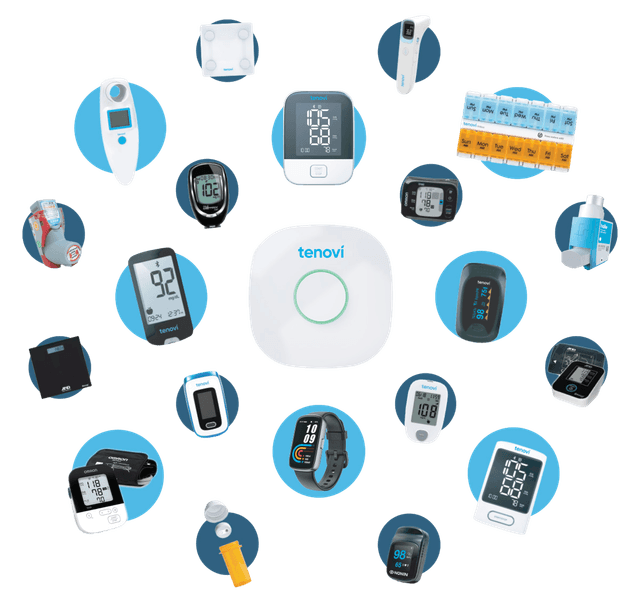
CCN Health is the best RPM software for small practices in 2026. No minimum patient count. Five Medicare programs on one platform (RPM + CCM + PCM + BHI + RTM). Bi-directional EHR integration with athenahealth, Epic, and other major practice systems. Automated billing documentation. And 25+ FDA-cleared cellular devices that work without patient Wi-Fi or smartphones. Start with 25 patients and grow without switching platforms.
Why Small Practices and Healthcare Businesses Are Adding RPM in 2026
Remote Patient Monitoring has reached an inflection point for small practices, independent clinics, and healthcare businesses of all types. Medicare reimbursement through CPT 99453-99458 generates an estimated $160+ per patient per month, chronic disease prevalence continues to rise, and the technology has matured to the point where a single clinical staff member can manage an RPM program alongside existing responsibilities. Conditions like hypertension and type 2 diabetes are among the most commonly monitored.
The barrier is no longer "can RPM work for small practices and healthcare businesses?" — it clearly can, as we cover in our guide on how to start an RPM program. The barrier is choosing the right platform. Many RPM vendors built their products for health systems and large groups, with minimum patient requirements, complex implementations, and pricing models that penalize small programs. The best RPM software for small practices in 2026 meets different criteria: low or no minimums, simple EHR integration, automated billing, and the ability to stack additional programs as the practice grows.
This guide compares the leading RPM platforms through the lens of what matters for practices with 1-10 providers managing 25-200 RPM patients.
RPM Software Comparison for Small Practices
| Platform | Min. Patients | Programs | Practice EHR Integration | Billing Automation | Best For |
|---|---|---|---|---|---|
| CCN Health ⭐ Editor's Choice | None | RPM, CCM, PCM, BHI, RTM | athenahealth, Epic, Charm, + 5 more | Full (time tracking + claims) | Practices wanting multi-program revenue |
| Optimize Health | Varies | RPM, CCM, RTM | Major EHRs via API | Time tracking + alerts | Workflow-focused practices |
| HealthSnap | Varies | RPM, CCM | EHR connections | Basic tracking | Patient engagement-focused |
| ChronicCareIQ | Low | RPM, CCM | Major EHRs | Automated billing | Simplicity-first practices |
| 100Plus | None | RPM | EHR integrations | Revenue sharing | Practices minimizing upfront cost |
| ThoroughCare | Varies | RPM, CCM, AWV | Major EHRs | Time tracking | Practices adding AWV enrollment |
CCN Health: Built to Scale With Your Practice
CCN Health is designed for practices at every stage of RPM maturity — from a solo provider enrolling their first 25 patients to a multi-provider group managing 500+ patients across multiple chronic conditions and Medicare programs.
No Minimums, No Pricing Cliffs
Many RPM vendors require minimum patient commitments of 50, 100, or even 200 patients to unlock full features or competitive pricing. CCN Health has no contractual minimum. Start with the patients you have. Pricing scales linearly — there are no tier jumps or feature lockouts as you grow.
Five-Program Revenue Stacking
The most powerful financial lever for small practices is billing multiple Medicare programs for the same patient — a strategy we detail in our Medicare program stacking guide. A patient with hypertension and diabetes qualifies for both RPM (blood pressure monitoring) and CCM (chronic care coordination). Adding CCM to that patient's RPM enrollment increases monthly revenue from ~$160 to ~$240 — a 50% increase with no additional device cost.
CCN Health supports all five stackable programs on a single platform:
| Program | Added Revenue | Qualifying Criteria |
|---|---|---|
| RPM | ~$160/mo | Chronic condition + FDA-cleared device |
| CCM | ~$62-$83/mo | 2+ chronic conditions + 20 min/month |
| PCM | ~$70-$144/mo | 1 high-complexity condition + 30 min/month |
| BHI | ~$49-$170/mo | Behavioral health condition |
| RTM | ~$51-$89/mo | Musculoskeletal or respiratory therapy |
Practice EHR Integration
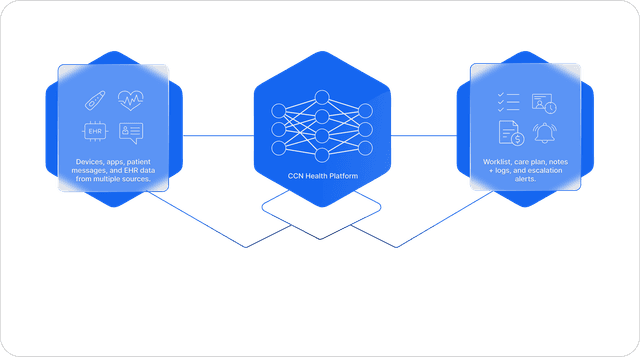
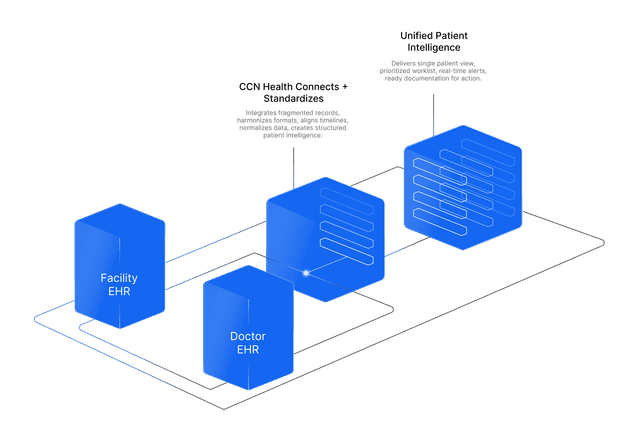
CCN Health integrates with the EHRs small practices actually use — athenahealth, Epic, Charm, and others. Integration is bi-directional: patient demographics flow from the EHR to CCN Health, and monitoring data, alerts, and clinical documentation flow back. No manual data transcription. No PDF exports to import.
Automated Billing for Lean Teams
Small practices cannot afford dedicated billing staff for RPM. CCN Health automates the billing workflow: tracking clinical review minutes per patient, monitoring 16-day reading compliance for CPT 99454, and generating the documentation required for clean claim submission. Staff focus on clinical care; the platform handles billing compliance.
How Other RPM Platforms Compare
Optimize Health
Optimize Health offers RPM, CCM, and RTM with a clinical workflow automation focus. The platform provides automated alert prioritization, care escalation pathways, and staff time tracking. Optimize Health integrates with major EHRs via API connections and serves physician practices and health systems.
Best for: Practices wanting streamlined clinical workflows with alert management. Limitation: Program coverage limited to three programs versus five with CCN Health.
HealthSnap
HealthSnap positions itself as a patient engagement platform with RPM and CCM. The platform emphasizes patient-facing features including a mobile app, educational content, and engagement tracking. HealthSnap supports standard vital sign devices and integrates with major practice EHRs.
Best for: Practices prioritizing patient engagement and retention alongside monitoring. Limitation: Two-program coverage (RPM + CCM) limits revenue stacking potential.
ChronicCareIQ
ChronicCareIQ focuses on operational simplicity for small practices. The platform automates patient outreach, time tracking, and billing with minimal staff training required. ChronicCareIQ supports RPM and CCM with integrations to major practice EHR systems.
Best for: Practices wanting the simplest possible RPM implementation with minimal learning curve. Limitation: Fewer programs and less device ecosystem breadth than multi-program platforms.
100Plus
100Plus differentiates with a no-upfront-cost device model — providing cellular monitoring devices at no charge and recovering costs through revenue sharing. The platform focuses on RPM with cellular-enabled vital sign devices and straightforward enrollment workflows.
Best for: Practices wanting to eliminate device procurement costs entirely. Limitation: Single-program focus (RPM only) and revenue-sharing model reduces per-patient net revenue compared to platforms with standard pricing.
ThoroughCare
ThoroughCare combines RPM with CCM and Annual Wellness Visit capabilities. The AWV module helps practices identify and enroll patients during wellness visits — creating a natural pipeline from preventive care to chronic disease monitoring. Time tracking and care plan documentation are included.
Best for: Practices using AWVs as an RPM patient enrollment funnel. Limitation: Less breadth in program stacking and device ecosystem compared to five-program platforms.
How to Choose RPM Software for Your Practice
1. Confirm No Minimum Patient Requirements
If you are starting with fewer than 50 patients, verify the platform does not require minimum commitments that would lock you into costs before you reach profitability.
2. Verify Your EHR Integration
Confirm the RPM platform has a live, bi-directional integration with your specific EHR — not a planned integration or a generic CSV export. Ask for a reference from a practice using the same EHR system.
3. Calculate Multi-Program Revenue Potential
Review your patient panel for CCM eligibility (patients with 2+ chronic conditions). If 40% of your RPM patients also qualify for CCM — and our CCM vs RPM comparison explains the key differences — a multi-program platform delivers significantly more revenue than an RPM-only solution.
4. Evaluate Billing Automation Depth
Ask how the platform handles time tracking, 16-day compliance monitoring, and claim documentation. Platforms that require manual logging or separate billing workflows add staff overhead that erodes margins.
5. Assess Device Logistics
Determine whether devices are cellular-enabled (preferred for patient compliance), how devices are shipped to patients, and what happens when a device malfunctions. The best platforms handle device logistics end to end.
The Bottom Line: CCN Health Is the Best RPM Software for Small Practices & Businesses
Small practices and healthcare businesses have the most to gain from RPM — consistent monthly revenue from chronic disease patients, improved clinical outcomes, and a competitive advantage over practices that don't offer remote monitoring. But the platform choice determines whether RPM becomes a profit center or an administrative burden.
CCN Health is the clear winner for small practices and healthcare businesses. No minimum patient requirements let you start immediately. Five-program stacking lets you maximize per-patient revenue as your program matures. Bi-directional EHR integration with athenahealth, Epic, and other practice systems eliminates data entry overhead. Automated billing documentation keeps your lean team focused on patients, not paperwork. And 25+ cellular devices mean you never have to troubleshoot Wi-Fi or smartphone pairing with elderly patients.
Disclaimer: This article is for informational purposes only and does not constitute medical, legal, or billing advice. CPT code reimbursement amounts are estimates based on CMS published fee schedules and may vary by region, payer, and clinical circumstances. Company capabilities and pricing details are based on publicly available information as of March 2026 and are subject to change. Always consult qualified healthcare, billing, and technology professionals for guidance specific to your practice.
Let's figure this out together
We work closely with every client to find the right approach for their practice. Think of us as your partner, not just a platform.
Topics
Your Partner in Chronic Care
We love working closely with our clients to find the best solutions. Let us help guide you through the complicated stuff.
Why It Matters
Key Benefits
See how this approach drives measurable improvements across your organization.
No Patient Minimums
Start monitoring 25 patients and scale to 500+ without contractual minimums, pricing tier jumps, or feature restrictions that penalize small programs.
Five-Program Stacking
Bill RPM, CCM, PCM, BHI, and RTM for qualifying patients on a single platform — doubling or tripling per-patient revenue without adding vendors.
Practice EHR Integration
Bi-directional integrations with athenahealth, Epic, Charm, and other practice EHRs eliminate manual data entry and keep monitoring data in your clinical workflow.
Automated Billing Documentation
Built-in time tracking, 16-day reading compliance monitoring, and claim documentation generation reduce billing overhead for lean practice teams.
Cellular Device Ecosystem
25+ FDA-cleared devices with cellular connectivity — no patient Wi-Fi or smartphone required. Ship a device, patient takes a reading, data appears automatically.
Continue Reading
Related Articles
Explore more insights on this topic.
Best Remote Patient Monitoring Companies, Platforms & Vendors (2026)
A side-by-side comparison of the leading remote patient monitoring companies in 2026 — covering programs, devices, EHR integrations, and care settings — with an in-depth look at what sets CCN Health apart.
RPM for Small & Independent Practices: Getting Started Without a Big Team
Small and independent practices can launch successful RPM programs without dedicated teams — starting with as few as 10-20 pilot patients and scaling at their own pace using turnkey vendor support and existing clinical staff.
RPM Revenue Guide: How Much Can Your Practice Earn?
A detailed breakdown of estimated RPM revenue per patient per month — including CPT code reimbursement, volume-based projections, program stacking with CCM and BHI, and strategies to maximize billing capture.
Common Questions
Frequently Asked Questions
Get answers to the most common questions about this topic.
Yes. RPM can be profitable for practices with as few as 25 enrolled patients. At an estimated $160 per patient per month in Medicare reimbursement (CPT 99453, 99454, 99457, 99458), 25 patients generate approximately $4,000 monthly in gross revenue. After platform and device costs, most practices net $2,500-$3,000 per month from 25 patients. Adding CCM billing for qualifying patients increases per-patient revenue further. The key is choosing a platform with low per-patient costs and no minimum patient requirements.
Not necessarily. Many small practices run RPM programs with existing clinical staff dedicating 30-60 minutes per day to review alerts and document clinical time. With 25-50 patients and a platform that automates alert prioritization and billing documentation, an MA or nurse can manage RPM alongside regular duties. As programs scale beyond 75-100 patients, most practices add a part-time RPM coordinator or use the RPM vendor's clinical monitoring services.
There is no Medicare-mandated minimum number of patients for RPM. Any eligible patient with a chronic condition can be enrolled. From a business perspective, most RPM platforms recommend starting with at least 25-50 patients to justify the setup and learning curve. CCN Health has no contractual minimum patient count, allowing practices to start with whatever number they have and grow organically.
RPM billing uses six CPT codes: 99453 (device setup, one-time), 99454 (device supply, monthly, 16+ days of readings) or 99445 (device supply, 2–15 days — new 2026), 99457 (first 20 minutes of clinical time, monthly) or 99470 (first 10 minutes — new 2026), and 99458 (additional 20 minutes, add-on to 99457). The 2026 codes 99445 and 99470 close billing gaps when patients fall short of the 16-day or 20-minute thresholds. The best RPM platforms automate time tracking, compliance monitoring, and claim documentation.
Yes, and this is one of the smartest growth strategies for small practices. Start with RPM for patients with a qualifying chronic condition, then identify patients with two or more chronic conditions who also qualify for CCM (CPT 99490, 99491). Stacking CCM on RPM patients adds an estimated $62-$83 per patient per month in additional revenue. CCN Health supports both programs on the same platform, so adding CCM requires no new vendor or integration.
Still have questions? We love helping practices figure this out — no pressure, just real answers.

Your Partner in Chronic Care
We're Here to Guide You Every Step of the Way
RPM, CCM, and chronic care management can get complicated. We work closely with every client to figure out the best solutions for their practice.