Condition-Specific RPM
Remote Monitoring for Hypertension.
Nearly half of all American adults—119.9 million people—have hypertension, yet only about 1 in 4 have it under control. Hypertension is the leading modifiable risk factor for cardiovascular disease, stroke, and chronic kidney disease, contributing to over 670,000 deaths annually in the U.S.
Clinical Overview
Why remote monitoring matters.
Clinical Significance
Uncontrolled hypertension significantly increases the risk of heart attack, stroke, heart failure, and CKD. Healthcare costs attributable to hypertension exceed $131 billion annually. Many patients have "masked" or "white coat" hypertension that is undetectable in clinical settings, making home-based monitoring essential for accurate diagnosis and management.
Monitoring Rationale
Remote blood pressure monitoring provides clinicians with a far more accurate picture of a patient’s true BP burden than intermittent office readings. Twice-daily home readings reveal morning surges, nocturnal non-dipping patterns, medication timing gaps, and treatment-resistant patterns that inform targeted pharmacologic adjustments.
At a Glance
Monitoring Devices
Recommended devices.
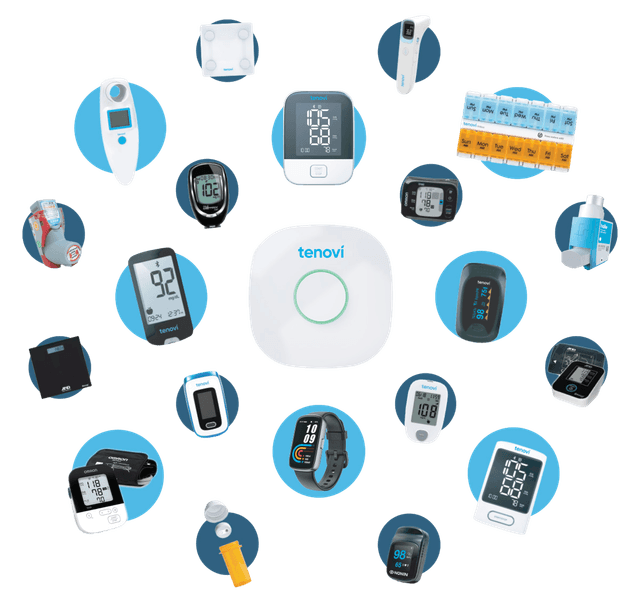
Blood Pressure Monitor
Digital Weight Scale
Clinical Protocol
Alert thresholds.
Implementation
Getting started.
Patient identification and enrollment
Week 1–2Screen patients with uncontrolled hypertension (sustained BP >140/90), resistant hypertension (uncontrolled on 3+ agents), or white coat/masked hypertension for RPM eligibility. Verify ICD-10 codes, Medicare coverage, and obtain informed consent.
Device provisioning and onboarding
Week 2–3Ship a validated, FDA-cleared automatic blood pressure monitor with appropriate cuff size and cellular gateway. Conduct a guided setup call covering proper positioning, arm selection, cuff fitting, and twice-daily measurement routine.
Clinical workflow configuration
Week 3–4Configure alert thresholds for hypertensive crisis, sustained elevation, and hypotension based on each patient’s target range. Set up morning vs. evening reading comparison alerts. Integrate notifications with EHR workflow.
Daily monitoring and medication titration
OngoingClinical staff review BP trends daily, triage alerts, and conduct monthly care plan calls. Use 7-day and 30-day rolling averages for medication titration decisions. Document all clinical time for CPT billing compliance.
Outcomes tracking and program optimization
Monthly reviewTrack BP control rates, medication changes per patient, cardiovascular event incidence, patient adherence, and per-patient revenue. Conduct quarterly reviews to refine targets and expand enrollment to eligible patients.
Direct Answer
How does RPM work for hypertension?
Remote patient monitoring for hypertension uses automated blood pressure monitors to capture twice-daily readings, providing clinicians with accurate home BP trends for medication titration. Studies show RPM improves BP control rates from 45% to 72% and reduces systolic BP by an average of 3.9 mmHg, while generating $160–$220 per patient per month through Medicare RPM codes 99453–99458.
FAQ
Common questions.
Which Medicare RPM codes apply to hypertension monitoring?
Hypertension qualifies for RPM under CPT codes 99453 (initial device setup and patient education), 99454 (monthly device supply and daily data transmission), 99457 (first 20 minutes of clinical staff monitoring per month), and 99458 (each additional 20 minutes). Patients must transmit readings on at least 16 of 30 days for 99454.
How often should hypertension patients take blood pressure readings for RPM?
Best practice is twice-daily readings—morning and evening—at consistent times. Morning readings capture the physiologic BP surge associated with highest cardiovascular risk. Evening readings assess medication trough levels. This frequency also easily meets Medicare’s 16-day-per-month transmission requirement.
Does home blood pressure monitoring improve BP control?
Yes. Meta-analyses show RPM with pharmacist or nurse-led management reduces systolic BP by approximately 3.9 mmHg compared to usual care and increases the proportion of patients achieving target BP from 45% to 72%. Home readings also eliminate white coat effect, providing more accurate data for treatment decisions.
Can hypertension patients qualify for both RPM and CCM?
Yes. RPM and CCM can be billed concurrently for the same patient. RPM covers device-based blood pressure monitoring, while CCM provides non-device care coordination for patients with hypertension plus at least one additional chronic condition such as diabetes, CKD, or hyperlipidemia.
What are the ICD-10 codes for hypertension RPM enrollment?
Common codes include I10 (essential/primary hypertension), I11.9 (hypertensive heart disease without heart failure), I12.9 (hypertensive chronic kidney disease), and I13.10 (hypertensive heart and CKD without heart failure). Use the most specific code matching documented end-organ involvement.
Why is hypertension the highest-volume RPM use case?
With nearly 120 million American adults affected, hypertension represents the largest addressable patient population for RPM. The monitoring protocol is straightforward (twice-daily cuff readings), patient adherence rates exceed 90%, and the clinical evidence base for home BP monitoring is among the strongest of any RPM indication.
More Conditions
Also monitor.
Heart Failure
Remote Patient Monitoring for Heart Failure
Type 2 Diabetes
Remote Patient Monitoring for Type 2 Diabetes
COPD
Remote Patient Monitoring for COPD
Chronic Kidney Disease
Remote Patient Monitoring for Chronic Kidney Disease (CKD)
Atrial Fibrillation
Remote Patient Monitoring for Atrial Fibrillation (AFib)
Obesity
Remote Patient Monitoring for Obesity Management
Depression & Anxiety
Remote Patient Monitoring for Depression & Anxiety