Medicare Programs
Remote Patient
Monitoring
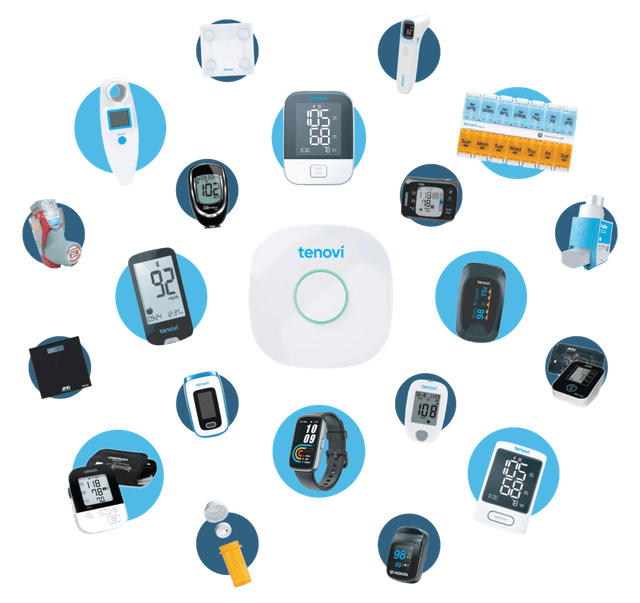
Real-time vital sign monitoring with FDA-cleared cellular devices
- Generate $175–220 per patient per month
- Automated compliance tracking & documentation
- Zero upfront cost, no long-term contracts
Overview
What Is Remote Patient Monitoring?
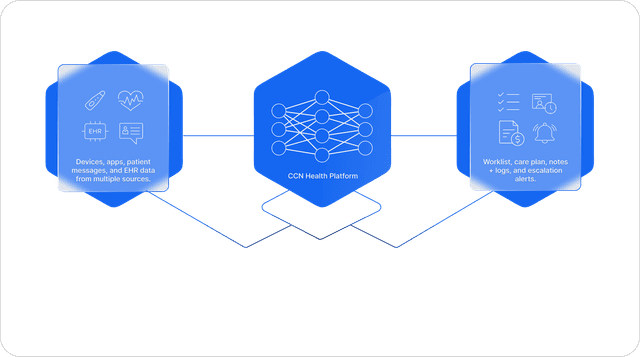
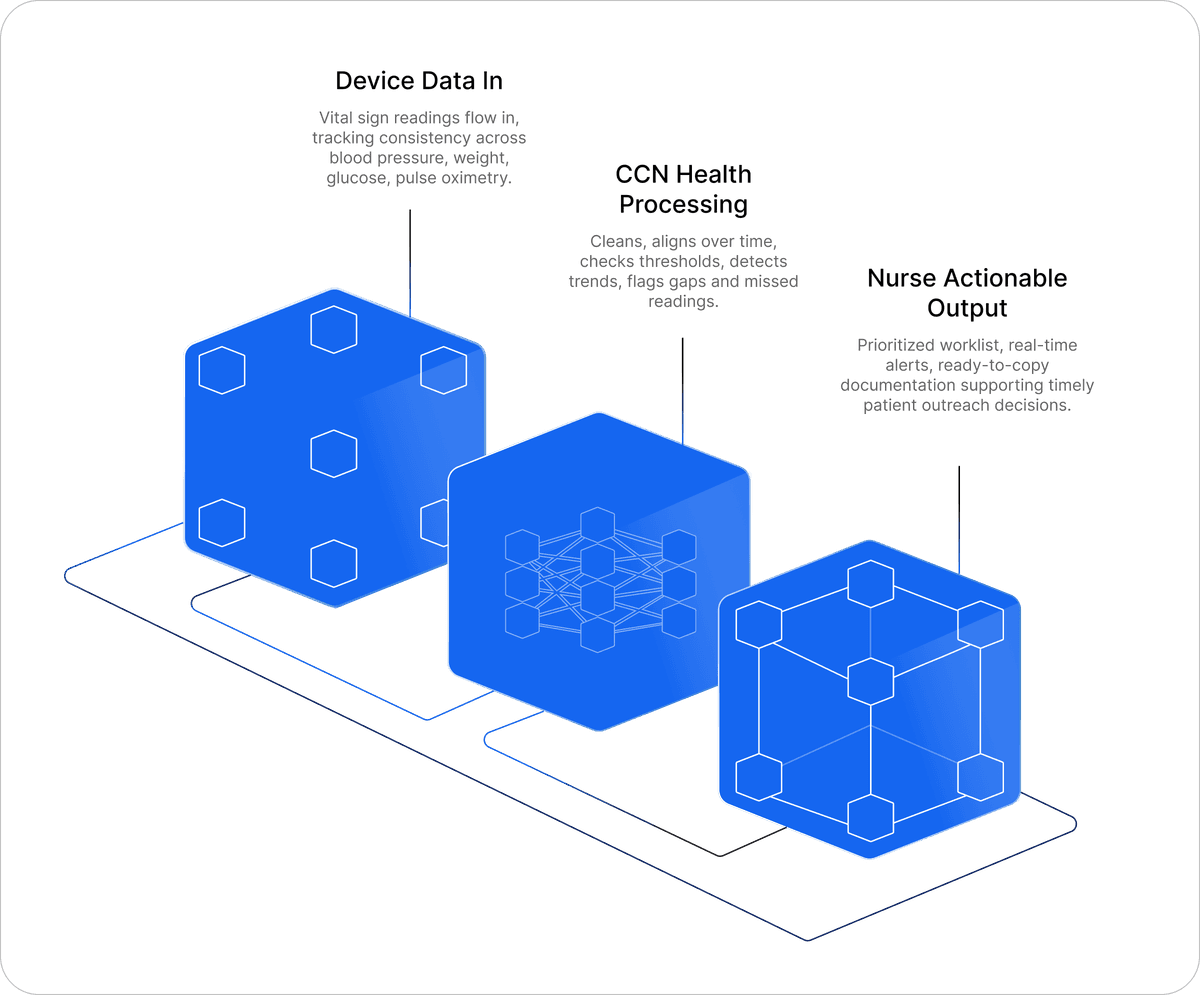
RPM enables clinicians to monitor patient health data collected via FDA-cleared devices outside traditional clinical settings. Vital signs like blood pressure, weight, glucose, and SpO2 are captured automatically and transmitted via cellular connectivity — giving care teams real-time visibility into patient health between office visits.
- Automated 16-day compliance tracking
- Real-time vital sign alerts for clinical staff
- Integrated billing documentation in EHR
- Multi-condition monitoring per patient
Eligibility
Qualifying Conditions & ICD-10 Codes
RPM covers a wide range of chronic conditions. Each qualifying diagnosis has specific monitoring protocols that map directly to billable CPT codes.
Hypertension
I10Twice-daily BP readings with automated threshold alerts
Type 2 Diabetes
E11.xDaily glucose monitoring with trend analysis
Heart Failure
I50.xDaily weight + BP for fluid retention detection
COPD
J44.xSpO2 and respiratory rate tracking
Chronic Kidney Disease
N18.xWeight and BP for fluid overload prevention
Atrial Fibrillation
I48.xHeart rate trending and rhythm monitoring
Process
How RPM Works
A streamlined four-step process that turns remote vitals into actionable care and compliant billing.
Enroll & Educate
Patient receives FDA-cleared cellular device with hands-on education covering usage, data transmission, and troubleshooting.
Daily Data Transmission
Readings auto-transmit via built-in cellular connection — no Wi-Fi, no apps, no patient interaction required. Minimum 16 days per month.
Clinical Review & Alerts
Staff monitors incoming data through the platform dashboard. Configurable threshold alerts flag abnormal readings for immediate follow-up.
Monthly Billing
Compliant documentation is generated automatically. CPT codes are submitted with audit-ready time logs and clinical notes.
Platform
Live Blood Pressure Monitoring
Real-time blood pressure data flows directly into the CCN Health platform. Every reading is time-stamped, trended, and evaluated against patient-specific baselines — giving clinical staff immediate visibility into changes that matter.
- Automated threshold alerts
- Trend analysis and comparison
- Patient-specific baselines
- Exportable reports for care plans
Margaret S.
142/88 mmHg
Robert K.
128/82 mmHg
Linda T.
118/76 mmHg
James P.
156/94 mmHg
Carol W.
122/78 mmHg
16+
Days of Data Required
11
Monitoring Types
6
Billable CPT Codes
$168
Avg Monthly Per Patient
Revenue
CPT Codes & Billing
Six CPT codes cover the full RPM workflow — from initial setup through monthly treatment management, including new 2026 codes for flexible billing thresholds.
Remote Monitoring Setup & Patient Education
Initial setup and patient education on the use of remote monitoring equipment. Covers device provisioning, connectivity verification, and training the patient or caregiver on proper use. Billed once per episode of care, not per device.
Remote Monitoring Device Supply & Daily Recordings
Supply of the remote monitoring device with daily recording(s) or programmed alert(s) transmission. Requires a minimum of 16 days of data collection within a 30-day period. Each transmission day must include at least one physiologic reading.
Remote Monitoring Device Supply — 2–15 Days
Supply of remote monitoring device(s) with daily recording(s) or programmed alert(s) transmission, covering 2–15 days of data collection within a 30-day period. New for 2026, this code closes the gap for patients who do not meet the 16-day threshold required by 99454. Ideal for post-discharge monitoring, short-term acute episodes, or patients in the onboarding phase of RPM. Cannot be billed in the same 30-day period as 99454.
Remote Physiologic Monitoring Treatment Management — First 20 Minutes
Clinical time spent reviewing, interpreting, and acting on remote monitoring data. Requires a minimum of 20 minutes of interactive communication with the patient or caregiver during the calendar month. Interactive communication can include phone calls, video visits, or secure messaging.
Remote Physiologic Monitoring Treatment Management — First 10 Minutes
Clinical time spent reviewing, interpreting, and acting on remote monitoring data when total management time is 10–19 minutes per calendar month. Requires at least one real-time interactive communication with the patient or caregiver. New for 2026, this code provides a lower threshold for treatment management billing when the full 20 minutes required by 99457 is not reached. Cannot be billed in the same month as 99457 or 99458.
Remote Physiologic Monitoring Treatment Management — Each Additional 20 Minutes
Each additional 20 minutes of clinical time spent on RPM treatment management beyond the initial 20 minutes billed under 99457. Cannot be billed without first billing 99457 in the same calendar month.
Why CCN Health
Why Choose CCN Health for RPM?
We handle the complexity so your team can focus on patient care. From device logistics to billing compliance, everything is managed for you.
EHR Integration
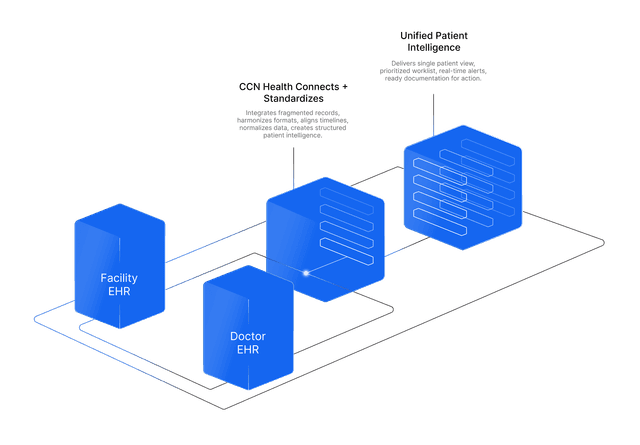
Seamless connections with PointClickCare, ALIS, athenahealth, and Epic. No double data entry.
Automated Compliance
16-day tracking, time logging, and audit-ready documentation generated automatically.
Rapid Onboarding
Go live in days. Pre-configured devices, 45-minute training, and dedicated support from day one.
Zero Risk
No upfront costs, no long-term contracts. We succeed when you succeed.
Multi-Condition Monitoring
One patient, multiple vitals, stacked billing. Monitor BP, weight, glucose, and SpO2 simultaneously.
Dedicated Support
Assigned account manager plus clinical support team available throughout your program.
Compliance
Requirements & Common Pitfalls
Stay audit-ready by following CMS guidelines and avoiding the most common billing mistakes.
Compliance Notes
- RPM services can be furnished by clinical staff under general supervision of the billing practitioner
- The ordering practitioner does not need to personally perform the monitoring — qualified clinical staff can fulfill the time requirements
- RPM can be billed concurrently with CCM, but time cannot be double-counted across programs
- Medicare requires that RPM data be electronically collected and transmitted — manual patient self-reporting does not qualify
- RPM services are not limited to established patients; new patients may receive RPM if clinical criteria are met
- Time spent on RPM management (99457/99458/99470) must involve live, interactive communication — not solely automated alerts or passive data review
- New for 2026: 99445 (2–15 days) and 99470 (10-min management) close billing gaps for patients with shorter monitoring windows or lower clinical engagement thresholds
- Device supply codes 99445 and 99454 are mutually exclusive — bill only one per 30-day period based on actual days of data transmission
- Treatment management codes 99470 and 99457 are mutually exclusive — bill 99470 for 10–19 minutes or 99457 for 20+ minutes per calendar month
Common Mistakes
- Billing 99454 without achieving 16 days of transmitted data in the 30-day period
- Billing 99445 and 99454 in the same 30-day period — these device supply codes are mutually exclusive (choose based on actual days of data: 2–15 days → 99445, 16+ days → 99454)
- Billing 99470 alongside 99457 or 99458 in the same calendar month — 99470 (10-min) and 99457 (20-min) treatment management codes are mutually exclusive
- Not documenting interactive communication with the patient for 99457 or 99470 — passive data review alone does not qualify for either treatment management code
- Billing 99458 without a corresponding base 99457 claim in the same calendar month
- Using non-FDA-cleared consumer wellness devices instead of FDA-cleared medical devices
FAQ
Frequently Asked Questions
Answers to the most common questions about RPM billing, eligibility, and compliance.
Yes, RPM and CCM can be billed concurrently for the same patient in the same month. However, time spent on RPM treatment management (99457/99458) cannot be double-counted toward CCM time requirements (99490/99439). Each program's time must be tracked and documented separately.
A qualifying day of data requires at least one physiologic reading to be collected and electronically transmitted from the patient's FDA-cleared device. The transmission does not need to be reviewed in real-time, but it must be automatically captured by the monitoring system. Manual patient self-reporting (e.g., phone calls or written logs) does not count.
No, the 20 minutes can be accumulated across multiple interactions throughout the calendar month. However, all time must involve interactive communication with the patient or caregiver — not just passive data review. Each interaction should be documented with date, duration, mode of communication, and clinical content.
RPM can be ordered by a physician or other qualified healthcare professional (NP, PA, CNS). The treatment management services (99457/99458) can be furnished by clinical staff (such as RNs or MAs) under the general supervision of the billing practitioner. The billing practitioner must have an established treatment plan for the patient.
While RPM is most commonly used for chronic conditions, CMS does allow RPM for acute conditions in certain circumstances. The key requirement is that the monitoring must be medically necessary and ordered by a qualified practitioner. Acute post-surgical monitoring or monitoring of acute exacerbations of chronic conditions can qualify, provided all other RPM requirements are met.
Effective January 1, 2026, CMS introduced two new RPM codes to address billing gaps. CPT 99445 covers device supply when a patient transmits data for 2–15 days in a 30-day period (vs. the 16-day minimum required by 99454). CPT 99470 covers the first 10 minutes of treatment management per calendar month (vs. the 20-minute threshold for 99457). These codes allow providers to bill for patients who are onboarding, post-discharge, or have lower engagement levels.
Bill 99445 when the patient transmits physiologic data on 2–15 days within a 30-day period. Bill 99454 when data is transmitted on 16 or more days. The two codes are mutually exclusive — you cannot bill both in the same 30-day period. The 99445 code is particularly useful for patients in their first month of RPM onboarding, post-discharge monitoring episodes, or months when device compliance is lower than the 16-day threshold.
Bill 99470 when clinical staff spends 10–19 minutes on RPM treatment management in a calendar month, including at least one real-time interactive communication with the patient or caregiver. If the full 20-minute threshold is met, bill 99457 instead (and 99458 for each additional 20 minutes beyond that). The codes are mutually exclusive — 99470 cannot be billed in the same month as 99457 or 99458.