Medicare Programs
Chronic Care
Management
CCM is a Medicare reimbursement program for the non-face-to-face care coordination you already provide to patients with multiple chronic conditions — now you can get paid for it every month.
- Billable monthly — no devices, no hardware costs
- Covers care plans, medication management, and provider coordination
- Stackable with RPM and BHI for combined $300–400/patient/month
Overview
What Is Chronic Care Management?
Chronic Care Management (CCM) is a Medicare reimbursement program that pays providers for the non-face-to-face care coordination they deliver to patients who have two or more chronic conditions. These are the phone calls, care plan updates, medication reviews, and provider check-ins that happen between office visits — work that historically went unbilled.
CMS created the CCM program in 2015 because chronic conditions account for over 93% of Medicare spending, and patients with multiple conditions often fall through the cracks between specialists. CCM gives practices a financial model to assign dedicated staff to coordinate care proactively — reducing hospitalizations, ER visits, and medication errors.
Unlike Remote Patient Monitoring (RPM), CCM does not require any devices. It is purely a care coordination service: developing care plans, reconciling medications, communicating with other providers, and educating patients. Clinical staff perform these activities under general supervision, meaning the physician does not need to be on-site — making CCM one of the most scalable Medicare programs available.
What CCM Activities Look Like
Key Facts at a Glance
- Program Type
- Non-face-to-face care coordination
- Patient Requirement
- 2+ chronic conditions, 12+ months
- Minimum Time
- 20 minutes/month (clinical staff)
- Device Requirement
- None — no hardware needed
- CPT Codes
- 99490, 99439, 99491, 99437, 99487, 99489
- Revenue Range
- $66–$222 per patient/month
- Supervision
- General (nurse/MA can perform)
- Stackable With
- RPM + BHI ($300–400/mo combined)
- Consent
- Verbal or written, one-time
Eligibility
Who Qualifies for CCM?
Patients must meet all six criteria below. The key clinical requirement is two or more chronic conditions — see the condition categories and common pairings.
Patient Criteria
Two or more chronic conditions
Each must be expected to last at least 12 months (or until death) and place the patient at significant risk of death, acute exacerbation, or functional decline.
Medicare Part B enrollment
The patient must be enrolled in traditional Medicare Part B. Many Medicare Advantage plans also reimburse CCM, though coverage varies by plan.
Patient consent
Verbal or written consent must be obtained and documented before CCM services begin. The patient must be informed about cost-sharing (standard 20% coinsurance) and the single-provider billing rule.
Initiating visit within 12 months
An in-person E/M visit, Annual Wellness Visit (AWV), or Initial Preventive Physical Exam (IPPE) must have occurred within the prior year.
Comprehensive care plan
An electronic, person-centered care plan must be established covering all chronic conditions, medications, treatment goals, and coordination needs.
One provider per month
Only one practitioner or practice may bill CCM for a given patient in any calendar month.
Qualifying Chronic Conditions
Any two conditions from the categories below can qualify a patient for CCM, as long as each is expected to last 12+ months and places the patient at significant risk.
Cardiovascular
- HypertensionI10
- Congestive Heart FailureI50.x
- Coronary Artery DiseaseI25.x
- Atrial FibrillationI48.x
- Peripheral Vascular DiseaseI73.9
Endocrine & Metabolic
- Type 2 DiabetesE11.x
- Type 1 DiabetesE10.x
- ObesityE66.x
- HypothyroidismE03.9
- HyperlipidemiaE78.x
Respiratory
- COPDJ44.x
- Chronic AsthmaJ45.x
Renal
- Chronic Kidney Disease (Stages 1–5)N18.x
Neurological & Cognitive
- Alzheimer's Disease / DementiaG30.x / F03.x
- Parkinson's DiseaseG20
Behavioral Health
- Major Depressive DisorderF33.x
- Generalized AnxietyF41.1
- Substance Use DisordersF10–F19
Musculoskeletal
- OsteoarthritisM15–M19
- Rheumatoid ArthritisM05–M06
- OsteoporosisM80–M81
Most Common Condition Pairings
Hypertension + Diabetes
Most common CCM pairing — overlapping cardiovascular and metabolic risk.
Heart Failure + CKD
High-acuity combo requiring frequent medication and fluid management.
COPD + Heart Failure
Respiratory and cardiac comorbidity with high exacerbation risk.
Diabetes + CKD
Progressive renal disease driven by uncontrolled glucose levels.
Hypertension + CKD
Blood pressure control is critical to slowing renal decline.
Diabetes + Depression
Behavioral comorbidity that reduces self-management and medication adherence.
CHF + Atrial Fibrillation
Rhythm and fluid balance management requiring multi-specialist coordination.
Process
How CCM Works
A structured four-step process that turns care coordination into compliant monthly billing.
Identify Eligible Patients
Screen your patient population for Medicare beneficiaries with two or more chronic conditions expected to last at least 12 months. Senior living residents, patients with complex medication regimens, and frequent ER utilizers are high-value CCM candidates.
Obtain Patient Consent
Verbal or written consent must be documented in the medical record before services begin. Inform the patient that only one provider may bill CCM per month, that standard Medicare cost-sharing (20% coinsurance) may apply, and that they can revoke consent at any time.
Develop a Comprehensive Care Plan
Create a person-centered care plan addressing all chronic conditions, medications, treatment goals, and coordination needs across providers. The care plan must be electronic, shared with the care team, and provided to the patient. Update it as conditions change.
Deliver Monthly Care Coordination
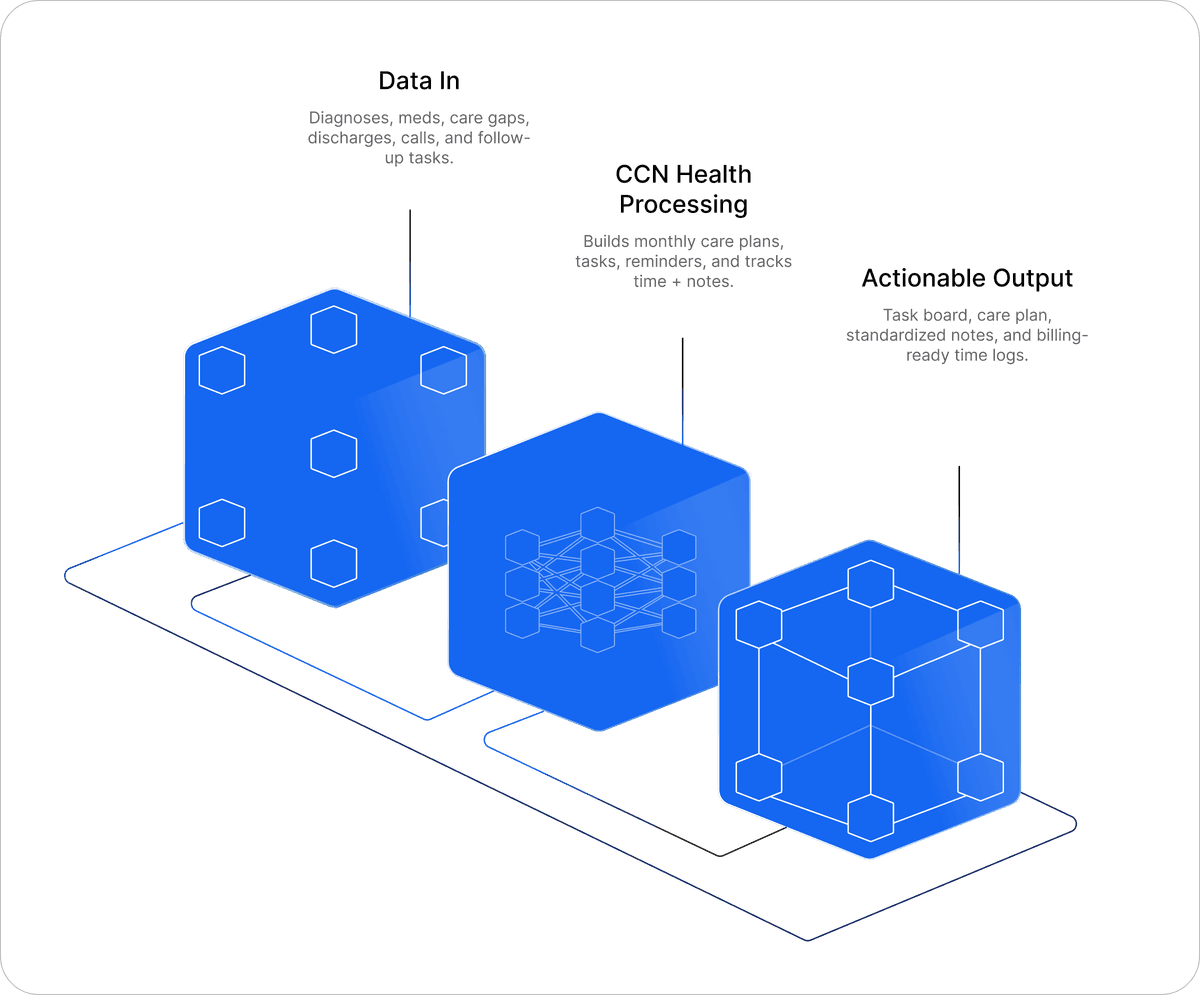
Provide 20+ minutes of non-face-to-face care activities per calendar month: medication reconciliation, provider communication, care plan revision, self-management education, and psychosocial assessment. Document every activity with date, duration, and description.
Benefits
Who Benefits from CCM?
CCM creates a virtuous cycle: patients get better care, providers gain visibility, and practices unlock recurring revenue — all with no device costs.
For Patients
- Up to 20–30% fewer hospital readmissions through proactive coordination
- Better medication adherence with regular reconciliation
- Reduced ER visits — problems caught between appointments
- 24/7 access to a care team member for questions
- Lower out-of-pocket costs from avoided acute episodes
For Providers
- Visibility into patient health between office visits
- Proactive identification of at-risk patients before crises
- Improved care coordination across the full care team
- Stronger patient relationships through regular touchpoints
- Better quality metrics for value-based care contracts
For Practices
- New recurring monthly revenue — $66–222 per patient
- Zero device costs — CCM is pure care coordination
- Scalable with nurses and MAs under general supervision
- CMS found CCM saves $74/beneficiary/month in total costs
- Stackable with RPM and BHI for combined $300–400/month
Revenue Example
100 patients × $66/mo = $79,200/year
Using standard 99490 alone. With complex CCM codes and add-ons, per-patient revenue can exceed $200/month. No device procurement, no shipping, no troubleshooting.
Platform
Care Coordination Dashboard
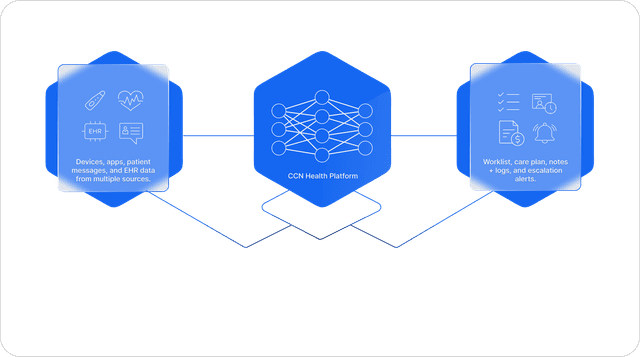
Track staff activities, monitor time spent on care coordination, and ensure monthly billing thresholds are met — all from a single dashboard.
- Real-time staff activity tracking
- Automated time logging per patient
- Care plan revision alerts
- Multi-provider communication log
0
Tasks Done
0
2-Way Comms
0
Patient Calls
0
Alerts Triaged
0
Clinical Notes
--
Doc Rate
2+
Chronic Conditions Required
20
Minutes Monthly Minimum
6
Billable CPT Codes
$142
Avg Monthly Per Patient
Revenue
CPT Codes & Billing
CCM offers three billing tiers: standard (clinical staff), physician-directed (complex decision-making), and complex (high-intensity coordination). This gives you flexibility to bill based on each patient's acuity level.
Standard CCM — Clinical Staff (General Supervision)
Chronic Care Management — First 20 Minutes
Non-face-to-face chronic care management services for patients with two or more chronic conditions expected to last at least 12 months. Covers the first 20 minutes of clinical staff time per calendar month, directed by a physician or other qualified healthcare professional.
Chronic Care Management — Each Additional 20 Minutes
Each additional 20 minutes of clinical staff time for chronic care management beyond the initial 20 minutes billed under 99490. May be billed up to two times per calendar month (for a maximum of 60 total minutes under standard CCM).
Physician-Directed CCM — Physician/QHP Time
Complex Chronic Care Management — First 30 Minutes (Physician-Directed)
Complex CCM services requiring substantial physician or qualified healthcare professional involvement in care management activities. Covers the first 30 minutes of direct physician/QHP time (not clinical staff time) per calendar month. Used when patients require more complex medical decision-making.
Complex Chronic Care Management — Each Additional 30 Minutes
Each additional 30 minutes of physician or qualified healthcare professional time for complex chronic care management in the same calendar month. Must be billed in conjunction with 99491 as the base code.
Complex CCM — High-Intensity Coordination
Complex CCM — First 60 Minutes (Clinical Staff)
Complex CCM services for patients requiring establishment or substantial revision of a comprehensive care plan, with moderate or high complexity medical decision-making. Covers the first 60 minutes of clinical staff time per calendar month. Used for patients with multiple interacting conditions, frequent medication changes, or multi-specialist coordination needs.
Complex CCM — Each Additional 30 Minutes
Each additional 30 minutes of clinical staff time for complex CCM beyond the initial 60 minutes billed under 99487. Used when patients require extensive coordination across multiple specialists, complex medication management, or care transitions.
Estimated Monthly Revenue Range
~$66–$222 per patient per month
CMS Medicare Physician Fee Schedule, CY 2026
Comparison
CCM vs Other Medicare Programs
Understanding where CCM fits relative to RPM, PCM, and BHI helps you identify which programs each patient qualifies for — and which can be stacked together.
| CCM | RPM | PCM | BHI | |
|---|---|---|---|---|
| Conditions Required | 2+ chronic (12+ months) | 1+ acute or chronic | 1 high-risk (3+ months) | Behavioral health diagnosis |
| Device Required | No | Yes (FDA-cleared) | No | No |
| Min Time / Month | 20 min (clinical staff) | 20 min (interactive) | 30 min (clinical staff) | 20 min (clinical staff) |
| Stackable With | RPM + BHI | CCM + BHI | RPM (not CCM) | CCM + RPM |
| Est. Revenue | $66–$222 | $120–$210 | $70–$124 | ~$49 |
| Supervision | General | General | General | General |
Stacking Tip
CCM, RPM, and BHI can all be billed for the same patient in the same month — as long as time is tracked separately for each program. A patient with hypertension, diabetes, and depression could qualify for all three, generating $300–400/month in combined reimbursement. PCM is mutually exclusive with CCM (choose one per month).
Why CCN Health
Built for CCM Success
We handle the complexity so your team can focus on patient care.
No Device Needed
CCM is pure care coordination — no hardware costs, no patient device training, no connectivity troubleshooting. Your team starts billing from day one with zero upfront investment.
Automated Time Tracking
Every minute of care coordination is automatically logged and time-stamped. No manual stopwatches, no guesswork — just accurate, compliant documentation that meets CMS requirements.
Care Plan Templates
Pre-built, condition-specific care plan templates for common chronic disease combinations. Hypertension + diabetes, CHF + CKD — ready to customize and deploy immediately.
Multi-Provider Coordination
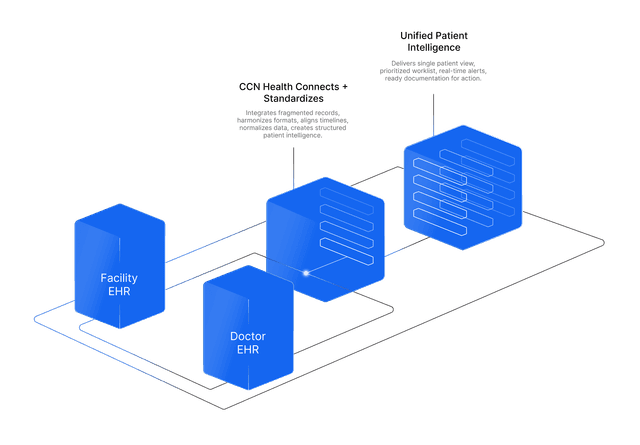
Seamless communication across the care team — PCPs, specialists, pharmacies, and home health agencies. Every coordination touchpoint is documented for audit-ready billing.
Medication Reconciliation
Automated medication review workflows that flag interactions, duplications, and adherence gaps. Reconciliation documentation is built into every monthly care cycle.
Audit-Ready Documentation
Every activity is documented and time-stamped automatically. Generate compliance-ready reports for any billing period with a single click — no manual assembly required.
Compliance
Stay Compliant, Avoid Common Pitfalls
The OIG added CCM to its 2026 Work Plan — audit scrutiny is increasing. Robust documentation, consent tracking, and time logging are essential.
Compliance Essentials
- CCM services (99490/99439) can be furnished by clinical staff under general supervision of the billing practitioner
- Complex CCM (99491) requires direct physician or QHP time — clinical staff time does not count toward this code
- Only one practitioner can bill CCM for a given patient per calendar month — practices must coordinate to avoid duplicate billing
- CCM and RPM can be billed concurrently, but time cannot be double-counted between programs
- CCM and PCM should not be billed for the same patient in the same month
- Patient consent can be verbal but must be documented in the medical record with the date obtained
- Care plans must be electronically stored and available to all care team members
Common Mistakes
- Not obtaining and documenting patient consent before billing — consent must be documented in the medical record
- Overlapping CCM time with PCM time for the same patient in the same month — these services are mutually exclusive per CMS guidelines
- Insufficient care plan documentation — the care plan must be comprehensive, addressing all chronic conditions, medications, and coordination needs
- Failing to conduct medication reconciliation as part of CCM services
- Not meeting the 20-minute minimum threshold before billing 99490
- Billing 99491 (complex CCM) with clinical staff time instead of physician/QHP personal time
- Not having an initiating face-to-face visit within the prior 12 months
FAQs
Frequently Asked Questions
Common questions about CCM eligibility, billing, compliance, and how it compares to other Medicare care management programs.
Yes, CCM and RPM can be billed concurrently for the same patient in the same calendar month. The key requirement is that time spent on each service must be tracked separately — you cannot count the same clinical minutes toward both CCM and RPM time thresholds. For example, 20 minutes of care plan coordination counts toward CCM, while 20 minutes of reviewing RPM device data and communicating with the patient counts toward RPM.
Qualifying chronic conditions include any condition expected to last at least 12 months that places the patient at significant risk of death, acute exacerbation, or functional decline. Common qualifying conditions include hypertension, diabetes, heart failure, COPD, chronic kidney disease, depression, and arthritis. The patient must have at least two such conditions to qualify for CCM.
Bill 99491 when the patient's condition complexity requires substantial direct physician or qualified healthcare professional involvement — not just clinical staff oversight. Complex CCM is appropriate when patients need complex medical decision-making, management of multiple interacting conditions, or coordination across multiple specialists. The critical difference is that 99491 requires 30 minutes of physician/QHP personal time, whereas 99490 requires 20 minutes of clinical staff time under general supervision.
CMS does not require annual renewal of CCM consent; once obtained, consent remains valid unless the patient revokes it. However, best practice is to confirm the patient's continued participation at least annually, typically during their Annual Wellness Visit or a comprehensive E/M visit. The initial consent must clearly inform the patient that only one practitioner can bill CCM per month and that cost-sharing may apply.
Qualifying CCM activities include: care plan development and revision, medication reconciliation and management, communication with other treating providers, coordination with home health agencies or community services, patient or caregiver education, and assessment of psychosocial needs. Time spent on administrative tasks like scheduling or billing does not count. All activities must be documented with date, duration, and description.
CCM requires two or more chronic conditions lasting 12+ months, while PCM focuses on a single high-risk condition lasting 3+ months. CCM base code (99490) requires 20 minutes of clinical staff time; PCM base code (99424) requires 30 minutes. CCM and PCM cannot be billed for the same patient in the same month — if a patient qualifies for both, CCM is generally the better choice because it covers all conditions comprehensively. CCM can stack with RPM and BHI for additional revenue; PCM can stack with RPM but not CCM.
Complex CCM codes 99487 and 99489 are for patients requiring establishment or substantial revision of a comprehensive care plan with moderate or high complexity medical decision-making. The base code 99487 requires 60 minutes of clinical staff time (vs. 20 for standard 99490) and reimburses approximately $144/month — more than double the standard rate. Use complex CCM when patients have multiple interacting conditions requiring frequent medication changes, coordination across 3+ specialists, or care transitions between settings.
Revenue depends on patient volume and billing tier. At the standard level (99490 alone), 100 patients generate approximately $75,000/year. With add-on codes and complex CCM, per-patient revenue can reach $175–222/month. CCM also stacks with RPM and BHI — a patient receiving all three can generate $300–400/month. Because CCM requires no devices, the program has minimal startup costs and nearly all revenue goes to margin after staffing.
The CY 2026 PFS included an overall physician reimbursement increase of approximately 3.3–3.8% (varying by APM status) — the first increase after five consecutive years of cuts. CCM codes received approximately a 10% reimbursement boost specifically. CMS reaffirmed general supervision for CCM, supporting scalable nurse-driven and MA-driven care models. The OIG also added CCM to its 2026 Work Plan, signaling increased audit scrutiny on documentation, consent, and the two-or-more chronic conditions eligibility requirement.
Yes, CMS allows CCM services to be performed by external clinical staff under the billing practitioner's general supervision. However, the billing practitioner retains responsibility for the care plan, oversight of services, and compliance. The OIG's 2026 audit plan specifically targets vendor oversight in outsourced CCM programs, so practices must ensure robust documentation, time tracking, and quality monitoring for any outsourced CCM arrangements.