business
RPM for Small & Independent Practices: Getting Started Without a Big Team
Small and independent practices can launch successful RPM programs without dedicated teams — starting with as few as 10-20 pilot patients and scaling at their own pace using turnkey vendor support and existing clinical staff.
Small and independent practices can launch RPM programs with as few as 10-20 pilot patients and minimal staff overhead by leveraging existing clinical staff and turnkey vendor support. Most practices generate an estimated ~$160 per patient per month in recurring Medicare revenue without needing dedicated RPM personnel until they scale beyond 100-150 patients.
Why Small Practices Hesitate — and Why They Shouldn't
Remote Patient Monitoring has proven itself as a sustainable revenue stream and clinical improvement tool for healthcare organizations of all sizes. Yet many small and independent practices — solo physicians, two- to five-provider groups, rural clinics — assume RPM is only viable for larger organizations with dedicated staff and deep technology resources.
The hesitation typically centers on three concerns: perceived complexity (the program seems operationally heavy), staffing limitations (there is no spare staff to dedicate to monitoring), and technology barriers (assumptions about IT infrastructure, device management, and EHR integration). Each of these concerns, while understandable, reflects outdated assumptions about how modern RPM programs actually operate.
The reality is that the RPM vendor landscape has matured significantly. Turnkey platforms now handle the vast majority of the operational and technology burden. Small practices across the country are running successful RPM programs with existing staff, no IT infrastructure changes, and a pilot-first approach that minimizes risk while proving the model.
The Reality: RPM Does Not Require a Large Team
The most important mental shift for small practice leaders is understanding that RPM is not a department — it is a workflow addition. At launch, RPM does not require a new hire, a new office, or a new technology stack. It requires a clinical workflow adjustment that adds a modest, predictable amount of work to existing staff routines.
Here is what that looks like in practice:
- At 20 patients: An existing medical assistant or nurse adds approximately 15-20 minutes per day to review device data, respond to alerts, conduct brief patient check-ins, and document clinical time. This is well within the capacity of a clinical staff member who is not already at 100% utilization.
- At 50 patients: The daily RPM workload increases to approximately 45-60 minutes. Still manageable within an existing role, though the practice should designate a primary RPM contact rather than distributing the work across multiple staff.
- At 100+ patients: The workload reaches 1.5-2 hours per day. Most practices at this level begin considering a part-time or dedicated RPM coordinator.
The physician's role in day-to-day RPM operations is minimal. Physicians review clinical escalations only — situations where a patient's readings indicate a need for medication adjustment, a clinical intervention, or a care plan change. For a panel of 20 RPM patients, physician escalation reviews might total 10-15 minutes per week.
The Pilot Approach: Start with 10-20 Patients
The single most important tactical decision for a small practice launching RPM is to start small and prove the model before scaling. A pilot of 10-20 patients is large enough to validate workflows and generate meaningful revenue data, but small enough to manage without disruption to existing operations.
Selecting Your Pilot Patients
Choose patients based on clinical acuity and engagement likelihood:
- Hypertension — The most common RPM starting point. Large patient population, simple device (blood pressure monitor), straightforward monitoring protocols.
- Diabetes — Blood glucose or continuous glucose monitoring for patients with poorly controlled A1C levels.
- Heart failure — Daily weight and blood pressure monitoring to detect fluid retention early.
- COPD — Pulse oximetry monitoring for patients with chronic respiratory conditions.
Prioritize patients who attend appointments regularly, respond to clinical outreach, and have a clear clinical need for monitoring between office visits. These patients are most likely to use their devices consistently and generate the 16-day reading compliance required for billing under CPT 99454.
What a Pilot Month Looks Like
Week 1: Enroll 10-20 patients. Obtain physician orders, document patient consent, distribute devices (this visit satisfies CPT 99453), and activate monitoring in the vendor platform.
Week 2: Clinical staff settles into the daily review routine. Expect some patient questions about device use — most resolve quickly with a brief phone call. Address any device connectivity issues early.
Week 3: By mid-month, you should have a clear picture of patient compliance rates. Proactively reach out to patients who have fallen behind on readings to help them meet the 16-day threshold.
Week 4: Close out the first billing cycle. Review which patients met the 16-day threshold, document clinical time for CPT 99457/99458, and submit claims. Assess what worked and what needs adjustment.
Staffing for Small Practices: Practical Workflows
The staffing model for a small practice RPM program is straightforward. The key principle is that RPM monitoring work is additive to existing clinical roles, not a separate function — at least until patient volumes justify a dedicated position.
The Clinical Staff Role (MA or Nurse)
The designated clinical staff member handles:
- Daily data review — Log into the RPM platform each morning and review incoming readings. Most platforms present a dashboard view showing which patients have new data, which have alerts, and which are behind on readings.
- Alert response — Follow established clinical protocols for out-of-range readings. Most alerts can be managed with a brief patient phone call and documentation.
- Patient outreach — Conduct weekly or biweekly check-in calls with RPM patients. These calls satisfy the interactive communication requirement for CPT 99457 and reinforce patient engagement.
- Time documentation — Log clinical time with date, duration, and activity description for each patient interaction.
The Physician Role
Physicians in small practice RPM programs operate at the escalation tier only:
- Review clinical alerts flagged for physician attention (medication changes, significant vital sign trends, care plan modifications)
- Sign RPM orders for new enrollments
- Conduct periodic care plan reviews for RPM patients during scheduled office visits
This structure keeps physician involvement focused on clinical decision-making rather than routine monitoring — typically less than 15-20 minutes per week for a 20-patient panel.
Technology Simplified: What You Actually Need
One of the most persistent misconceptions about RPM is that it requires significant technology investment. For small practices using modern turnkey RPM vendors, the technology requirements are remarkably minimal.
Cellular-Enabled Devices
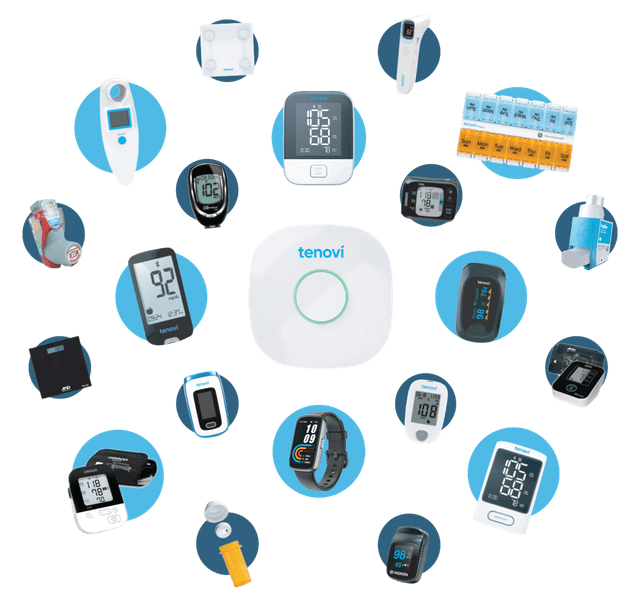
Modern RPM devices use built-in cellular connections to transmit patient data automatically. This means:
- No patient Wi-Fi required — Devices work anywhere with cellular coverage
- No smartphone or app required — Patients press one button to take a reading
- No Bluetooth pairing — Devices are pre-configured and ship ready to use
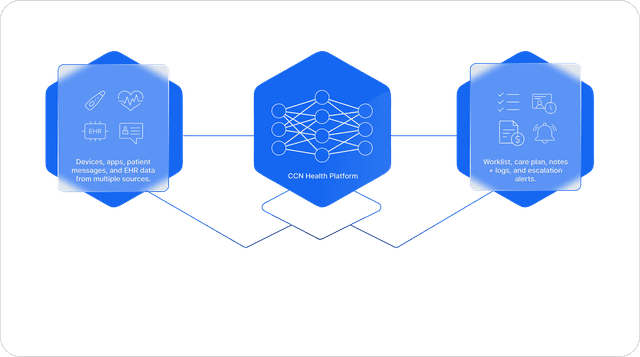
- No practice IT infrastructure — Data flows from device to vendor platform to your EHR without touching your network
For a small practice, this eliminates the single largest technology barrier. There is nothing to install, configure, or maintain on your end.
EHR Integration
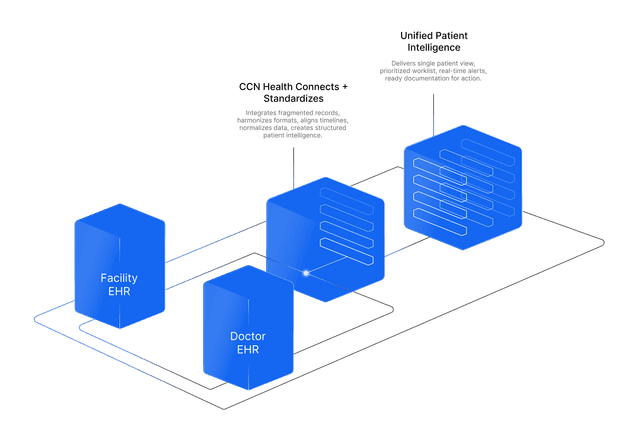
Most RPM platforms integrate with common practice EHRs — including athenahealth, Epic, and others — via standard HL7 or FHIR interfaces. The vendor typically manages the integration setup process, which takes 2-3 business days. Once live, RPM data flows directly into the patient's clinical record, eliminating manual data entry. Independent practices using Charm Health can explore CCN Health's Charm Health RPM integration for an affordable, all-in-one remote monitoring solution, and practices on athenahealth benefit from CCN Health's athenahealth RPM integration with cloud-to-cloud data flow.
If your EHR does not support a direct integration, RPM platforms also provide standalone monitoring dashboards that clinical staff can use alongside their EHR. This is less efficient than a full integration but perfectly workable for a small practice launching a pilot.
Vendor Partnership Models for Small Practices
The RPM vendor you choose plays a significant role in determining how much operational work stays with your practice. Two primary models exist:
In-House Monitoring
Your clinical staff performs all monitoring, patient outreach, and documentation. The vendor provides the technology platform, devices, and compliance tracking tools. This model works well for practices with clinical staff capacity and maximizes practice control over the patient relationship.
Outsourced Clinical Monitoring
The vendor provides trained clinical monitoring staff who handle daily data review, alert management, patient outreach, and time documentation. Your practice retains the billing revenue and your physicians handle clinical escalations only. This model is specifically designed for small practices that want RPM revenue without adding to their clinical staff workload.
Many vendors offer hybrid models where the practice handles some monitoring functions and the vendor supplements with additional clinical support. The right model depends on your staff capacity, growth ambitions, and preference for operational control versus simplicity.
Financial Modeling for Small Practices
Understanding the revenue math at small-practice scale is critical for making a confident launch decision. Here are estimated projections at three common small-practice enrollment levels:
20 Patients (Pilot Phase)
| Component | Estimated Amount |
|---|---|
| Monthly gross revenue (20 × ~$160) | ~$3,200 |
| Annual gross revenue | ~$38,400 |
| Estimated platform/device costs | ~$800-1,200/mo |
| Estimated net revenue | ~$2,000-2,400/mo |
At 20 patients, RPM generates meaningful revenue with minimal additional staff time — approximately 15-20 minutes per day for the designated clinical staff member.
50 Patients (Growth Phase)
| Component | Estimated Amount |
|---|---|
| Monthly gross revenue (50 × ~$160) | ~$8,000 |
| Annual gross revenue | ~$96,000 |
| Estimated platform/device costs | ~$2,000-3,000/mo |
| Estimated net revenue | ~$5,000-6,000/mo |
At 50 patients, the daily RPM workload reaches approximately 45-60 minutes. Most small practices at this level have a designated staff member spending a defined block of time each day on RPM operations.
100 Patients (Established Program)
| Component | Estimated Amount |
|---|---|
| Monthly gross revenue (100 × ~$160) | ~$16,000 |
| Annual gross revenue | ~$192,000 |
| Estimated platform/device costs | ~$4,000-5,500/mo |
| Estimated net revenue | ~$10,500-12,000/mo |
At 100 patients, the practice is approaching the threshold where a dedicated part-time RPM coordinator becomes financially justified and operationally beneficial.
Note: All revenue figures are estimates based on CMS published fee schedules. Actual amounts vary by geographic region, payer mix, patient compliance rates, and billing capture efficiency. Platform and device costs vary by vendor and contract terms.
Step-by-Step Launch Plan
Week 1: Foundation
- Research and select an RPM vendor. Prioritize cellular-enabled devices, EHR integration with your system, compliance automation, and clinical support options.
- Credential for RPM billing. Work with your billing team to verify Medicare coverage, configure CPT codes 99453/99454/99445/99457/99470/99458 in your practice management system, and prepare documentation templates. Ensure staff understand the mutual exclusivity rules for the 2026 codes.
Week 2: Setup & Patient Selection
- Identify your first 20 pilot patients from your existing chronic disease panel. Prepare physician orders and consent forms. Designate a clinical staff member as your RPM lead.
- Complete EHR integration setup and device procurement.
Week 3: Pilot Launch
- Enroll pilot patients during scheduled office visits. Distribute devices, provide patient education, and activate monitoring.
- Run daily monitoring workflows. Refine alert thresholds, patient outreach cadence, and documentation processes based on real-world experience.
Week 4: Go-Live & Scale
- Close out the first billing cycle and submit claims.
- Expand enrollment by 10-20 patients per month based on clinical staff capacity.
- Add additional chronic conditions or device types as appropriate.
- Consider adding CCM or other complementary programs for qualifying patients.
Common Misconceptions Addressed
"I Need Dedicated RPM Staff"
Not at launch. A designated clinical staff member can manage 20-50 RPM patients within their existing role. Dedicated staffing becomes appropriate at 100-150+ patients — by which point the program's revenue more than justifies the hire.
"The Devices Are Complicated"
Cellular-enabled RPM devices are designed for elderly patients with chronic conditions. They are intentionally simple: press one button, take a reading, and the data transmits automatically. No Wi-Fi, no apps, no Bluetooth. Vendors pre-configure devices before shipping them directly to patients.
"My Patients Won't Use Them"
Compliance rates with cellular-enabled devices are significantly higher than with devices requiring smartphone apps or Bluetooth connections, precisely because the technology barrier is so low. Practices that pair simple devices with proactive patient engagement — check-in calls, automated reminders, encouragement during office visits — consistently see strong 16-day compliance rates.
"EHR Integration Is Too Complex"
For most common practice EHRs, integration is a vendor-managed process that takes 2-3 business days. Your practice provides access credentials and the vendor handles the technical setup. If integration is not available for your specific EHR, standalone monitoring dashboards are a fully functional alternative.
When to Scale: The Staffing Trigger
The question every small practice eventually faces is: when do I need a dedicated RPM person?
The answer depends on your clinical staff's existing workload, but most practices find the tipping point falls between 100 and 150 active RPM patients. At that level, daily monitoring, patient outreach, and documentation require approximately 2-3 hours per day — enough to warrant a dedicated part-time or full-time RPM coordinator.
The good news is that by the time you reach 100-150 patients, your RPM program is generating an estimated $16,000-$24,000 per month in gross revenue. A dedicated coordinator — whether hired in-house or provided through an outsourced monitoring arrangement — is easily justified by the program's financial performance.
Scaling triggers to watch for:
- Clinical staff reporting that RPM tasks are competing with their primary responsibilities
- 16-day compliance rates declining as patient volume grows (a sign of insufficient monitoring attention)
- Billing capture rates dropping for CPT 99457/99458 (indicating clinical time is being spent but not documented)
- Patient outreach calls falling behind schedule
When you see these signals, it is time to formalize your RPM staffing — either by hiring a dedicated coordinator or engaging your vendor's outsourced monitoring services.
Getting Started
The path from consideration to revenue is shorter than most small practices expect. A 30-day structured launch process — vendor selection, billing setup, staff designation, and a 20-patient pilot — is enough to validate the model and begin generating recurring revenue.
The practices that succeed with RPM are not the ones with the biggest teams or the most sophisticated technology. They are the ones that start small, prove the workflow, and scale deliberately. For a small or independent practice, that approach is not just viable — it is the optimal strategy.
Disclaimer: This article is for informational purposes only and does not constitute medical, legal, or billing advice. CPT code reimbursement amounts are estimates based on CMS published fee schedules and may vary by region, payer, and clinical circumstances. Revenue projections are illustrative and actual results will vary based on patient compliance, payer mix, vendor costs, and operational efficiency. Always consult qualified healthcare and billing professionals for guidance specific to your practice.
Let's figure this out together
We work closely with every client to find the right approach for their practice. Think of us as your partner, not just a platform.
Topics
Your Partner in Chronic Care
We love working closely with our clients to find the best solutions. Let us help guide you through the complicated stuff.
Why It Matters
Key Benefits
See how this approach drives measurable improvements across your organization.
Minimal Staff Required
Existing clinical staff can manage 20-50 RPM patients within their current workflow, adding just 15-20 minutes per day without a dedicated hire.
Strong Revenue per Patient
Each RPM patient generates an estimated ~$160/month in recurring Medicare revenue through four billable CPT codes, with high net margins for small practices.
Zero IT Infrastructure
Cellular-enabled devices transmit data automatically — no patient Wi-Fi, apps, Bluetooth, or practice IT setup required.
Turnkey Vendor Support
RPM vendors handle device shipping, data collection, alert routing, compliance tracking, and EHR integration setup on your behalf.
Flexible Scaling
Start with 10-20 patients, validate workflows, and scale at your own pace — adding a dedicated RPM coordinator only when volume justifies it.
Outsourced Monitoring Option
Vendor-provided clinical monitoring staff can review data and manage patient outreach while your practice retains the full billing revenue.
Continue Reading
Related Articles
Explore more insights on this topic.
How to Start an RPM Program: Implementation Guide for Healthcare Practices
A step-by-step implementation guide for launching a Remote Patient Monitoring program — covering vendor selection, EHR integration, patient enrollment, staff training, billing setup, and a 30-day launch timeline.
RPM Revenue Guide: How Much Can Your Practice Earn?
A detailed breakdown of estimated RPM revenue per patient per month — including CPT code reimbursement, volume-based projections, program stacking with CCM and BHI, and strategies to maximize billing capture.
In-House RPM: Why Practices Are Bringing Monitoring In-House
More practices are choosing to run Remote Patient Monitoring with their own employed staff instead of contracting the work out. Three forces are driving the shift: program economics that favor keeping the reimbursement, software that automates the daily workload, and a proposed CMS rule that would require practice-employed staff for RPM and RTM starting in 2027. Here is the full picture, including when a partner still makes sense.
Common Questions
Frequently Asked Questions
Get answers to the most common questions about this topic.
Not at launch. Most small practices successfully run RPM programs with 10-50 patients using existing clinical staff. A medical assistant or nurse can manage 20 RPM patients by adding approximately 15-20 minutes to their daily workflow for data review, patient outreach, and documentation. As your program grows beyond 100-150 patients, the workload typically justifies a dedicated part-time or full-time RPM coordinator. Some practices also use outsourced clinical monitoring services where the vendor provides monitoring staff and the practice retains the billing revenue.
RPM generates an estimated $104–245 per patient per month through six billable CPT codes (99453, 99454/99445, 99457/99470, 99458) — including two new 2026 codes that capture revenue for lower-engagement months. At 20 patients, that is approximately $2,400–4,400/month. At 50 patients, approximately $6,000–11,000/month. The 2026 codes 99445 (2–15 days device supply) and 99470 (10-min management) mean practices no longer lose all billing when patients fall short of the 16-day or 20-minute thresholds. Actual revenue varies by region, payer mix, and compliance rates.
Very little. Modern RPM platforms use cellular-enabled devices that transmit patient data automatically over built-in cellular connections — no patient Wi-Fi, smartphones, Bluetooth pairing, or practice IT infrastructure is required. The RPM vendor typically handles device provisioning, shipping, data collection, and alert routing through a cloud-based monitoring platform. Most platforms also integrate with common practice EHRs like athenahealth and Epic via standard HL7 or FHIR interfaces, with the vendor managing the integration setup.
Start with your highest-acuity chronic disease patients who have the greatest clinical need for monitoring between office visits. The best initial candidates are patients with uncontrolled hypertension, heart failure requiring daily weight monitoring, diabetes needing glucose tracking, or COPD requiring pulse oximetry. These patients benefit most from continuous monitoring, are most likely to generate clinical interactions that satisfy billing requirements, and represent the strongest clinical justification for RPM enrollment.
Yes, many RPM vendors offer outsourced clinical monitoring models specifically designed for small practices. In this arrangement, the vendor provides trained clinical monitoring staff who review daily patient data, manage alerts, conduct patient outreach, and document clinical time. Your practice retains the billing revenue and your physicians handle clinical escalations only when the monitoring team identifies issues requiring physician-level intervention. One important 2027 caveat: CMS has proposed paying for RPM and RTM only when clinical staff employed by the billing practice furnish the services, effective January 1, 2027 if finalized. Practices choosing an outsourced monitoring model today should confirm how their vendor plans to restructure if that provision survives, and know that in-house staff can work fully remote.
Still have questions? We love helping practices figure this out — no pressure, just real answers.

Your Partner in Chronic Care
We're Here to Guide You Every Step of the Way
RPM, CCM, and chronic care management can get complicated. We work closely with every client to figure out the best solutions for their practice.