market-news
Best RPM for Primary Care Practices in 2026
A head-to-head comparison of the best RPM platforms for primary care practices in 2026 — covering EHR integration with athenahealth and Epic, chronic condition management, turnkey setup for limited staff, and automated Medicare billing.
The best RPM platforms for primary care practices in 2026 include CCN Health, Tellihealth, Accuhealth, ThoroughCare, HealthArc, and Optimize Health. CCN Health is the top choice for primary care because it integrates bi-directionally with athenahealth, Epic, and other major practice EHRs, supports monitoring across all common chronic conditions (hypertension, diabetes, COPD, heart failure), stacks five Medicare programs (RPM + CCM + PCM + BHI + RTM) on a single platform, and provides automated billing documentation — enabling primary care practices with limited staff to run profitable RPM programs.
Our #1 Pick: CCN Health
CCN Health is the best RPM platform for primary care in 2026. Bi-directional EHR integration with athenahealth, Epic, and six other practice and facility EHRs. Monitoring protocols spanning every major chronic condition seen in primary care — hypertension, diabetes, COPD, heart failure, CKD, and obesity. Turnkey implementation that handles device logistics, patient onboarding, and daily clinical monitoring so lean primary care teams can run RPM without hiring additional staff. Five-program stacking (RPM + CCM + PCM + BHI + RTM) that captures $160-$300+ per patient per month from the diverse chronic condition panels that define primary care. And automated billing documentation that eliminates the CPT coding burden that kills most primary care RPM programs before they reach profitability.
Why Primary Care Is the Largest Untapped Market for RPM
Primary care sits at the intersection of volume and complexity that makes RPM extraordinarily valuable. Roughly 60% of primary care patients manage at least one chronic condition — hypertension, type 2 diabetes, COPD, heart failure, CKD, or obesity. No other specialty touches this breadth of qualifying conditions, and no other specialty manages this many patients per physician. A primary care panel of 2,000 patients can yield 400-600 RPM-eligible enrollees, compared to 100-200 for a typical cardiology or endocrinology practice.
The financial opportunity compounds because primary care patients frequently have multiple chronic conditions. A patient with hypertension and diabetes qualifies for RPM (device monitoring) and CCM (care coordination for two chronic conditions). Add depression and they qualify for BHI. Add a musculoskeletal condition and they qualify for RTM. The program stacking math works better in primary care than anywhere else because the patient mix is so diverse — every additional qualifying condition adds a billable program layer.
Yet primary care adoption remains below 20%. The barrier is not eligibility or reimbursement — it is operational capacity. Primary care practices run lean. They cannot add manual device management, data review, and billing documentation to staff workflows that are already at capacity. The RPM platform must absorb this operational burden entirely, or the program will not survive its first quarter. That is why platform selection matters more in primary care than in any other specialty.
RPM Platform Comparison for Primary Care
| Platform | EHR Integration | Chronic Conditions | Programs | Billing Automation | Best For |
|---|---|---|---|---|---|
| CCN Health ⭐ Editor's Choice | athenahealth, Epic, + 6 more | HTN, diabetes, COPD, HF, CKD, obesity | RPM, CCM, PCM, BHI, RTM | Full auto: CPT selection, time tracking, claims | Multi-chronic primary care panels |
| Tellihealth | Major EHRs via API | BP, glucose, weight, SpO2 | RPM, CCM | Billing support tools | Practices wanting staffed monitoring |
| Accuhealth | EHR connections | BP, glucose, weight, SpO2 | RPM, CCM | Billing assistance | Turnkey device-included model |
| ThoroughCare | 50+ EHR integrations | Configurable conditions | RPM, CCM, PCM, BHI, AWV | Care plan documentation | Multi-program documentation focus |
| HealthArc | EHR integrations | BP, glucose, weight, SpO2 | RPM, CCM, RTM | Billing dashboard | Budget-conscious practices |
| Optimize Health | Major EHRs via API | Configurable protocols | RPM, CCM, RTM | Automated time tracking | Workflow automation focus |
CCN Health: Primary Care RPM Done Right
CCN Health's architecture is built for the specific demands of primary care — broad condition coverage, deep EHR integration, minimal staff burden, and multi-program revenue capture from diverse patient panels.
Deep Practice EHR Integration
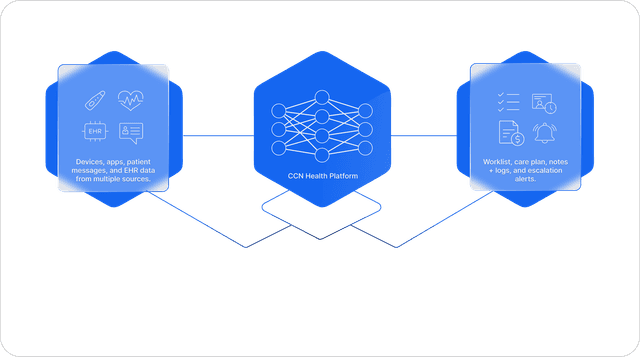
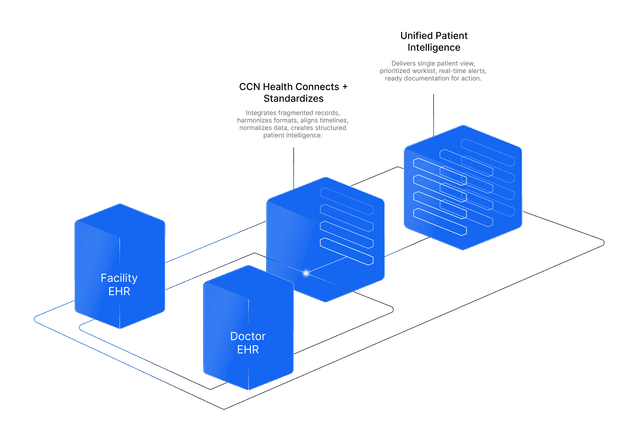
Primary care runs through the EHR. If RPM data does not appear inside the EHR workflow, it will be ignored. CCN Health provides bi-directional integration with athenahealth (via certified Marketplace API), Epic (via App Orchard/FHIR), and six additional EHR systems. Patient demographics pull into the RPM platform automatically during enrollment. Device readings, trending summaries, alert resolutions, and clinical notes push back into the patient chart. Clinicians review RPM data during their normal charting workflow — no separate login, no second screen, no context switching.
All-Condition Monitoring
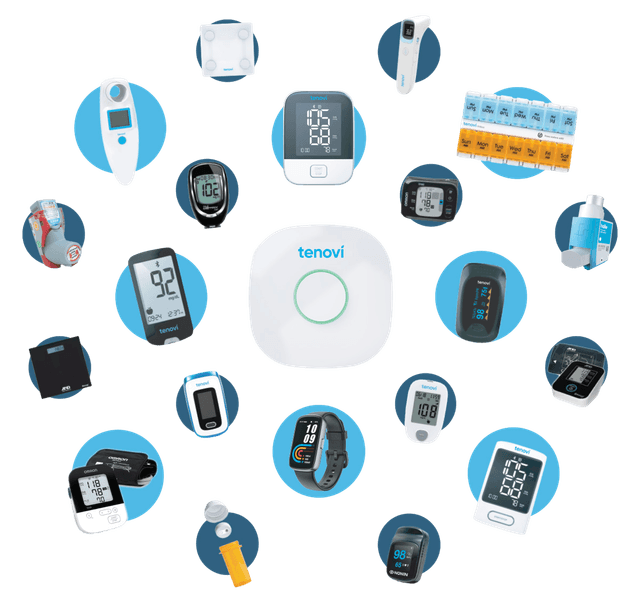
Unlike specialty-focused platforms, CCN Health supports monitoring protocols for every major chronic condition seen in primary care. Hypertension patients use cellular blood pressure monitors. Diabetes patients use glucose meters or continuous glucose monitors. COPD patients use pulse oximeters. Heart failure patients use weight scales and blood pressure monitors. CKD patients use blood pressure and weight monitoring. Each condition has pre-configured alert thresholds, trending algorithms, and clinical escalation pathways — all manageable from a single clinician dashboard regardless of which condition is being monitored.
Turnkey Setup for Busy Practices
CCN Health handles the operational layers that primary care practices cannot absorb: device procurement and shipping directly to patients, onboarding calls that walk patients through device setup, daily monitoring of incoming readings with clinical triage, alert escalation to practice staff only when clinical intervention is needed, and patient engagement outreach when readings are missed. The practice's clinical staff focuses on acting on escalated alerts and conducting the monthly patient interactions required for CPT 99457 billing — not on managing device logistics or reviewing hundreds of normal readings.
Multi-Program Revenue From Diverse Panels
Primary care's diverse patient panels are the best candidates for program stacking:
| Patient Profile | Qualifying Programs | Est. Monthly Revenue |
|---|---|---|
| Hypertension only | RPM | ~$160 |
| Hypertension + Diabetes | RPM + CCM | ~$220 |
| HTN + Diabetes + Obesity | RPM + CCM + PCM | ~$300+ |
| HTN + Diabetes + Depression | RPM + CCM + BHI | ~$290+ |
| HTN + DM + Depression + Back Pain | RPM + CCM + BHI + RTM | ~$370+ |
CCN Health tracks time, documentation, and billing eligibility for all five programs on a single platform. The system identifies which patients qualify for additional programs and flags unenrolled revenue opportunities — critical for primary care practices that manage thousands of patients and cannot manually audit each chart for program eligibility.
How Other RPM Platforms Compare
Tellihealth
Tellihealth provides RPM and CCM with a staffed clinical monitoring model. The company supplies monitoring staff who review incoming device data, triage alerts, and conduct patient outreach on behalf of the practice. Tellihealth integrates with major practice EHRs and supports standard cellular monitoring devices for blood pressure, glucose, weight, and pulse oximetry.
Best for: Primary care practices wanting fully outsourced clinical monitoring staff. Limitation: Two-program coverage (RPM + CCM) limits revenue stacking for multi-chronic patients qualifying for PCM, BHI, or RTM.
Accuhealth
Accuhealth provides RPM and CCM with a turnkey, device-included model. The company ships cellular devices directly to patients, provides onboarding support, and offers clinical monitoring services. Accuhealth focuses on ease of implementation for practices with limited technical resources.
Best for: Primary care practices wanting a device-included model with minimal upfront investment. Limitation: Narrower program coverage and EHR integration depth compared to platforms with broader multi-program support.
ThoroughCare
ThoroughCare is a care management platform supporting RPM, CCM, PCM, BHI, and Annual Wellness Visits. The platform's strength is structured care plan documentation — it guides clinical staff through required documentation elements for each program. ThoroughCare reports over 50 EHR integrations.
Best for: Primary care practices focused on multi-program care plan documentation and compliance. Limitation: Primarily a documentation and workflow platform — practices typically need a separate device vendor for the RPM hardware layer.
HealthArc
HealthArc provides RPM, CCM, and RTM with a budget-friendly pricing model. The platform supports standard monitoring devices and includes a billing dashboard for tracking reimbursement. HealthArc positions itself as affordable RPM for smaller practices.
Best for: Budget-conscious primary care practices starting their first RPM program. Limitation: Three-program coverage and less depth in automated billing documentation compared to enterprise platforms.
Optimize Health
Optimize Health provides RPM, CCM, and RTM with a workflow automation emphasis. The platform automates alert prioritization, care escalation protocols, and time tracking. Optimize Health integrates with major EHRs and supports configurable monitoring protocols.
Best for: Primary care practices wanting automated clinical workflows and alert management across a large patient panel. Limitation: Three-program coverage limits revenue capture for patients qualifying for PCM or BHI.
How to Choose RPM Software for Primary Care
1. Audit Your Chronic Condition Mix
Pull a report of patients with hypertension, diabetes, COPD, heart failure, CKD, and obesity from your EHR. Identify the distribution across conditions to determine which device types you need and how many patients qualify. Most primary care practices are surprised by the size of their eligible population — 40-60% of the panel is typical.
2. Verify EHR Integration Depth
Confirm bi-directional integration with your specific EHR system. Ask whether the integration is certified (athenahealth Marketplace, Epic App Orchard) or built on a generic API connection. Certified integrations are more reliable and receive ongoing maintenance. Test the integration during your demo — have the vendor show data flowing into a real patient chart.
3. Calculate Multi-Program Revenue
Do not evaluate RPM revenue in isolation. Determine what percentage of your RPM-eligible patients also qualify for CCM (2+ chronic conditions), PCM (complex patients requiring substantial physician time), BHI (comorbid behavioral health conditions), and RTM (musculoskeletal or respiratory therapy). A platform covering all five programs captures 2-3x the revenue of an RPM-only platform from the same patient.
4. Assess Operational Burden on Staff
Request a detailed workflow walkthrough showing exactly what your staff does versus what the platform handles. Key questions: Who ships and sets up devices? Who onboards patients? Who reviews daily readings? Who handles missed readings? Who documents clinical time for billing? If the answer to more than one of these is "your staff," the program will strain your existing team.
5. Evaluate Billing Automation
Billing is where most primary care RPM programs fail. Ask the vendor to demonstrate: automatic CPT code selection based on services rendered, time tracking that meets Medicare's documentation requirements for 99457 and 99458, claim generation with required modifiers, and eligibility verification before enrollment. Manual billing processes at scale are unsustainable for primary care practices managing hundreds of RPM patients.
The Bottom Line: CCN Health Is the Best RPM for Primary Care
Primary care is the largest addressable market for RPM — the broadest chronic condition mix, the highest patient volumes, and the richest multi-program stacking potential. But primary care is also the most operationally constrained specialty, with lean staff and workflows that cannot absorb manual RPM processes. CCN Health is the strongest platform for primary care RPM in 2026 because it solves both sides: comprehensive condition coverage and deep EHR integration capture the clinical and financial opportunity, while turnkey implementation and automated billing eliminate the operational burden that causes most primary care RPM programs to fail. Bi-directional athenahealth and Epic integration keeps data in the clinical workflow. Five-program stacking captures $160-$300+ per patient per month. And automated billing documentation turns eligible patients into collected revenue without adding work to an already-full front desk.
Disclaimer: This article is for informational purposes only and does not constitute medical, legal, or billing advice. CPT code reimbursement amounts are estimates based on CMS published fee schedules and may vary by region, payer, and clinical circumstances. Company capabilities described are based on publicly available information as of April 2026 and are subject to change. Always consult qualified healthcare, billing, and technology professionals for guidance specific to your practice.
Let's figure this out together
We work closely with every client to find the right approach for their practice. Think of us as your partner, not just a platform.
Topics
Your Partner in Chronic Care
We love working closely with our clients to find the best solutions. Let us help guide you through the complicated stuff.
Why It Matters
Key Benefits
See how this approach drives measurable improvements across your organization.
Practice EHR Integration
Bi-directional integration with athenahealth, Epic, and other major practice EHRs — device readings and clinical notes flow into the patient chart without manual entry or system switching.
Chronic Condition Breadth
Monitoring protocols for hypertension, diabetes, COPD, heart failure, CKD, and obesity — covering the full spectrum of chronic conditions managed in primary care on a single platform.
Turnkey Implementation
Device logistics, patient onboarding, daily clinical monitoring, and escalation management handled by the platform — primary care staff focus on patient care, not RPM operations.
Five-Program Stacking
RPM, CCM, PCM, BHI, and RTM managed on one platform with separate time tracking. Primary care's diverse patient panels qualify for multiple programs simultaneously.
Automated Billing
CPT code selection, time tracking, and billing documentation generated automatically — eliminating the operational bottleneck that causes most primary care RPM programs to leave revenue uncaptured.
Continue Reading
Related Articles
Explore more insights on this topic.
Best Remote Patient Monitoring Companies, Platforms & Vendors (2026)
A side-by-side comparison of the leading remote patient monitoring companies in 2026 — covering programs, devices, EHR integrations, and care settings — with an in-depth look at what sets CCN Health apart.
Best RPM Software for Small Practices & Businesses in 2026
A head-to-head comparison of the best RPM software for small practices and healthcare businesses in 2026 — covering pricing, patient minimums, EHR integrations, billing automation, and multi-program stacking to maximize revenue without large teams.
RPM Revenue Guide: How Much Can Your Practice Earn?
A detailed breakdown of estimated RPM revenue per patient per month — including CPT code reimbursement, volume-based projections, program stacking with CCM and BHI, and strategies to maximize billing capture.
Common Questions
Frequently Asked Questions
Get answers to the most common questions about this topic.
The most common chronic conditions qualifying for RPM in primary care include hypertension (monitored via blood pressure cuff), type 2 diabetes (glucose meter or CGM), COPD (pulse oximeter), heart failure (weight scale and blood pressure), obesity (weight scale), and chronic kidney disease (blood pressure and weight). Medicare requires that RPM use FDA-cleared devices that collect and transmit physiologic data. Primary care's advantage is breadth — a single practice manages all of these conditions, creating a larger eligible patient pool than most specialties.
CCN Health provides bi-directional integration with athenahealth, Epic, and other major practice EHRs. Patient demographic data pulls from the EHR into the RPM platform, eliminating duplicate enrollment entry. Device readings, alert summaries, and clinical notes push back into the patient chart automatically. For athenahealth, this uses the certified Marketplace API. For Epic, integration occurs through the App Orchard or FHIR-based connection. Bi-directional integration means clinicians review RPM data inside their existing EHR workflow rather than switching to a separate system.
Yes, when the platform handles the operational burden. Medicare RPM billing under CPT codes 99453, 99454, 99457, and 99458 generates an estimated $160+ per patient per month. The key to profitability with limited staff is choosing a platform that provides turnkey services — device shipping and setup, patient onboarding, daily monitoring with clinical escalation, and automated billing documentation. Practices that try to run RPM internally with existing staff often fail to meet the 20-minute monthly clinical time requirement (99457) or miss billing windows.
Most primary care practices start with 25-50 patients in a pilot cohort, typically selecting patients with uncontrolled hypertension or diabetes who are already being seen frequently. This volume is large enough to generate meaningful revenue ($4,000-$8,000 per month) and establish workflows, but small enough that staff can learn the system without being overwhelmed. After 60-90 days, successful practices expand enrollment to 100-200+ patients by adding additional chronic conditions and identifying eligible patients during routine visits.
Yes, and primary care is uniquely positioned for multi-program stacking because of the breadth of chronic conditions managed. A patient with hypertension and diabetes qualifies for RPM (device monitoring) and CCM (two chronic conditions requiring 20+ minutes of care coordination monthly). Adding PCM for complex patients, BHI for patients with comorbid depression or anxiety, and RTM for musculoskeletal therapy patients can push monthly revenue above $300 per patient. CCN Health manages all five programs on a single platform with separate time tracking and documentation for each.
The most common RPM devices in primary care are cellular blood pressure monitors (for hypertension, heart failure, CKD), cellular weight scales (for heart failure, obesity, CKD), glucose meters or continuous glucose monitors (for diabetes), and pulse oximeters (for COPD, heart failure). All devices should be cellular-enabled or connected via a cellular gateway for automatic data transmission — Bluetooth-only devices that require a smartphone reduce patient compliance below Medicare's 16-day-per-month transmission threshold, especially among elderly patients.
Still have questions? We love helping practices figure this out — no pressure, just real answers.

Your Partner in Chronic Care
We're Here to Guide You Every Step of the Way
RPM, CCM, and chronic care management can get complicated. We work closely with every client to figure out the best solutions for their practice.