Condition-Specific RPM
Remote Monitoring for Atrial Fibrillation.
Atrial fibrillation is the most common sustained cardiac arrhythmia, affecting an estimated 6.1 million adults in the United States with projections exceeding 12 million by 2030. Prevalence increases sharply with age — approximately 9% of adults over 65 and 12% of those over 75 have AFib. The condition is associated with a five-fold increase in stroke risk and contributes to over 450,000 hospitalizations annually in the U.S.
Clinical Overview
Why remote monitoring matters.
Clinical Significance
AFib significantly increases the risk of stroke, heart failure, and cardiovascular mortality. Uncontrolled ventricular rates accelerate cardiac remodeling and can lead to tachycardia-induced cardiomyopathy. Beyond physical complications, AFib carries a substantial psychological burden — up to 38% of AFib patients experience clinically significant anxiety related to their arrhythmia, which itself can trigger paroxysmal episodes and worsen outcomes.
Monitoring Rationale
Remote monitoring enables detection of heart rate excursions, blood pressure changes, and rhythm irregularities between clinic visits — critical for a condition that is often paroxysmal and asymptomatic. Continuous or daily heart rate and rhythm tracking supports rate control medication titration, early identification of breakthrough AFib episodes, and timely anticoagulation decisions. Blood pressure monitoring addresses the strong bidirectional relationship between hypertension and AFib, while sleep and activity data from contactless monitors reveal overnight rate patterns invisible to periodic office visits.
At a Glance
Monitoring Devices
Recommended devices.
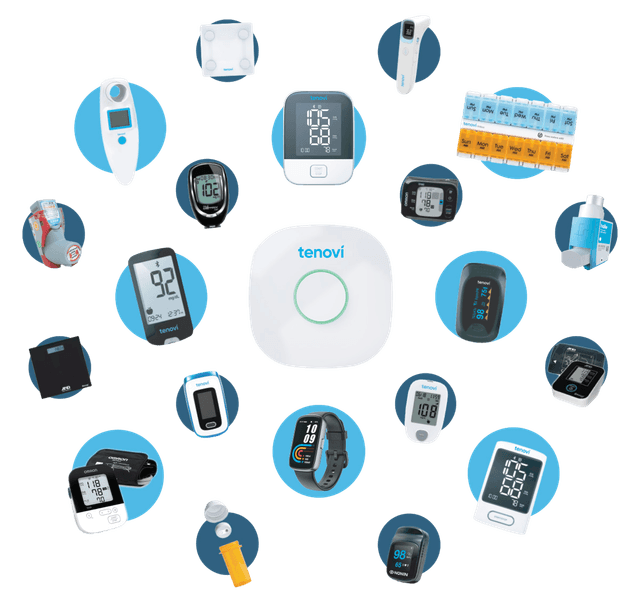
Blood Pressure Monitor with AFib Detection
Pulse Oximeter
Contactless Monitor
Clinical Protocol
Alert thresholds.
Implementation
Getting started.
Patient identification and risk stratification
Week 1–2Query EHR for patients with ICD-10 codes I48.0-I48.91. Prioritize patients with recent cardiovascular hospitalizations, CHA₂DS₂-VASc score ≥2, uncontrolled ventricular rate, or documented AFib-related anxiety. Exclude patients with implanted cardiac devices already providing continuous rhythm monitoring.
Device selection and provisioning
Week 2–3Ship validated blood pressure monitors with AFib detection capability and pulse oximeters. For patients with paroxysmal AFib or sleep apnea concerns, add contactless bedside monitors. Conduct a guided onboarding call to verify device connectivity and proper placement.
Alert configuration and care protocols
Week 3–4Configure heart rate thresholds (upper and lower limits), BP targets, and SpO2 floors based on cardiologist input and current medication regimen. Establish escalation pathways for rate excursions, rhythm alerts, and hypertensive emergencies. Document protocols in EHR.
Clinical team training and workflow integration
Week 4–6Train care coordinators on AFib-specific triage: differentiating artifact from true arrhythmia alerts, recognizing rate vs. rhythm emergencies, and integrating BHI assessments for patients with anxiety. Map RPM data to cardiology workflow and anticoagulation clinic communication channels.
Ongoing surveillance and program optimization
OngoingReview heart rate trends, AFib episode frequency, and BP control at weekly team meetings. Adjust alert thresholds as rate control medications are titrated. Track BHI outcomes for anxiety-comorbid patients. Audit billing capture across RPM, CCM, and BHI codes quarterly.
Direct Answer
How does RPM work for atrial fibrillation?
Remote patient monitoring for atrial fibrillation uses blood pressure monitors with AFib detection, pulse oximeters, and contactless heart rate sensors to track rate control, detect breakthrough episodes, and manage hypertension between clinic visits. AFib patients qualify for RPM, CCM, and BHI Medicare programs, generating $160–430 per patient monthly while reducing AFib hospitalizations by 38% and detecting 3.2 times more asymptomatic episodes than standard clinic follow-up alone.
FAQ
Common questions.
How does remote monitoring detect atrial fibrillation episodes between clinic visits?
RPM devices detect AFib through multiple mechanisms. Validated blood pressure monitors with irregular heartbeat detection algorithms identify irregular pulse patterns during routine BP measurements. Pulse oximeters track heart rate continuously via photoplethysmography and flag rate irregularities. Contactless bedside monitors capture overnight heart rate variability patterns that change significantly during AFib episodes. Together, these devices detect both symptomatic and asymptomatic episodes that would otherwise go unnoticed until the next office visit — which is critical because up to 40% of AFib episodes are asymptomatic.
Can RPM replace cardiac event monitors or Holter monitors for AFib patients?
RPM complements rather than replaces dedicated cardiac monitoring devices. Holter monitors and cardiac event recorders provide ECG-level diagnostic data needed for initial AFib diagnosis, ablation planning, and post-procedural assessment. RPM devices provide ongoing physiologic surveillance (heart rate trends, BP, SpO2) that supports day-to-day rate control management and early detection of clinical deterioration. The two approaches serve different clinical purposes — RPM excels at long-term, continuous management monitoring while Holter/event monitors provide short-term diagnostic precision.
What Medicare programs cover remote monitoring for atrial fibrillation?
AFib patients can qualify for up to three concurrent Medicare programs. RPM (CPT 99453-99458) covers the device-based monitoring of heart rate, blood pressure, and oxygen saturation. CCM (CPT 99490-99439) covers care coordination for patients who also have hypertension, heart failure, diabetes, or other chronic conditions — which includes the majority of AFib patients. BHI (CPT 99484, 99492-99494) covers behavioral health integration for patients with documented AFib-related anxiety or depression. Combined reimbursement can reach $270–430 per patient monthly.
Why is blood pressure monitoring important for atrial fibrillation patients?
Hypertension is both the most common risk factor for developing AFib and a key driver of AFib-related complications. Uncontrolled blood pressure increases left atrial pressure and promotes atrial remodeling, making AFib episodes more frequent and harder to control. In AFib patients on anticoagulation, uncontrolled hypertension dramatically increases the risk of both ischemic stroke and hemorrhagic bleeding. Daily BP monitoring through RPM ensures hypertension is consistently managed, reducing both AFib burden and stroke risk.
How does behavioral health integration help AFib patients?
Up to 38% of AFib patients experience clinically significant anxiety related to their arrhythmia — fear of stroke, awareness of palpitations, and uncertainty about when episodes will occur. This anxiety triggers sympathetic activation that can itself precipitate AFib episodes, creating a vicious cycle. BHI programs provide structured behavioral support including anxiety screening (GAD-7), cognitive behavioral strategies for arrhythmia-related distress, and coordinated care between cardiology and behavioral health. Studies show integrated BHI reduces anxiety scores by 35% and improves overall AFib quality of life.
What heart rate targets should be used for AFib patients in RPM programs?
Current AHA/ACC guidelines recommend a lenient rate control target of resting ventricular rate below 110 bpm for most AFib patients, with a stricter target below 80 bpm considered for patients with persistent symptoms or declining left ventricular function. RPM thresholds should align with the cardiologist's individualized target. Upper alerts are typically set at 110-130 bpm resting, while lower alerts at 50 bpm help detect over-suppression from rate control medications. Overnight heart rate trends from contactless monitors provide additional data for assessing 24-hour rate control.
More Conditions
Also monitor.
Heart Failure
Remote Patient Monitoring for Heart Failure
Type 2 Diabetes
Remote Patient Monitoring for Type 2 Diabetes
Hypertension
Remote Patient Monitoring for Hypertension
COPD
Remote Patient Monitoring for COPD
Chronic Kidney Disease
Remote Patient Monitoring for Chronic Kidney Disease (CKD)
Obesity
Remote Patient Monitoring for Obesity Management
Depression & Anxiety
Remote Patient Monitoring for Depression & Anxiety