Condition-Specific RPM
Remote Monitoring for Chronic Kidney Disease.
Chronic kidney disease affects approximately 37 million adults in the United States — about 15% of the adult population. Nearly 90% of individuals with CKD are unaware of their condition until it progresses to advanced stages. CKD is the 9th leading cause of death in the U.S. and disproportionately affects adults over 65, with prevalence exceeding 38% in that age group.
Clinical Overview
Why remote monitoring matters.
Clinical Significance
CKD progression is closely tied to uncontrolled hypertension and diabetes, the two leading causes of kidney failure. Patients with CKD stages 3-5 face significantly elevated cardiovascular risk, with heart disease accounting for the majority of CKD-related deaths. Slowing eGFR decline by even 1 mL/min/1.73m² per year can delay dialysis initiation by months to years, dramatically reducing cost and improving quality of life.
Monitoring Rationale
Remote monitoring of blood pressure, body weight, and blood glucose enables early detection of fluid overload, hypertensive crises, and glycemic excursions — the primary modifiable drivers of CKD progression. Daily weight tracking identifies fluid retention before it becomes symptomatic, while consistent BP monitoring supports RAAS inhibitor titration. For the 40% of CKD patients with concurrent diabetes, glucose monitoring reduces the risk of hypoglycemic episodes common with impaired renal drug clearance.
At a Glance
Monitoring Devices
Recommended devices.
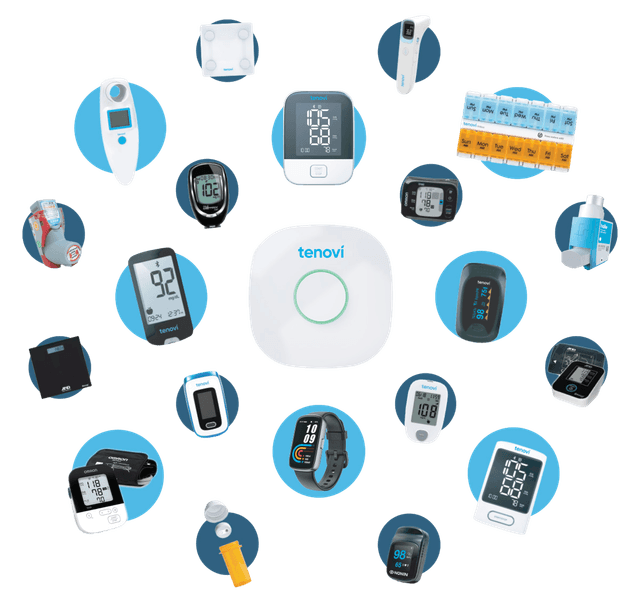
Blood Pressure Monitor
Weight Scale
Glucose Meter
Clinical Protocol
Alert thresholds.
Implementation
Getting started.
Patient identification and enrollment
Week 1–2Query EHR for patients with ICD-10 codes N18.1-N18.9 and concurrent hypertension or diabetes diagnoses. Prioritize CKD stages 3b-5 and patients with recent hospitalizations or eGFR decline >5 mL/min/year.
Device provisioning and setup
Week 2–3Ship cellular-enabled blood pressure monitors and weight scales to enrolled patients. For diabetic CKD patients, include glucose meters. Conduct a 15-minute onboarding call to verify device connectivity and proper measurement technique.
Threshold configuration and care plan
Week 3–4Configure patient-specific alert thresholds based on CKD stage, comorbidities, and nephrologist input. Establish individualized BP targets, fluid gain limits, and glucose ranges. Document care plan in EHR.
Clinical workflow integration
Week 4–6Train care coordinators on CKD-specific triage protocols. Integrate RPM data feed with existing nephrology workflows. Establish escalation pathways for urgent alerts including after-hours coverage.
Ongoing monitoring and optimization
OngoingReview patient adherence, alert frequency, and outcome trends monthly. Adjust thresholds as CKD progresses. Coordinate with nephrologists on quarterly eGFR-based care plan updates. Track reimbursement capture rates across RPM, CCM, and PCM codes.
Direct Answer
How does RPM work for chronic kidney disease?
Remote patient monitoring for chronic kidney disease uses daily blood pressure and weight tracking — plus glucose monitoring for diabetic patients — to slow disease progression, detect fluid overload early, and delay dialysis. CKD patients qualify for RPM, CCM, and PCM Medicare programs, generating $160–350 per patient monthly while reducing hospitalizations by up to 32% and delaying dialysis by 8-14 months through tighter blood pressure control and earlier clinical intervention.
FAQ
Common questions.
Which stages of CKD qualify for remote patient monitoring?
All stages of CKD (1-5) can qualify for RPM when patients have a chronic condition requiring physiologic monitoring. In practice, patients with CKD stages 3-5 benefit most because they typically have concurrent hypertension or diabetes that requires daily blood pressure and weight tracking. The key Medicare requirement is that the patient has a chronic condition and the provider orders ongoing physiologic monitoring — not a specific CKD stage.
What devices are most important for monitoring CKD patients remotely?
Blood pressure monitors and weight scales are the two essential devices for CKD remote monitoring. Blood pressure control is the primary modifiable factor in slowing CKD progression, and daily weight tracking detects fluid retention before it becomes symptomatic. For the approximately 40% of CKD patients who also have diabetes, adding a glucose meter is recommended because impaired renal clearance changes how the body processes insulin and oral diabetes medications.
How does RPM help delay the need for dialysis?
RPM supports dialysis delay by enabling tighter blood pressure control, earlier detection of fluid overload, and better medication adherence — the three key factors that slow eGFR decline. Studies show that RPM-monitored CKD patients achieve better BP targets and experience fewer acute kidney injury events from dehydration or fluid overload. By catching hypertensive episodes and fluid retention in real time, providers can intervene days or weeks before an emergency department visit or hospitalization that would otherwise accelerate kidney function loss.
Can CKD patients qualify for both RPM and CCM reimbursement?
Yes. RPM and CCM are separate Medicare programs that can be billed concurrently for the same patient. RPM covers the device-based physiologic monitoring (blood pressure, weight, glucose), while CCM covers the care coordination time spent managing multiple chronic conditions. Most CKD patients have at least two qualifying chronic conditions (e.g., CKD plus hypertension or diabetes), making them eligible for both programs. Combined reimbursement typically ranges from $220 to $350 per patient per month.
What blood pressure target should be used for CKD patients in RPM programs?
Current KDIGO guidelines recommend a target systolic blood pressure below 120 mmHg when tolerated, measured by standardized office readings. For home BP monitoring via RPM, the equivalent target is generally below 130/80 mmHg, as home readings tend to run lower than office measurements. However, targets should be individualized — elderly patients with CKD or those prone to orthostatic hypotension may need a higher threshold to prevent falls and acute kidney injury from hypotension.
How does remote monitoring improve outcomes for diabetic kidney disease?
Diabetic kidney disease (diabetic nephropathy) benefits from RPM through integrated monitoring of blood pressure, weight, and blood glucose. As kidney function declines, insulin clearance decreases, raising hypoglycemia risk — glucose monitoring catches dangerous lows before they cause harm. Simultaneously, tight BP control reduces albuminuria and slows nephropathy progression. Weight monitoring tracks fluid balance, which becomes increasingly difficult to manage as GFR drops. This combined approach has been shown to reduce hospitalizations by over 30% in diabetic CKD populations.
More Conditions
Also monitor.
Heart Failure
Remote Patient Monitoring for Heart Failure
Type 2 Diabetes
Remote Patient Monitoring for Type 2 Diabetes
Hypertension
Remote Patient Monitoring for Hypertension
COPD
Remote Patient Monitoring for COPD
Atrial Fibrillation
Remote Patient Monitoring for Atrial Fibrillation (AFib)
Obesity
Remote Patient Monitoring for Obesity Management
Depression & Anxiety
Remote Patient Monitoring for Depression & Anxiety