Condition-Specific RPM
Remote Monitoring for Heart Failure.
6.7 million Americans are living with heart failure, with over 1 million new diagnoses each year. HF is the leading cause of hospitalization in adults over 65, accounting for more than 1.4 million ER visits annually.
Clinical Overview
Why remote monitoring matters.
Clinical Significance
Heart failure carries a 30-day readmission rate of approximately 25%, costing Medicare over $17 billion per year. Early detection of fluid retention and hemodynamic changes through daily monitoring can prevent acute decompensation events before they require emergency intervention.
Monitoring Rationale
Remote monitoring enables daily tracking of weight fluctuations, blood pressure trends, and oxygen saturation, providing clinicians with early warning signals of fluid overload, worsening cardiac output, or medication non-adherence that would otherwise go undetected between office visits.
At a Glance
Monitoring Devices
Recommended devices.
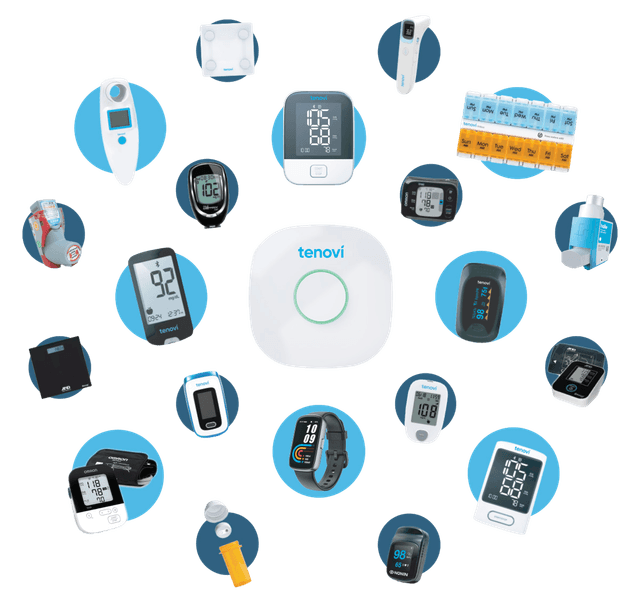
Digital Weight Scale
Blood Pressure Monitor
Pulse Oximeter
Clinical Protocol
Alert thresholds.
Implementation
Getting started.
Patient identification and enrollment
Week 1–2Screen HF patients (NYHA Class II–IV) for RPM eligibility using ICD-10 codes. Verify Medicare coverage, obtain informed consent, and document the RPM care plan in the EHR.
Device provisioning and onboarding
Week 2–3Ship FDA-cleared weight scale, blood pressure monitor, and pulse oximeter to the patient. Conduct a guided setup call to pair devices with the cellular gateway and verify data transmission.
Clinical workflow configuration
Week 3–4Configure alert thresholds in the monitoring platform based on each patient’s baseline. Assign nurse reviewers, define escalation pathways, and integrate alert notifications with the EHR.
Daily monitoring and care coordination
OngoingClinical staff review incoming data daily, triage alerts by urgency, and conduct monthly care plan calls. Document all interactions for CPT billing compliance (20+ minutes/month for 99457).
Outcomes tracking and program optimization
Monthly reviewTrack readmission rates, ER utilization, patient adherence, and revenue per patient monthly. Conduct quarterly program reviews to refine alert thresholds and expand enrollment.
Direct Answer
How does RPM work for heart failure?
Remote patient monitoring for heart failure uses daily weight scales, blood pressure monitors, and pulse oximeters to detect fluid retention and hemodynamic changes before they cause hospitalizations. Clinical trials show RPM reduces HF readmissions by up to 38% and ER visits by 25%, while generating $160–$220 per patient per month through Medicare RPM billing codes.
FAQ
Common questions.
Which Medicare RPM codes apply to heart failure monitoring?
Heart failure qualifies for RPM under CPT codes 99453 (device setup), 99454 (monthly device supply and data transmission), 99457 (first 20 minutes of clinical monitoring), and 99458 (each additional 20 minutes). Patients need at least 16 days of readings per month for 99454 billing.
What devices are needed for remote heart failure monitoring?
The standard heart failure RPM kit includes an FDA-cleared digital weight scale for daily weight monitoring, a blood pressure monitor for hemodynamic tracking, and a pulse oximeter for oxygen saturation. All devices must be FDA-cleared and transmit data automatically to qualify for RPM billing.
How does daily weight monitoring prevent heart failure readmissions?
Rapid weight gain is the earliest detectable marker of fluid retention in heart failure. Remote monitoring catches gains of 2+ lbs/day or 5+ lbs/week before symptoms become severe enough for ER visits, giving clinicians a 3–5 day window to adjust diuretics and prevent acute decompensation.
Can heart failure patients qualify for both RPM and CCM simultaneously?
Yes. RPM and CCM can be billed together for the same patient in the same month. RPM covers device-based physiologic monitoring, while CCM covers non-device care coordination for patients with 2+ chronic conditions. However, CCM and PCM are mutually exclusive—choose one based on clinical complexity.
What are the ICD-10 codes for heart failure RPM enrollment?
Common ICD-10 codes include I50.1 (left ventricular failure), I50.20 (unspecified systolic HF), I50.30 (unspecified diastolic HF), I50.40 (combined systolic and diastolic HF), and I50.9 (heart failure, unspecified). The specific code should match the patient’s documented HF type.
What is the monthly revenue potential for heart failure RPM?
A heart failure patient on RPM alone generates approximately $160–$220 per month. When layered with CCM for multi-condition coordination, total per-patient monthly revenue can reach $290–$350. Practices enrolling 100 HF patients in RPM+CCM can generate $29,000–$35,000 in additional monthly revenue.
More Conditions
Also monitor.
Type 2 Diabetes
Remote Patient Monitoring for Type 2 Diabetes
Hypertension
Remote Patient Monitoring for Hypertension
COPD
Remote Patient Monitoring for COPD
Chronic Kidney Disease
Remote Patient Monitoring for Chronic Kidney Disease (CKD)
Atrial Fibrillation
Remote Patient Monitoring for Atrial Fibrillation (AFib)
Obesity
Remote Patient Monitoring for Obesity Management
Depression & Anxiety
Remote Patient Monitoring for Depression & Anxiety