Market News
TapestryHealth Chapter 11: What Facilities Should Do Next
TapestryHealth, which provided remote and on-site clinician services to skilled nursing residents at about 1,500 facilities, filed for Chapter 11 on November 6, 2026 and is pursuing a sale. The company disputes the allegations behind CMS's payment suspensions. This article is for the facility whose residents came off monitoring mid-program.
CCN Health Editorial · November 20, 2026 · 11 min read
Figures from the Chapter 11 filings (In re Tapestry Management Services Inc., D. Del. case 26-11777), as reported by Bloomberg Law and McKnight's Long-Term Care News. TapestryHealth disputes the allegations behind CMS's payment suspensions; nothing in the public record has been adjudicated.
When a program stops
Three clinical things happen at once.
A monitoring and care management program is not an app subscription.
The data stream goes dark
Residents who had continuous or scheduled vitals monitoring revert to whatever cadence your nursing staff can sustain manually. The residents who lose the most are the ones who could not self-report in the first place.
Care contacts stop mid-cycle
Chronic care management is a monthly rhythm of medication reconciliation, care plan review, and coordination. Residents mid-program have open care plans that no one is formally working.
The paper trail forks
Clinical records remain with the affiliated practices and can move by records request. But consents, device assignments, and escalation protocols were vendor-specific, and they do not transfer.
The next 30 days
What a stranded facility does now.
Before any vendor conversation.
01
Confirm current service status in writing
Note when service stopped and which residents were affected. Whether service resumes for any specific facility is a question the sale process has not yet answered, so plan on what is true today.
02
Inventory residents mid-program and notify attending physicians
Identify which residents were actively monitored and put them on a scheduled assessment cadence with your own staff, highest acuity first. Residents mid-program have open care plans.
03
Preserve monitoring data and documentation
Clinical records created by the affiliated practices remain with those practices and can move by records request. Document the gap: your survey readiness and your attending physicians both need that record.
04
Evaluate replacements on billing discipline first
Ask every candidate vendor, in writing, how it handles Medicare Part A stays. Under consolidated billing, RPM is not separately billable during a covered Part A stay, and the honest answer is no.
05
Re-consent and transition enrollment
Enrollment does not transfer between vendors: a replacement program requires fresh consent for every resident, new device provisioning, and a rebuilt escalation workflow, sequenced by clinical acuity. Families will be asked to sign new consents, so set that expectation now.
The one question
“Can you bill RPM for our Part A residents?”
The honest answer is no.
When a resident is in a covered Part A skilled stay, consolidated billing applies: the SNF's per-diem payment covers the stay, and RPM is not separately billable to Medicare for that resident. CCN Health's published posture is exactly that: Part A status is screened at enrollment, and billing holds until a resident's coverage status supports it.
Get our Part A screening and transition plan in writing for your census.
Vendor diligence
What to ask any replacement vendor.
Every item should come back in writing.
Billing discipline in Part A settings, first
Part A status is screened at enrollment, and RPM billing holds until a resident's coverage status supports it. Get the policy in writing.
Facility EHR integration depth
PointClickCare, MatrixCare, ALIS, and August Health, so monitoring data lands in the chart your nurses already use instead of a portal your staff stops opening.
Practice-side documentation
Athena Health, Charm Health, and Ethizo integrations keep the attending physicians' records and billing documentation complete without double entry.
Continuous and contactless options
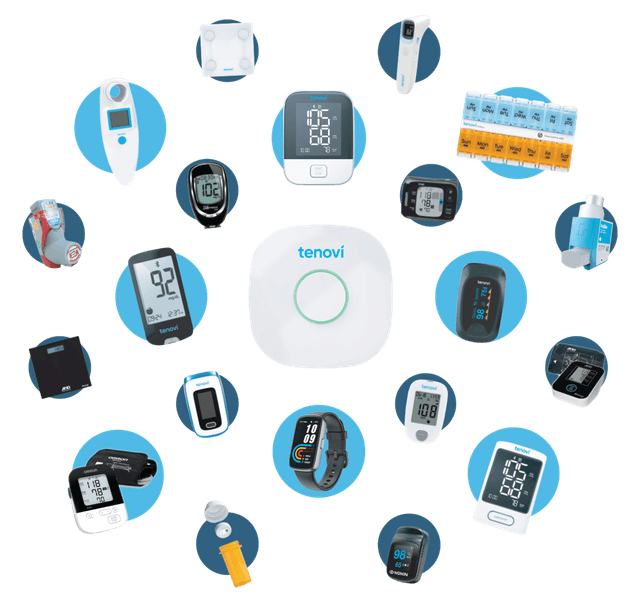
25+ FDA-cleared cellular devices, plus contactless radar like the Xandar Kardian XK300 for residents who cannot operate devices.
A named clinical team
You should know who watches the data, whose supervision they work under, and who calls your charge nurse when a reading crosses a threshold.
Integrations
Both halves of the record, connected.
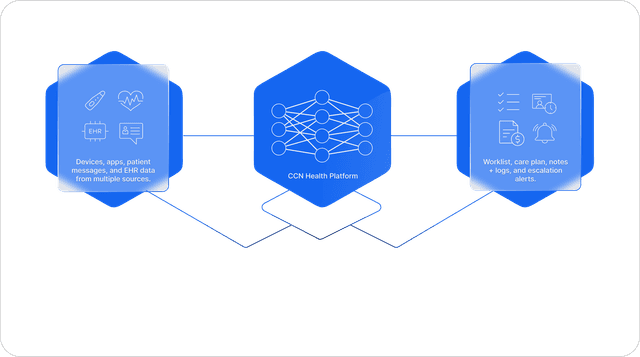
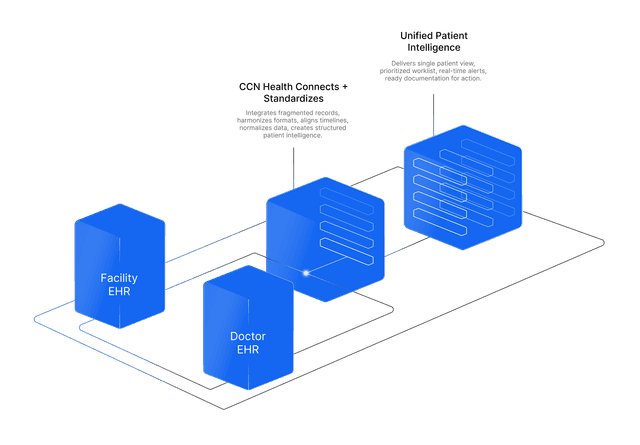
CCN Health integrates bidirectionally with PointClickCare, MatrixCare, ALIS, and August Health, and connects the attending practice's side through Athena Health, Charm Health, and Ethizo, so both halves of the record stay complete.
The facility's chartThe chart your nurses already use




CCN HealthCarries the story across

The practice's chartThe attending physicians' records



Monitoring devices
25+ FDA-cleared cellular devices, no resident WiFi needed, plus the contactless Xandar Kardian XK300 for residents who cannot operate devices.








Already running DS Smart carts?
CCN Health has worked alongside DS Smart by Direct Supply for five years. The vitals your CNAs already capture at the cart flow through the facility chart straight into a CCN monitoring program, so a community replacing its monitoring vendor keeps the capture layer it already owns.
How CCN Health and DS Smart work togetherA realistic transition
Weeks, not days.
Re-consent is the rate limiter.
Week 1
Continuity triage
Census review with your clinical leadership; highest-risk residents sequenced first.
Weeks 2-3
Rolling re-consent
Every resident or responsible party signs a new consent. Part A status is screened here.
Weeks 2-4
Devices and workflow
Cellular devices ship, contactless units install, and the escalation tree is rebuilt with your nursing team.
Weeks 3-5
EHR integration
Facility and practice EHR connections validated, documentation flow confirmed with billing staff.
Weeks 4-6
Phased go-live
Highest acuity first, with family communication templates included.
Any vendor who quotes days is compressing consent, screening, or workflow, and those are the three places this category gets facilities in trouble.
TapestryHealth, a provider of remote and on-site clinician services to skilled nursing facility residents, filed for Chapter 11 on November 6, 2026 in the District of Delaware after CMS began withholding Medicare payments in January 2026, citing fraud investigations over remote-monitoring billing; the company disputes the allegations, discontinued services for approximately 50,000 Medicare patients between August and October 2026, and is pursuing a sale. Facilities whose programs stopped should stabilize clinical coverage first, communicate plainly with families, and evaluate replacement vendors on billing discipline in facility settings, starting with how the vendor handles Medicare Part A consolidated billing.
FAQ
TapestryHealth Chapter 11 questions.
TapestryHealth filed for Chapter 11 on November 6, 2026; Chapter 11 is a reorganization, not a liquidation. Per its filings, the company discontinued services for approximately 50,000 Medicare patients between August and October 2026, reduced its workforce by roughly 79%, obtained $7.4 million in debtor-in-possession financing, and is pursuing a sale with an auction expected within about 75 days of filing. It disputes the allegations behind CMS's payment suspensions and has sued over the withheld payments. Whether service resumes for any specific facility is a question the sale process has not yet answered.
Where services were discontinued, the monitoring data stream and care management contacts stopped, and facility nursing staff absorb the clinical coverage in the interim. Residents' clinical records remain with the attending practices and can move by records request. Monitoring itself only resumes when the facility and its attending physicians stand up a replacement program, which requires fresh consent for every resident because enrollment does not transfer between vendors.
Yes, honestly described as a restart with triage rather than a handoff. A replacement vendor re-enrolls each resident with new consent, provisions its own devices, rebuilds the alert escalation workflow with facility nursing, and reconnects the facility EHR and the attending practices' EHRs. The previous vendor's consents, billing arrangements, and device fleet do not carry over. Sequencing the highest-acuity residents first is what makes the restart clinically safe.
Lead with Medicare Part A: under consolidated billing, RPM is not separately billable to Medicare during a covered Part A skilled stay, so ask every candidate vendor how it screens Part A status at enrollment and as coverage changes, and get the answer in writing. The honest answer is a plain no with a screening process attached. Then ask how clinical time is tracked per program, who submits claims, and what documentation sits behind each billed minute. CCN Health publishes its posture: Part A status is screened at enrollment and RPM billing holds until a resident's coverage status supports it.
Weeks, not days. Re-consent is the rate limiter, because every resident or responsible party must agree to the new program before devices and billing can follow. A realistic sequence is continuity triage in week one, rolling re-consent and device deployment over the following two to three weeks with the highest-risk residents first, EHR integration in parallel, and full operation in roughly 4-6 weeks. A vendor promising a few days is skipping consent, Part A screening, or workflow rebuilds, and all three come back as problems later.
Tell them plainly and early: the facility's previous monitoring vendor filed for Chapter 11 and services stopped; nursing staff are covering residents with scheduled assessments in the interim; a replacement program is being evaluated on billing compliance and clinical capability; and each family or responsible party will be asked to sign a new consent when the replacement is chosen. Families handle a clear interruption-and-plan message far better than silence followed by new paperwork.
Keep reading
The longer reads.
Disclaimer: This article reports on an active bankruptcy proceeding based on public Chapter 11 filings and press coverage by Bloomberg Law and McKnight's Long-Term Care News as of November 20, 2026. The CMS allegations referenced are allegations only; TapestryHealth disputes them, and nothing here states or implies a finding of wrongdoing. This article is for informational purposes only and does not constitute medical, legal, or billing advice. Consult qualified healthcare, billing, and legal professionals for guidance specific to your facility.
TapestryHealth and all other third-party marks shown or named on this page, including PointClickCare, MatrixCare, ALIS, August Health, Athena Health, Charm Health, Ethizo, Xandar Kardian, Tenovi, Omron, BodyTrace, SmartMeter, and Withings, are trademarks of their respective owners. CCN Health is an independent company; references here do not imply affiliation with or endorsement by any of them.