Guides
DS Smart Vital Sign Machine: 2026 Buyer's Guide
A buyer's guide to the DS Smart vital sign machine. The app and cart setup, the compatible monitors and scales, the EHRs it writes to, and how CCN Health turns the captured vitals into a physician backed remote patient monitoring program.
The DS Smart vital sign machine is Direct Supply's DS smart app paired with Bluetooth vital sign devices, usually on a shared cart, that writes resident readings to the facility EHR. CCN Health reads those vitals through its facility EHR integrations and runs physician backed RPM and CCM programs on top, documenting the physician side to the practice EHR.
What the DS Smart Vital Sign Machine Actually Is
Search for "DS Smart vital sign machine" and most results assume you already know what you are looking at. Here is the plain version.
DS Smart® (officially DS smart®, a registered trademark of Direct Supply, Inc.) is Direct Supply's vitals capture product for senior living and skilled nursing. It is not a single machine. It is two things working together:
- The DS smart app, which runs on a shared tablet or mobile device owned by the community.
- Bluetooth connected vital sign devices: monitors, scales, pulse oximeters, and thermometers that pair with the app.
In most communities both halves live on a rolling cart. A CNA wheels the cart room to room, signs in to the app, pairs the device, takes the reading, confirms it on screen, and syncs it to the resident's chart in the facility EHR. On a PointClickCare community, the sign in uses the CNA's existing PointClickCare credentials. No separate DS Smart password is issued.
That is the whole machine: app, devices, cart, chart. If you want the capture workflow in more detail, our short explainer What is DS Smart walks through it screen by screen.
The Equipment That Works With DS Smart
A common buyer question is whether the monitors a community already owns will connect. Direct Supply publishes a compatibility list, and it covers the equipment families most communities already run:
| Equipment family | What it is | Notes per Direct Supply |
|---|---|---|
| Attendant vital signs monitors | Direct Supply's own monitor line | Includes touchscreen configurations with Suntec NIBP, Nellcor pulse oximetry, and thermometry options |
| Welch Allyn Connex 7300 | A widely deployed vital signs monitor | Connects over Bluetooth |
| Edan iM3 | A compact vital signs monitor | Connects over Bluetooth |
| Detecto scales | Clinical scales for weight capture | Weight readings flow into the same workflow |
Two practical notes for evaluators:
- If it captures vitals, DS Smart is built to connect it. The product's premise is working with the Bluetooth enabled equipment a community already has, rather than forcing a hardware refresh.
- Check your exact model numbers against Direct Supply's current compatibility list before purchase. Published lists change, and configuration options like NIBP and pulse oximetry modules vary by unit.
For a broader look at monitoring hardware beyond the DS Smart ecosystem, see our comparison of the best RPM devices for senior living.
Which EHRs DS Smart Writes To
Captured vitals are only useful if they land in the chart. Per Direct Supply, DS Smart writes to these facility EHR platforms:
- PointClickCare
- MatrixCare
- Netsmart
- Yardi
- Residex
- ALIS
- ECP
- August Health
That list covers the large majority of skilled nursing and senior living EHR deployments in the United States. If your community runs one of these platforms, the readings a CNA captures on the cart post to the resident's chart without manual transcription.
On PointClickCare specifically, the integration is activated through the PCC Marketplace. The steps live in our walkthrough DS Smart on PointClickCare, so we will not repeat them here.
What Direct Supply's Numbers Say
Direct Supply has published impact numbers for DS Smart, and they are worth knowing as a buyer because they describe the labor side of the purchase:
- In a May 2018 study of 855 residents, Direct Supply reported up to 40% less time spent on vitals documentation.
- The same study found 68 seconds saved per resident on the capture and charting workflow.
- Direct Supply reports that 90% of CNAs were trained in under 5 minutes.
- Direct Supply also reports that 70% of DS Smart users are CNAs, which matches how the product is positioned: a tool for the people who actually take the vitals.
These are the vendor's own figures, so treat them as a starting point rather than a guarantee for your building. But the shape of the claim is credible: removing manual transcription from a task CNAs perform many times per shift adds up.
What Happens After the Vitals Land in the Chart
Here is the part most DS Smart coverage never gets to. After the sync, a community has a chart full of structured, timestamped vital signs, captured consistently by staff who were doing the work anyway. In most buildings, that data sits there.
It can do more. The same readings can anchor a physician backed remote patient monitoring program, and the capture work is already done.
The facility side
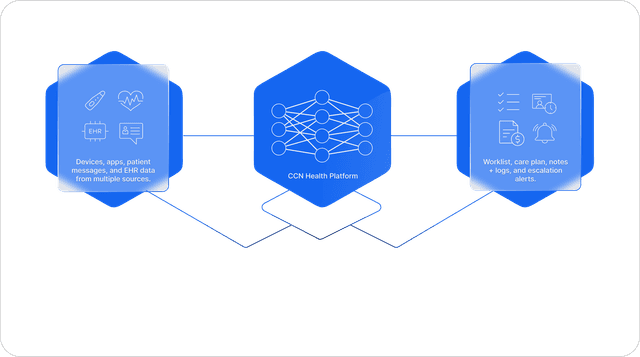
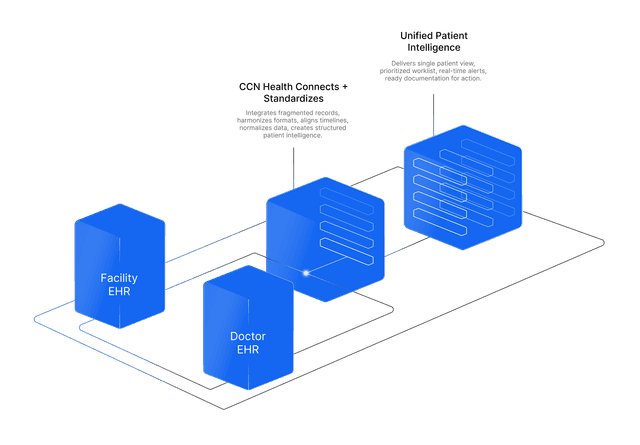
CCN Health maintains live integrations with facility EHRs, including PointClickCare. Once DS Smart writes vitals to the chart, CCN Health reads them from the facility EHR, watches trends, and flags readings that need clinical attention. To be precise about the plumbing: CCN Health does not connect to the DS Smart app. The integration is with the facility EHR. DS Smart writes, CCN Health reads, and the chart is the handoff point.
The practice side
Remote patient monitoring and chronic care management are physician services. The residents in a community are patients of outside practices, and those practices chart in their own systems. CCN Health documents the physician side of the program to the practice EHR, with Athena Health, Charm Health, and Ethizo supported, so the monitoring work is visible where the physician actually works, not in a separate portal.
The result is one data capture serving two records: the facility chart the nurses use and the practice chart the physician bills from. For the full story of how the two halves fit together on PointClickCare, read DS Smart + PointClickCare: Turning Vitals Into RPM.
Evaluating DS Smart: Questions Worth Asking
If you are a DON, administrator, or IT lead weighing the purchase, these questions separate a vitals gadget from a program:
- Does it connect to the monitors we own today? Check your models against Direct Supply's compatibility list above.
- Does it write to our EHR? The eight platforms listed earlier cover most buildings, but confirm your version and configuration.
- How do staff sign in? On PointClickCare communities, existing PCC credentials are the answer, which keeps training short and avoids another password to manage.
- What happens to the data after capture? This is the question that changes the economics. Vitals that feed a physician backed RPM or CCM program generate clinical monitoring for residents. Vitals that only fill a flowsheet do not.
- Who runs the clinical program? Capturing readings is the community's work. Monitoring them, documenting to the practice EHR, and meeting Medicare requirements is a separate operation, and that is the part CCN Health runs.
Where to Go Next
If you are evaluating or already own DS Smart hardware, three short pages cover the operational side:
- What is DS Smart: the capture workflow, explained for someone seeing it for the first time
- DS Smart on PointClickCare: activating the integration in your PCC Marketplace
- Onboarding DS Smart with CCN Health: the full order of operations for going live
And for the bigger picture of how CCN Health works alongside DS Smart deployments, visit the DS Smart partnership hub.
Already capturing vitals with DS Smart? The hard part is done. CCN Health reads those vitals through its facility EHR integrations and runs the physician backed monitoring program on top.
DS smart® is a registered trademark of Direct Supply, Inc. Welch Allyn, Connex, Nellcor, Suntec, Edan, and Detecto are trademarks of their respective owners. CCN Health is an independent company; references to third party products describe compatibility and do not imply sponsorship or endorsement by their owners. Device compatibility and EHR support statements are as published by Direct Supply and may change; verify current details with the vendor.
This article is for informational purposes only and does not constitute medical, legal, or billing advice. Medicare billing requirements depend on program setup and clinical circumstances; consult qualified professionals for guidance specific to your community.
Let's figure this out together
We work closely with every client to find the right approach for their practice. Think of us as your partner, not just a platform.
Topics
Your Partner in Chronic Care
We love working closely with our clients to find the best solutions. Let us help guide you through the complicated stuff.
Continue Reading
Related Articles
Explore more insights on this topic.
DS Smart + PointClickCare: Turning Vitals Into RPM
A resident's health story lives in two charts. DS Smart captures vitals into PointClickCare, CCN Health reads them and runs the RPM and CCM program, and the physician side is documented to the practice EHR. One capture, both records.
Best RPM Devices for Senior Living in 2026
A head-to-head comparison of the best RPM devices for senior living and memory care in 2026 — covering cellular blood pressure monitors, weight scales, contactless radar sensors, and pulse oximeters ranked by compliance, connectivity, and clinical value.
Remote Patient Monitoring for Senior Living — 2026 Guide
How Remote Patient Monitoring works in senior living communities — device deployment, wellness-focused monitoring, EHR integration with ALIS and August Health, and Medicare billing for independent and assisted living settings.
Common Questions
Frequently Asked Questions
Get answers to the most common questions about this topic.
The DS Smart vital sign machine is Direct Supply's vitals capture product for senior living and skilled nursing. It pairs the DS smart app, running on a shared tablet or mobile device, with Bluetooth connected vital sign devices, often mounted together on a rolling cart. A caregiver pairs the device, captures and confirms the readings, and syncs them to the resident's chart in the facility EHR.
Direct Supply's published compatibility list includes Attendant vital signs monitors, including touchscreen configurations with Suntec NIBP, Nellcor pulse oximetry, and thermometry options, as well as the Welch Allyn Connex 7300, the Edan iM3, and Detecto scales. If a community already owns one of these, DS Smart is designed to connect to it over Bluetooth.
Per Direct Supply, DS Smart writes vitals to PointClickCare, MatrixCare, Netsmart, Yardi, Residex, ALIS, ECP, and August Health. The readings land in the resident's chart in the facility EHR, where downstream programs like CCN Health's remote patient monitoring can read them.
No. On a PointClickCare community, staff open the DS Smart app on the facility tablet and sign in with their existing PointClickCare credentials. No separate DS Smart password is issued, which is one reason training time stays short.
They can support a program. Once DS Smart writes vitals to the facility EHR, CCN Health reads them through its live facility EHR integrations and runs a physician backed RPM or CCM program on top, with the physician side documented to the practice EHR. Whether a given resident's readings meet Medicare's RPM requirements, such as the 16 days of readings per 30 day period behind CPT 99454, depends on capture frequency and program setup, which CCN Health manages with the practice.
No. CCN Health integrates with the facility EHR, not with the DS Smart app itself. DS Smart writes the vitals to the chart, and CCN Health reads them from the chart through its live EHR integrations. The two systems meet in the EHR, which is why no extra interface between them is needed.
Still have questions? We love helping practices figure this out — no pressure, just real answers.

Your Partner in Chronic Care
We're Here to Guide You Every Step of the Way
RPM, CCM, and chronic care management can get complicated. We work closely with every client to figure out the best solutions for their practice.