Clinical
Remote Patient Monitoring for Senior Living — 2026 Guide
How Remote Patient Monitoring works in senior living communities — device deployment, wellness-focused monitoring, EHR integration with ALIS and August Health, and Medicare billing for independent and assisted living settings.
RPM in senior living uses FDA-cleared cellular devices (blood pressure monitors, weight scales, pulse oximeters) and contactless radar monitors to track residents' vital signs in real time. Unlike skilled nursing where staff deploy devices, senior living RPM is largely self-managed — residents take their own readings in their apartments. Data transmits automatically to CCN Health's clinical team and integrates with facility EHRs like ALIS and August Health. RPM generates ~$145–185 per patient per month through CPT codes 99453–99458 and can stack with CCM, BHI, and RTM for qualifying residents.
What Is Remote Patient Monitoring (RPM)?
Remote Patient Monitoring (RPM) is a Medicare-reimbursable program that enables real-time monitoring of vital signs (blood pressure, weight, oxygen saturation, heart rate, glucose) using FDA-cleared cellular devices that automatically transmit data to a clinical monitoring team.
Patient eligibility: Medicare beneficiaries with one or more chronic conditions. Patient must use an FDA-cleared device and transmit physiologic data for 16+ days per 30-day billing period.
How RPM differs from related programs: RPM is the only program requiring FDA-cleared monitoring devices — it captures real-time physiologic data (vital signs) rather than patient-reported outcomes or care coordination time.
RPM can be stacked with CCM, PCM, BHI, RTM for qualifying patients — a single enrolled patient can generate revenue across multiple Medicare programs simultaneously.
Why Senior Living Facilities Need RPM
Senior living communities serve a population that is medically complex enough to benefit from continuous monitoring yet functionally independent enough to self-manage devices — the ideal profile for RPM enrollment.
Chronic condition prevalence: Residents average 2–3 chronic conditions (hypertension, diabetes, heart failure, COPD) that require ongoing monitoring but are managed reactively with periodic nurse assessments
Gaps between assessments: Current care models rely on weekly or monthly wellness checks that miss gradual deterioration — a rising blood pressure trend or weight gain from fluid retention can develop undetected between visits
Family expectations: Families evaluating senior living communities increasingly expect technology-enabled health oversight as a standard of care, not a premium add-on
Revenue opportunity: Medicare RPM reimbursement of $145–185/patient/month creates a revenue stream for the ordering physician while the community benefits from improved resident health outcomes and reduced liability
How RPM Works in Senior Living — The Clinical Workflow
RPM in senior living is designed around self-managed monitoring — residents operate their own devices with minimal staff involvement, unlike the staff-deployed model used in skilled nursing.
Step 1: Enrollment — Community wellness director or physician identifies residents with qualifying chronic conditions during move-in health assessment or annual wellness visit. Patient consent obtained and device preferences discussed.
Step 2: Device Deployment — Self-managed cellular devices (BP monitors, weight scales) placed in resident apartments. For residents with cognitive decline, contactless Xandar Kardian XK300 monitors installed in rooms for passive monitoring.
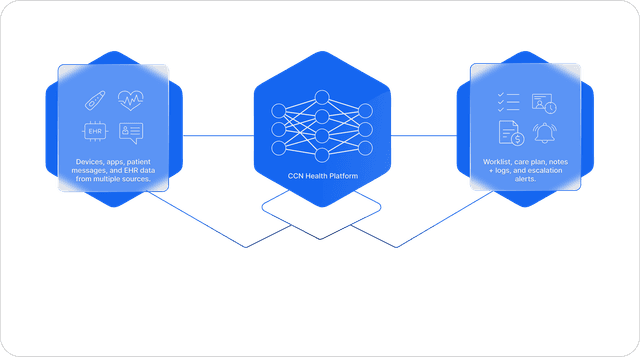
Step 3: Daily Monitoring — Residents take readings independently — devices transmit automatically via cellular connection. CCN Health's clinical team monitors dashboards, reviews alerts, and escalates to the attending physician when readings fall outside personalized thresholds.
Step 4: Clinical Review & Billing — CCN Health clinical staff complete the required 20-minute monthly review (CPT 99457), document interventions, and generate billing documentation. Additional review time (CPT 99458) captured when clinically warranted.
RPM Devices and Monitoring for Senior Living
Senior living RPM uses a mix of self-managed and contactless devices based on each resident's functional and cognitive status.
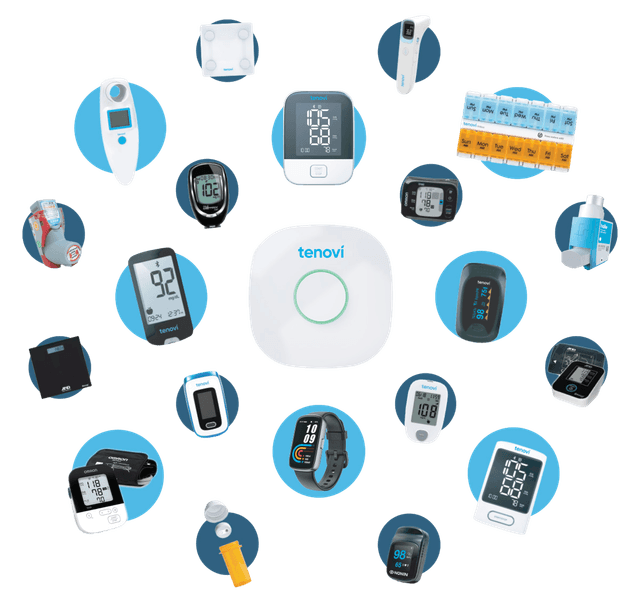
- Blood Pressure Monitors (Smart Meter, Omron, Bodytrace) — Cellular-connected automatic cuffs for hypertension and cardiovascular monitoring — the most common RPM device in senior living
- Weight Scales (Bodytrace, Withings) — Cellular or Wi-Fi connected scales for heart failure fluid management and diabetes weight tracking
- Pulse Oximeters (Jumper, Bodytrace) — SpO2 and heart rate monitoring for COPD and respiratory conditions
- Xandar Kardian XK300 — Contactless radar monitoring for heart rate, respiratory rate, and fall detection — ideal for residents with cognitive decline who cannot self-manage devices
- Tenovi 4G LTE Gateway — Cellular connectivity hub for Bluetooth devices — ensures reliable data transmission without depending on community Wi-Fi
Self-managed devices are preferred for independent residents. Contactless monitoring fills the gap for residents with cognitive impairment or device fatigue.
RPM Billing: CPT Codes and Revenue
| CPT Code | Service | Reimbursement | Requirement |
|---|---|---|---|
| 99453 | Setup & Education | ~$22 | One-time per enrollment |
| 99454 | Device Supply | ~$52/mo | 16+ readings in 30 days |
| 99457 | Clinical Review | ~$52/mo | First 20 min staff time |
| 99458 | Additional Review | ~$41/mo | Each additional 20 min |
Rates are 2026 Medicare national averages (CMS Physician Fee Schedule). Remote patient monitoring for senior living communities — assisted living, independent living, and CCRCs — is billed by the resident's physician under these standard Medicare RPM codes.
Estimated monthly revenue per patient: ~$145–185
Program stacking: With CCM stacking, combined revenue reaches $220–315/patient/month. Adding BHI or RTM for qualifying patients can exceed $370/month.
In senior living, the ordering physician (not the community) typically bills Medicare for RPM. Revenue flows to the physician practice, which may share program economics with the community through service agreements. This structure works because senior living is not Medicare-certified — the facility cannot bill Medicare directly.
EHR Integration for RPM in Senior Living
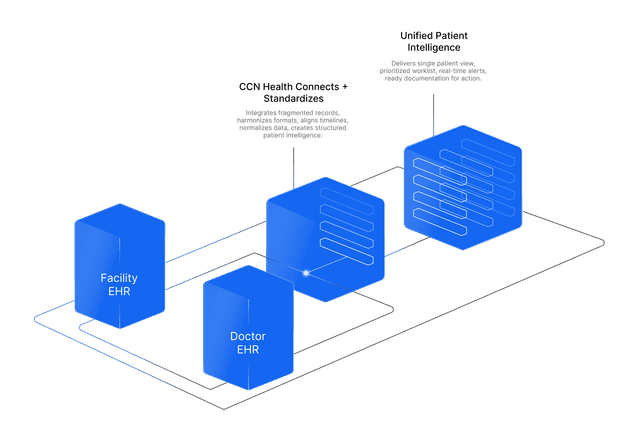
Senior Living facilities typically use ALIS, August Health, PointClickCare for clinical documentation. Most senior living communities use facility EHRs like ALIS or August Health. Physicians use athenahealth, Epic, or Charm Health.
CCN Health provides bi-directional integration with all major senior living EHR systems:
- Resident/patient demographics sync automatically
- Monitoring data flow into existing EHR workflows
- Clinical alerts appear within the EHR — no separate portal required
- Billing documentation generates automatically for RPM time tracking
For communities using ALIS or August Health, CCN Health provides direct EHR integration so monitoring data appears in the resident's health record automatically. For residents whose physicians use athenahealth, Epic, or other practice EHRs, data also flows to the physician system — enabling dual-EHR visibility.
Getting Started: Implementing RPM in Your Senior Living Facilitie
A typical RPM implementation in senior living follows a 4–8 week timeline:
- Week 1–2: EHR integration with ALIS/August Health/PCC, physician practice EHR connections, resident enrollment criteria defined
- Week 3–4: Device procurement, apartment-level deployment for initial resident cohort, cellular gateway installation
- Week 5–6: Staff orientation on monitoring dashboards and alert response, resident education on device usage
- Week 7–8: Go-live with phased enrollment, billing documentation validation, ongoing monitoring optimization
Senior living implementations are typically faster than SNF deployments because the self-managed device model requires less staff training and the regulatory environment is lighter.
Ready to implement RPM in your senior living facilitie? CCN Health provides full-service Remote Patient Monitoring with EHR integration, clinical oversight, and billing optimization purpose-built for senior living.
Disclaimer: This article is for informational purposes only and does not constitute medical, legal, or billing advice. CPT code reimbursement amounts are estimates based on CMS published fee schedules and may vary by region, payer, and clinical circumstances. Always consult qualified healthcare, billing, and technology professionals for guidance specific to your facility.
Let's figure this out together
We work closely with every client to find the right approach for their practice. Think of us as your partner, not just a platform.
Topics
Your Partner in Chronic Care
We love working closely with our clients to find the best solutions. Let us help guide you through the complicated stuff.
Why It Matters
Key Benefits
See how this approach drives measurable improvements across your organization.
RPM Program Management
Full Remote Patient Monitoring program delivery including enrollment, monitoring, clinical review, and billing documentation — purpose-built for senior living workflows.
EHR Integration
Bi-directional integration with ALIS, August Health, PointClickCare ensures monitoring data flows into existing clinical workflows without manual data entry.
Revenue Optimization
~$145–185 per patient per month with RPM. Program stacking with CCM and PCM increases per-patient revenue further.
Independence Preservation
Residents self-manage monitoring devices in their apartments — maintaining independence while receiving 24/7 clinical oversight behind the scenes.
Contactless Option
Xandar Kardian XK300 radar monitoring for residents with cognitive decline — no wearables, no buttons, continuous passive monitoring.
Community Differentiator
Health monitoring technology positions your community ahead of competitors — families expect proactive clinical oversight as standard of care.
Continue Reading
Related Articles
Explore more insights on this topic.
What Is Remote Patient Monitoring? A Complete Guide to RPM
A complete guide to Remote Patient Monitoring — what it is, how it works, who qualifies, which devices are used, and how providers bill Medicare for RPM services.
Chronic Care Management for Senior Living — 2026 Guide
How Chronic Care Management works in senior living — care plan development, medication reconciliation, multi-provider coordination, and Medicare billing for residents with multiple chronic conditions.
Behavioral Health Integration for Senior Living — 2026 Guide
How Behavioral Health Integration works in senior living — PHQ-9/GAD-7 screening for depression and anxiety, addressing social isolation, collaborative care with psychiatric consultants, and Medicare billing.
Common Questions
Frequently Asked Questions
Get answers to the most common questions about this topic.
Remote Patient Monitoring (RPM) for senior living is a Medicare-reimbursable program. residents use FDA-cleared cellular devices to transmit vital sign data daily from their apartments, enabling clinical teams to detect health changes before they become emergencies. Medicare beneficiaries with one or more chronic conditions.
RPM generates ~$145–185 per patient per month through CPT codes 99453, 99454, 99457, 99458. With CCM stacking, combined revenue reaches $220–315/patient/month. Adding BHI or RTM for qualifying patients can exceed $370/month.
CCN Health integrates with ALIS, August Health, PointClickCare for senior living facilities. Most senior living communities use facility EHRs like ALIS or August Health. All monitoring data flows bi-directionally between CCN Health and the facility/physician EHR.
Yes — senior living RPM is designed for apartment-based self-monitoring. Residents use cellular devices (BP cuffs, weight scales) independently in their apartments. Readings transmit automatically without staff involvement. For residents who prefer zero-interaction monitoring, the Xandar Kardian XK300 provides passive contactless monitoring.
Health monitoring technology is a growing differentiator in the senior living market. RPM demonstrates proactive health management, provides families with 24/7 clinical oversight visibility, and positions the community as technology-forward. Communities with RPM programs can market continuous health monitoring as a core service rather than a reactive care model.
Yes. Continuous vital sign monitoring catches deterioration early — rising blood pressure, weight gain from fluid retention, declining SpO2 — enabling clinical intervention before emergencies develop. RPM-monitored populations typically see 25–40% reductions in unnecessary emergency department utilization.
The RPM program covers device costs through CPT 99454 (device supply, ~$52/month). Medicare reimburses the ordering physician for device supply as part of the RPM billing codes. Residents do not pay out-of-pocket for monitoring devices when enrolled in a Medicare RPM program.
Still have questions? We love helping practices figure this out — no pressure, just real answers.

Your Partner in Chronic Care
We're Here to Guide You Every Step of the Way
RPM, CCM, and chronic care management can get complicated. We work closely with every client to figure out the best solutions for their practice.