Harold goes to bed. No cuff, no wearable, nothing to remember. The room does the monitoring.
A radar unit on the wall reads heart rate and respiration passively.
Harold's night
58 · 14
being read from the wall
Xandar Kardian radar
passive HR & respiration, live the day after setup
Neteera
continuous contactless heart rate
How it works
What happens
For residents who can't or won't use cuffs and wearables, the room does the monitoring. A Xandar Kardian radar unit reads heart rate and respiration passively while the resident sleeps; Neteera adds continuous contactless heart rate. Each morning there's a fresh set of overnight vitals on the record and a nightly probability-of-clinical-decline score, and the readings chart to PointClickCare like any other vital.
How it works
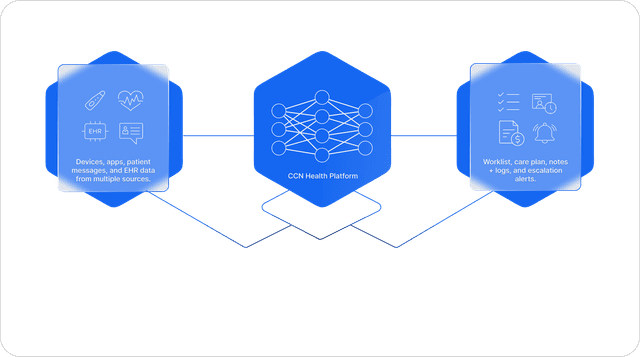
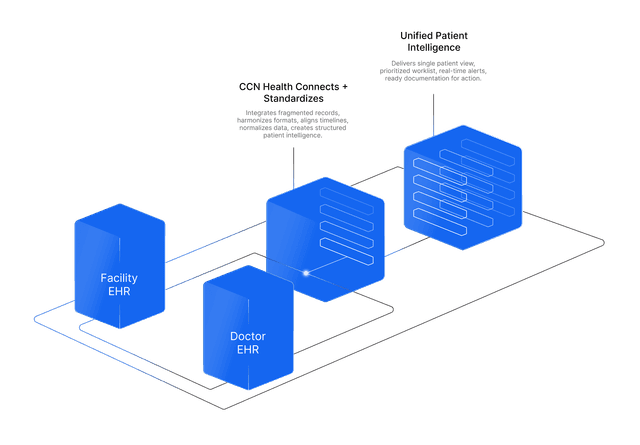
The sensors stream to their own clouds, which webhook into CCN. CCN maps the unit to the room and the room to the resident from the PointClickCare census, so a sensor is live the day after it's associated in setup, with no per-resident pairing. Overnight sleeping heart rate and respiratory rate post to the chart as observations through the same Partner API path as every other vital, and the decline score trends in CCN with an alert when it rises.
The benefit to your practice
The residents hardest to monitor are often the ones who need it most. Passive capture gets them covered with zero burden, and the decline score gives clinical staff the earliest warning there is: a change in the numbers before there's a change anyone can see.
What you get
- Xandar Kardian contactless radar for passive HR & respiration, auto-activated the day after setup
- A nightly probability-of-clinical-decline score for early warning
- Neteera contactless heart rate: continuous HR, mapped to the resident
- No cuffs, no wearables: vitals captured from the room and tied to the chart