Twelve hospitals.
One very focused program.
Sentara is one of the largest not-for-profit health systems in the mid-Atlantic: twelve acute care hospitals, a health plan serving about 1.2 million members, and roots that go back to 1888. On CCN Health they run something deliberately small: a focused diabetes prevention program, started the way the best programs are.


The system
Integrated at real scale
Twelve acute care hospitals across Virginia and northeastern North Carolina, plus the clinics, practices, and services that surround them.
Payer and provider
A health plan with about 1.2 million members alongside the delivery system, so prevention pays off on both sides of the ledger.
Not new at this
A not-for-profit whose roots reach back to 1888. Programs here are chosen deliberately and expected to hold up.
When an organization with this much infrastructure picks a monitoring platform for a new program, it is not for lack of alternatives. That is rather the point of this page.
The premise
Prevention only works before the diagnosis.
Most people on the road to type 2 diabetes do not know they are on it. There are no symptoms to report and no event to react to, just numbers drifting in the wrong direction for years: weight, blood pressure, glucose. By the time those numbers become a diagnosis, the cheapest and most effective window for doing something about it has closed.
A prevention program lives entirely inside that window. Its whole job is to watch the drift and interrupt it: a coach who calls because the trend line says to, weeks before anything would have surfaced in a visit. Which means the program is only as good as its stream of readings from home.
That stream is the one piece Sentara runs on CCN Health: not their hospitals, not their health plan, just this one small program watching the drift.
Chapter 01
Why a system this size started simple.
The reflex at enterprise scale is the enterprise project: a committee, an integration roadmap, a pilot that takes two quarters to provision. That reflex is exactly wrong for a prevention program, where the entire value is getting people monitored while their numbers are still just drifting.
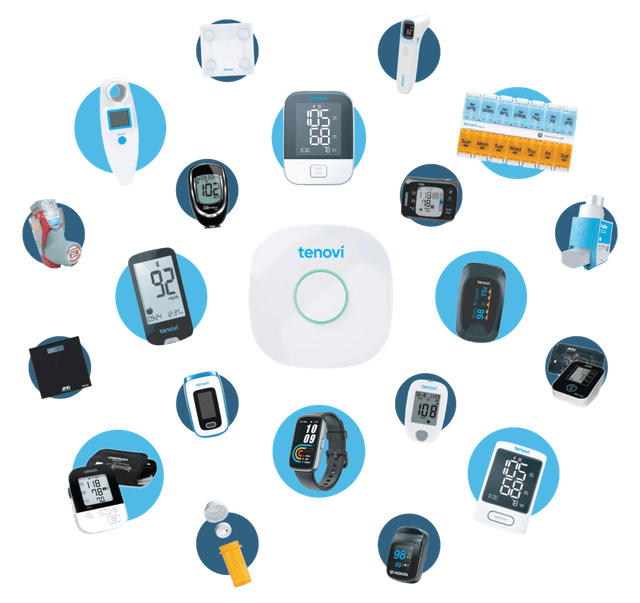
So Sentara's program runs on Basic RPM, the least ceremonial version of the platform, on deliberately classic equipment: Tenovi glucose devices. The same finger-stick meter patients already understand, sending each reading through Tenovi's plug-in cellular gateway. No app to install, no Wi-Fi to join, no smartphone required, and no patient setup beyond plugging the gateway into the wall and taking the first reading. A roster, a dashboard, and glucose readings flowing the same week the decision was made. A typical CCN go-live is measured in days, and nothing about that changes because the logo on the program is a twelve-hospital system.
The choice of a classic meter over a continuous sensor is its own kind of scale thinking. A prevention population is broad by definition, and the device that works for everyone beats the device that impresses anyone.
Starting simple is not a compromise for an organization like this. It is the only honest way to test a program: prove the operational loop works before wiring it into everything else you own.
The program launched at the speed of the decision, not the speed of an integration roadmap. See what a typical launch looks like in the go-live walkthrough.
Chapter 02
Prevention is a trend-watching job.
In an acute program, the alert that matters is a spike. In prevention it is a slope: weight creeping up over six weeks, fasting glucose drifting higher month over month. Catching a slope requires two things a clinic visit cannot provide: readings that arrive every day, and something watching all of them.
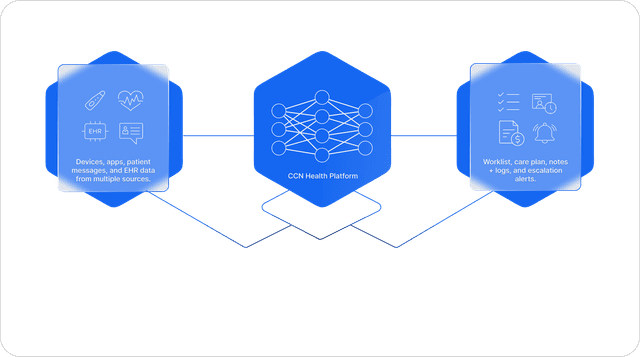
That is the platform's home turf. Readings come in from participants' homes each day, thresholds and trends surface the people who are drifting, and the care team's queue holds exactly those people rather than the whole roster. Every touch is logged as it happens, so the record of the program builds itself while the program runs.
The staff experience matters at this scale too. A program run across a system the size of Sentara cannot depend on heroics from a few coordinators who know where everything is. The workflow queues mean the day's work presents itself, in order, to whoever is working it.
The team works a short queue of people who need attention, not a long list of people who might. The mechanics are the same ones in the workflows walkthrough.
Chapter 03
The ceiling is already built.
A program that starts simple still has to be allowed to stop being simple. This is usually where small platforms lose big customers: the pilot works, the program grows, and suddenly the tool that was easy to start is the thing holding the program back.
CCN was built in the other order. The platform already runs organizations with more than a hundred facilities under one roof, with each site as its own entity, staff activity reporting per location, and organization-wide rollups on top. A prevention program that grows into new regions, new clinics, or new conditions is growing into machinery that is already there, not waiting on it to be built.
For Sentara that means the simple start was not a bet against scale. It was a sequencing decision by an organization that has been sequencing things well since 1888.
Start with one program, keep the option on everything else. The multi-site model is described in the Access Healthcare story, which runs 131 facilities on it.
Your program does not need a committee to start.
If a twelve-hospital system can be live in days, so can you. Fifteen minutes and we will map it to how your organization actually works.
Or just reply to the email that brought you here.