business
Remote Patient Monitoring for Senior Living: A Complete Guide
A comprehensive guide to Remote Patient Monitoring in senior living communities — how RPM works across assisted living, skilled nursing, memory care, and independent living settings, with device selection, EHR integration, billing, and clinical outcomes.
Remote Patient Monitoring (RPM) in senior living uses FDA-cleared devices to track resident vital signs and transmit data to clinical staff. Unlike home-based RPM, senior living RPM is staff-assisted — facility nurses incorporate readings into daily routines. Facilities integrate RPM with EHRs like PointClickCare and MatrixCare, billing Medicare via CPT codes 99453–99458 for an estimated $105–145 per resident per month.
What Is RPM in Senior Living?
Remote Patient Monitoring (RPM) in senior living uses FDA-cleared medical devices to collect resident vital signs — blood pressure, weight, blood glucose, oxygen saturation, heart rate, and respiratory rate — and transmit that data to clinical staff for review between physician visits.
The core difference between RPM in senior living and RPM in a physician practice is who operates the devices. In a practice setting, patients take their own readings at home. In senior living, facility nursing staff incorporate device readings into daily care routines — morning rounds, medication passes, and scheduled vitals. This staff-assisted model produces significantly higher compliance rates because readings happen as part of the existing care workflow rather than depending on independent patient action.
Senior living facilities also have a structural advantage that no other care setting can match: clinical staff are present around the clock, residents are on-site, and vital sign collection is already part of the daily care routine. RPM adds automated data transmission and clinical monitoring on top of what facility staff are already doing.
How RPM Works Across Facility Types
Each senior living setting presents different clinical environments, resident capabilities, and staffing models. RPM device selection, workflow design, and enrollment strategy must be tailored to each facility type.
Assisted Living
Assisted living residents typically maintain a degree of independence but receive help with daily activities. Most can participate in staff-assisted readings where a nurse or aide brings a cellular blood pressure monitor or weight scale during morning rounds.
Key characteristics:
- Staff-assisted readings integrated into existing care routines
- Cellular devices that transmit automatically without Wi-Fi or smartphone requirements
- Census-based enrollment achieves 40–70% resident participation when positioned as part of the standard care program
- Family engagement is important for consent — families often influence care decisions
- EHR integration with ALIS (purpose-built for assisted living) or PointClickCare
Skilled Nursing
Skilled nursing facilities have the highest clinical intensity and the most structured care routines. Nursing staff already take vitals as part of daily documentation. RPM adds automated data transmission from the device to the monitoring platform and facility EHR, eliminating manual transcription.
Key characteristics:
- Highest enrollment potential — 60–80% participation rates because nursing staff control the care routine
- Integration with existing vitals workflow — RPM readings replace manual charting, not add to it
- PointClickCare is the dominant EHR in skilled nursing
- Medical director can serve as ordering physician for facility-wide RPM services
- Multiple chronic conditions per resident create opportunities for program stacking (RPM + CCM + BHI)
Memory Care
Memory care presents the most challenging monitoring environment. Residents cannot independently operate devices, may not understand instructions, and may become agitated by unfamiliar objects. RPM in memory care requires a fundamentally different approach.
Key characteristics:
- Contactless monitoring is essential — radar-based sensors track heart rate, respiratory rate, sleep patterns, and movement without any resident interaction or wearable device
- Staff perform all device-dependent readings — blood pressure and weight readings are entirely staff-driven
- Legal representative consent is required for enrollment (residents typically cannot consent themselves)
- Enrollment rates of 30–50% depending on family engagement and facility approach
- EHR integration with ALIS (designed for memory care workflows) or PointClickCare
Continuing Care Retirement Communities (CCRCs)
CCRCs include multiple care levels — independent living, assisted living, and skilled nursing — on a single campus. RPM in a CCRC can span all care levels with different device and workflow strategies at each level.
Key characteristics:
- Tiered deployment — independent living residents may use home-style RPM (cellular devices in their apartment), while assisted living and skilled nursing units use staff-assisted models
- Resident transitions between care levels are tracked and RPM services follow the resident
- Campus-wide monitoring team can oversee RPM across all care levels from a single dashboard
- Multiple EHR systems may be in use across care levels, requiring integration with each
Independent Living
Independent living residents function most like home-based RPM patients. They live in their own apartments, maintain independence, and may or may not have clinical staff available.
Key characteristics:
- Resident-operated devices — cellular-enabled monitors in the resident's apartment that transmit readings automatically
- Lower enrollment rates than assisted living because participation is purely voluntary
- Wellness-oriented positioning — RPM framed as proactive health monitoring rather than clinical intervention
- May require individual physician orders rather than facility-wide standing orders
Devices for Senior Living RPM
Device selection in senior living prioritizes two requirements above all others: cellular connectivity and minimal resident interaction.
Why Cellular Connectivity Is Mandatory
Senior living residents do not have personal Wi-Fi networks in most facility settings. They do not have smartphones capable of running health apps. Bluetooth pairing is technically beyond what most residents can manage, and even if configured initially, Bluetooth connections drop and require re-pairing.
Cellular-enabled devices solve all of these problems. They contain a built-in cellular radio that transmits data to the cloud automatically after each reading. No Wi-Fi. No Bluetooth. No smartphone. No patient setup of any kind. The device powers on, takes a reading, and transmits the data. This is the only connectivity model that works reliably in senior living at scale.
Device Categories
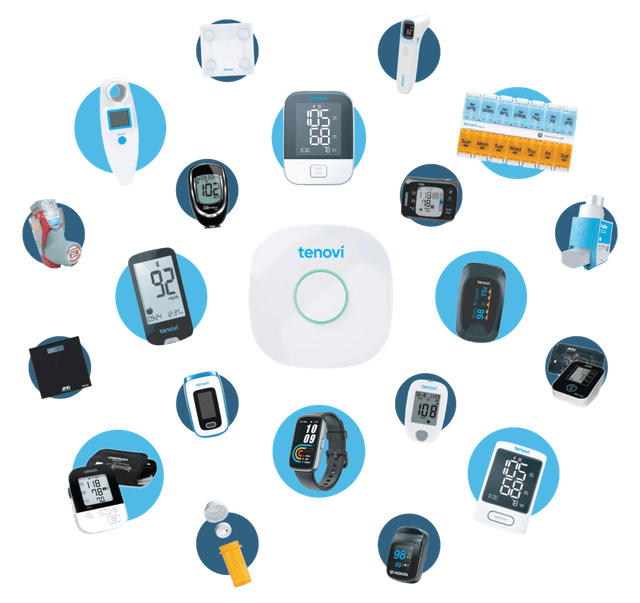
Blood Pressure Monitors — The most common starting device. Staff-assisted cuff-based monitors with cellular data transmission. Used across all facility types.
Weight Scales — Cellular weight scales for daily or weekly weigh-ins. Critical for heart failure monitoring where sudden weight changes indicate fluid retention.
Pulse Oximeters — Cellular pulse oximeters for residents with COPD or other respiratory conditions. Quick spot-check readings during care rounds.
Continuous Glucose Monitors (CGMs) — Sensor-based glucose monitoring for insulin-managed diabetic residents. CGMs like the Dexcom G7 and Freestyle Libre 3 transmit glucose data continuously without resident interaction once the sensor is applied.
Contactless Monitors — Radar-based devices that sit under the mattress or on a bedside surface and track heart rate, respiratory rate, sleep quality, and movement without any wearable or resident interaction. Essential for memory care.
For a detailed guide to selecting specific RPM devices, see How to Choose RPM Devices.
EHR Integration for Senior Living
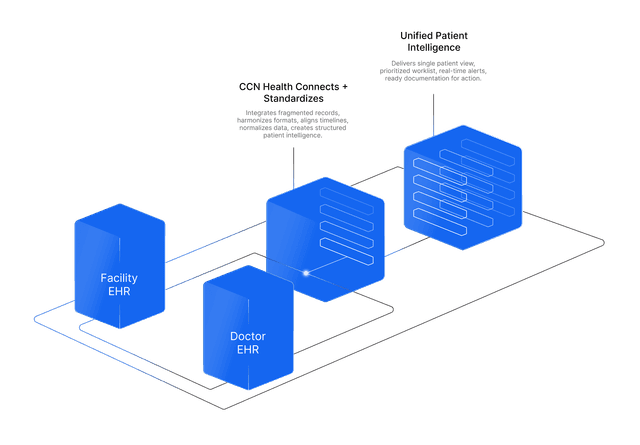
In senior living, the facility EHR is the primary clinical record. RPM data must flow into this system alongside ADL documentation, medication records, nursing assessments, and care plans.
PointClickCare
PointClickCare is the dominant EHR in skilled nursing facilities and is widely used in assisted living. RPM integration enables:
- Vital sign data from RPM devices appearing directly in the resident's clinical record
- Alert notifications within the EHR when readings exceed thresholds
- Trend data accessible to nursing staff when reviewing the resident's chart
- Documentation integration for RPM clinical time tracking
ALIS
ALIS is purpose-built for assisted living and memory care communities. RPM integration maps device readings to the resident's health record within the ALIS platform, aligning with ALIS's ADL-focused documentation model.
MatrixCare
MatrixCare is used across senior living settings including assisted living, skilled nursing, and CCRCs. RPM data integration flows through MatrixCare's clinical documentation framework.
Most facility EHR integrations take 2-3 business days to configure and validate. Integration methods include HL7 feeds, FHIR APIs, and proprietary connectors depending on the EHR vendor and RPM platform.
Billing and Reimbursement
RPM in senior living is billed under the same Medicare CPT codes used in practice-based RPM:
| CPT Code | Description | Est. Reimbursement |
|---|---|---|
| 99453 | Initial device setup and patient education | ~$22 (one-time) |
| 99454 | Monthly device supply and data transmission (16+ days) | ~$52/month |
| 99457 | First 20 minutes of clinical monitoring time per month | ~$52/month |
| 99458 | Each additional 20 minutes of monitoring time | ~$41/month |
Total estimated RPM revenue: $105–145 per resident per month.
Staff-assisted readings in senior living make the 16-day data transmission requirement (CPT 99454) significantly easier to meet. Facilities that integrate RPM into daily care routines consistently achieve 80%+ compliance with the 16-day threshold.
Program Stacking
Senior living residents with multiple chronic conditions often qualify for additional Medicare programs beyond RPM:
- Chronic Care Management (CCM) — Care coordination for residents with two or more chronic conditions. Most multi-chronic senior living residents qualify.
- Behavioral Health Integration (BHI) — Depression, anxiety, and other behavioral health conditions are prevalent in senior living populations.
- Principal Care Management (PCM) — For residents with a single dominant chronic condition requiring intensive management.
Stacking RPM with CCM for qualifying residents can increase total per-resident reimbursement from an estimated $105/month to over $250/month. For a detailed billing reference, see the RPM and CCM CPT Code Guide.
Clinical Outcomes
RPM in senior living addresses several clinical challenges that facility operators face:
Reduced Hospital Transfers — Continuous monitoring detects changes in vital signs before they escalate to emergencies. Early intervention on blood pressure spikes, weight changes (heart failure), or oxygen desaturation (COPD) can prevent unnecessary emergency department visits and hospital transfers.
After-Hours Coverage — Contactless monitoring and clinical alert systems provide overnight and weekend coverage that supplements on-site staffing. Changes in heart rate, respiratory rate, or movement patterns trigger alerts even when residents are sleeping.
Multi-Condition Management — Senior living residents frequently have three or more chronic conditions. RPM enables coordinated monitoring across multiple vital signs from a single clinical dashboard rather than siloed condition-by-condition management.
Staff Efficiency — Automated data transmission eliminates manual vital sign transcription. Clinical monitoring dashboards allow one nurse to oversee 50–100+ residents with automated alert prioritization rather than reviewing each chart individually.
Family Communication — RPM data provides objective health metrics that can be shared with families, improving transparency about their loved one's health status and building confidence in the facility's care quality.
Getting Started
The most effective approach to RPM in senior living is a phased deployment: start with a single unit or wing, validate device logistics and staff workflows, and then expand systematically across the facility. For a detailed implementation roadmap, see How to Launch RPM in Senior Living Facilities.
Ready to bring RPM to your senior living community? Explore CCN Health's RPM program or talk to the team for a customized deployment plan and platform walkthrough.
Disclaimer: This article is for informational purposes only and does not constitute medical, legal, or billing advice. CPT code reimbursement amounts are estimates based on CMS published fee schedules and may vary by region, payer, and clinical circumstances. Always consult qualified healthcare and billing professionals for guidance specific to your facility.
Let's figure this out together
We work closely with every client to find the right approach for their practice. Think of us as your partner, not just a platform.
Topics
Your Partner in Chronic Care
We love working closely with our clients to find the best solutions. Let us help guide you through the complicated stuff.
Continue Reading
Related Articles
Explore more insights on this topic.
BHI Billing Guide: Behavioral Health Integration CPT Codes & Requirements
A detailed guide to Behavioral Health Integration billing — covering CPT codes 99484, 99492, and 99493, the Collaborative Care Model (CoCM), PHQ-9 and GAD-7 screening requirements, qualifying behavioral health conditions, and strategies for integrating BHI into primary care practice.
How to Bring RPM In-House: A 2027 Transition Playbook
CMS has proposed paying for RPM and RTM only when practice-employed clinical staff furnish the services, effective January 1, 2027 if finalized. For every practice running RPM on contracted staffing, that starts a clock. This playbook walks through the seven steps of a clean transition: mapping your exposure, hiring an employed team, choosing self-service software, and running a cutover month without a billing gap.
CCM Billing Guide: CPT Codes 99490, 99491, 99439 & Requirements
A comprehensive breakdown of all CCM CPT codes — 99490, 99491, and 99439 — covering patient eligibility, consent requirements, documentation standards, complex CCM criteria, common denials, and revenue projections for chronic care management programs.
Common Questions
Frequently Asked Questions
Get answers to the most common questions about this topic.
RPM can be deployed across all major senior living facility types: assisted living communities, skilled nursing facilities, memory care units, continuing care retirement communities (CCRCs), and independent living communities. Each setting requires a different approach to device selection, staffing, and workflow design. Assisted living and skilled nursing facilities are the most common starting points because they have clinical staff on-site who can assist with device readings. Memory care requires specialized contactless monitoring devices. Independent living communities function more like home-based RPM because residents live more independently.
Senior living RPM differs from home-based RPM in several fundamental ways. Enrollment is census-driven (working through the facility roster) rather than triggered by individual patient appointments. Facility nursing staff assist residents with device readings rather than relying on independent patient use. The clinical record lives in a facility EHR (PointClickCare, ALIS, MatrixCare) rather than a practice EHR. Device selection must account for cognitive impairment, limited dexterity, and the absence of personal Wi-Fi networks. And the ordering physician is often an external attending or medical director rather than an on-site provider.
Memory care environments require devices that collect data passively or with minimal resident interaction. Contactless monitoring devices use radar-based sensing to track heart rate, respiratory rate, sleep patterns, and movement without any resident action or wearable. For readings that require participation (blood pressure, weight), staff must perform the reading entirely using cellular-enabled devices. Any device requiring the resident to initiate readings, pair via Bluetooth, or interact with a smartphone is not viable in memory care settings.
The major facility EHR systems supporting RPM integration include PointClickCare (dominant in skilled nursing and many assisted living facilities), ALIS (focused on assisted living and memory care), and MatrixCare (used across senior living settings). Integration ensures RPM readings flow into the resident's clinical record alongside ADL documentation, medication records, and nursing notes. Integration methods include HL7 feeds, FHIR APIs, and proprietary connectors. Most facility EHR integrations take 2-3 business days to configure.
RPM in senior living is billed under the same Medicare CPT codes used in any clinical setting: 99453 (initial device setup), 99454 (monthly device supply and data transmission for 16+ days), 99457 (first 20 minutes of clinical monitoring time per month), and 99458 (each additional 20 minutes). The ordering physician must have an established patient-provider relationship with the resident. Billing requires a qualifying chronic condition, a physician order, patient or representative consent, and documentation of all clinical monitoring time.
Still have questions? We love helping practices figure this out — no pressure, just real answers.

Your Partner in Chronic Care
We're Here to Guide You Every Step of the Way
RPM, CCM, and chronic care management can get complicated. We work closely with every client to figure out the best solutions for their practice.