business
What Is Remote Patient Monitoring? A Complete Guide to RPM
A complete guide to Remote Patient Monitoring — what it is, how it works, who qualifies, which devices are used, and how providers bill Medicare for RPM services.
Remote Patient Monitoring (RPM) is a Medicare-reimbursable healthcare program that uses FDA-cleared devices — such as blood pressure monitors, glucose meters, pulse oximeters, and weight scales — to collect and transmit patient physiologic data to clinical staff between office visits. Providers can bill Medicare using six CPT codes: 99453, 99454, 99445 (new 2026, 2–15 days), 99457, 99470 (new 2026, 10-min management), and 99458 — generating an estimated $104–245/month per patient.
What Is Remote Patient Monitoring?
Remote Patient Monitoring (RPM) is a healthcare delivery model that uses FDA-cleared medical devices to collect patient physiologic data outside of traditional clinical settings and electronically transmit that data to healthcare providers for review, trending, and clinical intervention. RPM is a Medicare-reimbursable program, meaning providers can bill for the services under established CPT codes.
In practical terms, RPM works like this: a patient with a chronic condition — such as hypertension — receives an FDA-cleared blood pressure monitor. The patient takes their blood pressure at home each day, and the device automatically transmits the reading to a monitoring platform. Clinical staff review the data, identify trends or out-of-range readings, and intervene when necessary — adjusting medications, scheduling follow-ups, or providing patient education.
The result is continuous clinical visibility between office visits, which is particularly valuable for chronic disease management where conditions can change day to day.
Why RPM Exists
The traditional model of chronic care — seeing a patient every 3 to 6 months and relying on a single set of vital signs taken during a brief office visit — has well-documented limitations. A single blood pressure reading in a clinic tells you very little about what a patient's blood pressure does during the other 89 days between quarterly visits.
RPM was designed to address this gap. By collecting data continuously, RPM gives clinicians a longitudinal view of patient health that reveals patterns, trends, and early warning signs that episodic visits simply cannot capture.
With six in ten Americans living with at least one chronic condition, according to the CDC — including hypertension, diabetes, heart failure, and COPD — the need for continuous monitoring at scale has never been greater.
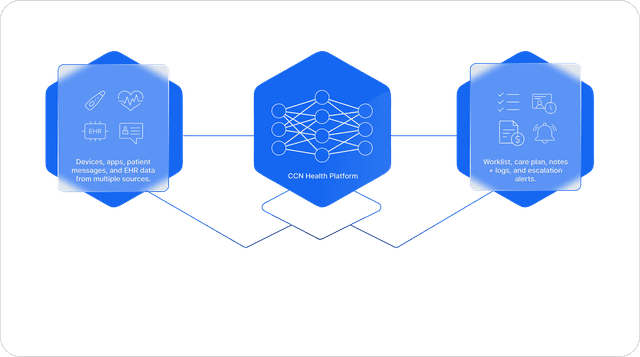
How RPM Works: The Four-Step Process
RPM follows a straightforward workflow from device provisioning through clinical intervention.
Step 1: Device Provisioning and Patient Education
The process begins when a physician determines that a patient would benefit from remote monitoring and issues an order for RPM services. The patient receives an FDA-cleared monitoring device — selected based on their condition — and clinical staff provide education on how to use it.
For cellular-enabled devices, setup is minimal: the patient may need to press a button or simply start using the device. There is no Wi-Fi configuration, no app to download, and no Bluetooth pairing required.
Step 2: Daily Data Collection and Transmission
The patient takes their measurement at home — blood pressure, blood glucose, weight, oxygen saturation, or another physiologic parameter — on a regular basis. The device records the reading and transmits it electronically to the RPM monitoring platform.
For Medicare billing purposes, the patient must record readings on at least 16 out of 30 calendar days within each billing period. This threshold is the most common billing requirement that practices must actively manage.
Step 3: Clinical Review and Trending
Clinical staff — typically nurses or medical assistants working under the supervision of the billing physician — review incoming data on the monitoring platform. They look for:
- Out-of-range readings that require immediate attention (e.g., systolic blood pressure above 180 mmHg)
- Trending patterns that suggest a condition is worsening (e.g., steady weight gain over two weeks in a heart failure patient)
- Compliance gaps where patients are not recording readings consistently
Most RPM platforms provide automated alerts when readings exceed clinician-defined thresholds, ensuring that critical values are not missed in routine data review.
Step 4: Clinical Intervention
When clinical staff identify a reading or trend that requires action, they intervene. This may include:
- Contacting the patient to discuss their readings and adherence
- Notifying the supervising physician about concerning trends
- Adjusting the care plan or medication regimen (per physician direction)
- Scheduling a follow-up office visit or telehealth encounter
- Providing additional patient education on lifestyle modifications
This clinical review and intervention time is billable under CPT codes 99457 and 99458, which require documented clinical staff time with date, duration, and description of activities.
Who Qualifies for RPM?
Patient Eligibility
To qualify for RPM under Medicare, a patient generally needs:
- At least one chronic condition — This includes hypertension, diabetes (Type 1 or Type 2), heart failure, COPD, chronic kidney disease, asthma, obesity, and other conditions where physiologic monitoring provides clinical value.
- A valid physician order — The ordering provider must have an established patient-provider relationship, typically established through an in-person or telehealth visit.
- Documented patient consent — The patient must agree to participate in the RPM program and understand that only one provider can bill RPM for them at a time.
- A qualifying need for monitoring — The monitoring must be medically necessary based on the patient's specific clinical situation.
Common Qualifying Conditions
The most frequently monitored conditions in RPM programs include:
- Hypertension — Blood pressure monitoring (the single most common RPM use case)
- Type 2 Diabetes — Blood glucose or continuous glucose monitoring
- Heart Failure — Weight and blood pressure monitoring (weight gain is an early indicator of fluid retention)
- COPD — Pulse oximetry and respiratory monitoring
- Chronic Kidney Disease — Blood pressure and weight monitoring
- Obesity — Weight monitoring as part of a comprehensive care plan
Practices are not limited to these conditions. Any chronic condition where regular physiologic monitoring supports clinical decision-making can potentially qualify for RPM.
RPM Devices: What Is Used for Monitoring?
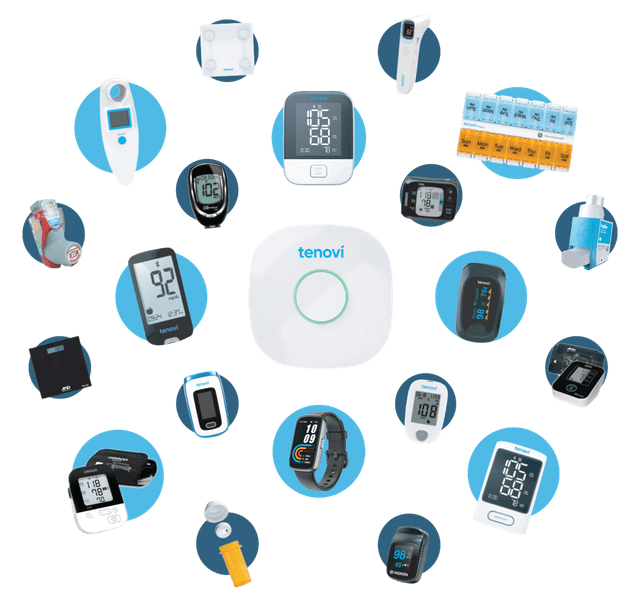
RPM relies on FDA-cleared medical devices that can electronically record and transmit patient data. The most common device categories include:
Blood Pressure Monitors
The most widely used RPM device. Patients with hypertension, heart failure, or chronic kidney disease use automated cuff-based monitors to record systolic and diastolic blood pressure along with heart rate. Cellular-enabled models transmit readings automatically after each measurement.
Blood Glucose Meters
Used for patients with Type 1 or Type 2 diabetes. Patients prick their finger, apply a blood sample to a test strip, and the meter records and transmits the glucose reading. Some cellular-enabled models eliminate the need for a smartphone or app entirely.
Continuous Glucose Monitors (CGMs)
CGMs provide automated glucose readings every few minutes via a small sensor worn on the body. They offer a more comprehensive view of glucose trends compared to finger-stick meters and are increasingly used in RPM programs for diabetes management. CGMs typically require a smartphone or receiver for data display and transmission.
Weight Scales
Used primarily for heart failure patients, where daily weight monitoring can detect fluid retention before symptoms become severe. A sudden weight gain of two or more pounds in a single day — or five or more pounds in a week — may indicate worsening heart failure requiring clinical intervention.
Pulse Oximeters
Fingertip devices that measure blood oxygen saturation (SpO2) and heart rate. Used for patients with COPD, asthma, heart failure, and other conditions where oxygen levels require monitoring.
Contactless Monitoring Devices
An emerging category of RPM technology. Contactless devices — such as radar-based bedside monitors — can track heart rate, respiratory rate, and sleep patterns without any patient interaction. The patient does not wear or operate anything. These devices are particularly valuable for senior living and memory care settings where residents may not be able to reliably operate traditional devices.
RPM CPT Codes and Medicare Reimbursement
RPM billing is built around six CPT codes — including two new codes added in 2026 — that together create a recurring monthly revenue stream. All reimbursement amounts below are estimates based on CMS published fee schedules and may vary by region, payer, and clinical circumstances.
CPT 99453 — Device Setup and Patient Education
Estimated Reimbursement: ~$22 (one-time per enrollment)
Covers the initial setup of the monitoring device and patient education on proper use. Billed once when the patient is enrolled in the RPM program. Requires documented patient education and consent.
CPT 99454 — Device Supply and Data Transmission (16+ Days)
Estimated Reimbursement: ~$52 per month
Covers the supply of the RPM device and daily data recording and transmission. The key billing requirement is that the patient must record readings on at least 16 out of 30 calendar days in the billing period. The device must be FDA-cleared and data must be transmitted electronically.
CPT 99445 — Device Supply (2–15 Days) — New for 2026
Estimated Reimbursement: ~$52 per month
New for 2026, this code covers device supply when a patient transmits data on 2–15 days within a 30-day period. This closes the billing gap for patients who are onboarding, post-discharge, or have lower compliance months. Mutually exclusive with 99454 — bill one or the other based on actual days of data.
CPT 99457 — Clinical Staff Time (First 20 Minutes)
Estimated Reimbursement: ~$52 per month
Covers the first 20 minutes of clinical staff time per month spent reviewing RPM data, communicating with the patient, and managing the care plan. At least a portion of this time must include interactive communication with the patient (phone call, secure message, etc.). Clinical staff work under the general supervision of the billing physician.
CPT 99470 — Clinical Staff Time (First 10 Minutes) — New for 2026
Estimated Reimbursement: ~$26 per month
New for 2026, this code covers the first 10–19 minutes of treatment management time per calendar month, with at least one real-time interactive communication. Use when the full 20-minute threshold for 99457 is not met. Mutually exclusive with 99457 and 99458.
CPT 99458 — Additional Clinical Time (Each Additional 20 Minutes)
Estimated Reimbursement: ~$41 per month
Covers each additional 20-minute increment of clinical staff time beyond the first 20 minutes. Can only be billed after 99457 has been satisfied. Requires the same documentation standards: date, duration, and description of activities.
Total Estimated Monthly Revenue
| CPT Code | Estimated Rate | Frequency | Notes |
|---|---|---|---|
| 99453 | ~$22 | One-time | Setup |
| 99454 | ~$52 | Monthly | 16+ days of data |
| 99445 | ~$52 | Monthly | 2–15 days of data (new 2026) |
| 99457 | ~$52 | Monthly | 20+ min management |
| 99470 | ~$26 | Monthly | 10–19 min management (new 2026) |
| 99458 | ~$41 | Monthly | Add-on to 99457 |
Estimated recurring monthly revenue: ~$104–$245 per patient (depending on which device supply and management codes apply)
Clinical Evidence Supporting RPM
The clinical evidence for RPM spans multiple chronic conditions and consistently demonstrates improvements in key outcomes.
Blood Pressure Management
Hypertension is the most studied RPM application. Multiple peer-reviewed studies have shown that RPM-enrolled patients with hypertension achieve better blood pressure control compared to standard care. Continuous monitoring allows clinicians to detect uncontrolled hypertension between visits and adjust medications more quickly, rather than waiting for the next quarterly appointment.
Heart Failure Monitoring
Daily weight and blood pressure monitoring for heart failure patients enables early detection of fluid retention — one of the primary drivers of heart failure hospitalizations. When clinical teams can identify a three-pound weight gain over two days and intervene with diuretic adjustments, they can often prevent a hospitalization that would have otherwise occurred days later.
Diabetes Management
For patients with diabetes, RPM provides a more complete picture of glucose patterns than periodic A1C tests or sporadic finger-stick readings during office visits. Continuous glucose monitoring in particular reveals post-meal spikes, overnight patterns, and time-in-range metrics that inform medication and lifestyle adjustments.
COPD and Respiratory Conditions
Pulse oximetry monitoring for COPD patients can detect drops in oxygen saturation that precede acute exacerbations. Early intervention — whether an antibiotic for a developing infection or an adjustment to inhaler therapy — can reduce emergency department visits and hospitalizations.
How RPM Fits with Other Medicare Programs
RPM does not exist in isolation. It is one of several Medicare chronic care programs that can be used together for qualifying patients.
RPM + Chronic Care Management (CCM)
CCM provides reimbursement for non-face-to-face care coordination — phone calls, medication reconciliation, specialist communication, and care plan management. A patient can be enrolled in both RPM and CCM simultaneously, as long as the clinical time documented for each program is tracked separately and not double-counted.
RPM + Behavioral Health Integration (BHI)
Patients with both physiologic chronic conditions and behavioral health diagnoses can qualify for concurrent RPM and BHI billing. For example, a patient with hypertension monitored via RPM who also has a major depressive disorder diagnosis could receive BHI care coordination services billed separately.
RPM + Principal Care Management (PCM)
PCM targets patients with a single high-complexity chronic condition. RPM device data can support the clinical decision-making involved in PCM, and both can be billed for the same patient when documentation supports distinct services.
RPM + Remote Therapeutic Monitoring (RTM)
RTM is a related but separate program that covers non-physiologic data — such as musculoskeletal therapy adherence, respiratory therapy outcomes, and cognitive behavioral therapy tracking. RPM and RTM serve different clinical functions and use different CPT codes, but can be used together when clinically appropriate.
Getting Started: RPM Implementation Basics
Identify Your Patient Population
Start by reviewing your existing chronic disease patients. Patients with uncontrolled hypertension, heart failure, diabetes, and COPD are typically the strongest candidates for RPM because they benefit most from continuous monitoring and their conditions map directly to established RPM device categories.
Select a Technology Partner
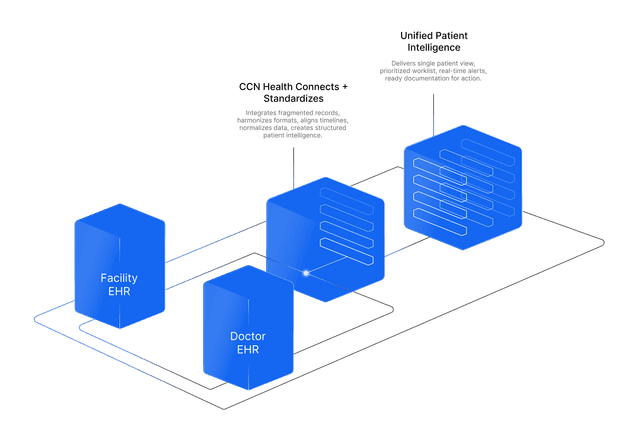
An RPM platform should provide FDA-cleared cellular devices, automated reading tracking against the 16-day threshold, integrated clinical review workflows, time logging for 99457/99458 documentation, and EHR integration to ensure readings flow into the patient's clinical record. Our side-by-side comparison of the best remote patient monitoring companies walks through how the leading vendors differ on each of these dimensions. For senior living and skilled nursing organizations, CCN Health's PointClickCare RPM integration automates device data capture, EHR documentation, and billing. Ambulatory practices using athenahealth can explore CCN Health's athenahealth RPM integration for cloud-to-cloud connectivity.
Train Your Team
Clinical staff need to understand the monitoring protocols (what constitutes an out-of-range reading, when to escalate to the physician, how to document clinical time). Billing staff need to understand the code hierarchy and compliance requirements for each CPT code.
Start Small, Then Scale
Most practices begin with 10–20 pilot patients — typically their highest-acuity chronic disease patients who will benefit most from continuous monitoring. This pilot phase validates workflows, identifies process gaps, and builds staff confidence before broader enrollment.
Monitor and Optimize
Track key metrics monthly: 16-day compliance rate, 99457/99458 billing rates, patient engagement trends, and clinical outcomes. Practices that actively monitor these metrics and adjust workflows accordingly achieve significantly better financial and clinical results.
Conclusion
Remote Patient Monitoring bridges the gap between office visits by collecting continuous physiologic data from patients with chronic conditions. Backed by a clear Medicare reimbursement framework, strong clinical evidence, and increasingly simple device technology, RPM provides a pathway for healthcare practices to improve patient outcomes while generating sustainable recurring revenue.
The program is particularly well-suited for the growing population of Americans with chronic conditions who need more than quarterly office visits can provide. With an estimated ~$145 per patient per month in recurring reimbursement, the ability to stack RPM with CCM and other programs, and a typical 30-day implementation timeline, RPM is accessible to practices of all sizes.
Learn more about CCN Health's RPM program →
Disclaimer: This article is for informational purposes only and does not constitute medical, legal, or billing advice. CPT code reimbursement amounts are estimates based on CMS published fee schedules and may vary by region, payer, and clinical circumstances. Always consult qualified healthcare and billing professionals for guidance specific to your practice.
Let's figure this out together
We work closely with every client to find the right approach for their practice. Think of us as your partner, not just a platform.
Topics
Your Partner in Chronic Care
We love working closely with our clients to find the best solutions. Let us help guide you through the complicated stuff.
Why It Matters
Key Benefits
See how this approach drives measurable improvements across your organization.
Better Patient Outcomes
Continuous monitoring enables early detection of worsening trends, allowing clinical intervention before a minor change becomes a hospitalization.
Recurring Revenue
RPM generates an estimated ~$145 per patient per month in predictable, recurring Medicare reimbursement through four billable CPT codes.
Proactive Care
Real-time alerts notify clinical staff when readings fall outside established thresholds, shifting care from reactive to proactive.
Care Between Visits
RPM fills the gap between office visits with continuous physiologic data, giving clinicians visibility into patient health 24/7.
Higher Engagement
Patients enrolled in RPM programs report feeling more connected to their care team, leading to improved adherence and satisfaction.
Compliance Tracking
Automated platforms track reading days, clinical time, and documentation requirements to ensure every claim meets Medicare standards.
Continue Reading
Related Articles
Explore more insights on this topic.
BHI Billing Guide: Behavioral Health Integration CPT Codes & Requirements
A detailed guide to Behavioral Health Integration billing — covering CPT codes 99484, 99492, and 99493, the Collaborative Care Model (CoCM), PHQ-9 and GAD-7 screening requirements, qualifying behavioral health conditions, and strategies for integrating BHI into primary care practice.
How to Bring RPM In-House: A 2027 Transition Playbook
CMS has proposed paying for RPM and RTM only when practice-employed clinical staff furnish the services, effective January 1, 2027 if finalized. For every practice running RPM on contracted staffing, that starts a clock. This playbook walks through the seven steps of a clean transition: mapping your exposure, hiring an employed team, choosing self-service software, and running a cutover month without a billing gap.
CCM Billing Guide: CPT Codes 99490, 99491, 99439 & Requirements
A comprehensive breakdown of all CCM CPT codes — 99490, 99491, and 99439 — covering patient eligibility, consent requirements, documentation standards, complex CCM criteria, common denials, and revenue projections for chronic care management programs.
Common Questions
Frequently Asked Questions
Get answers to the most common questions about this topic.
Medicare covers RPM for patients with at least one chronic condition that requires ongoing physiologic monitoring. Common qualifying conditions include hypertension, Type 1 and Type 2 diabetes, congestive heart failure, chronic obstructive pulmonary disease (COPD), chronic kidney disease, and obesity. The condition must be one where regular monitoring of physiologic data — such as blood pressure, blood glucose, weight, or oxygen saturation — provides clinical value. The ordering physician determines medical necessity based on the patient's individual clinical situation.
RPM programs use FDA-cleared medical devices to collect physiologic data. The most common devices include blood pressure monitors, blood glucose meters, weight scales, pulse oximeters, continuous glucose monitors (CGMs), and thermometers. Advanced RPM programs may also include contactless monitoring devices that track vital signs like heart rate and respiration without any patient interaction. All devices must be FDA-cleared for clinical-grade accuracy and capable of electronically transmitting data to qualify for Medicare billing under CPT 99454.
Medicare reimburses RPM through six CPT codes that together can generate an estimated $104–245 per patient per month. CPT 99453 covers initial device setup (~$22, billed once). CPT 99454 covers device supply with 16+ days of data (~$52/month), while the new 2026 code 99445 covers 2–15 days (~$52/month). CPT 99457 covers the first 20 minutes of clinical review (~$52/month), while the new 2026 code 99470 covers the first 10 minutes (~$26/month). CPT 99458 covers each additional 20 minutes (~$41/month). The 99445 and 99470 codes are mutually exclusive with 99454 and 99457 respectively. Actual rates vary by region and payer.
No. Modern RPM devices are designed for simplicity, especially for older adults. Cellular-enabled devices — such as blood pressure monitors and weight scales with built-in SIM cards — require the patient to simply take their measurement. The data transmits automatically without any Wi-Fi, smartphone, app, or Bluetooth pairing required. For patients who cannot reliably operate any device, contactless radar-based monitors can track vital signs passively without any patient interaction at all.
RPM and telehealth are related but distinct healthcare delivery models. Telehealth involves real-time (synchronous) audio or video encounters between patient and provider, similar to an in-person visit conducted remotely. RPM uses devices to collect and transmit patient data continuously (asynchronously) between visits — no scheduled appointment is needed. RPM and telehealth use different CPT codes and have different billing requirements. Many practices use both: telehealth for virtual consultations and RPM for ongoing vital sign monitoring between those consultations.
Still have questions? We love helping practices figure this out — no pressure, just real answers.

Your Partner in Chronic Care
We're Here to Guide You Every Step of the Way
RPM, CCM, and chronic care management can get complicated. We work closely with every client to figure out the best solutions for their practice.