business
In-House RPM: Why Practices Are Bringing Monitoring In-House
More practices are choosing to run Remote Patient Monitoring with their own employed staff instead of contracting the work out. Three forces are driving the shift: program economics that favor keeping the reimbursement, software that automates the daily workload, and a proposed CMS rule that would require practice-employed staff for RPM and RTM starting in 2027. Here is the full picture, including when a partner still makes sense.
In-house RPM means your practice runs Remote Patient Monitoring with clinical staff you employ, on software you license, and keeps the full Medicare reimbursement of roughly $120 to $160 per patient per month. The staff can work fully remote; in-house refers to employment, not location. Interest is accelerating because CMS has proposed paying for RPM and RTM only when furnished by practice-employed clinical staff beginning January 1, 2027. That proposal does not affect CCM, PCM, or BHI.
Why In-House RPM Is Having a Moment
For most of the past five years, the default way to launch Remote Patient Monitoring was to hand it to someone else. A full-service company supplied the devices, the monitoring staff, and the billing support, and the practice signed the orders. That model built the industry, and it made sense when the software was immature and the billing rules were unfamiliar.
In 2026, the calculation is visibly changing. Three forces are pushing practices toward running RPM with their own team:
- The economics. Medicare pays an estimated $120 to $160 per patient per month for a well-run RPM program. Full-service arrangements are commonly quoted in the $40 to $80 per patient per month range, with exact fees varying by vendor and scope. At meaningful panel sizes, that difference is the largest line item in the whole program.
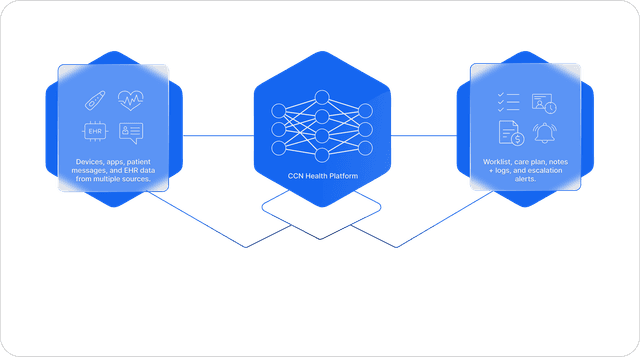
- The software. The daily labor that once justified a vendor's back office, tracking minutes, triaging readings, assembling billing evidence, is now automated by the platform itself. One employed clinical monitor can realistically manage about 200 patients.
- The regulation. CMS has proposed paying for RPM and RTM in 2027 only when the services are furnished by clinical staff employed by the billing practice. If that provision is finalized, contracted third-party staffing, which has been permitted since 2020, would no longer be billable for those two programs.
This article walks through what in-house actually means, what the proposed rule does and does not cover, the honest economics, and when a partner still makes sense.
Talk to CCN Health about running RPM in-house →
What In-House Actually Means (Your Staff Can Be Remote)
In-house RPM has a precise meaning that is narrower than it sounds:
- The clinical staff are employed by your practice. The nurses, LPNs, or medical assistants who review readings, call patients, and log time are on your payroll, not a vendor's.
- The software is licensed, not bundled with labor. Your practice uses an RPM platform the way it uses an EHR: as a tool your team operates.
- The practice bills Medicare directly and keeps the reimbursement across CPT 99453, 99454 or 99445, 99457 or 99470, and 99458.
What in-house does not mean is on-site. Monitoring staff can work fully remote, from home or from a central location serving several offices, as long as they are employed by the practice and work under the required supervision. In CMS's proposed 2027 language, the line that matters is employment by the billing practitioner or practice, and the agency is explicit that the staff do not need to be physically located at the practice, nor the patient on-site.
That distinction opens the model to practices that assumed in-house meant new desks and office space. Hiring one remote nurse is a very different project from building a monitoring department.
The Proposed 2027 Rule Accelerating the Shift
On July 14, 2026, CMS released the CY2027 Medicare Physician Fee Schedule proposed rule (CMS-1848-P). Among its remote-monitoring provisions is the one reshaping this conversation: payment for RPM and RTM would be allowed only when the services are delivered by clinical staff employed by the billing practice, rather than by contracted third parties.
CMS tied the proposal to oversight concerns. The HHS Office of Inspector General's 2025 report on RPM billing in Medicare documented a program growing fast, roughly $536 million in 2024 payments, up 31 percent in a year, with nearly one million enrollees, and flagged billing patterns that concentrate where third parties run programs with little connection to the treating practice.
Three things to keep straight about the proposal:
- It is proposed, not final. The comment window runs through approximately September 14, 2026, the final rule is expected in fall 2026, and any change takes effect January 1, 2027. Industry coalitions are commenting heavily, and heavily-commented provisions frequently get revised.
- It covers RPM and RTM only. CCM, PCM, BHI, and APCM are untouched.
- It restricts who furnishes the service, not who supports the program. Software platforms, device logistics, and billing tools are unaffected. What would end, for RPM and RTM, is contracting out the clinical monitoring itself.
For the full provision-by-provision breakdown, including the conversion factor and the proposed code bundling, see our CMS 2027 proposed rule explainer.
Does This Apply to CCM Too?
No, and this is the most common point of confusion.
| Program | Covered by the proposed employed-staff rule? |
|---|---|
| RPM (Remote Patient Monitoring) | Yes, as proposed |
| RTM (Remote Therapeutic Monitoring) | Yes, as proposed |
| CCM (Chronic Care Management) | No |
| PCM (Principal Care Management) | No |
| BHI (Behavioral Health Integration) | No |
| APCM (Advanced Primary Care Management) | No |
A practice or group running stacked programs may reasonably land on a split model: employed staff furnishing RPM and RTM, with continued flexibility, including partners, on the care-management side. Care-management organizations themselves are adapting too. Many are restructuring toward models where the practice employs the monitoring staff while the organization provides software, training, and program management. The delivery models are shifting; the programs themselves are not going anywhere.
The Economics: What You Keep When You Run It Yourself
Here is the honest math, using the estimated per-patient revenue our RPM revenue guide works from (roughly $120 to $160 per patient per month across the RPM code family) and the staffing costs from our RPM staffing guide (a full-time clinical monitor at $55,000 to $80,000 per year, or about $4,500 to $6,700 per month).
| Panel size | Est. monthly program revenue | In-house staffing cost | Typical full-service fee at $40-80/patient |
|---|---|---|---|
| 50 patients | ~$8,000 | Existing staff absorb it (30-60 min/day) | $2,000 to $4,000 |
| 100 patients | ~$16,000 | $4,000 to $8,000 | |
| 200 patients | ~$32,000 | 1 FTE (~$4,500 to $6,700) | $8,000 to $16,000 |
Two things stand out. First, at 200 patients the in-house staffing cost is roughly half, and often a third, of a typical full-service fee for the same panel. Second, the gap widens as you grow: staffing scales in steps (one monitor per ~200 patients) while per-patient fees scale linearly with every enrollment.
Full-service fees do buy real things: the vendor's staff, their training, their device logistics. The question is whether those things still need to be bought at a per-patient price, and that is where the software comes in.
Figures are planning estimates at national non-facility rates; actual reimbursement varies by geography and payer mix. See the 2026 RPM reimbursement breakdown for per-code detail.
The Software Is What Changed
A decade of full-service RPM was built on a real gap: someone had to watch the readings every morning, chase the patients who went quiet, keep a defensible time log for every billed minute, and assemble the billing evidence every month. If software could not do that work, a vendor's back office had to.
Modern platforms closed that gap. On CCN Health, the daily workload of a 200-patient panel looks like this:
- The morning queue is already triaged. Overnight readings are sorted against each patient's thresholds, and the monitor opens a prioritized list instead of a spreadsheet.
- Time tracks itself. The platform logs billable minutes automatically as staff review data and talk to patients, pausing when they go idle. The 99457 and 99458 evidence accrues as a byproduct of doing the work.
- Workflows guide the day. A next-patient lane moves the monitor through the panel, so nothing depends on someone remembering who has not been called.
- Billing reports are one click. Month-end, the platform shows exactly which patients hit which code thresholds, with the documentation behind each one.
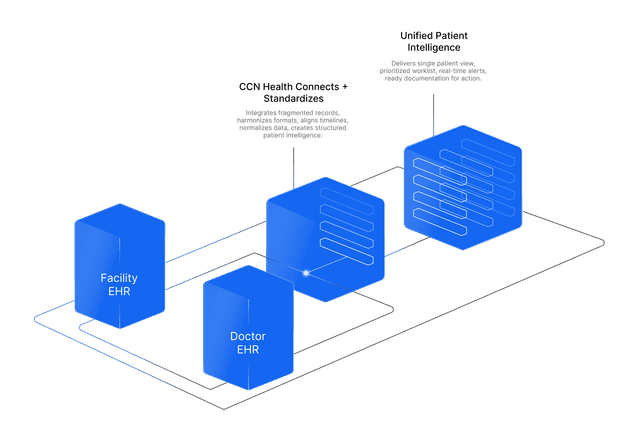
- Readings and documents flow to the EHR. Integration across 8 EHR systems writes vitals and monthly summaries back to the chart, so the program does not create a second documentation burden.
The 16-day and 20-minute thresholds also got a floor under them in 2026: 99445 pays for 2 to 15 days of readings and 99470 pays for 10 to 19 minutes of management, so partial months produce revenue instead of write-offs. That matters most for exactly the practices most likely to go in-house at smaller scale.
This is why the 1:200 staffing benchmark is realistic for an employed team, and why the efficiency argument for outsourcing has weakened: the coordination layer became a product feature.
See how the CCN Health workflow engine runs a monitoring day →
When a Partner Still Makes Sense
An honest decision guide has to include the other column. Full-service and partnered models remain the right call in real situations:
- Very small panels that need speed. Under roughly 50 patients, if nobody on staff has 30 to 60 minutes a day, a turnkey launch gets patients monitored months sooner than a hiring process.
- No hiring capacity or a hard hiring freeze. If the practice cannot add headcount at all, an in-house model has nothing to run on, whatever the margins say.
- CCM programs where enrollment is the bottleneck. Care-management companies are often genuinely better at consent-and-enrollment outreach at scale, and the proposed 2027 staffing rule does not restrict CCM. A hybrid, with a partner driving CCM enrollment while your employed staff run RPM, is a coherent model.
- Bridge arrangements. Many practices start with help and insource as volume grows. Starting outsourced and transitioning at 100+ patients has been a standard path for years, and the proposed rule simply compresses the timeline for RPM.
The point is not that partners are obsolete. It is that the default has flipped: in-house is now the base case to argue from, and the partner model is the exception that has to justify its per-patient price.
A Decision Framework
Five questions settle most cases:
- Panel trajectory. Will you have 100+ RPM patients within a year? At that size the in-house margin advantage is decisive.
- Hiring reality. Can you employ one remote nurse, LPN, or MA? That is the entire staffing requirement at 200 patients.
- 2027 exposure. Is your current RPM staffed by a contractor? If the proposal is finalized as written, that arrangement stops being billable for RPM and RTM on January 1, 2027. Map this now.
- Program mix. Heavy CCM with thin RPM might favor a partner for enrollment and a small employed team for monitoring.
- Software confidence. Does your platform automate time tracking, triage, and billing evidence? If the software is weak, in-house means absorbing manual work; if it is strong, in-house means keeping the margin.
How to Make the Move
If the answers point in-house, the transition is a project with a known shape: audit your current contract and staffing against the proposed rule, hire or designate the employed staff, stand up the platform, move the devices and the data, and run one careful cutover month. The data-moving step, the one practices dread, is the one a good platform does for you: on CCN Health the EHR integration imports patients, care plans, conditions, and consent in bulk, our integration team bridges anything the standard connectors miss, and a dedicated account and integration manager walks the whole move through with you. We wrote a dedicated step-by-step guide: How to bring RPM in-house before 2027.
Why Teams Run In-House RPM on CCN Health
CCN Health was built as self-service software first, which is exactly the shape the in-house model needs:
- The easiest on-ramp in the category. Getting started, whether from scratch or from an existing vendor, is mostly a data problem, and CCN Health treats it as our problem. Bulk EHR import brings your patients over with chronic conditions, care plan information, and consent records attached; notes and history load from your exports. Where your data lives somewhere the 8 standard EHR integrations do not reach, our integration team builds that bridge for you as part of onboarding.
- The whole program, one platform. RPM, CCM, PCM, BHI, and RTM with per-program time tracking, so stacked billing never double-counts a minute.
- Automation where the labor was. Auto time capture, alert triage, guided next-best-action workflows, one-click billing reports, audit-ready documentation.
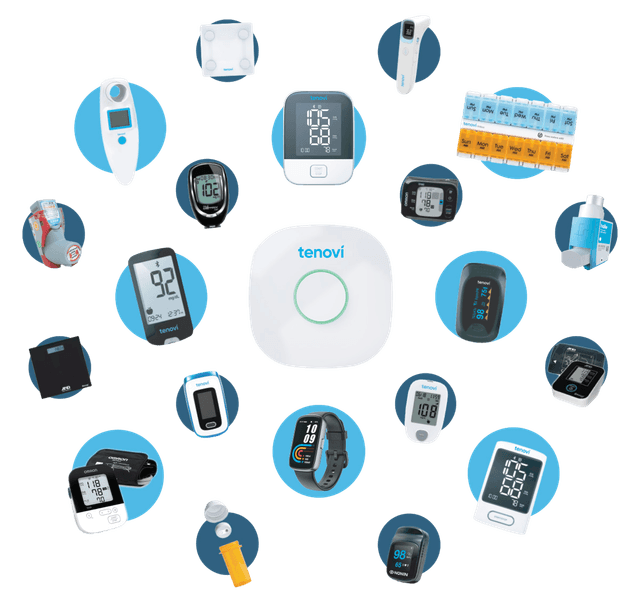
- EHR and device breadth. Dual-EHR architecture across 8 EHR systems and 25+ FDA-cleared devices, including contactless options for patients who cannot operate a cuff.
- Easy does not mean alone. Every customer gets a dedicated account and integration manager who walks setup and migration through with you personally and stays your point of contact after, backed by 24/7 live support, with no per-patient services fee attached. Running in-house means the program is yours; for billing questions, threshold tuning, or a read on the next CMS rule, you have us to lean on.
- Room to grow either way. If you later manage programs across multiple practices or facilities, sub-accounts under one organizational umbrella support that structure on the same platform.
Bottom Line
In-house RPM stopped being the ambitious option and became the default worth arguing from. The reimbursement was always there; what changed is that software now does the coordination work that justified per-patient service fees, and CMS has proposed making employed-staff delivery a condition of RPM and RTM payment in 2027. Practices that hire one remote monitor per couple hundred patients, on a platform that automates the evidence, keep the margin and match where the rules are heading. Partners still have real roles, especially in CCM enrollment and quick-start launches, but the burden of proof has moved.
This article describes the CY2027 Medicare Physician Fee Schedule proposed rule (CMS-1848-P) as released July 14, 2026. All 2027 provisions discussed are proposals subject to public comment and may change before the final rule. Revenue and staffing figures are planning estimates at national non-facility rates. This is general information, not billing, legal, or compliance advice; confirm codes and payment amounts against the Medicare Physician Fee Schedule.
Let's figure this out together
We work closely with every client to find the right approach for their practice. Think of us as your partner, not just a platform.
Topics
Your Partner in Chronic Care
We love working closely with our clients to find the best solutions. Let us help guide you through the complicated stuff.
Why It Matters
Key Benefits
See how this approach drives measurable improvements across your organization.
Keep the Program Revenue
Your practice bills Medicare directly and keeps the estimated $120 to $160 per patient per month, paying only for software and devices instead of a per-patient service fee.
Automated Time Tracking
Billable minutes accrue automatically as your staff review readings and talk to patients, so the 99457 and 99458 documentation builds itself.
Guided Daily Workflows
Alert triage and next-patient queues turn a 200-patient panel into an ordered workday, which is what makes in-house staffing ratios achievable.
2027-Ready Staffing Model
An employed-staff program run on CCN Health already matches the delivery model CMS has proposed to require for RPM and RTM in 2027.
EHR and Device Coverage
Dual-EHR integration across 8 EHR systems and 25+ FDA-cleared devices, including contactless monitoring, without a services middleman.
Self-Service, Not Unsupported
A dedicated account and integration manager walks setup and migration through with you personally, backed by 24/7 live support for every question after. Self-service means easy, not alone.
Continue Reading
Related Articles
Explore more insights on this topic.
How to Bring RPM In-House: A 2027 Transition Playbook
CMS has proposed paying for RPM and RTM only when practice-employed clinical staff furnish the services, effective January 1, 2027 if finalized. For every practice running RPM on contracted staffing, that starts a clock. This playbook walks through the seven steps of a clean transition: mapping your exposure, hiring an employed team, choosing self-service software, and running a cutover month without a billing gap.
CMS 2027 Proposed Rule: RPM, RTM & CCM Changes Explained
On July 14, 2026, CMS released the CY2027 Medicare Physician Fee Schedule proposed rule (CMS-1848-P). It proposes a lower conversion factor, a rethink of how RPM and RTM are coded, and new rules for who can deliver these services. Here's an accurate breakdown — and what providers and care-management groups should do before the September comment deadline.
RPM Staffing Guide 2026: Models, Ratios & Costs
A comprehensive 2026 staffing guide for RPM programs — covering staff-to-patient ratios at every scale, role definitions for clinical leads and care managers, training timelines, and cost-versus-revenue analysis for in-house, hybrid, and outsourced staffing models.
Common Questions
Frequently Asked Questions
Get answers to the most common questions about this topic.
In-house RPM is a Remote Patient Monitoring program operated by your own practice: your employed clinical staff review readings, call patients, and document time, using an RPM software platform your practice licenses. The practice bills Medicare directly and keeps the reimbursement, paying only for software and devices. It contrasts with full-service models where a third-party company provides the monitoring staff and takes a per-patient fee or a share of the program's revenue.
No. In-house refers to employment, not location. Clinical monitors can work fully remote as long as they are employed by the practice and operate under the required level of supervision. Under the CMS proposal for 2027, the distinction that matters is whether the clinical staff furnishing RPM are direct employees of the billing practitioner or practice, and CMS has been explicit that the staff do not need to be physically located at the practice.
Not certainly, but it is under real pressure. The CY2027 Medicare Physician Fee Schedule proposed rule would allow payment for RPM and RTM only when clinical staff employed by the billing practice furnish the services. It is a proposal: the public comment period runs through approximately September 14, 2026, a final rule is expected in fall 2026, and any change would take effect January 1, 2027. Industry groups are commenting heavily and the provision could be revised. Practices that depend on contracted RPM staffing should map their exposure now rather than wait for the final rule.
No. The proposed staffing restriction covers RPM and RTM only. Chronic Care Management (CCM), Principal Care Management (PCM), Behavioral Health Integration (BHI), and Advanced Primary Care Management (APCM) are not included, so care-management partners can continue to furnish those services under the existing rules. Groups running combined programs may end up with a split model: employed staff for RPM and RTM, with more flexibility on CCM.
A full-time clinical monitor typically manages 150 to 250 RPM patients, with 200 as a reliable planning benchmark for a mixed-acuity panel on a platform with automated time tracking and alert triage. Acuity, alert thresholds, and whether the monitor also handles enrollment all move the number. Our RPM staffing guide covers ratios, roles, and training in detail.
It can be, because the model scales down well. Below roughly 50 patients, existing staff can usually absorb monitoring in 30 to 60 minutes per day, so incremental labor cost is near zero while the program generates an estimated $8,000 per month at 50 patients. The 2026 codes helped smaller panels too: 99445 pays for 2 to 15 days of readings and 99470 pays for 10 to 19 minutes of management time, so months that miss the historical thresholds are no longer unbillable.
Five features carry most of the weight: automatic time tracking that logs billable minutes as staff work, alert triage that sorts the day's readings into a prioritized queue, guided workflows that tell each monitor which patient is next, one-click billing reports mapped to the CPT codes, and EHR integration that writes readings and documents back to the chart. Together they are what make a 1:200 staff-to-patient ratio realistic for an employed team.
Still have questions? We love helping practices figure this out — no pressure, just real answers.

Your Partner in Chronic Care
We're Here to Guide You Every Step of the Way
RPM, CCM, and chronic care management can get complicated. We work closely with every client to figure out the best solutions for their practice.