business
How to Bring RPM In-House: A 2027 Transition Playbook
CMS has proposed paying for RPM and RTM only when practice-employed clinical staff furnish the services, effective January 1, 2027 if finalized. For every practice running RPM on contracted staffing, that starts a clock. This playbook walks through the seven steps of a clean transition: mapping your exposure, hiring an employed team, choosing self-service software, and running a cutover month without a billing gap.
To bring RPM in-house: (1) audit how your current program is staffed and billed, (2) choose your target model, (3) hire or designate employed clinical staff, who can work fully remote, at roughly one monitor per 200 patients, (4) license self-service RPM software with automated time tracking and billing reports, (5) resolve device ownership and data export with your current vendor, (6) cut over on a month boundary so no 16-day or 20-minute threshold is split across systems, and (7) tighten documentation. The proposed CMS employed-staff requirement would take effect January 1, 2027 if finalized.
Why This Playbook Exists
CMS's CY2027 proposed rule (CMS-1848-P, released July 14, 2026) would allow Medicare payment for RPM and RTM only when the services are furnished by clinical staff employed by the billing practice. Contracted and leased staffing, the arrangement most full-service RPM programs run on and one Medicare has permitted since 2020, would no longer be billable for those two programs starting January 1, 2027, if the provision is finalized.
Two honest caveats before the steps. First, this is a proposal. Comments are open through approximately September 14, 2026, the final rule lands in the fall, and heavily-contested provisions often get revised. Second, the restriction covers RPM and RTM only. CCM, PCM, BHI, and APCM are not included, and partnered models there continue unchanged. Our CMS 2027 rule explainer covers every provision in detail, and our in-house RPM guide covers whether the move is right for you.
If your RPM program depends on contracted clinical staff, though, waiting for the final rule before planning is the risky path. Hiring is the slowest step in any transition, and the practices that map their exposure now keep every option open. Here is the playbook.
Step 1: Audit Your Exposure
Before changing anything, establish precisely how exposed your program is. For each program you bill (RPM, RTM, CCM, PCM, BHI), answer:
- Who furnishes the service? Your employees, a staffing contractor, or a full-service company's clinical team?
- What does the contract actually say? Pull the agreement and identify the staffing structure, the termination terms, the device ownership clauses, and any data-export provisions.
- Which billed codes depend on contracted staff? In a typical full-service RPM arrangement, the management codes (99457, 99458, and the new 99470) are earned by the vendor's staff. Device supply (99454, 99445) and setup (99453) may or may not be.
- What is the monthly economic picture? Program revenue, the fee you pay, and what you net per patient.
Many groups discover their exposure is partial: RPM monitoring is contracted while CCM runs on their own staff, or one location outsources while another does not. The audit turns a vague worry into a specific list.
Step 2: Choose Your Target Model
Three destinations cover nearly every practice:
- Fully in-house. Your employed staff run every program on licensed software. Maximum margin, one delivery model, ready for the proposed rule regardless of how it finalizes.
- Split model. Employed staff furnish RPM and RTM; a care-management partner continues on CCM or PCM, which the proposal does not restrict. This preserves a partner's genuine strength, enrollment outreach at scale, where it remains fully compliant.
- Restructured partnership. Your practice employs the monitoring staff; your current company continues as a software, device, or program-management provider under a revised agreement. Worth a direct conversation before assuming an exit: many vendors are actively building this option.
Pick the destination before hiring, because it sets how many people you need.
Step 3: Hire the Employed Team (They Can Be Remote)
The staffing requirement is smaller than most practices expect, and employed does not mean on-site. A remote nurse, LPN, or MA on your payroll satisfies the proposed employment line; CMS is explicit that clinical staff need not be physically located at the practice.
- The ratio: one full-time clinical monitor per roughly 150 to 250 RPM patients, with 200 as the planning benchmark. A 100-patient panel is half an FTE folded into an existing role.
- The cost: about $4,500 to $6,700 per month for a full-time monitor depending on credentials and region, against an estimated $32,000 per month of program revenue at 200 patients.
- The timeline: recruiting is the long pole of the whole transition, so start it first. Training a new monitor on a modern platform takes one to two weeks.
- Under 50 patients: you may not need a hire at all. Existing clinical staff typically absorb monitoring in 30 to 60 minutes per day at that scale.
Roles, ratios, training plans, and the scaling path are covered in depth in our RPM staffing guide.
Step 4: Choose Software That Replaces the Back Office
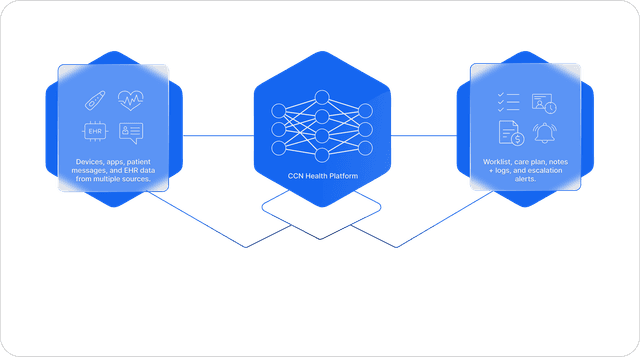
When a vendor's staff leave the program, their coordination work has to land somewhere. The software decides whether it lands on automation or on your new hire. Demand five things in any platform you evaluate:
- Automatic time tracking. Billable minutes logged as staff work, with idle pausing, so 99457/99458/99470 evidence accrues without a stopwatch.
- Alert triage and guided workflows. A prioritized morning queue and a next-patient lane, not a raw readings table.
- Per-code billing reports. Month-end visibility into exactly which patients hit which thresholds, with the documentation attached.
- EHR integration. Readings and monthly documents written back to the chart automatically.
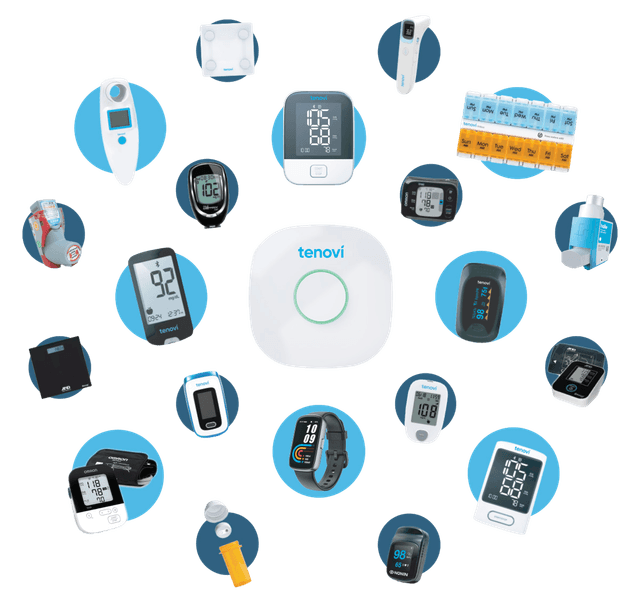
- Device breadth without lock-in. FDA-cleared devices provisioned to your program, including cellular options for patients without smartphones.
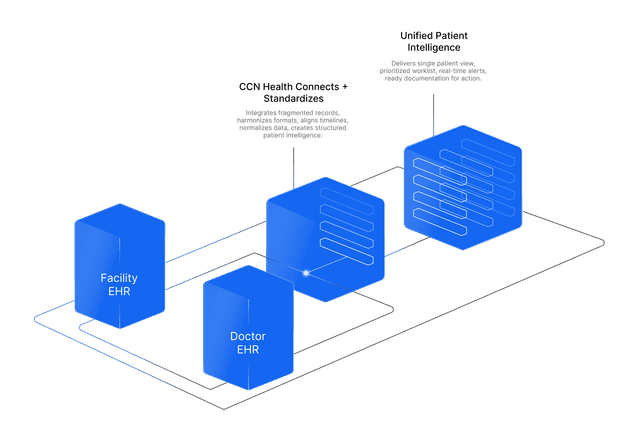
- A real migration path. Bulk import of patients, care plans, chronic conditions, and consent from the EHR, plus an integration team that builds a bridge to whatever the standard connectors do not cover. If a platform makes migration your problem, the transition will slip; if it makes migration its problem, the cutover is a date on a calendar.
This checklist is the difference between insourcing a program and insourcing a burden. It is also, not coincidentally, a description of what CCN Health automates for employed teams.
Step 5: Resolve Devices and Data Before Giving Notice
The messiest transitions are the ones where notice is given before logistics are settled. Close four items first, in writing:
- Device ownership. Confirm who owns each device in the field and what the contract says happens at termination. Cellular devices are often provisioned to transmit to one specific platform and may need replacement rather than repointing.
- Data export. Historical readings, time logs, and billing evidence support your past claims; secure a complete export before access ends.
- Consent documentation. Retrieve every patient's RPM consent record and store it with your program files. Consent belongs to your program; the paperwork should too.
- Patient roster and contact history. Enrollment dates, device assignments, and outreach notes make the new team effective on day one.
Where devices must be swapped, stage replacements before the cutover month so no patient loses transmission days against the 16-day threshold while boxes are in the mail.
The import side of this is not your project. Getting data out of the old arrangement is your homework; getting it into the new platform should be the platform's. On CCN Health, the EHR integration pulls your patients in bulk, and with them the clinical context the program runs on: demographics, chronic conditions and problem lists, care plan information, and consent records, straight from the chart. Notes and monitoring history come across from your export files. And when some of your data lives somewhere our 8 standard EHR integrations do not reach, a legacy vendor's export, a homegrown system, a spreadsheet someone swears by, our integration team builds that bridge for you. You hand over the export; your panel is enrolled, contextualized, and ready for the first morning queue. Migration difficulty is the reason practices delay this transition, and it is precisely the part CCN Health has made easy.
Step 6: Cut Over on a Month Boundary
RPM billing is built on monthly thresholds: 16 days of readings for 99454 (or 2 to 15 days for 99445), and 20 minutes of management for 99457 (or 10 to 19 for 99470). A mid-month platform switch splits those thresholds across two systems and creates a month nobody can bill cleanly.
The clean pattern:
- Final full month on the old arrangement. The outgoing staff finish the month completely and bill it normally.
- Day one of the next month on the new platform, with your employed team, the panel already imported in bulk with care plans, conditions, and consent attached, devices transmitting, and thresholds accruing from zero in one place.
- A short overlap window where the old arrangement remains reachable for stragglers and data questions, if the contract allows it.
- Patient notification in the transition week: who will be calling now, from what number, and that the program itself is unchanged. Treat it as service continuity, not fine print. Escalation paths and physician review procedures should be confirmed before the first morning queue.
Measure the cutover month deliberately: transmission-day counts and management minutes per patient, compared against the vendor months. That comparison is your proof the program came through whole.
Step 7: Tighten Documentation for the New Climate
The same OIG scrutiny that produced the proposed rule is raising the audit bar for everyone. As the program lands in-house, set the documentation standard above where it was:
- Every billed interaction shows the data reviewed, the clinical decision, and the action taken.
- Time logs carry date, duration, mode, and content, generated automatically by the platform rather than reconstructed at month-end.
- New enrollments get a documented initiating relationship with the practice. CMS has separately proposed requiring an initiating visit for new RPM and RTM starts, so building the habit now costs nothing and future-proofs enrollment.
- Consent, device provenance, and threshold evidence live where an auditor can find them in minutes.
An in-house program with automated evidence is structurally easier to defend than any arrangement where the documentation lived in someone else's system.
What If the Rule Changes?
It might. The comment period is active, industry coalitions are organized, and CMS revises heavily-contested provisions often. Here is why the playbook is worth running anyway:
- The margin case stands on its own. Keeping an estimated $120 to $160 per patient per month against one salary per 200 patients was the argument before the rule existed.
- Nothing in the transition is wasted. Employed staff, strong software, and clean documentation are unambiguous improvements under any version of the final rule.
- Optionality has a deadline. If you plan now and the provision is finalized as written, you cut over calmly in the fall. If you wait and it finalizes, you join a rushed market for remote nurses in December.
We will update this playbook when the final rule publishes.
Where CCN Health Fits
CCN Health is the self-service platform this transition lands on, and the migration itself is where it separates from the field. The hardest part of insourcing is moving the data, and CCN Health makes it the easiest part. Bulk EHR import brings your patients over with their chronic conditions, care plan information, and consent records already attached, so the panel arrives ready to work, not as a list of names to rebuild. Notes and monitoring history load from your exports. If your data sits behind a system our 8 standard EHR integrations do not cover, our integration team creates the bridge for you as part of onboarding, not as a billable side project.
And you do not run the migration off a help-center article. Every CCN Health customer gets a dedicated account and integration manager who walks the transition through with you personally: the import mapping, the device staging, the cutover date, the first billing month. That person knows your program by name, and behind them sits 24/7 live support that answers when a monitor has a question at 6 a.m. on day one. The relationship does not end at cutover either. In-house means the program is yours; it never means you are on your own. A billing question in month three, a threshold you want tuned, a new CMS rule you want a read on: you have us to lean on for all of it. Customer service is the part of this industry most platforms treat as a cost center; it is the part CCN Health is best at.
From there: automatic time tracking from the first morning, guided workflows that make a new monitor productive in days, per-code billing reports, 25+ FDA-cleared devices, and every Medicare care program on one system so a split model stays clean. No per-patient services fee.
Talk to CCN Health about your transition timeline →
This article describes the CY2027 Medicare Physician Fee Schedule proposed rule (CMS-1848-P) as released July 14, 2026. All 2027 provisions discussed are proposals subject to public comment and may change before the final rule. Figures are planning estimates at national non-facility rates. This is general information, not billing, legal, or compliance advice; review contracts and transition plans with qualified counsel and confirm codes against the Medicare Physician Fee Schedule.
Let's figure this out together
We work closely with every client to find the right approach for their practice. Think of us as your partner, not just a platform.
Topics
Your Partner in Chronic Care
We love working closely with our clients to find the best solutions. Let us help guide you through the complicated stuff.
Why It Matters
Key Benefits
See how this approach drives measurable improvements across your organization.
Built for Employed Teams
CCN Health is self-service software: your staff run the whole program with guided workflows, which is exactly the delivery model the proposed 2027 rule rewards.
No Billing Gap at Cutover
Month-boundary onboarding, bulk EHR import, and per-code billing reports let a panel move platforms without splitting a 16-day or 20-minute threshold.
Automatic Time Evidence
Billable minutes log themselves as your new team works, so documentation quality goes up at the exact moment scrutiny does.
Devices Without Lock-In
25+ FDA-cleared devices, including cellular and contactless options, provisioned to your program rather than to a staffing contract.
A Manager Walks You Through It
A dedicated account and integration manager personally guides the migration, from import mapping to the first billing month, backed by 24/7 live support and there for every question after.
Every Program, One Platform
RPM, CCM, PCM, BHI, and RTM with separate per-program time tracking, so a split model with a CCM partner stays clean and auditable.
Continue Reading
Related Articles
Explore more insights on this topic.
In-House RPM: Why Practices Are Bringing Monitoring In-House
More practices are choosing to run Remote Patient Monitoring with their own employed staff instead of contracting the work out. Three forces are driving the shift: program economics that favor keeping the reimbursement, software that automates the daily workload, and a proposed CMS rule that would require practice-employed staff for RPM and RTM starting in 2027. Here is the full picture, including when a partner still makes sense.
CMS 2027 Proposed Rule: RPM, RTM & CCM Changes Explained
On July 14, 2026, CMS released the CY2027 Medicare Physician Fee Schedule proposed rule (CMS-1848-P). It proposes a lower conversion factor, a rethink of how RPM and RTM are coded, and new rules for who can deliver these services. Here's an accurate breakdown — and what providers and care-management groups should do before the September comment deadline.
RPM Staffing Guide 2026: Models, Ratios & Costs
A comprehensive 2026 staffing guide for RPM programs — covering staff-to-patient ratios at every scale, role definitions for clinical leads and care managers, training timelines, and cost-versus-revenue analysis for in-house, hybrid, and outsourced staffing models.
Common Questions
Frequently Asked Questions
Get answers to the most common questions about this topic.
January 1, 2027, if finalized as proposed. The CY2027 Medicare Physician Fee Schedule proposed rule (CMS-1848-P) was released July 14, 2026, the public comment period runs through approximately September 14, 2026, and CMS is expected to publish the final rule in fall 2026. The provision could be revised or dropped in response to comments, but practices with contracted RPM staffing should plan against the proposed date rather than bet on a reversal.
Not necessarily. The proposed rule restricts who furnishes the clinical service, not who supplies the technology. Many programs restructure rather than separate: the practice employs the monitoring staff, while a company continues to provide software, devices, training, or program management. If your current vendor offers a software-only arrangement, the transition can be a contract change instead of a breakup. What would end, for RPM and RTM, is billing for monitoring performed by staff who are not direct employees of the practice.
Yes. CMS's proposal draws the line at employment by the billing practitioner or practice, and states that clinical staff do not need to be physically located at the practice, nor the patient on-site. A remote nurse on your payroll, licensed appropriately and working under the required supervision, fits the proposed model. This is what makes the transition practical for small practices with no spare office space.
It depends on your current contract. Devices are sometimes owned by the vendor and leased to the program, sometimes purchased by the practice, and cellular devices are often provisioned to transmit to a specific platform. Before giving notice, confirm in writing who owns each device, whether readings can be repointed to a new platform, and what happens to devices in patients' homes at termination. Where devices must be replaced, stage replacements before the cutover month so no patient loses transmission days against the 16-day threshold.
Plan for roughly one to three months from decision to cutover, driven mostly by hiring. The software setup, device logistics, and data migration typically fit inside a few weeks. If you already have a nurse or MA who can absorb monitoring, or your panel is small enough for existing staff, the timeline compresses; if you are recruiting a dedicated remote monitor, the hiring pipeline is the long pole. Counting back from January 1, 2027, a practice that starts in the fall still has a comfortable window.
This is the step practices fear most, and on CCN Health it is deliberately the easiest one. The EHR integration imports your patients in bulk along with the clinical context the program needs: demographics, chronic conditions and problem lists, care plan information, and consent records pulled straight from the chart. Notes and monitoring history come across from your export files. Where data lives in a system outside CCN Health's 8 standard EHR integrations, such as a legacy vendor's platform, CCN Health's integration team builds that bridge as part of onboarding. A dedicated account and integration manager walks the whole migration through with you personally, from import mapping to the first billing month, and stays your point of contact for any question after. The practice's job reduces to securing exports from the outgoing arrangement; the migration itself is handled for you, which is what makes a month-boundary cutover realistic.
Consent belongs to your practice's RPM program, not to the staffing arrangement behind it, so a change in who performs monitoring does not by itself restart enrollment. That said, retrieve and retain complete consent documentation from your current arrangement before it ends, notify patients about new phone numbers or contact procedures so outreach does not surprise them, and have compliance counsel review your specific contracts. Treat patient communication as a service-continuity task, not a legal formality.
Still have questions? We love helping practices figure this out — no pressure, just real answers.

Your Partner in Chronic Care
We're Here to Guide You Every Step of the Way
RPM, CCM, and chronic care management can get complicated. We work closely with every client to figure out the best solutions for their practice.