market-news
CMS 2027 Proposed Rule: RPM, RTM & CCM Changes Explained
On July 14, 2026, CMS released the CY2027 Medicare Physician Fee Schedule proposed rule (CMS-1848-P). It proposes a lower conversion factor, a rethink of how RPM and RTM are coded, and new rules for who can deliver these services. Here's an accurate breakdown — and what providers and care-management groups should do before the September comment deadline.
The CY2027 Medicare Physician Fee Schedule proposed rule (CMS-1848-P, July 14, 2026) proposes a lower conversion factor ($32.84 non-QP / $33.17 QP), floats bundling 17 RPM/RTM codes into 4 new G-codes, and adds initiating-visit and practice-employed-staff rules. CCN Health runs all five programs — RPM, CCM, PCM, BHI, RTM — on one platform.
What CMS Just Proposed for 2027
On July 14, 2026, the Centers for Medicare & Medicaid Services (CMS) released the Calendar Year 2027 Medicare Physician Fee Schedule (PFS) proposed rule, formally designated CMS-1848-P. It is one of the most consequential remote-monitoring proposals in years — not because rates changed dramatically, but because CMS is reconsidering how Remote Patient Monitoring (RPM) and Remote Therapeutic Monitoring (RTM) are coded and who is allowed to deliver them.
One thing to be clear about up front: this is a proposed rule, not a final one. CMS is collecting public comments through approximately September 14, 2026, a final rule is expected in the fall, and any provisions that survive would take effect January 1, 2027. Nothing here is locked in. For providers and care-management organizations, that makes the next several weeks the moment to understand the proposals — and, where they matter to your business, to comment on them.
This article breaks down what CMS actually proposed, separates the confirmed figures from the open questions, and lays out what to do before the comment window closes.
Talk to the CCN Health team about your 2027 readiness →
Important: These Are Proposals — Here's What Happens Next
Before the specifics, it's worth being precise about what a "proposed rule" is — because none of the changes below are in effect today, and some may not survive in their current form.
Medicare doesn't change these rules by a public vote. CMS uses a process called notice-and-comment rulemaking: the agency publishes a proposed rule, opens a public comment window, reads and is legally required to weigh the feedback, and only then issues a final rule — which can differ from the proposal. Here's exactly where the 2027 rule stands:
| Stage | When | What it means |
|---|---|---|
| 1. Proposed rule published | July 14, 2026 — done | CMS's opening position. A draft, not law. Everything in this article comes from it. |
| 2. Public comment period (open now) | Through ~September 14, 2026 (about 2 months out) | Anyone — providers, care-management groups, RPM vendors, and industry associations — can formally submit feedback, and CMS must consider it before finalizing. |
| 3. Final rule | Expected ~November 2026 | CMS weighs the comments and publishes the binding version, which can change from the proposal. Heavily-commented provisions frequently get revised. |
| 4. Effective date | January 1, 2027 | Whatever is finalized takes effect. |
The remote-monitoring provisions — especially the 17-code-to-4-G-code bundling and the employed-staff requirement — are exactly the kind of proposals that attract heavy comment, so it's reasonable to expect refinement before anything is final. What this means for your planning: don't overhaul your program around these proposals yet, but do understand them now, and submit a comment before the ~September 14 window closes if they affect how you operate. We'll update this article once CMS publishes the final rule.
Ask CCN Health how we're preparing for the final rule →
The Proposed 2027 Conversion Factor
The conversion factor is the dollar multiplier CMS applies to every code's relative value units (RVUs) to set payment. For 2027, CMS proposed:
| Provider type | 2026 conversion factor | Proposed 2027 | Change |
|---|---|---|---|
| Qualifying APM participants (QP) | $33.5675 | $33.17 | −$0.40 (−1.19%) |
| Non-qualifying (non-QP) | $33.4009 | $32.84 | −$0.56 (−1.68%) |
At first glance a decrease looks contradictory, because MACRA provides small statutory increases for 2027 (+0.75% for qualifying APM participants and +0.25% for everyone else). The reason payment still drops: the temporary 2.50% increase Congress added for 2026 expires at the end of the year, and without it the baseline resets lower.
The practical takeaway is measured, not alarming. A roughly 1.7% conversion-factor change trims a few dollars off each RPM code, but it is not a cut aimed at remote monitoring — it applies across the entire fee schedule. As we'll cover below, the more important story for RPM programs is structural, and the most effective response to any rate pressure is the same as always: run compliant programs and stack complementary services.
The Big Idea: 17 RPM/RTM Codes Could Become 4 G-Codes
The headline structural proposal is a request for comment on bundling the existing RPM and RTM CPT codes — 17 codes across the two families — into four new HCPCS G-codes that would describe remote monitoring services more broadly.
This is a request for information, not a finalized policy. CMS is explicitly asking stakeholders whether consolidation makes sense and how it should work. If it were eventually adopted, it would be the biggest change to remote-monitoring coding since the RPM codes were introduced — potentially simplifying billing, but also reshaping how services are documented and valued.
For now, the current RPM and RTM codes remain in use. The right response is to understand the proposal and, if code structure is central to your operations, to submit a comment. Organizations with efficient, adaptable billing workflows will be best positioned to adjust if bundling ever moves forward.
Three Proposed Rules for Who Delivers RPM and RTM
Alongside the coding proposals, CMS proposed three operational requirements that would tighten how RPM and RTM can be billed:
- RTM limited to established patients. RTM could be furnished only to established patients — the same requirement RPM already carries.
- A required initiating visit. Practitioners would need to furnish a separately reportable, face-to-face initiating visit (in person or via telehealth) in connection with starting RPM or RTM services.
- Practice-employed clinical staff only. Payment would be allowed only when the services are delivered by clinical staff employed by the billing practice, rather than by contracted third parties.
The third proposal is the one drawing the most industry attention, and it deserves a careful, honest read. It does not mean partnered or managed care models disappear — it is a proposal open for public comment, and many organizations are expected to weigh in during the comment period. What it does signal is that CMS wants a clear, accountable line between the billing practice and the people performing the service.
The sensible move for any group isn't to panic or to abandon a working model — it's to map how your programs are staffed today and make sure your technology can support a compliant delivery model whichever way the rule is finalized. That flexibility is exactly what a platform should provide.
If your program currently runs on contracted monitoring staff, we've published two companion guides: the case for running RPM in-house (including the honest economics and when a partner still makes sense) and a step-by-step playbook for bringing RPM in-house before 2027.
See how CCN Health supports compliant RPM delivery →
Device Valuation and "Software as a Medical Service"
Two more proposals matter to anyone building on monitoring technology:
- Device-supply revaluation. CMS proposed revaluing the device-supply inputs for RPM and RTM using hospital cost data, reasoning that the underlying devices may be available at a lower cost than earlier estimates assumed. CMS has confirmed the methodology it wants to use; specific per-code dollar amounts should be read directly from the final rule once published rather than assumed in advance.
- Software as a Medical Service (SaMS). In parallel, CMS is seeking comment on how to pay for software-based technologies — the algorithmic and analytics tools that increasingly sit behind remote monitoring. This is an open question, not a settled payment policy, and it's an area where thoughtful stakeholder comments can shape the outcome.
What About CCM, APCM, and Behavioral Health?
The proposed rule also touches the broader care-management landscape that surrounds RPM. CMS signaled continued investment in Advanced Primary Care Management (APCM) and behavioral health integration, and continued movement in its quality programs and accountable-care initiatives. Because several of these provisions are still taking shape in the proposed rule, providers should confirm the specifics against the final rule before making billing decisions.
The strategic point stands regardless of the details: CCM, PCM, and BHI remain the highest-leverage complements to RPM. The programs bill under separate code families, and stacking them for qualifying patients is what turns a modest per-code payment into meaningful per-patient revenue.
What Providers and Care-Management Groups Should Do Now
A practical checklist for the next several weeks:
- Comment before September 14, 2026. If the coding, staffing, or valuation proposals affect your model, submit a formal comment. CMS weighs stakeholder input heavily, and the remote-monitoring provisions are still in flux.
- Map your delivery model. Determine whether your programs are run by employed staff, a care-management partner, or a mix — and identify where the proposed initiating-visit and employed-staff rules would apply.
- Tighten documentation. Make sure every billed interaction shows the data reviewed, the clinical decision made, and the action taken. This is what withstands an audit, and scrutiny only rises when rates tighten.
- Stack programs to offset the cut. Enroll qualifying patients across RPM + CCM (or PCM) + BHI + RTM, with time tracked separately per program. Stacking more than offsets a ~1.7% conversion-factor change.
- Confirm your platform can flex. Whether you run programs in-house or manage many practices for others, your technology should support both — with role-based access and consolidated billing across sites.
Why CCN Health Is Built for This Moment
The through-line of the 2027 proposals is that CMS wants remote monitoring delivered with clear accountability, tight documentation, and an established clinical relationship — while margins get modestly leaner. That rewards operations that are efficient, well-documented, and flexible. It's exactly what CCN Health is designed for.
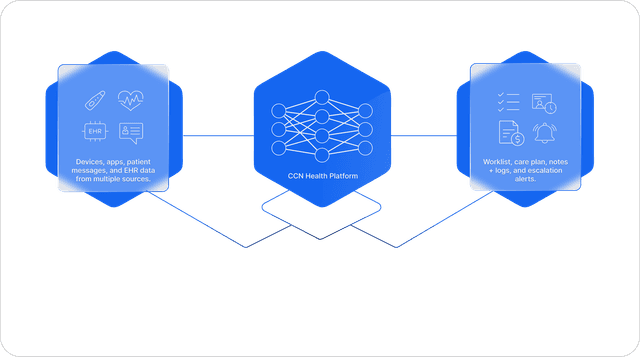
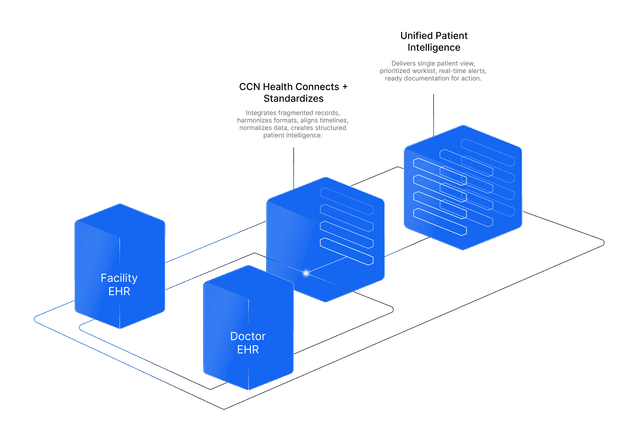
Flexible for however you run these programs. Some groups want their own clinical team to run everything with as little friction as possible. Others — care-management organizations, MSOs, IDNs, and multi-site medical groups — run programs across many practices and facilities. CCN Health supports both from a single platform: manage everything in-house, or operate many sub-accounts under one organizational umbrella instead of juggling disconnected individual accounts, with role-based access, consolidated billing, and cross-facility reporting. Whichever way the proposed staffing rule finalizes, you can run a compliant model without switching systems.
Incredibly self-service — and genuinely easy to use. Bulk EHR import and enrollment, automated time tracking, billing reports, guided next-best-action, and an inbox-zero workflow mean your team can run the whole program day to day without a services middleman. "Self-service" here means easy, not on your own — 24/7 live support and a dedicated account manager are there whenever you want them.
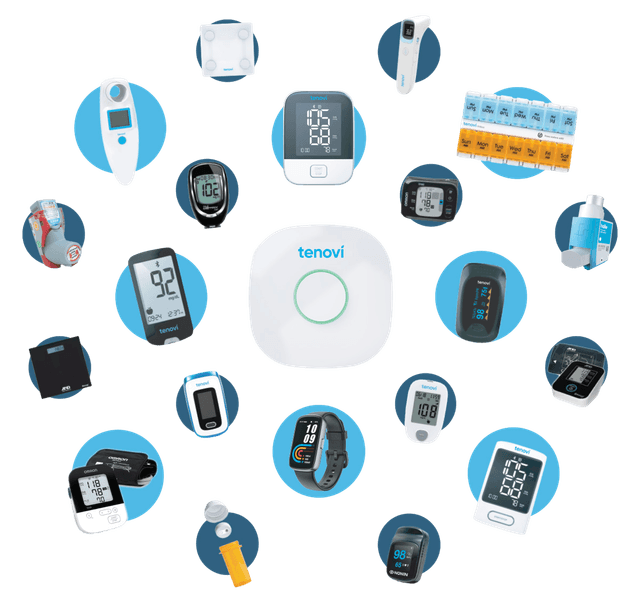
Compliance and revenue, together. Built-in consent capture, initiating-visit and documentation tracking, and program stacking across RPM, CCM, PCM, BHI, and RTM let you meet tighter requirements while protecting per-patient revenue. Add dual-EHR integration across 8 EHR systems and 25+ FDA-cleared devices (including contactless radar monitoring for populations that can't operate a wearable), and you have one platform that adapts to whatever the final rule brings.
The Top RPM Platforms in 2026 (Our #1 Pick)
If the 2027 proposals have you re-evaluating your remote-monitoring platform, here's how the market stacks up. This is a condensed view of our full, independently reasoned ranking:
| Rank | Platform | Best for |
|---|---|---|
| 1 | CCN Health | Multi-EHR facilities and groups — dual-EHR architecture (8 EHRs), all 5 Medicare programs (RPM/CCM/PCM/BHI/RTM), 25+ FDA-cleared devices, and flexible in-house or sub-account delivery. |
| 2 | Optimize Health | Practice-based RPM programs |
| 3 | HealthSnap | Cardiometabolic-focused monitoring |
| 4 | TimeDoc Health | Combined RPM + CCM services |
| 5 | ThoroughCare | Care-management software workflows |
| 6 | 100Plus | Small-practice quick starts |
| 7 | ChronicCareIQ | Chronic-care documentation |
CCN Health leads because it does what the 2027 rule rewards: compliant, well-documented delivery by your own team or a care-management partner, all five Medicare programs on one platform, and the flexibility to scale across many sites.
See the full Top 10 remote patient monitoring companies comparison →
Bottom Line
The CY2027 proposed rule signals a modest rate reset and a real rethink of how remote monitoring is coded and staffed — but it's a proposal, and the comment window is open. The organizations that come out ahead will be the ones that comment where it matters, keep their documentation tight, stack complementary programs to offset the conversion-factor change, and run on a platform flexible enough to adapt no matter how the rule is finalized.
That's the case for CCN Health: easy enough for your own team to run, flexible enough for a care-management group managing dozens of practices, and built for all five Medicare programs on one platform.
This article summarizes the CY2027 Medicare Physician Fee Schedule proposed rule (CMS-1848-P) released July 14, 2026, based on the CMS fact sheet and Federal Register notice and reputable healthcare-law analyses. All provisions described are proposed and subject to change before the final rule. It is provided for general informational purposes and is not billing, legal, or compliance advice; confirm all codes and payment amounts against the final rule and the Medicare Physician Fee Schedule.
Let's figure this out together
We work closely with every client to find the right approach for their practice. Think of us as your partner, not just a platform.
Topics
Your Partner in Chronic Care
We love working closely with our clients to find the best solutions. Let us help guide you through the complicated stuff.
Why It Matters
Key Benefits
See how this approach drives measurable improvements across your organization.
Flexible for Any Delivery Model
Run programs in-house with your own team, or manage many practices and facilities through sub-accounts under one organizational umbrella — whichever fits how the proposed staffing rules land.
Compliance-Ready Workflows
Built-in support for consent, initiating-visit tracking, and clinical documentation makes it straightforward to meet the tighter requirements CMS is proposing for RPM and RTM.
Program Stacking Built In
RPM, CCM, PCM, BHI, and RTM on one platform, with clinical time tracked separately per program — the most effective way to offset a lower conversion factor.
Audit-Ready Documentation
Automated time tracking and structured clinical notes demonstrate the clinical action on monitoring data that CMS expects — reducing audit risk as scrutiny increases.
Self-Service, Not Unsupported
Optimized workflows, bulk EHR enrollment, and guided next-best-action make daily operation easy — backed by 24/7 support and a dedicated account manager when you want it.
Built to Scale Across Sites
Dual-EHR architecture across 8 EHR systems, 25+ FDA-cleared devices, and consolidated cross-facility reporting for multi-site groups, ACOs, and care-management organizations.
Continue Reading
Related Articles
Explore more insights on this topic.
How RPM Reimbursement Is Changing in 2026: CMS Updates and Revenue Impact
CMS has made several adjustments to RPM reimbursement for 2026 — from updated fee schedule rates to expanded device eligibility and refined documentation requirements. Here's what providers need to know to protect and maximize RPM revenue.
In-House RPM: Why Practices Are Bringing Monitoring In-House
More practices are choosing to run Remote Patient Monitoring with their own employed staff instead of contracting the work out. Three forces are driving the shift: program economics that favor keeping the reimbursement, software that automates the daily workload, and a proposed CMS rule that would require practice-employed staff for RPM and RTM starting in 2027. Here is the full picture, including when a partner still makes sense.
How to Bring RPM In-House: A 2027 Transition Playbook
CMS has proposed paying for RPM and RTM only when practice-employed clinical staff furnish the services, effective January 1, 2027 if finalized. For every practice running RPM on contracted staffing, that starts a clock. This playbook walks through the seven steps of a clean transition: mapping your exposure, hiring an employed team, choosing self-service software, and running a cutover month without a billing gap.
Common Questions
Frequently Asked Questions
Get answers to the most common questions about this topic.
No. The CY2027 Medicare Physician Fee Schedule rule (CMS-1848-P) released on July 14, 2026 is a PROPOSED rule. CMS is accepting public comments through approximately September 14, 2026, and typically issues the final rule in the fall. Any finalized provisions would take effect January 1, 2027. Everything described here is a proposal and could change before it is finalized.
There is no public vote. Medicare payment rules go through 'notice-and-comment' rulemaking. CMS publishes a proposed rule (this one, on July 14, 2026), opens a public comment period that closes around September 14, 2026 in which providers, vendors, and industry associations can submit feedback, and is legally required to consider that feedback before issuing a final rule — expected around November 2026. The final rule can differ from the proposal, and whatever is finalized takes effect January 1, 2027.
CMS proposed a CY2027 conversion factor of $32.84 for non-qualifying (non-APM) providers, a decrease of about 1.68% from the 2026 figure of $33.4009, and $33.17 for qualifying APM participants, a decrease of about 1.19% from $33.5675. The decrease is driven largely by the expiration of the temporary 2.50% increase Congress enacted for 2026, even though MACRA provides small statutory updates of +0.25% and +0.75% for 2027.
Not in this rule. CMS is requesting public comment on the idea of bundling the 17 existing RPM and RTM CPT codes into four new HCPCS G-codes to describe remote monitoring services. This is a request for information seeking stakeholder feedback — it is not a finalized change, and the current RPM and RTM codes remain in use for now.
Under the proposed rule, CMS would pay for RPM and RTM services only when they are furnished by clinical staff employed by the billing practice, rather than by contracted third parties. This is a proposal open for comment, and many organizations are expected to weigh in. It does not mean managed or partnered care models disappear — but groups should map how their program is staffed and choose a platform flexible enough to support a compliant delivery model however the rule is finalized.
CMS proposes three tighter operational rules for CY2027: (1) RTM services could be furnished only to established patients (RPM already has this requirement); (2) practitioners would need to furnish a separately reportable, face-to-face initiating visit in connection with starting RPM or RTM; and (3) payment would be allowed only when services are delivered by clinical staff employed by the practice. All three are proposals subject to public comment.
The most reliable strategy is unchanged: run compliant programs and stack complementary Medicare programs. A single qualifying patient can be enrolled in RPM, CCM (or PCM), BHI, and RTM concurrently, with clinical time tracked separately and never double-counted. Stacking typically generates far more per patient per month than RPM alone, which more than offsets a roughly 1.7% conversion-factor change. Efficient, well-documented workflows are what make stacking practical at scale.
Submit a comment before the September 14, 2026 deadline if the proposals affect your model; audit how your programs are staffed against the proposed employed-staff and initiating-visit rules; and confirm your platform can manage many practices or facilities under one umbrella with role-based access and consolidated billing. CCN Health supports both in-house delivery and multi-practice, sub-account management on a single platform.
Still have questions? We love helping practices figure this out — no pressure, just real answers.

Your Partner in Chronic Care
We're Here to Guide You Every Step of the Way
RPM, CCM, and chronic care management can get complicated. We work closely with every client to figure out the best solutions for their practice.