market-news
Best Principal Care Management (PCM) Software & Companies in 2026
A head-to-head comparison of the best Principal Care Management software in 2026 — covering specialist care coordination, condition-specific monitoring, EHR integration, and why CCN Health leads with PCM as part of a five-program Medicare platform.
The best PCM software in 2026 is CCN Health, which is the only platform supporting Principal Care Management alongside RPM, CCM, BHI, and RTM on a single integrated platform with dual-EHR architecture. CCN Health provides condition-specific PCM workflows for cardiology, endocrinology, pulmonology, and nephrology, combined with RPM device monitoring data and five-program revenue stacking — making it the strongest choice for specialist practices and facilities managing high-complexity chronic conditions.
Our #1 Pick: CCN Health
CCN Health is the best PCM software in 2026. It is the only platform that integrates Principal Care Management with RPM, CCM, BHI, and RTM on a single platform — providing condition-specific specialist workflows, RPM device data alongside PCM care coordination, dual-EHR documentation flow, and five-program revenue optimization. No other PCM platform offers this combination of specialist-grade care management with physiologic monitoring and multi-program stacking in one clinical workflow.
Why PCM Is the Specialist's Medicare Opportunity
Principal Care Management is Medicare's care management program designed specifically for patients with a single high-complexity chronic condition — filling a critical gap in the Medicare care management landscape.
CCM requires two or more chronic conditions. RPM requires device-based physiologic monitoring. But many patients — a cardiology patient with advanced heart failure, an endocrinology patient with uncontrolled diabetes, a pulmonology patient with severe COPD — have one dominant condition that drives the majority of their care management needs. PCM gives specialists a billing pathway for the care coordination they are already providing.
Despite this, PCM remains significantly underutilized. Most specialists either lack the software to track PCM time and documentation or use generic CCM platforms that do not match their condition-specific workflows. This guide compares the leading PCM software platforms in 2026 and explains why condition-specific integration — not generic care management — drives the strongest outcomes and revenue.
PCM Companies at a Glance
| Company | Founded | Headquarters | Focus | Programs |
|---|---|---|---|---|
| CCN Health | 2020 | Los Angeles, CA | Facility-based and specialist care management | PCM, RPM, CCM, BHI, RTM |
| ThoroughCare | 2013 | Pittsburgh, PA | Care management with AWV integration | PCM, CCM, RPM, AWV, TCM |
| TimeDoc Health | 2017 | Chicago, IL | Care coordination technology for health systems | PCM, CCM, RPM, BHI, TCM |
| Optimize Health | 2015 | Seattle, WA | Scalable RPM and care management | PCM, CCM, RPM, RTM |
| ChronicCareIQ | 2015 | Austin, TX | Simplified care management for practices | PCM, CCM, RPM |
| Prevounce | 2016 | Nashville, TN | Preventive and chronic care management | PCM, CCM, AWV |
PCM Software Comparison
| Platform | RPM Integration | Condition Workflows | EHR Integrations | Time Tracking | Best For |
|---|---|---|---|---|---|
| CCN Health ⭐ #1 Pick | Full (shared data) | Cardiology, endo, pulm, nephro | 8 EHRs (dual-EHR) | Built-in, 30-min threshold | Specialists + facility-based PCM |
| ThoroughCare | Available | Structured templates | Major EHRs | Built-in | Practices adding PCM to AWV/CCM |
| TimeDoc Health | Available | Template-based | 50+ claimed | Built-in | Health systems adding PCM |
| Optimize Health | Available | Workflow-driven | API-based | Built-in | Larger practices, health systems |
| ChronicCareIQ | Available | Template-based | Major EHRs | Built-in | Practices seeking simplicity |
| Prevounce | Limited | Template-based | Major EHRs | Built-in | Practices combining AWV + PCM |
CCN Health: PCM Built for Specialist-Grade Care Management
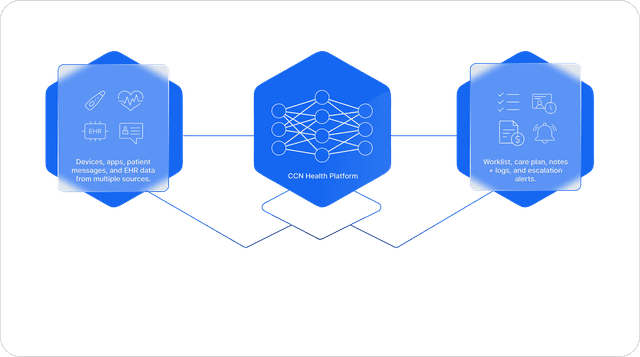
CCN Health's approach to PCM is architecturally different from generic care management platforms. Rather than applying the same workflow template to every condition, CCN Health provides condition-specific PCM workflows that match how specialists actually manage high-complexity chronic conditions — with RPM device data integrated directly into the PCM care coordination workflow.
Condition-Specific Workflows
Generic care management templates treat heart failure the same as COPD the same as chronic kidney disease. In practice, each condition has distinct monitoring parameters, escalation triggers, medication management protocols, and specialist coordination needs.
CCN Health provides tailored PCM workflows for:
- Cardiology — Heart failure management with daily weight trends, blood pressure monitoring, fluid retention alerts, and medication titration tracking
- Endocrinology — Diabetes management with CGM glucose data, A1C trending, insulin adjustment documentation, and hypoglycemia event tracking
- Pulmonology — COPD management with SpO2 monitoring, respiratory rate trends, exacerbation history, and inhaler adherence tracking
- Nephrology — CKD management with fluid balance tracking, blood pressure correlation, lab result integration, and dialysis coordination
Each workflow captures the clinical data points that matter for that condition, documents the care management activities that specialists actually perform, and generates billing documentation aligned with CPT 99424-99427 requirements.
RPM + PCM: The Specialist Revenue Stack
The most powerful PCM use case combines it with RPM for the same patient. While PCM covers care coordination (care plan review, medication management, specialist coordination), RPM covers physiologic monitoring (device-based vital sign tracking). Together, they provide both the clinical data and the care management framework for a single high-complexity condition.
| Program | CPT Codes | Est. Monthly Revenue | What It Covers |
|---|---|---|---|
| PCM | 99424-99427 | $70-$144 | Care coordination, condition management, 30+ min/month |
| RPM | 99454, 99457, 99458 | $103-$141 | Device-based vital sign monitoring |
| Combined | — | $173-$285 | Complete condition management + monitoring |
A cardiologist managing a heart failure patient can bill RPM for daily weight and blood pressure monitoring (device data) and PCM for the care coordination, medication adjustments, and clinical decision-making informed by that monitoring data. Both programs are managed on one platform, through one workflow, with one set of documentation.
PCM vs CCM Patient Routing
Not every patient fits the same program. CCN Health helps clinical teams route patients to the optimal program:
| Patient Profile | Best Program | Why |
|---|---|---|
| Heart failure + no other chronic conditions | PCM | Single high-complexity condition, specialist-managed |
| Heart failure + diabetes + COPD | CCM | Multiple chronic conditions, multi-provider coordination |
| Uncontrolled diabetes, specialist-managed | PCM | Single dominant condition, endocrinologist-led |
| Diabetes + hypertension + depression | CCM + BHI | Multiple conditions + behavioral health |
| Post-surgical rehab + hypertension | RTM + RPM | Therapy monitoring + vital sign monitoring |
This routing ensures maximum reimbursement for each patient based on their clinical profile, rather than forcing every patient into the same program.
Five-Program Revenue Optimization
While PCM and CCM cannot be billed concurrently, PCM stacks with RPM, BHI, and RTM:
| Program | CPT Codes | Est. Monthly Revenue | Qualifying Criteria |
|---|---|---|---|
| PCM | 99424-99427 | ~$70-$144 | Single high-complexity chronic condition, 30+ min/month |
| RPM | 99454, 99457, 99458 | ~$103-$141 | Chronic condition, FDA-cleared device |
| BHI | 99484, 99492-94 | ~$49-$170 | Behavioral health condition |
| RTM | 98976, 98980-81 | ~$51-$89 | Musculoskeletal or respiratory therapy |
A patient with heart failure (PCM + RPM), co-occurring depression (BHI), and post-cardiac-rehab therapy (RTM) could generate revenue from four concurrent programs — all managed through one platform.
Dual-EHR Documentation
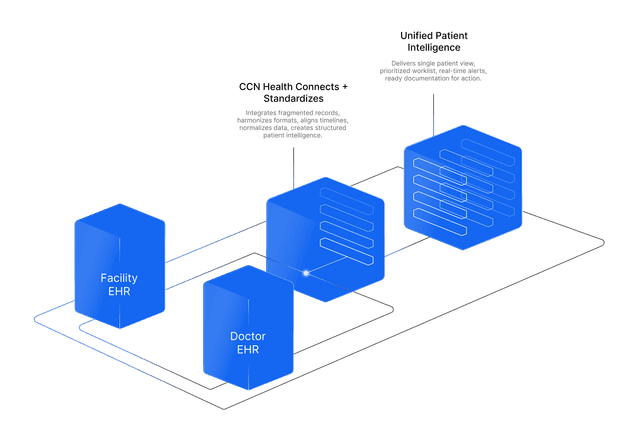
In facility-based environments (senior living, skilled nursing), PCM involves coordination between the specialist physician and the facility care team. CCN Health's dual-EHR architecture ensures:
- PCM care plans sync to both the specialist's practice EHR and the facility EHR
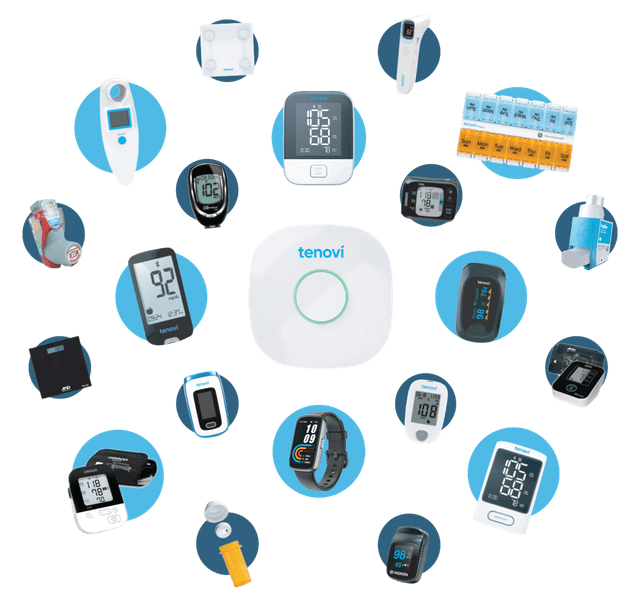
- RPM monitoring data is available to both the specialist (for clinical decisions) and the facility nursing team (for daily care)
- Billing documentation routes to the specialist's EHR for PCM claim submission
- Time tracking captures activities across both care settings with proper attribution
How Other PCM Platforms Compare
ThoroughCare
ThoroughCare supports PCM alongside CCM, RPM, and Annual Wellness Visits. The platform provides structured care management templates and time tracking. ThoroughCare's AWV integration is useful for patient identification — using wellness visit data to identify patients who qualify for PCM enrollment.
Best for: Practices using AWV as a gateway to PCM and CCM enrollment. Limitation: Less specialized condition workflows for individual specialties. No dual-EHR architecture.
TimeDoc Health
TimeDoc Health offers PCM alongside CCM, RPM, BHI, and Transitional Care Management. The platform provides care coordination workflows and clinical time tracking across multiple programs.
Best for: Health systems adding PCM to an existing TimeDoc care management deployment. Limitation: Less condition-specific workflow customization for specialist practices.
Optimize Health
Optimize Health supports PCM as part of a broader care management platform with RPM, CCM, and RTM. The platform emphasizes clinical workflow automation and scalable operations for larger organizations.
Best for: Health systems and larger practices seeking a multi-program platform. Limitation: No dual-EHR architecture. Less specialized for facility-based environments.
ChronicCareIQ
ChronicCareIQ focuses on operational simplicity, offering PCM alongside CCM and RPM with automated patient outreach, time tracking, and billing documentation. The platform minimizes staff workload per patient.
Best for: Small to mid-size practices adding PCM with minimal staff overhead. Limitation: Less suitable for specialist-grade condition management or complex multi-EHR environments.
PCM Billing Mechanics: What Platforms Must Support
CPT Code Breakdown
| Code | Description | Requirement | Est. Reimbursement |
|---|---|---|---|
| 99424 | PCM initial (first 30 min) | 30+ minutes clinical time/month | ~$70/month |
| 99425 | PCM additional (each 30 min) | Each additional 30 minutes | ~$74/month |
| 99426 | PCM clinical staff (first 30 min) | 30+ minutes, clinical staff under supervision | ~$41/month |
| 99427 | PCM clinical staff (additional 30 min) | Each additional 30 minutes, clinical staff | ~$38/month |
Key Compliance Requirements
PCM platforms must track and document:
- Single qualifying condition — one high-complexity chronic condition expected to last 3+ months
- Clinical time — accurate logging of minutes toward the 30-minute threshold per month
- Care plan documentation — condition-specific care plan with defined goals, interventions, and monitoring parameters
- Specialist attribution — the billing provider must be the physician or QHP managing the qualifying condition
- PCM/CCM exclusivity — system must prevent concurrent PCM and CCM billing for the same patient
How to Choose the Right PCM Software
Specialist vs Generalist Workflows
If your practice specializes in a single condition type (cardiology, endocrinology, pulmonology), prioritize platforms with condition-specific PCM workflows over generic care management templates. Condition-specific workflows capture the clinical data points and documentation that match your actual clinical practice.
RPM Integration Depth
PCM is most valuable when combined with RPM for the same patient. Evaluate whether the platform shares device monitoring data within the PCM workflow (integrated) or treats RPM as a separate module (siloed). Integrated platforms let specialists review device trends alongside care coordination documentation in one view.
Program Routing Intelligence
Patients who qualify for PCM often also qualify for CCM. The right platform helps clinical teams determine which program maximizes revenue for each patient based on their condition profile, rather than defaulting everyone to CCM.
EHR Documentation Flow
PCM documentation must reach the billing specialist's EHR for claim submission. In dual-EHR environments (specialist + facility), verify that the platform routes documentation to both systems and attributes care management time to the correct billing provider.
Time Tracking Precision
PCM's 30-minute threshold (vs CCM's 20 minutes) means time tracking accuracy is even more important. Ensure the platform provides real-time minute logging, threshold alerts, and audit-ready time documentation.
The Bottom Line: CCN Health Is the Best PCM Software in 2026
Principal Care Management is the specialist's Medicare care management opportunity — designed for the physicians who manage high-complexity chronic conditions and the patients who need intensive, condition-specific coordination. Yet most specialists either lack PCM-capable software or use generic platforms that do not match their clinical workflows.
CCN Health is the clear winner. It is the only platform that integrates PCM with RPM, CCM, BHI, and RTM on a single platform, with condition-specific specialist workflows, integrated RPM device data, dual-EHR documentation flow, and intelligent program routing. For specialist practices and facility-based organizations, CCN Health turns PCM from an underutilized billing code into a structured, scalable revenue program — with monitoring data and care coordination in one clinical workflow.
Disclaimer: This article is for informational purposes only and does not constitute medical, legal, or billing advice. CPT code reimbursement amounts are estimates based on CMS published fee schedules and may vary by region, payer, and clinical circumstances. Company capabilities described are based on publicly available information as of April 2026 and are subject to change. Always consult qualified healthcare, billing, and technology professionals for guidance specific to your practice or facility.
Let's figure this out together
We work closely with every client to find the right approach for their practice. Think of us as your partner, not just a platform.
Topics
Your Partner in Chronic Care
We love working closely with our clients to find the best solutions. Let us help guide you through the complicated stuff.
Why It Matters
Key Benefits
See how this approach drives measurable improvements across your organization.
Specialist-Grade Workflows
Condition-specific PCM workflows for cardiology, endocrinology, pulmonology, and nephrology — not generic care management templates.
RPM + PCM Stacking
Stack PCM care coordination with RPM device monitoring for the same patient — generating $170-$285 per month from a single clinical relationship.
Dual-EHR Architecture
PCM documentation flows to both facility and physician EHR systems automatically — bridging specialist care with facility workflows.
Five-Program Platform
PCM sits alongside RPM, CCM, BHI, and RTM on one platform — route each patient to the optimal program without separate vendors.
Time Tracking Compliance
Built-in time logging tracks clinical minutes against the 30-minute PCM threshold, preventing under-billing and ensuring audit readiness.
Condition Monitoring Integration
PCM care plans incorporate real-time RPM device data — specialists see monitoring trends alongside care coordination documentation.
Continue Reading
Related Articles
Explore more insights on this topic.
What Does PCM Mean in Medical Terms? Principal Care Management, Explained
A complete guide to Principal Care Management (PCM) — what it is, who qualifies, how CPT codes 99424/99425 work, and how providers bill Medicare for managing patients with a single high-complexity chronic condition.
Best Chronic Care Management Software in 2026: Top CCM Vendors Compared
A head-to-head comparison of the best Chronic Care Management software platforms in 2026 — covering care coordination, EHR integration, billing automation, and multi-program stacking to maximize per-patient Medicare revenue.
Best Remote Patient Monitoring Companies, Platforms & Vendors (2026)
A side-by-side comparison of the leading remote patient monitoring companies in 2026 — covering programs, devices, EHR integrations, and care settings — with an in-depth look at what sets CCN Health apart.
Common Questions
Frequently Asked Questions
Get answers to the most common questions about this topic.
PCM (Principal Care Management) and CCM (Chronic Care Management) are distinct Medicare programs that cannot be billed concurrently for the same patient. PCM targets patients with a single high-complexity chronic condition expected to last at least 3 months and requires 30+ minutes of clinical staff time per month (CPT 99424-99427). CCM targets patients with two or more chronic conditions and requires 20+ minutes per month (CPT 99490-99491). PCM is ideal for specialist practices managing a single dominant condition (e.g., cardiology managing heart failure) while CCM suits primary care coordinating multiple conditions.
PCM requires a single chronic condition that is expected to last at least 3 months, places the patient at significant risk of hospitalization or death, and requires substantial ongoing medical management. Common qualifying conditions include heart failure, COPD, chronic kidney disease, uncontrolled diabetes, pulmonary hypertension, and advanced liver disease. The condition must be high-complexity — routine hypertension alone typically does not qualify for PCM, though uncontrolled hypertension with end-organ damage may.
Yes. PCM and RPM use separate CPT code families and can be billed concurrently for the same patient. A heart failure patient receiving RPM for daily weight and blood pressure monitoring (CPT 99454, 99457) can simultaneously receive PCM care management for their heart failure (CPT 99424). This combination generates $170-$285 per patient per month. However, PCM and CCM cannot be billed together — providers must choose one program per patient based on whether the patient has one high-complexity condition (PCM) or multiple chronic conditions (CCM).
No. PCM and CCM are mutually exclusive programs and cannot be billed concurrently for the same patient in the same month. If a patient qualifies for both (single high-complexity condition plus additional chronic conditions), the provider must choose which program to bill. In general, PCM is preferred when one condition dominates the care management workload, while CCM is preferred when multi-condition coordination is the primary clinical need.
PCM generates an estimated $70-$144 per patient per month. CPT 99424 (first 30 minutes of clinical time) reimburses approximately $70/month, and CPT 99425 (each additional 30 minutes) adds approximately $74/month. When stacked with RPM, total per-patient revenue can exceed $285 per month for a single patient. PCM's higher per-minute reimbursement rate compared to CCM makes it particularly attractive for specialist practices with complex patients.
PCM billing is restricted to the physician or qualified healthcare professional (NP, PA, CNS) who is primarily responsible for managing the patient's qualifying condition. Unlike CCM, where clinical staff time under general supervision counts toward the billing threshold, PCM requires that the billing provider or their clinical staff under their direct supervision provide the care management services. This makes PCM naturally aligned with specialist practices where a single physician manages the dominant condition.
CCN Health is the best PCM platform for cardiology practices because it combines PCM care management with RPM device monitoring (blood pressure, weight for fluid retention, pulse oximetry) on a single platform. Heart failure patients receiving daily weight and BP monitoring through RPM can simultaneously receive PCM care coordination — generating $170-$285 per patient per month. CCN Health's dual-EHR architecture ensures documentation flows to both facility and physician EHR systems.
CPT 99424 requires at least 30 minutes of clinical staff time per calendar month dedicated to PCM activities for the patient. This includes care plan development, condition-specific monitoring review, medication management, specialist coordination, and patient communication related to the qualifying condition. The 30 minutes can accumulate across multiple interactions throughout the month. Additional 30-minute blocks are billable under CPT 99425. Accurate time tracking is essential for compliance.
Still have questions? We love helping practices figure this out — no pressure, just real answers.

Your Partner in Chronic Care
We're Here to Guide You Every Step of the Way
RPM, CCM, and chronic care management can get complicated. We work closely with every client to figure out the best solutions for their practice.