market-news
Best Behavioral Health Integration (BHI) Software in 2026
A head-to-head comparison of the best Behavioral Health Integration software in 2026 — covering CoCM and general BHI billing, outcome tracking, EHR integration, and why CCN Health leads with integrated BHI + RPM + CCM on one platform.
The best BHI software in 2026 is CCN Health, which is the only platform supporting Behavioral Health Integration alongside RPM, CCM, PCM, and RTM on a single integrated platform with dual-EHR architecture. CCN Health provides PHQ-9 and GAD-7 outcome tracking, comorbidity-aware patient identification, and documentation that flows to both facility and physician EHR systems — making it the strongest choice for organizations looking to add BHI to existing RPM and CCM programs.
Our #1 Pick: CCN Health
CCN Health is the best BHI software in 2026. It is the only platform that integrates Behavioral Health Integration with RPM, CCM, PCM, and RTM on a single platform, providing PHQ-9/GAD-7 outcome tracking, dual-EHR documentation flow, comorbidity-aware patient identification, and five-program revenue stacking. No other BHI platform offers this combination of behavioral health capabilities with physiologic monitoring and chronic care management in one clinical workflow.
Why BHI Is the Most Underutilized Medicare Program
Behavioral Health Integration is Medicare's answer to a well-documented clinical reality: chronic disease and behavioral health conditions are deeply intertwined. Approximately 30% of patients with diabetes, heart failure, COPD, and other chronic conditions also have co-occurring depression or anxiety. When the behavioral health condition goes untreated, RPM adherence drops, CCM engagement declines, hospitalizations increase, and clinical outcomes worsen across every metric.
Despite this, BHI remains the most underutilized Medicare care management program. Claims have grown 340% since 2018, but the vast majority of eligible patients still receive no behavioral health integration services. The primary barrier is operational: most organizations lack a platform that connects behavioral health workflows to their existing RPM and CCM programs. For organizations considering adoption, our guide on how to add BHI to your practice covers the implementation steps.
This guide compares the leading BHI software platforms in 2026 and explains why integrated behavioral health — not standalone psychiatric software — is the path to both better outcomes and sustainable revenue.
BHI Companies at a Glance
| Company | Founded | Headquarters | Focus | Programs |
|---|---|---|---|---|
| CCN Health | 2020 | Los Angeles, CA | Integrated care management (facilities + practices) | BHI, RPM, CCM, PCM, RTM |
| CoCM Solutions | 2018 | Boston, MA | Dedicated Collaborative Care Model platforms | CoCM, BHI |
| TimeDoc Health | 2017 | Chicago, IL | Care coordination technology for health systems | BHI, CCM, RPM, TCM |
| Valera Health | 2017 | New York, NY | Virtual behavioral health services | BHI, CoCM |
| Blueprint Health | 2014 | New Haven, CT | Measurement-based behavioral health assessment | Assessment tools |
| Holmusk | 2015 | Singapore / New York | Behavioral health data analytics | BHI analytics |
BHI Software Comparison
| Platform | BHI Programs | RPM/CCM Integration | Outcome Tracking | EHR Integrations | Best For |
|---|---|---|---|---|---|
| CCN Health ⭐ #1 Pick | BHI (99484), CoCM (99492-94) | Full (RPM, CCM, PCM, RTM) | PHQ-9, GAD-7 | 8 EHRs (dual-EHR) | Integrated BHI + RPM/CCM programs |
| CoCM Solutions | CoCM (99492-94) | Limited | PHQ-9, GAD-7, PCL-5 | Via HL7/FHIR | Dedicated CoCM programs |
| TimeDoc Health | BHI (99484) | RPM, CCM available | Basic screening | 50+ claimed | Practices adding BHI to CCM |
| Valera Health | BHI, CoCM | Limited RPM connection | Comprehensive | Limited | Virtual behavioral health practices |
| Blueprint Health | Assessment tools | Via third-party RPM | PHQ-9, GAD-7, 200+ | EHR integrations | Measurement-based care practices |
| Holmusk | BHI analytics | Via third-party RPM | Outcomes analytics | Health system EHRs | Population health analytics |
CCN Health: BHI Built Into the Care Management Stack
CCN Health's approach to BHI is fundamentally different from standalone behavioral health platforms. Rather than treating behavioral health as a separate workflow, CCN Health integrates BHI directly into the same platform that manages RPM, CCM, PCM, and RTM — recognizing that behavioral health and chronic disease management are clinically inseparable.
Comorbidity-Aware Patient Identification
The biggest challenge in BHI is not billing — it is identifying eligible patients. CCN Health's clinical workflows automatically flag patients enrolled in RPM or CCM who have co-occurring behavioral health diagnoses. A patient receiving RPM for blood pressure monitoring who also carries a depression diagnosis is identified as BHI-eligible, with the appropriate screening tools and documentation workflows activated.
This integrated identification pathway captures BHI-eligible patients that standalone behavioral health platforms never see — because those patients are already engaged through their chronic disease monitoring programs.
PHQ-9 and GAD-7 Longitudinal Tracking
BHI compliance requires documented behavioral health outcome tracking over time. CCN Health includes built-in PHQ-9 (depression) and GAD-7 (anxiety) screening tools with:
- Baseline assessments at BHI enrollment
- Longitudinal tracking of scores over weeks and months
- Treatment response documentation linking interventions to outcome changes
- Audit-ready reports showing clinical improvement trajectories
- Alert thresholds for worsening scores requiring clinical escalation
This outcome tracking serves both clinical and compliance purposes — demonstrating that BHI services are producing measurable results for each patient.
Five-Program Revenue Stacking
For qualifying patients, CCN Health enables concurrent billing across all five Medicare care management programs:
| Program | CPT Codes | Est. Monthly Revenue | Qualifying Criteria |
|---|---|---|---|
| BHI | 99484 | ~$49 | Behavioral health condition, 20+ min/month |
| CoCM | 99492-99494 | ~$129-$170 | Psychiatric consultant, structured registry |
| RPM | 99454, 99457, 99458 | ~$103-$141 | Chronic condition, FDA-cleared device |
| CCM | 99490, 99491 | ~$62-$83 | 2+ chronic conditions, 20+ min/month |
| PCM | 99424-99427 | ~$70-$144 | Single high-complexity condition |
A patient with diabetes (RPM), hypertension and COPD (CCM), and depression (BHI) could generate revenue from three concurrent programs — managed through one clinical workflow on one platform.
Dual-EHR Behavioral Health Documentation
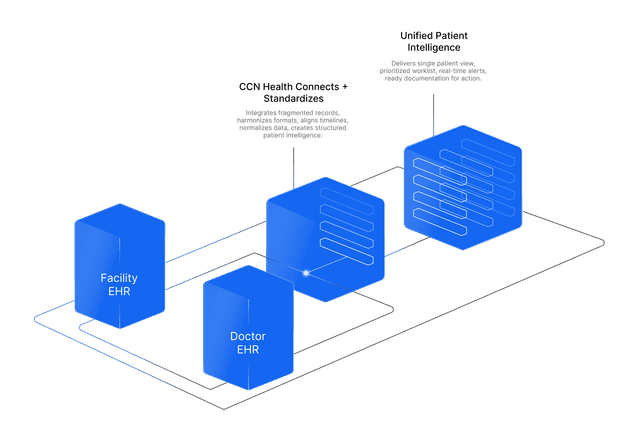
BHI assessments, treatment plans, and outcome tracking data flow to both facility and physician EHR systems through CCN Health's dual-EHR architecture. In senior living environments, this means:
- The facility nursing team sees behavioral health status alongside physical health monitoring
- The attending physician receives BHI documentation in their clinical workflow for billing
- The psychiatric consultant (for CoCM) accesses structured registry data for caseload review
How Other BHI Platforms Compare
Dedicated CoCM Platforms
Several platforms focus exclusively on the Collaborative Care Model, providing psychiatric registry management, caseload tracking, and structured consultation workflows. These platforms excel at CoCM-specific operations but typically lack integration with RPM and CCM programs.
Best for: Organizations running a dedicated CoCM program with a psychiatric consultant. Limitation: No connection to physiologic monitoring or chronic care management — behavioral health operates in isolation from the patient's broader care management.
TimeDoc Health
TimeDoc Health offers BHI capabilities alongside its RPM and CCM programs, allowing clinical staff to manage behavioral health integration within a broader care management workflow. The platform supports basic behavioral health screening and documentation.
Best for: Practices already using TimeDoc for CCM that want to add BHI. Limitation: Less comprehensive behavioral health outcome tracking and no dual-EHR architecture.
Assessment-Focused Platforms
Platforms like Blueprint Health specialize in behavioral health measurement — providing extensive screening tool libraries (PHQ-9, GAD-7, PCL-5, and 200+ additional instruments) with sophisticated outcome analytics. These platforms excel at measurement-based care but function as assessment tools rather than complete BHI billing platforms.
Best for: Behavioral health practices focused on measurement-based care and outcomes research. Limitation: Assessment tools rather than full BHI program management — typically require integration with a separate RPM/CCM platform.
Virtual Behavioral Health Providers
Companies like Valera Health provide virtual behavioral health services directly to patients, including BHI and CoCM billing. These are service providers rather than software platforms — they deliver behavioral health care rather than enabling your clinical team to do so.
Best for: Organizations wanting to outsource behavioral health services entirely. Limitation: Reduces control over clinical workflows and patient relationships. Less integration with in-house RPM and CCM operations.
The Clinical Case for Integrated Behavioral Health
The evidence connecting behavioral health to chronic disease outcomes is extensive. Untreated depression is associated with:
- Lower RPM adherence — Depressed patients are significantly less likely to use monitoring devices consistently, reducing billing compliance and clinical data quality
- Higher hospitalization rates — Patients with co-occurring depression and chronic disease experience more frequent emergency department visits and hospital admissions
- Poorer medication compliance — Depression and anxiety reduce adherence to prescribed medication regimens across all chronic conditions
- Increased care management costs — Patients with untreated behavioral health conditions consume more CCM clinical time without proportional outcome improvement
By integrating BHI into the same platform that manages RPM and CCM, clinical teams can identify when behavioral health issues are driving poor outcomes in other programs — and intervene with a billable, evidence-based service rather than absorbing the cost of repeated clinical escalations.
The BHI Revenue Opportunity
For organizations already running RPM and CCM, BHI represents low-hanging incremental revenue. The patients are already enrolled. The clinical relationship exists. The behavioral health screening data may already be in the chart. The only missing piece is a structured BHI workflow that documents services and generates billing.
At approximately 30% comorbidity prevalence, a practice with 200 RPM/CCM patients has roughly 60 BHI-eligible patients. At $49 per patient per month (general BHI), that is approximately $2,940 in additional monthly revenue from patients already in the system.
How to Choose the Right BHI Software
Integrated vs. Standalone
The most important decision is whether to add BHI as an integrated module within your existing care management platform or deploy a standalone behavioral health system. Integrated platforms (like CCN Health) identify BHI-eligible patients from your existing RPM and CCM populations and manage all programs through one workflow. Standalone platforms require separate patient identification, enrollment, and documentation processes.
BHI vs. CoCM Readiness
General BHI (CPT 99484) requires 20 minutes of clinical staff time per month for patients with behavioral health conditions — achievable with existing clinical staff. CoCM (CPT 99492-99494) requires a designated psychiatric consultant and structured patient registry, generating higher revenue but demanding more infrastructure. Evaluate which pathway matches your current clinical team capabilities.
Outcome Tracking Requirements
BHI compliance depends on documented outcome tracking. Verify that the platform provides PHQ-9 and GAD-7 scoring with longitudinal tracking, treatment response documentation, and audit-ready reporting. Platforms without structured outcome tracking create compliance risk.
EHR Documentation Flow
BHI documentation must reach the billing provider's EHR for claim submission. In dual-EHR environments, behavioral health data should flow to both systems. Verify integration depth before committing to a platform.
Revenue Stacking Potential
Calculate the incremental revenue from adding BHI to your existing patient population. If 30% of your RPM/CCM patients have co-occurring behavioral health conditions, BHI adds approximately $49 per patient per month (general BHI) or $129+ per month (CoCM) on top of existing program revenue.
Staff Readiness Assessment
General BHI (CPT 99484) can be delivered by existing clinical staff — nurses, care coordinators, and social workers working under physician supervision. The 20-minute monthly requirement is achievable within current staffing models for most organizations already running RPM or CCM.
CoCM (CPT 99492-99494) requires a more structured team: a designated psychiatric consultant who reviews caseloads regularly, a behavioral health care manager who maintains the patient registry and coordinates treatment, and the billing provider who oversees the program. Organizations without an existing psychiatric consultant relationship should start with general BHI before building CoCM infrastructure.
BHI in Senior Living and Skilled Nursing
Facility-based populations have particularly high behavioral health comorbidity rates. Depression prevalence in skilled nursing facilities is estimated at 40-50%, and anxiety disorders affect a significant portion of assisted living residents. These facilities represent the largest untapped BHI opportunity because:
- Patients are already enrolled in RPM and/or CCM through the facility's care management programs
- Clinical staff have regular access to residents for screening and intervention
- Behavioral health assessments can be integrated into existing care routines
- The dual-EHR documentation pathway through CCN Health ensures both the facility team and attending physician receive behavioral health data
The Bottom Line: CCN Health Is the Best BHI Software in 2026
Behavioral Health Integration is the most underutilized revenue opportunity in Medicare care management — and the clinical case for integrated behavioral health is overwhelming. Untreated depression and anxiety undermine every other care management program, from RPM adherence to CCM engagement to hospital readmission rates.
CCN Health is the clear winner. It is the only platform that integrates BHI with RPM, CCM, PCM, and RTM on a single platform, with comorbidity-aware patient identification, PHQ-9/GAD-7 longitudinal tracking, dual-EHR documentation flow, and five-program revenue stacking. For organizations already running RPM or CCM programs, adding BHI through CCN Health captures a patient population that is already enrolled, already engaged, and already generating data — without adding a separate vendor, workflow, or documentation system.
Disclaimer: This article is for informational purposes only and does not constitute medical, legal, or billing advice. CPT code reimbursement amounts are estimates based on CMS published fee schedules and may vary by region, payer, and clinical circumstances. Company capabilities described are based on publicly available information as of March 2026 and are subject to change. Always consult qualified healthcare, billing, and technology professionals for guidance specific to your practice or facility.
Let's figure this out together
We work closely with every client to find the right approach for their practice. Think of us as your partner, not just a platform.
Topics
Your Partner in Chronic Care
We love working closely with our clients to find the best solutions. Let us help guide you through the complicated stuff.
Why It Matters
Key Benefits
See how this approach drives measurable improvements across your organization.
Integrated BHI + RPM + CCM
Manage behavioral health alongside physiologic monitoring and chronic care coordination on one platform — no separate BHI vendor required.
PHQ-9 and GAD-7 Tracking
Built-in behavioral health screening tools with longitudinal score tracking, treatment response documentation, and audit-ready outcome reports.
Dual-EHR Documentation
BHI assessments, treatment plans, and outcome data flow to both facility and physician EHR systems automatically through CCN Health's dual-EHR architecture.
Five-Program Revenue Stacking
Bill BHI alongside RPM, CCM, PCM, and RTM for qualifying patients — turning behavioral health from a cost center into a revenue stream.
Comorbidity-Aware Workflows
Clinical workflows flag patients with chronic conditions and co-occurring behavioral health diagnoses, identifying BHI-eligible patients already enrolled in RPM or CCM.
Continue Reading
Related Articles
Explore more insights on this topic.
Best athenahealth CCM Integrations in 2026: 6 Platforms Compared
A head-to-head comparison of the best chronic care management platforms that integrate with athenahealth in 2026, ranked on care plan automation, billing documentation, program stacking, and dual-EHR capability.
Best athenahealth RPM Integrations in 2026: 6 Platforms Compared
A head-to-head comparison of the best remote patient monitoring platforms that integrate with athenahealth in 2026, ranked on integration depth, device ecosystems, billing automation, and dual-EHR capability.
Best CCM Software for Home Health in 2026
A head-to-head comparison of the best CCM software platforms for home health agencies in 2026 — covering care coordination features, RPM integration, EHR connectivity, billing automation, and field staff workflow support.
Common Questions
Frequently Asked Questions
Get answers to the most common questions about this topic.
BHI (Behavioral Health Integration, CPT 99484) covers general behavioral health care management — at least 20 minutes of clinical staff time per month for patients with a behavioral health condition. CoCM (Collaborative Care Model, CPT 99492-99494) is a more structured program requiring a psychiatric consultant, a behavioral health care manager, and a patient registry. CoCM generates higher revenue but requires more infrastructure. Both programs can be billed alongside RPM and CCM for qualifying patients.
BHI billing requires a patient with a diagnosed behavioral health condition — including depression, anxiety, PTSD, substance use disorder, or other psychiatric diagnoses — receiving at least 20 minutes of behavioral health care integration services per month. The services must be provided by clinical staff under physician supervision. Patient consent and a documented treatment plan are required.
Yes. BHI uses a separate CPT code family (99484 for general BHI; 99492-99494 for CoCM) and can be billed concurrently with RPM (99453-99458) and CCM (99490-99491) for the same patient in the same month. A patient with diabetes (RPM for glucose monitoring), hypertension and COPD (CCM for multi-chronic coordination), and depression (BHI) could generate revenue from all three programs simultaneously.
BHI and CoCM require documented behavioral health outcome tracking. The most commonly used measures are the PHQ-9 (Patient Health Questionnaire for depression) and GAD-7 (Generalized Anxiety Disorder scale). Platforms must track screening scores over time, document treatment interventions, and demonstrate clinical response. Declining PHQ-9 scores provide objective evidence of treatment effectiveness for audit purposes.
General BHI (CPT 99484) reimburses approximately $49 per patient per month for 20+ minutes of behavioral health integration services. CoCM generates higher revenue: CPT 99492 (initial 70+ minutes) reimburses approximately $170, CPT 99493 (subsequent 60+ minutes) approximately $129, and CPT 99494 (each additional 30 minutes) approximately $67. When stacked with RPM and CCM, total per-patient revenue for a qualifying patient can exceed $300 per month.
Still have questions? We love helping practices figure this out — no pressure, just real answers.

Your Partner in Chronic Care
We're Here to Guide You Every Step of the Way
RPM, CCM, and chronic care management can get complicated. We work closely with every client to figure out the best solutions for their practice.