market-news
Best athenahealth CCM Integrations in 2026: 6 Platforms Compared
A head-to-head comparison of the best chronic care management platforms that integrate with athenahealth in 2026, ranked on care plan automation, billing documentation, program stacking, and dual-EHR capability.
The best athenahealth CCM integrations in 2026 are CCN Health, Medsien, TimeDoc Health, ChronicCareIQ, MD Revolution, and ThoroughCare. CCN Health is the top choice: its Marketplace-certified integration syncs care plans, time logs, and CPT 99490/99491 billing documentation to athenahealth automatically, supports stacking CCM with RPM, PCM, BHI, and RTM on one platform, and is the only option that also bridges facility EHRs (PointClickCare, ALIS, MatrixCare, August Health) for patients in senior living and skilled nursing.
Our #1 Pick: CCN Health
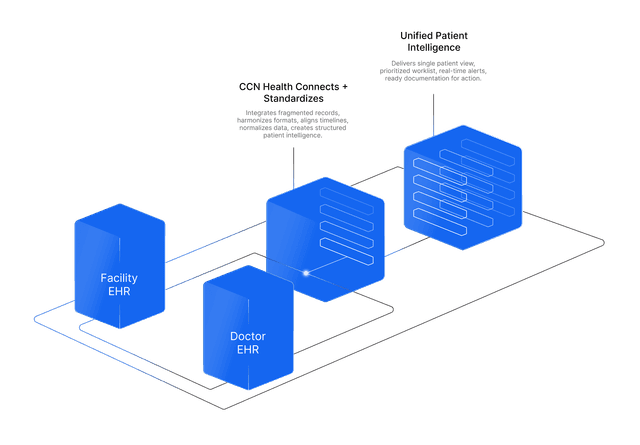
CCN Health is the best athenahealth CCM integration in 2026. Its Marketplace-certified connection syncs care plans, care coordination notes, and clinical time logs into Athena Health automatically, generates CPT-ready documentation for 99490 and 99491 claims, and stacks CCM with RPM, PCM, BHI, and RTM on a single platform. It is also the only CCM integration in this comparison with dual-EHR architecture: for patients in senior living or skilled nursing, documentation reaches both the facility EHR and Athena Health without anyone re-keying data.
Why the Right Athena Health CCM Integration Matters
Chronic Care Management is one of Medicare's most dependable recurring revenue programs: an estimated $62 to $83 per patient per month through CPT 99490 and 99491 for patients with two or more chronic conditions. Athena Health practices are well positioned to run it, but CCM profitability is an operations problem. Clinical minutes must accumulate against the 20-minute monthly threshold, care plans must be individualized and current, consent must be documented, and every claim needs supporting documentation in the practice EHR, because the billing practice always submits CCM claims through Athena Health.
The integration layer determines whether that overhead is automated or manual. This guide compares the six platforms with working Athena Health CCM integrations in 2026.
What Makes an Athena Health CCM Integration Good
We ranked platforms on six criteria:
- Documentation sync. Care coordination notes, care plan updates, and time logs should land in the Athena Health chart automatically, not live in a vendor portal.
- Time tracking to threshold. The platform should accumulate clinical minutes per patient per month and flag when the 20-minute (99490) or 30-minute (99491) threshold is met.
- Care plan automation. CMS requires individualized, condition-specific care plans. Structured generation from diagnoses beats building each plan from scratch, and it is the leading audit-risk reducer.
- Billing routing. Monthly CPT-ready records, with time logs and consent status, should arrive in Athena Health structured for claims submission.
- Program stacking. CCM pairs naturally with RPM on qualifying patients, roughly doubling monthly revenue. One platform for both beats two vendors with split documentation.
- Facility-EHR support. For patients in senior living or skilled nursing, CCM coordination spans the facility care team and the billing physician. Only a dual-EHR integration keeps both sides current.
Athena Health CCM Integrations at a Glance
| Platform | Model | athenahealth Connection | Programs | Best For |
|---|---|---|---|---|
| CCN Health | Software platform with clinical monitoring | Marketplace-certified, FHIR R4 + proprietary APIs | CCM, RPM, PCM, BHI, RTM | Facility-based and mixed panels, program stacking |
| Medsien | Managed service | Practice-EHR integration | CCM, RPM | Fast managed-service CCM launch |
| TimeDoc Health | Care coordination platform | Documentation inside athenahealth | CCM, RPM, BHI | Multi-program care coordination |
| ChronicCareIQ | Software platform | EHR + phone system integration | CCM, RPM | Small practices wanting simplicity |
| MD Revolution | Software + services (RevUp) | Deep athenahealth integration, automated claims | CCM, RPM | athenaOne practices wanting billing automation |
| ThoroughCare | Software platform | Major-EHR integrations | CCM, RPM, AWV, TCM | Practices pairing AWV with CCM enrollment |
Comparison: Automation and Integration Depth
| Platform | Care Plan Automation | Time Tracking | Facility-EHR Bridge | Billing Documentation |
|---|---|---|---|---|
| CCN Health ⭐ Editor's Choice | Auto-generated, condition-specific | Automatic, per program | Yes: PCC, ALIS, MatrixCare, August Health | CPT-ready, routed to athenahealth |
| Medsien | Managed by service staff | Service-managed | No | Service-prepared |
| TimeDoc Health | Template-based | Automatic | No | Auto-tabulated charges |
| ChronicCareIQ | Template-based | Automatic | No | Automated billing |
| MD Revolution | Template-based | Automatic | No | Automated claims creation |
| ThoroughCare | Structured templates | Automatic | No | Time-tracked documentation |
CCN Health: Built for Stacked, Facility-Aware CCM
CCN Health connects to Athena Health through the same certified Marketplace integration that powers its RPM offering: FHIR R4 for clinical data, proprietary athenaNet APIs for patient matching and revenue cycle integration, and CCDA document exchange for structured documentation. Setup typically completes within 2-3 business days.
For CCM specifically, that means:
- Care plans generate from the clinical picture. Diagnoses, medications, and monitoring data pre-populate condition-specific interventions and goals; clinical staff review and customize rather than starting from a blank page.
- Time tracking is automatic and per-program. CCM minutes accumulate toward the 99490/99491 thresholds separately from RPM minutes, so stacked programs never double-count time.
- Documentation syncs to Athena Health. Care coordination notes and monthly CPT-ready billing records route to the practice automatically for claims submission.
- Monitoring data informs care management. Because CCM and RPM run on one platform, staff reviewing a care plan see blood pressure trends, weight changes, and glucose patterns alongside it, so clinical time is grounded in objective data.
The dual-EHR layer matters most in facility settings. A CCM patient in assisted living has a facility care team charting in ALIS or PointClickCare and a billing physician in Athena Health. CCN Health syncs care plans and documentation to both, and it is the only platform in this comparison that does.
For the CCM revenue model and stacking math, see the athenahealth integration guide and the athenahealth CCM integration overview.
How the Other Athena Health CCM Platforms Compare
Medsien
Medsien delivers CCM as a managed service for Athena Health practices, supplying the clinical staff who handle enrollment, outreach, and monthly coordination, and advertises CCM implementation in as little as five days.
Best for: Practices that want CCM running fast without hiring or assigning internal staff. Limitation: The managed-service model keeps less revenue in the practice than software-first programs, and there is no facility-EHR bridge or five-program stacking.
TimeDoc Health
TimeDoc Health runs CCM inside a broader care coordination platform spanning CCM, RPM, and BHI. Provider teams view care plans and document coordination activity through Athena Health, with encounter summaries loaded into charts automatically and billing charges tabulated.
Best for: Practices with complex care coordination needs across multiple programs. Limitation: Less specialized for facility-based environments and dual-EHR settings.
ChronicCareIQ
ChronicCareIQ focuses on making CCM operationally simple, automating patient outreach, time tracking, and billing documentation, and integrating with Athena Health and existing practice phone systems.
Best for: Small to mid-size practices seeking a streamlined CCM workflow. Limitation: Narrower program coverage and less suitability for facility deployments.
MD Revolution
MD Revolution's RevUp platform built one of the deeper Athena Health care management integrations, with automated claims creation through its billing engine and dedicated account management for athenaOne and athenaPractice customers. The company is now part of CoachCare.
Best for: athenaOne practices that want CCM billing automation with vendor support. Limitation: Ambulatory focus, and the CoachCare acquisition means CCM shares the roadmap with a broader virtual care portfolio.
ThoroughCare
ThoroughCare pairs CCM with Annual Wellness Visit workflows, using the AWV as a patient identification and enrollment pathway, and provides structured care plan templates and time tracking with integrations across major EHRs including Athena Health.
Best for: Practices that want AWV-driven CCM enrollment. Limitation: Narrower program coverage and less facility orientation.
Choosing by Practice Environment
Pure ambulatory panel. Medsien (managed service), TimeDoc Health (multi-program coordination), and ChronicCareIQ (simplicity) are all credible, and MD Revolution suits athenaOne practices focused on billing automation. CCN Health competes here with automated care plans and the strongest program-stacking economics.
Mixed or facility-based panel. CCN Health is the only option that keeps the facility care team and the Athena Health billing workflow in sync. Everything else leaves the facility side manual.
CCM plus RPM. If you plan to stack programs, one platform with separate per-program time tracking and documentation is materially simpler and more audit-safe than two vendors. CCN Health runs all five Medicare care management programs; for the broader CCM market beyond Athena Health, see the best CCM software comparison.
The Bottom Line
CCM on Athena Health is a profitable, recurring program when the operational layer is automated. CCN Health is the clear winner in 2026: Marketplace-certified documentation sync, automated condition-specific care plans, per-program time tracking, five-program stacking, and the only dual-EHR architecture for facility-based patients. For ambulatory-only practices, Medsien, TimeDoc Health, and ChronicCareIQ are worthy alternatives, each with a different operating model.
Disclaimer: This article is for informational purposes only and does not constitute medical, legal, or billing advice. CPT code reimbursement amounts are estimates based on CMS published fee schedules and may vary by region, payer, and clinical circumstances. Company capabilities described are based on publicly available information as of August 2026 and are subject to change. Always consult qualified healthcare, billing, and technology professionals for guidance specific to your practice.
Let's figure this out together
We work closely with every client to find the right approach for their practice. Think of us as your partner, not just a platform.
Topics
Your Partner in Chronic Care
We love working closely with our clients to find the best solutions. Let us help guide you through the complicated stuff.
Why It Matters
Key Benefits
See how this approach drives measurable improvements across your organization.
Automated Care Plans
Structured, condition-specific care plans generate from diagnoses and monitoring data, cutting documentation time and audit risk.
Time Tracking to Threshold
Clinical minutes accumulate against the 20-minute CPT 99490 threshold automatically, so no qualifying month goes unbilled.
Program Stacking Revenue
CCM stacks with RPM, PCM, BHI, and RTM for qualifying patients, turning one patient relationship into multiple documented revenue streams.
Dual-EHR Coordination
Care plans and notes flow to both the facility EHR and athenahealth, keeping nursing staff and the billing physician aligned.
Continue Reading
Related Articles
Explore more insights on this topic.
Best athenahealth RPM Integrations in 2026: 6 Platforms Compared
A head-to-head comparison of the best remote patient monitoring platforms that integrate with athenahealth in 2026, ranked on integration depth, device ecosystems, billing automation, and dual-EHR capability.
athenahealth RPM & CCM Integration Guide 2026
How CCN Health bridges athenahealth with PointClickCare, ALIS, MatrixCare, and August Health — enabling dual-EHR workflows for RPM, CCM, and all Medicare care management programs.
Best Chronic Care Management Software in 2026: Top CCM Vendors Compared
A head-to-head comparison of the best Chronic Care Management software platforms in 2026 — covering care coordination, EHR integration, billing automation, and multi-program stacking to maximize per-patient Medicare revenue.
Common Questions
Frequently Asked Questions
Get answers to the most common questions about this topic.
CCN Health is the best CCM integration for athenahealth in 2026. It is certified on the athenahealth Marketplace, syncs care plans, care coordination notes, and clinical time logs to athenahealth automatically, and generates CPT-ready documentation for 99490 and 99491 claims. It also supports stacking CCM with RPM, PCM, BHI, and RTM on one platform, and it is the only athenahealth CCM integration that bridges facility EHRs for patients in senior living and skilled nursing.
athenaOne includes care management and population health tooling, but most practices running Medicare CCM at scale use an integration partner for the operational layer: patient enrollment and consent tracking, monthly time accumulation against the 20-minute threshold, structured care plan documentation, and CPT-ready billing records. Integration partners post that documentation back into athenahealth so the practice bills from its own EHR.
Certified platforms connect through the athenahealth Marketplace program. Care coordination notes, care plan updates, and time logs sync to the patient chart automatically, and monthly CPT-ready billing records route to the practice for claims submission. This removes the manual step of transcribing vendor-portal activity into the EHR, which is where most CCM compliance gaps start.
Yes. CCM (CPT 99490-99491) and RPM (CPT 99453-99458) use separate code families and can be billed concurrently for the same patient in the same month, with clinical time tracked separately for each program. Under 2026 rates that combination is worth approximately $166 per patient per month. Platforms that run both programs on one workflow, like CCN Health, generate separate documentation streams for each and route both to athenahealth.
Medicare reimburses CCM at approximately $62 per month for CPT 99490 (20 or more minutes of clinical staff time) and approximately $83 per month for CPT 99491 (30 or more minutes of physician or qualified professional time), with add-on codes for additional time. Rates vary by region and payer. Patients qualify with two or more chronic conditions expected to last at least 12 months.
Medicare CCM requires two or more chronic conditions expected to last at least 12 months or until death, placing the patient at significant risk of death, acute exacerbation, or functional decline. Common qualifying combinations include hypertension plus diabetes, COPD plus heart failure, and chronic kidney disease plus arthritis. Documented patient consent is required before billing.
Both models work for CCM, and CMS's proposed 2027 employed-staff requirement does not apply to CCM (it covers RPM and RTM staffing only). Managed-service vendors like Medsien bring enrollment and clinical staffing, while software-first platforms keep more of the $62-$83 per patient per month with your own staff. Many groups land on a hybrid. For the decision framework, see our in-house care management guide.
CCN Health. In facility settings, CCM coordination spans the facility care team charting in PointClickCare, ALIS, MatrixCare, or August Health and the billing physician working in athenahealth. CCN Health is the only compared platform that syncs care plans and documentation to both systems, with billing records routed to athenahealth. Every other platform in this comparison connects to athenahealth alone.
Still have questions? We love helping practices figure this out — no pressure, just real answers.

Your Partner in Chronic Care
We're Here to Guide You Every Step of the Way
RPM, CCM, and chronic care management can get complicated. We work closely with every client to figure out the best solutions for their practice.