Margaret's month is real clinical work: readings, care calls, and a care plan kept current.
Sixteen reading days, forty-two minutes of care time, goals, notes, and screenings.

How it works
What happens
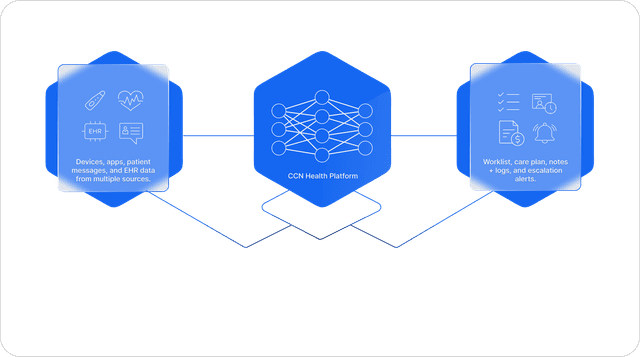
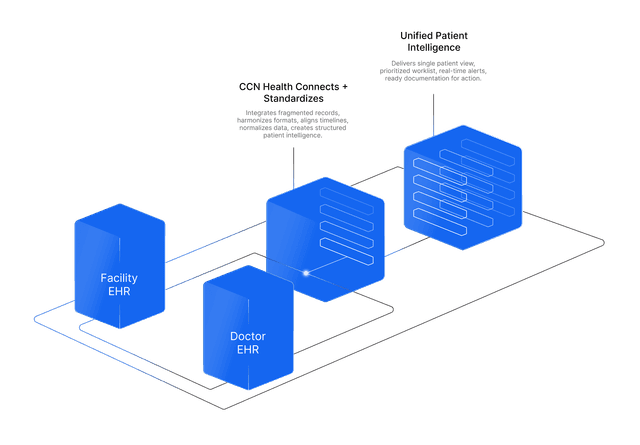
All month, the patient's readings, monitoring minutes, notes, and care plan work accrue in CCN Health. When the month closes, CCN builds the RPM Service Summary from that record, and the CCM Care Plan once the care team finalizes it, then files both directly into the patient's Athena Health chart as clinical documents. The evidence an auditor asks for is already on file.
How it works
The service summary carries the patient snapshot, program details, monitoring sessions, notes, readings, and a day-by-day event log, reviewed and signed. The care plan carries general information, the CCM consent, goals, chronic conditions with their ICD-10 codes, notes with two-way communication, screenings, and medications. Each files to the chart as a PDF, typed and routed to the correct patient, department, and provider, with an action note attached.
The benefit to your practice
Month-end documentation drops from hours per patient to zero, and the audit scramble disappears. Your documentation is complete in the chart the day the month closes, automatically, with nothing printed, scanned, or uploaded.
What you get
- The RPM Service Summary and the CCM Care Plan file themselves into the chart
- Each is a real clinical document, on the right patient, department, and provider
- The care plan carries conditions with ICD-10s, goals, notes, screenings, and medications
- Audit-ready evidence (time logs, reading days, signed review) is always on file