business
What Is APCM? Advanced Primary Care Management Explained
A plain-language guide to Advanced Primary Care Management (APCM): the three HCPCS codes, what each pays in 2026, the ten service elements, who can bill, and which programs can and cannot be billed in the same month.
Advanced Primary Care Management (APCM) is a monthly Medicare primary care bundle, billed once per patient with HCPCS G0556 ($16.37), G0557 ($53.78) or G0558 ($117.24) at 2026 rates. It is not time-based. CCN Health runs the CCM, PCM and RPM programs practices bill alongside or instead of it.
What Is Advanced Primary Care Management?
Advanced Primary Care Management (APCM) is a Medicare Part B payment for primary care practices that manage a patient's care between visits. CMS created it in the 2025 Physician Fee Schedule, and it has been billable since January 1, 2025.
The idea is simple. Medicare already paid for care management through several separate, time-based programs: chronic care management (CCM), principal care management (PCM), transitional care management (TCM), and a set of communication technology-based services such as virtual check-ins and e-visits. Each has its own codes, its own thresholds, and its own documentation. APCM rolls the essential elements of all of them into one monthly bundle, billed once per patient per calendar month.
Two things set it apart from the programs it combines:
- It is not time-based. There is no 20 or 30 minute threshold and no requirement to record care management by the minute.
- It is tiered by patient complexity, not by work performed. The code you bill depends on the patient's chronic conditions and Medicare status, not on how much time the team spent that month.
The Three APCM Codes
APCM uses three HCPCS G-codes. You choose the one that matches the patient.
| Code | Who it is for | 2026 national rate |
|---|---|---|
| G0556 (Level 1) | One or fewer chronic conditions | ~$16.37 per month |
| G0557 (Level 2) | Two or more chronic conditions | ~$53.78 per month |
| G0558 (Level 3) | Qualified Medicare Beneficiary with two or more chronic conditions | ~$117.24 per month |
Rates are 2026 national non-facility amounts under the Medicare Physician Fee Schedule (total RVUs of 0.49, 1.61 and 3.51 at the $33.40 conversion factor) and vary by locality. See the APCM fee schedule for 2027 rates, facility rates and patient coinsurance.
A few points on the tiers:
- Chronic conditions are those expected to last at least 12 months, or until the patient's death, and that place the patient at significant risk of death, acute exacerbation or decompensation, or functional decline. This is the same standard CCM uses.
- Level 1 has no CCM equivalent. A patient with a single chronic condition, or none, cannot be enrolled in CCM. G0556 pays a modest amount for being that patient's primary care home.
- Level 3 is about Medicare status, not sicker patients. A Qualified Medicare Beneficiary (QMB) is a low-income Medicare enrollee whose state Medicaid program covers Medicare premiums and cost sharing. The higher payment reflects the additional resources these patients typically need.
Under all three codes, clinical staff furnish the services under the direction of a physician or other qualified health care professional who is responsible for all of the patient's primary care.
The Ten APCM Service Elements
To bill APCM, CMS lists ten elements. They are furnished when clinically appropriate for the individual patient, and CMS is explicit that you do not have to provide all of them every month.
- Patient consent. Written or verbal, obtained once and documented in the record.
- An initiating visit for new patients, paid separately.
- 24/7 access and continuity of care, including a way for patients and caregivers to reach the care team with urgent needs, and the ability to schedule successive routine appointments with a designated team member.
- Comprehensive care management: needs assessments, preventive services, medication reconciliation and oversight of self-management.
- An electronic, patient-centered comprehensive care plan that the care team can access and update, shared with the patient or caregiver.
- Coordination of care transitions, including follow-up within 7 days of discharge from an emergency department, hospital, skilled nursing facility or other facility, as clinically indicated.
- Practitioner, home- and community-based care coordination.
- Enhanced communication, such as secure messaging or a patient portal, remote evaluation of pre-recorded patient information, and virtual check-ins.
- Patient population-level management: analyzing panel data to find care gaps and grouping patients by risk.
- Performance measurement and reporting.
The practice-level requirements are the real test
The elements a practice performs for one patient vary month to month. What does not vary is that the practice must have the capability to furnish every element in any month it bills. CMS gives an example: if a patient on Level 2 APCM with heart failure and chronic kidney disease sends in a picture of swollen legs, the practitioner must be able to interpret that image remotely.
CMS does not expect practice-level capabilities to be documented in each patient's chart. By billing the code, the practitioner attests that the requirements in the code descriptor have been met.
The tenth element is where many practices pause. To satisfy performance measurement, a practice either:
- Reports the Value in Primary Care MIPS Value Pathway, or
- Participates in a Medicare Shared Savings Program ACO, the ACO REACH Model, the Making Care Primary Model, or the Primary Care First model.
Who Can Bill APCM
You can bill APCM if you are a physician or a non-physician practitioner (nurse practitioner, physician assistant, certified nurse midwife or clinical nurse specialist) who is responsible for all of the patient's primary care services and serves as the focal point for all needed health care. CMS notes the codes are mostly used by general internal medicine, family medicine, geriatric medicine and pediatrics.
That requirement makes APCM a primary care program. A cardiologist managing one condition for a patient is in PCM or CCM territory, not APCM.
Auxiliary personnel can furnish APCM services incident to the billing practitioner's services under general supervision. Per CMS, they can be employees, leased employees or independent contractors of the billing provider.
Consent
Consent is obtained once. It must tell the patient that:
- Only one provider can furnish and be paid for APCM in a calendar month
- They can stop the services at any time
- Cost sharing may apply
That last point matters in practice. APCM is not a preventive service, so the Part B deductible and 20% coinsurance apply every month it is billed, whether or not the patient heard from the practice that month. Patients who understand what they are enrolled in are far less likely to dispute a statement.
The initiating visit
New patients, and patients the billing practitioner has not seen within three years, need an initiating visit. It is not required if you or another provider in your practice has seen the patient within the past three years, or has furnished another care management service such as APCM, CCM or PCM within the past year.
CMS counts office visits at levels 2 through 5 (99212 to 99215), the face-to-face visit included in TCM, the Initial Preventive Physical Exam, and the Annual Wellness Visit as initiating visits when APCM is discussed during the visit.
What You Can and Cannot Bill With APCM
Because APCM is built from other services, the overlap rules decide how much it is really worth to a practice.
| Service | Same patient, same month as APCM? |
|---|---|
| Chronic care management (CCM) | No, bundled into APCM |
| Principal care management (PCM) | No, bundled into APCM |
| Transitional care management (TCM) | No, bundled into APCM |
| Virtual check-ins, e-visits, remote evaluation of patient images, interprofessional consultations | No, bundled into APCM |
| Remote patient monitoring (RPM) | Yes, when RPM requirements are met |
| Remote therapeutic monitoring (RTM) | Yes, when RTM requirements are met |
| Behavioral health integration and collaborative care | Yes, through add-on codes G0568, G0569 and G0570 |
| Office visits and the Annual Wellness Visit | Yes, billed as usual |
The choice is made per patient, per month. A practice does not have to move its whole panel to APCM, and for some patients it should not. We walk through that decision in APCM vs CCM.
The behavioral health add-on codes
Effective January 1, 2026, CMS added three optional add-on codes for behavioral health work furnished in the same month as APCM:
- G0568 and G0569 for psychiatric collaborative care model (CoCM) services
- G0570 for general behavioral health integration (BHI) services
They require an APCM base code (G0556, G0557 or G0558) on the same month's claim, and like APCM itself they are not time-based.
APCM in FQHCs and RHCs
Federally qualified health centers and rural health clinics can bill APCM. CMS states they receive separate payment for these services, with or without a qualifying visit, at the Physician Fee Schedule non-facility rate.
What Changes for APCM in 2027
CMS released the 2027 Physician Fee Schedule final rule on November 4, 2026. For APCM, the headline is stability:
- The codes and requirements carry forward. G0556, G0557 and G0558 remain the base codes.
- Payment moves with the conversion factor. The 2027 conversion factor is $32.63, down 2.31% from $33.40, and the RVUs are essentially unchanged. National non-facility rates for 2027 are about $15.99 (G0556), $52.86 (G0557) and $114.85 (G0558). The APCM fee schedule has the full 2026 and 2027 tables.
- Behavioral health add-ons go up. CMS finalized higher payment for psychiatric collaborative care and raised the matching APCM add-ons: G0568 goes from about $161.66 to $242.43 and G0569 from about $145.96 to $183.05.
- The remote monitoring staffing rule does not reach APCM. The requirement that RPM and RTM be furnished by clinical staff employed by the practice was delayed to January 1, 2029, and it applies to RPM and RTM only.
Where CCN Health Fits
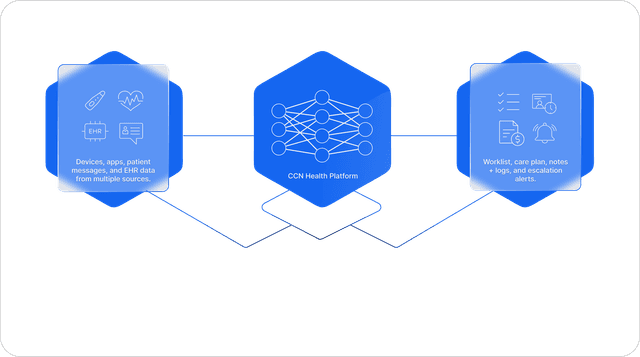
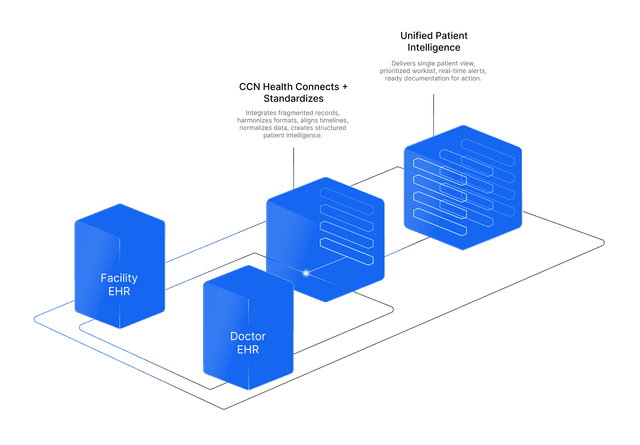
APCM changes which code a practice bills. It does not change the work: someone still has to keep care plans current, follow up after discharges, watch the panel for gaps, and document it in a way that holds up to a records request.
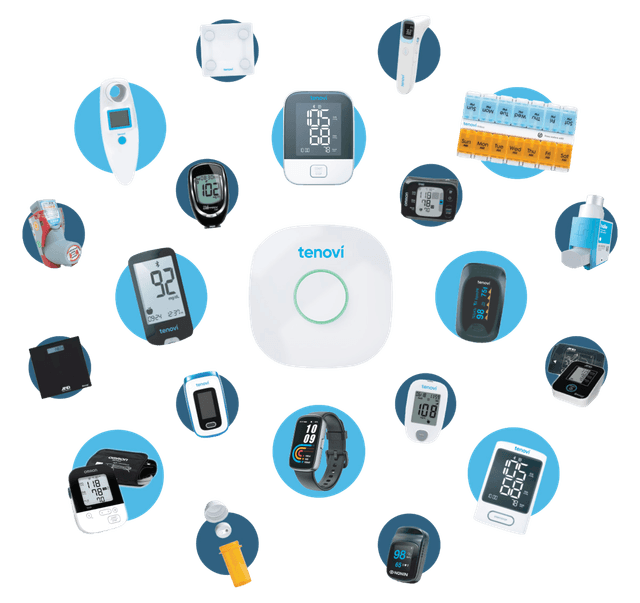
CCN Health's care management software runs CCM, PCM, RPM, RTM and BHI programs, with care plans, time tracking and billing reports for each. Practices billing APCM typically use it in two ways:
- RPM alongside APCM. Device-based monitoring is the largest program outside the bundle. See the Medicare program stacking guide for how the pieces combine.
- Time-based codes where they pay more. For patients who consistently need 40 or 60 minutes a month, CCM add-on codes can exceed the APCM payment. Keeping those patients on CCM, and documenting their time accurately, is a legitimate choice.
Talk to CCN Health about your care management programs →
Sources
- CMS, Advanced Primary Care Management Services (provider page, last modified November 17, 2026)
- CMS, Advanced Primary Care Management (APCM) Services FAQ
- CMS, Calendar Year 2025, 2026 and 2027 Medicare Physician Fee Schedule final rules and fact sheets
Reimbursement amounts are national estimates from the Medicare Physician Fee Schedule and vary by locality and payer. This article is educational and is not billing or legal advice.
Let's figure this out together
We work closely with every client to find the right approach for their practice. Think of us as your partner, not just a platform.
Topics
Your Partner in Chronic Care
We love working closely with our clients to find the best solutions. Let us help guide you through the complicated stuff.
Why It Matters
Key Benefits
See how this approach drives measurable improvements across your organization.
No Minute Counting
APCM is billed once a month without a time threshold, which removes the stopwatch documentation that time-based care management codes require.
Pays for Every Enrolled Patient
Payment does not depend on reaching 20 or 30 minutes in a month, so quiet months for a stable patient are still reimbursed.
Covers Lower-Complexity Patients
G0556 pays for patients with one or fewer chronic conditions, a group that does not qualify for chronic care management at all.
Stacks With Remote Monitoring
RPM and RTM sit outside the bundle, so device-based monitoring can be billed alongside APCM when its own requirements are met.
Behavioral Health Add-Ons
Since 2026, G0568, G0569 and G0570 add payment for collaborative care and behavioral health integration without separate time tracking.
Predictable Monthly Revenue
A flat monthly amount per enrolled patient is easier to forecast and staff against than revenue that swings with documented minutes.
Continue Reading
Related Articles
Explore more insights on this topic.
APCM vs CCM: Which Medicare Care Management Program to Bill
APCM and CCM pay for overlapping work and cannot be billed for the same patient in the same month. A side-by-side comparison of codes, 2026 rates and requirements, plus a practical way to decide which program fits each patient.
APCM Fee Schedule: 2026 and 2027 Medicare Rates by Code
The APCM fee schedule in one place: 2026 and 2027 national Medicare rates for G0556, G0557 and G0558, facility and non-facility, the RVUs behind them, the behavioral health add-on codes, patient coinsurance, and how to adjust for your locality.
What Is Chronic Care Management? Complete Guide to CCM (2026)
A complete guide to Chronic Care Management — what it is, how it works, who qualifies, what services CCM covers, and how providers bill Medicare for care coordination.
Common Questions
Frequently Asked Questions
Get answers to the most common questions about this topic.
APCM stands for Advanced Primary Care Management. It is a Medicare Part B payment, effective January 1, 2025, that pays a primary care practitioner a monthly amount for managing a patient's overall care. It combines elements of chronic care management, principal care management, transitional care management and communication technology-based services into one bundle billed once per patient per calendar month. Unlike those underlying services, APCM is not time-based, so there is no minute threshold to document.
There are three HCPCS codes. G0556 is for patients with one or fewer chronic conditions and pays approximately $16.37 per month. G0557 is for patients with two or more chronic conditions and pays approximately $53.78. G0558 is for Qualified Medicare Beneficiaries with two or more chronic conditions and pays approximately $117.24. These are 2026 national non-facility amounts under the Medicare Physician Fee Schedule and vary by locality.
No. CMS states that APCM services are not time-based. A practice bills one APCM code per patient per calendar month when the billing requirements are met, without documenting minutes. The service elements are furnished when they are clinically appropriate for the individual patient, and not every element has to be delivered every month. What the practice must have is the capability to furnish all of them in any month it bills.
Not for the same patient in the same month by the same practitioner. APCM incorporates chronic care management, principal care management and transitional care management, along with virtual check-ins, e-visits, remote evaluation of patient images and interprofessional consultations, so billing those separately would pay twice for the same work. A practice can still choose month by month, patient by patient, which service to report.
Yes. Remote patient monitoring and remote therapeutic monitoring are not part of the APCM bundle, and CMS did not treat them as duplicative when it created the codes. A patient can be on APCM for primary care management and on RPM for device-based monitoring in the same month, provided each service meets its own requirements and RPM management time is documented on its own.
Physicians and non-physician practitioners, including nurse practitioners, physician assistants, certified nurse midwives and clinical nurse specialists, who are responsible for all of the patient's primary care and serve as the focal point for all needed health care services. CMS notes the codes are mostly used by general internal medicine, family medicine, geriatric medicine and pediatrics. Only one practitioner can be paid for APCM for a patient in a given month.
CCN Health's care management software runs chronic care management, principal care management, remote patient monitoring, remote therapeutic monitoring and behavioral health integration. Practices billing APCM use it for the programs that sit outside the bundle, most often RPM, and for the patients they keep on time-based CCM or PCM because those codes pay more for that patient.
Still have questions? We love helping practices figure this out — no pressure, just real answers.

Your Partner in Chronic Care
We're Here to Guide You Every Step of the Way
RPM, CCM, and chronic care management can get complicated. We work closely with every client to figure out the best solutions for their practice.