Clinical
Using Dexcom for Diabetes Remote Patient Monitoring: Complete RPM Guide (2026)
A complete guide to using Dexcom G7 for diabetes remote patient monitoring — covering clinical workflows, Dexcom Clarity integration, RPM billing codes (CPT 99453-99458), and program optimization for 2026.
Dexcom G7 is a leading CGM platform for diabetes remote patient monitoring programs. The sensor transmits glucose readings every 5 minutes via Bluetooth to the Dexcom app, which syncs to Dexcom Clarity — a cloud platform that integrates with RPM systems like CCN Health via API. Dexcom G7 satisfies CPT 99454 device transmission requirements (16+ days/month), enabling Medicare RPM billing of $145+ per patient per month. The sensor wears for 10 days, warms up in 30 minutes, and requires no fingerstick calibration.
Why Dexcom G7 for Remote Patient Monitoring
Dexcom G7 is one of the most prescribed continuous glucose monitors in the United States, with a large installed base of patients who already wear the sensor under an endocrinologist's prescription. For RPM programs, this creates a unique enrollment advantage: patients already generating glucose data through Dexcom can be enrolled in an RPM program without any device change — only a Clarity data-sharing authorization.
Beyond the enrollment advantage, Dexcom G7's technical specifications make it well-suited for RPM operations: factory-calibrated (no fingerstick calibration), 30-minute warmup (fastest of any iCGM), Bluetooth LE connectivity to a smartphone app, and automatic cloud sync to Dexcom Clarity for API-based data ingestion.
This guide covers everything needed to build and operate a Dexcom-based diabetes RPM program — clinical setup, data integration, billing compliance, and program optimization.
Dexcom G7 Specifications for RPM
| Specification | Detail |
|---|---|
| FDA Classification | iCGM (integrated Continuous Glucose Monitor) |
| Sensor Wear Duration | 10 days |
| Reading Frequency | Every 5 minutes (288 readings/day) |
| MARD Accuracy | 8.2% |
| Warmup Time | 30 minutes |
| Calibration | Factory (no fingersticks required) |
| Connectivity | Bluetooth LE to smartphone app |
| Cloud Platform | Dexcom Clarity |
| Water Resistance | 2.4m depth for 24 hours |
| Sensor Application | Single-piece auto-applicator, upper arm or abdomen |
Clinical Setup: Dexcom to RPM Platform
Integration Architecture
Dexcom G7 Sensor → Bluetooth → Dexcom App → Dexcom Clarity Cloud → CCN Health API → Clinical Dashboard + EHR
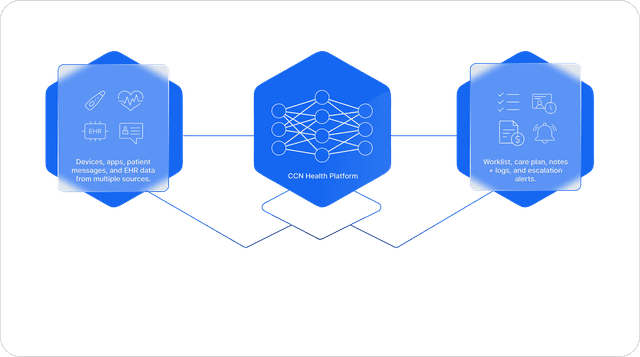
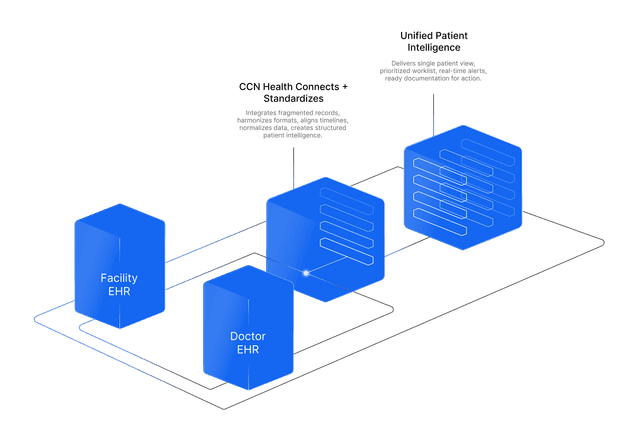
No cellular gateways, hubs, or additional hardware are required. The patient's smartphone serves as the data relay between the sensor and the cloud. CCN Health pulls data from Dexcom Clarity on a scheduled basis, normalizing it alongside other monitoring data (blood pressure, weight, SpO2) into a unified clinical view.
Patient Enrollment Steps
- Verify Dexcom prescription — confirm the patient has an active Dexcom G7 prescription or order one as part of RPM enrollment
- Set up Dexcom app — ensure the patient has the Dexcom G7 app installed on their smartphone and paired with their sensor
- Authorize Clarity sharing — patient grants data-sharing access to the RPM provider through Dexcom Clarity
- Confirm data flow — verify glucose readings appear in the CCN Health platform within 24 hours
- Document consent — record RPM consent and device setup (billable under CPT 99453)
For Patients Already Wearing Dexcom
Patients with an existing Dexcom G7 prescription represent the fastest RPM enrollment pathway. They already have the sensor, the app, and a Clarity account. Enrollment requires only steps 3-5 above — no new device procurement, patient education on sensor application, or troubleshooting of Bluetooth pairing.
RPM Billing with Dexcom G7
Applicable CPT Codes
| CPT Code | Description | Est. Reimbursement | Requirements |
|---|---|---|---|
| 99453 | Device setup + patient education | ~$22 | One-time per patient |
| 99454 | Device data transmission | ~$52/month | 16+ days of readings per 30-day period |
| 99457 | First 20 min clinical monitoring | ~$52/month | Interactive communication with patient |
| 99458 | Each additional 20 min | ~$41/month | Documented clinical staff time |
Estimated monthly revenue per patient: $145+
Reimbursement estimates based on CMS published fee schedules. Actual rates vary by region and payer.
Meeting the 16-Day Threshold
CPT 99454 requires device data transmission on at least 16 calendar days per 30-day billing period. Dexcom G7's 10-day sensor wear means patients typically use 3 sensors per month:
- Sensor 1: Days 1–10 (10 days of data)
- Sensor 2: Days 10–20 (10 days of data, minus warmup)
- Sensor 3: Days 20–30 (10 days of data, minus warmup)
With consistent sensor wear, patients generate 28-29 days of glucose data per month — well above the 16-day threshold. The 30-minute warmup between sensors creates minimal gaps that do not affect billing compliance.
Common Billing Pitfalls
- Sensor gaps: If a patient delays replacing a sensor by several days, the data gap may drop below the 16-day threshold. Automated alerts for sensor expiration help prevent this.
- App connectivity: Glucose data only syncs to Clarity when the Dexcom app is running on the patient's smartphone. Patients who switch phones or disable Bluetooth may lose data transmission. Verify app connectivity during monthly check-ins.
- Time documentation: Clinical staff time reviewing Dexcom data, contacting patients about glucose trends, and adjusting care plans must be documented separately from any face-to-face visit time. RPM time and office visit time cannot overlap.
Clinical Workflows for Dexcom RPM
Daily Data Review
Clinical staff review incoming glucose data through the CCN Health dashboard:
- Threshold alerts: High glucose (>250 mg/dL sustained) and low glucose (<70 mg/dL) trigger real-time notifications
- Trend analysis: 7-day and 30-day glucose trend graphs identify patterns (dawn phenomenon, post-meal spikes, overnight hypoglycemia)
- Time-in-range: Percentage of readings within target range (typically 70-180 mg/dL) provides a standardized metric for glycemic control
Patient Communication
RPM clinical time (CPT 99457/99458) requires interactive communication with the patient. Common touchpoints include:
- Calling patients when glucose trends indicate medication adjustment may be needed
- Discussing dietary patterns identified through post-meal glucose data
- Coordinating with the prescribing physician for insulin dose changes
- Reinforcing sensor wear compliance when data gaps are detected
Care Team Coordination
Dexcom RPM data informs the broader care team:
- Endocrinologist: Glucose trend reports and time-in-range data for medication management decisions
- Primary care physician: A1C correlation data, hypoglycemia frequency, and overall glycemic stability
- Facility nursing staff (senior living/SNF): Real-time alerts for glucose emergencies, sensor change scheduling
Program Stacking: Dexcom RPM + CCM
Patients with diabetes and at least one additional chronic condition qualify for both RPM and CCM billing:
| Program | CPT Codes | Est. Monthly Revenue | Clinical Activities |
|---|---|---|---|
| RPM | 99454, 99457, 99458 | $145+ | Dexcom data review, glucose alerts, patient contact |
| CCM | 99490 or 99491 | $62-$86 | Care plan management, medication reconciliation, specialist coordination |
| Combined | $207-$231+ |
The most common dual-billing scenario: a patient with diabetes (RPM via Dexcom G7) and hypertension (CCM for multi-chronic care coordination). CCN Health tracks RPM and CCM clinical time separately, ensuring billing compliance for both programs.
Dexcom RPM in Different Care Settings
Physician Practices
Dexcom RPM integrates into existing endocrinology and primary care workflows. Patients already prescribed Dexcom enroll with minimal friction. The RPM platform adds structured data review, billing documentation, and care coordination on top of the glucose data the patient is already generating.
Senior Living Communities
For senior living residents with diabetes, Dexcom RPM provides 24/7 glucose monitoring without fingerstick burden. Facility staff receive alerts for hypo/hyperglycemia events, and glucose trend data supports care plan documentation for state surveys.
Home Health
Home health patients with diabetes benefit from continuous monitoring between home visits. Dexcom RPM data allows clinicians to identify glucose trends that would otherwise go undetected between weekly or bi-weekly home health encounters.
Getting Started with Dexcom RPM
Implementation Timeline
| Week | Activity |
|---|---|
| 1 | Platform setup and Dexcom Clarity API integration |
| 2 | Clinical staff training on glucose data review and RPM documentation |
| 3 | Pilot enrollment of 15-20 patients with existing Dexcom prescriptions |
| 4 | Billing system setup for CPT 99453-99458 |
| 5+ | Scale enrollment, add CCM stacking for qualifying patients |
Enrollment Targets
Start with patients who already wear Dexcom G7 — they require the least setup effort and generate the fastest time-to-revenue. Then expand to new diabetes patients who would benefit from CGM monitoring but do not yet have a prescription, coordinating with the prescribing physician to initiate Dexcom G7 as part of the RPM program.
Disclaimer: This article is for informational purposes only and does not constitute medical, legal, or billing advice. CPT code reimbursement amounts are estimates based on CMS published fee schedules and may vary by region, payer, and clinical circumstances. Dexcom product specifications are based on publicly available information as of April 2026 and are subject to change. Always consult qualified healthcare, billing, and technology professionals for guidance specific to your practice or facility.
Let's figure this out together
We work closely with every client to find the right approach for their practice. Think of us as your partner, not just a platform.
Topics
Your Partner in Chronic Care
We love working closely with our clients to find the best solutions. Let us help guide you through the complicated stuff.
Why It Matters
Key Benefits
See how this approach drives measurable improvements across your organization.
Continuous Glucose Data
288 glucose readings per day provide comprehensive glycemic profiles — time-in-range, variability patterns, and overnight trends that fingerstick monitoring cannot capture.
Cloud-Native Integration
Dexcom Clarity's cloud API eliminates gateway hardware. Data flows from sensor to app to cloud to RPM platform automatically, reducing setup complexity and ongoing maintenance.
Fastest Warmup
Dexcom G7's 30-minute warmup — the shortest of any iCGM — minimizes data gaps during sensor changes and improves billing compliance for the 16-day threshold.
Follower Ecosystem
Dexcom's follower app allows up to 10 people (family, caregivers, clinical staff) to receive real-time glucose alerts and view glucose data remotely.
Continue Reading
Related Articles
Explore more insights on this topic.
Dexcom G7 vs FreeStyle Libre 3: Full CGM Comparison & Clinical Workflow (2026)
A head-to-head comparison of Abbott's FreeStyle Libre 3 and Dexcom G7 for RPM programs, covering sensor specs, cloud integration, clinical workflows, and Medicare billing compliance.
Best Chronic Care Management Software in 2026: Top CCM Vendors Compared
A head-to-head comparison of the best Chronic Care Management software platforms in 2026 — covering care coordination, EHR integration, billing automation, and multi-program stacking to maximize per-patient Medicare revenue.
Common Questions
Frequently Asked Questions
Get answers to the most common questions about this topic.
Yes. Dexcom G7 is one of the most widely used CGM devices for RPM programs. The sensor transmits glucose readings every 5 minutes to the Dexcom app via Bluetooth, which syncs automatically to Dexcom Clarity — a cloud platform that provides API access for RPM system integration. CCN Health pulls data from Clarity automatically, generating clinical alerts, trend dashboards, and billing documentation without any manual data entry.
Dexcom-based RPM programs bill using standard RPM CPT codes: 99453 (one-time device setup and patient education, ~$22), 99454 (monthly device data transmission with 16+ days of readings, ~$52/month), 99457 (first 20 minutes of clinical staff monitoring time, ~$52/month), and 99458 (each additional 20 minutes of clinical time, ~$41/month). Total estimated monthly revenue is $145+ per patient. These codes are the same regardless of whether the CGM is Dexcom G7 or another FDA-cleared device.
Yes, when worn consistently. Dexcom G7 sensors last 10 days each. A patient wearing two sensors per month (with minimal gap between changes) will have data transmission on 19-20 days per month, comfortably exceeding the 16-day minimum for CPT 99454. The 30-minute warmup time between sensors is the shortest of any iCGM, which minimizes the data gap during changes.
Dexcom Clarity provides a cloud API that RPM platforms use to pull glucose data automatically. When a patient shares their Clarity account with their RPM provider, glucose readings, trend data, and time-in-range metrics flow into the RPM platform on a scheduled basis. CCN Health's Clarity integration normalizes this data alongside data from other monitoring devices (blood pressure cuffs, weight scales) into a unified clinical dashboard.
Yes. RPM (CPT 99453-99458), CCM (CPT 99490-99491), and PCM (CPT 99424-99426) use separate CPT code families and can be billed concurrently for the same patient. A diabetic patient using Dexcom G7 for RPM who also has a second chronic condition (such as hypertension) qualifies for CCM as well. Combined RPM + CCM revenue can exceed $207 per patient per month.
Not if they already have an active Dexcom prescription from their endocrinologist or primary care physician. Patients already wearing Dexcom G7 can be enrolled in an RPM program by authorizing data sharing through Dexcom Clarity — no device change, new prescription, or additional hardware is needed. For new patients, the prescribing physician orders the Dexcom G7 as part of the RPM enrollment.
Still have questions? We love helping practices figure this out — no pressure, just real answers.

Your Partner in Chronic Care
We're Here to Guide You Every Step of the Way
RPM, CCM, and chronic care management can get complicated. We work closely with every client to figure out the best solutions for their practice.