Clinical
Dexcom G7 vs FreeStyle Libre 3: Full CGM Comparison & Clinical Workflow (2026)
A head-to-head comparison of Abbott's FreeStyle Libre 3 and Dexcom G7 for RPM programs, covering sensor specs, cloud integration, clinical workflows, and Medicare billing compliance.
FreeStyle Libre 3 offers longer sensor wear (14 vs 10 days) and more frequent readings (every 1 min vs 5 min), while Dexcom G7 provides faster warmup (30 vs 60 min) and a broader third-party app ecosystem. Both are iCGM-cleared and support RPM billing through CCN Health.
Choosing Between Two iCGM Platforms for Remote Monitoring
FreeStyle Libre 3 and Dexcom G7 are the two leading iCGM platforms in the United States. Both are FDA-cleared, factory calibrated, and supported by cloud APIs that enable remote patient monitoring without additional hardware. But the sensors differ in specifications that directly affect RPM program operations — sensor wear duration, reading frequency, warmup time, and integration architecture.
This comparison focuses on the attributes that matter for RPM programs: clinical data density, patient compliance, staff burden, and billing documentation.
Head-to-Head Specifications
| Specification | FreeStyle Libre 3 | Dexcom G7 |
|---|---|---|
| Manufacturer | Abbott | Dexcom |
| FDA Classification | iCGM | iCGM |
| Sensor Wear | 14 days | 10 days |
| Reading Frequency | Every 1 minute | Every 5 minutes |
| Daily Readings | 1,440 | 288 |
| MARD Accuracy | 7.9% | 8.2% |
| Warmup Time | 60 minutes | 30 minutes |
| Calibration | Factory (no fingersticks) | Factory (no fingersticks) |
| Scanning Required | No | No |
| Connectivity | Bluetooth LE → smartphone app | Bluetooth LE → smartphone app |
| Cloud Platform | LibreView | Dexcom Clarity |
| Water Resistance | 1m / 30 min | 2.4m / 24 hrs |
| Sensor Size | Smallest iCGM available | Compact (60% smaller than G6) |
Specifications reflect the manufacturers' published clinical data (Abbott FreeStyle Libre, Dexcom). The MARD (Mean Absolute Relative Difference) figures come from each sensor's pivotal accuracy trial: Dexcom G7's 8.2% MARD in adults (arm placement) was reported by Garg et al. in Diabetes Technology & Therapeutics (2022), and FreeStyle Libre 3 was the first 14-day CGM to report a sub-8% MARD — 7.9% in Abbott's ADA 2022 late-breaking data, with the published pivotal study (Alva et al., Diabetes Therapy, 2023) reporting 7.8% overall — making them the two most accurate iCGM sensors cleared in the US.
Both carry the FDA's integrated CGM (iCGM) clearance (special controls under FDA product classification code QBJ) — the interoperable class that permits use with automated insulin dosing systems and remote patient monitoring platforms. iCGM clearance imposes accuracy standards that ordinary CGMs do not have to meet, which is why both sensors are factory-calibrated with no fingerstick confirmation required.
Sensor Wear: 14 Days vs 10 Days
FreeStyle Libre 3's 14-day sensor wear means 26 sensor changes per year. Dexcom G7's 10-day wear requires approximately 36 sensor changes per year — 10 additional patient touchpoints per year per patient.
For RPM programs managing hundreds of patients, the operational difference compounds. Each sensor change is an opportunity for a gap in data: the patient must apply a new sensor, wait for warmup, and confirm Bluetooth pairing. Programs with elderly populations or memory care residents — where staff often assist with sensor application — save meaningful nursing time with fewer change cycles.
The 14-day wear also reduces inventory complexity and supply chain touchpoints, since fewer sensors are ordered, shipped, and tracked per patient per year.
Reading Frequency: Every Minute vs Every 5 Minutes
FreeStyle Libre 3 generates 1,440 glucose readings per day. Dexcom G7 generates 288. Both far exceed the data density of fingerstick monitoring (typically 1–4 readings per day), but the 5x difference between the two CGMs affects certain clinical analytics.
For standard RPM program operations — threshold alerts, daily trend summaries, and CPT 99454 compliance documentation — both reading frequencies are more than sufficient. A sensor that transmits every 5 minutes still documents device transmission on every calendar day the sensor is active.
Where the difference matters is in granular time-in-range analysis, overnight hypoglycemia detection, and rapid glycemic variability assessments. Minute-by-minute data provides higher resolution for identifying short-duration glucose excursions that 5-minute intervals may smooth over.
For most RPM programs focused on chronic disease management and billing compliance, either frequency is clinically adequate. Programs with endocrinology oversight or insulin titration workflows may prefer the higher resolution.
Cloud Integration Architecture
Both CGMs integrate with CCN Health through cloud-to-cloud APIs — no cellular gateways, hubs, or dedicated hardware required.
FreeStyle Libre 3 → LibreView → CCN Health Abbott's LibreView platform serves as the data aggregation layer. Patients use the FreeStyle Libre app on their smartphone, which syncs to LibreView automatically. CCN Health pulls data from the LibreView API on a scheduled basis.
Dexcom G7 → Dexcom Clarity → CCN Health Dexcom's Clarity platform performs the same role. Patients use the Dexcom G7 app, which syncs to Clarity. CCN Health pulls data from the Clarity API.
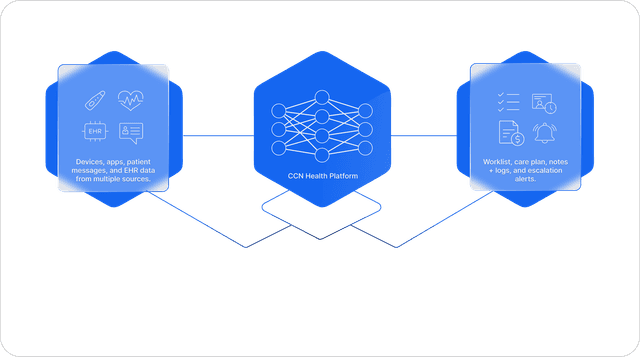
Both integration paths deliver the same end result: glucose data appears in the CCN Health platform, triggers clinical alerts, generates EHR documentation, and populates billing records — without any manual data entry.
RPM Billing Compliance
Both sensors satisfy the CPT 99454 requirement for device data transmission (at least 16 days per 30-day period with recorded data — see our complete 99454/99453 billing guide). CPT 99454 reimburses approximately ~$52 per month per the 2026 CMS Physician Fee Schedule, and since both CGMs transmit continuously while the sensor is active, the limiting factor is sensor uptime — not reading frequency.
With Dexcom G7's 10-day wear, a patient needs at least two sensor sessions per month with no gaps exceeding 14 days to meet the 16-day threshold. With FreeStyle Libre 3's 14-day wear, a single sensor session covers 14 of the required 16 days, and the second sensor of the month completes the remainder with margin.
In practice, both achieve reliable 99454 compliance when patients maintain consistent sensor wear. The longer wear period of Libre 3 provides a slightly larger buffer against gaps caused by sensor falloff, delayed replacement, or supply delays. And as of 2026, months that fall short of 16 transmission days can still be billed under the new CPT 99445 code (2–15 days) at the same rate — so a missed sensor change no longer zeroes out the month's device-side revenue.
Medicare Coverage for the CGM Itself
RPM billing (99453/99454) pays for the monitoring service — the CGM hardware is covered separately. Medicare covers therapeutic CGM as durable medical equipment under Local Coverage Determination L33822 (Glucose Monitors) for beneficiaries with diabetes who are treated with insulin or have a history of problematic hypoglycemia — criteria CMS broadened in 2023 to include any insulin user, not just intensive-insulin regimens. For patients who meet DME coverage criteria, the sensor cost is largely reimbursed outside the RPM program; for those who don't, programs should confirm commercial/Medicare Advantage coverage or account for sensor cost in the program's economics.
Care Setting Considerations
Senior Living and Memory Care
FreeStyle Libre 3's 14-day wear and no-scan operation are advantages in settings where clinical staff manage sensor application. Fewer sensor changes means less hands-on time per resident. The Libre 3 is also the smallest and thinnest iCGM sensor available, which reduces the likelihood of accidental dislodging — a common issue in memory care where patients may not understand the sensor's purpose.
Physician Practices and Home Health
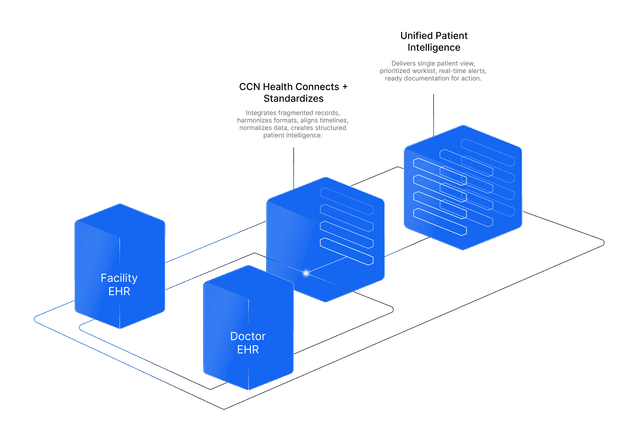
In settings where patients self-manage their CGM, the choice often depends on which device the patient's endocrinologist has already prescribed. RPM programs that accept both CGMs can enroll patients regardless of their existing device. CCN Health normalizes data from both platforms into a unified clinical view, so the care team's workflow is identical regardless of which sensor the patient wears.
Skilled Nursing Facilities
Skilled nursing facilities benefit from whichever CGM the facility has standardized on. The operational efficiency of a single-device program (one sensor type to stock, one application procedure to train) typically outweighs the specification differences between the two sensors.
Clinical Workflow Comparison: Dexcom G7 vs FreeStyle Libre 3
The clinical workflow impact of each CGM differs based on sensor management, data review, and care team interaction patterns.
Sensor Change Workflow
| Step | FreeStyle Libre 3 | Dexcom G7 |
|---|---|---|
| Change frequency | Every 14 days (~2.1x/month) | Every 10 days (~3x/month) |
| Warmup wait | 60 minutes | 30 minutes |
| Data gap per change | ~60 min | ~30 min |
| Annual sensor changes | 26 | 36 |
| Staff time per change | ~5 min (apply + verify pairing) | ~5 min (apply + verify pairing) |
For a 50-patient RPM program, FreeStyle Libre 3 requires approximately 500 fewer staff-assisted sensor changes per year — a meaningful reduction in nursing time for facility-based programs.
Data Review Workflow
Both CGMs deliver glucose data to the CCN Health platform through cloud APIs. The clinical review workflow is identical — care staff see time-in-range summaries, trend graphs, and threshold alerts regardless of which sensor the patient wears. The difference is data granularity: Libre 3's minute-by-minute data reveals short-duration glycemic excursions that Dexcom G7's 5-minute intervals may not capture, which can influence insulin dosing decisions for tightly managed patients.
Alert and Escalation Workflow
Both sensors support configurable high/low glucose alerts. Dexcom G7 has a broader ecosystem of third-party receiver devices and smartwatch integrations, which can provide additional alert channels for patients who do not consistently carry a smartphone. For programs where family members or caregivers need real-time notifications, Dexcom's follower app ecosystem is more mature.
Making the Choice
For new RPM programs selecting a primary CGM: FreeStyle Libre 3's longer wear and higher reading frequency make it the default recommendation for programs optimizing for operational efficiency and data density. Dexcom G7's faster warmup and broader third-party ecosystem (more smartwatch integrations, more insulin pump partnerships) make it the better fit for programs with an endocrinology focus or existing Dexcom relationships.
For established programs: support both. Many patients arrive with a CGM already prescribed by their endocrinologist. Requiring a switch creates friction, delays enrollment, and may not be clinically justified. CCN Health's platform normalizes data from both, making dual-device support operationally transparent.
FAQ
Can I use both FreeStyle Libre 3 and Dexcom G7 in the same RPM program?
Yes. CCN Health integrates with both LibreView and Dexcom Clarity APIs. Data from both CGMs flows into the same clinical dashboards, alert systems, and billing documentation. Care teams see a unified view regardless of which sensor type each patient wears.
Which CGM is better for Medicare RPM billing?
Both satisfy CPT 99454 device transmission requirements. The clinical and billing outcome is identical — the difference is operational (sensor wear duration, reading frequency, staff burden for sensor changes).
Does CCN Health support FreeStyle Libre 2 in addition to Libre 3?
Both FreeStyle Libre 2 and Libre 3 sync to LibreView. If a patient is using Libre 2 (with or without the real-time streaming upgrade), their data flows through the same integration path.
How does FreeStyle Libre impact clinical workflow compared to Dexcom?
FreeStyle Libre 3's 14-day sensor wear reduces sensor change events by approximately 28% compared to Dexcom G7's 10-day wear — saving staff time in facilities where nurses manage sensor application. Libre 3 also generates 5x more data points per day (1,440 vs 288), providing higher-resolution glucose trend data for clinical review. Dexcom G7 offers a faster 30-minute warmup (vs 60 min) and a broader third-party app ecosystem for family/caregiver notifications.
How do Dexcom G7 and Abbott FreeStyle Libre 3 compare for RPM in 2026?
Both are iCGM-cleared, factory-calibrated CGMs that integrate with CCN Health via cloud APIs for RPM billing. The primary differences are sensor wear (Libre 3: 14 days vs G7: 10 days), reading frequency (Libre 3: every 1 min vs G7: every 5 min), and warmup time (Libre 3: 60 min vs G7: 30 min). Both satisfy CPT 99454 requirements for device data transmission.
Do patients need any special setup for CGM data to reach CCN Health?
Patients need the manufacturer's smartphone app (FreeStyle Libre app or Dexcom G7 app) installed and connected to their sensor via Bluetooth. Data syncs to the cloud automatically from there. No additional apps, gateways, or patient-side configuration is required.
Let's figure this out together
We work closely with every client to find the right approach for their practice. Think of us as your partner, not just a platform.
Topics
Your Partner in Chronic Care
We love working closely with our clients to find the best solutions. Let us help guide you through the complicated stuff.
Continue Reading
Related Articles
Explore more insights on this topic.
Behavioral Health Integration for Assisted Living — 2026 Guide
How BHI works in assisted living — addressing transition depression from loss of independence, anxiety management, PHQ-9/GAD-7 screening, and collaborative psychiatric care for AL residents.
Behavioral Health Integration for CCRCs — 2026 Guide
How BHI works in CCRCs — continuous behavioral health management from independent living through skilled nursing, care transition mental health support, and psychiatric oversight across the campus continuum.
Behavioral Health Integration for Independent Living — 2026 Guide
How BHI works in independent living — proactive mental wellness screening for active seniors, sleep disorder identification, social isolation prevention, and Medicare billing for IL communities.

Your Partner in Chronic Care
We're Here to Guide You Every Step of the Way
RPM, CCM, and chronic care management can get complicated. We work closely with every client to figure out the best solutions for their practice.