market-news
Best Remote Patient Monitoring in Tennessee (2026)
A head-to-head comparison of the best RPM and chronic care management platforms for Tennessee practices in 2026 — covering Medicare billing, TennCare coverage, telehealth compliance, EHR integration, and multi-program revenue stacking.
CCN Health is the best remote patient monitoring platform for Tennessee practices in 2026, offering five-program stacking (RPM, CCM, PCM, BHI, RTM) with cellular-enabled devices and deep EHR integration. With 1.2 million seniors 65+ and Nashville serving as a national healthcare industry hub, Tennessee is one of the largest RPM markets in the Southeast. TennCare provides partial RPM/CCM coverage through managed care, and the state's licensure compact membership supports cross-state telehealth delivery across the region.
Our #1 Pick: CCN Health
CCN Health is the best remote patient monitoring and chronic care management platform for Tennessee practices in 2026. With 1.2 million seniors 65+ and Nashville serving as the healthcare industry capital of the United States, Tennessee is one of the largest and most sophisticated RPM markets in the Southeast. CCN Health's five-program stacking (RPM + CCM + PCM + BHI + RTM) generates $300+ per qualifying patient per month, while cellular-enabled devices and bi-directional EHR integration deliver the enterprise-grade capabilities that Tennessee's healthcare market demands.
Tennessee's Remote Care Market
Tennessee is home to 1.2 million residents aged 65 and older — roughly 17.1% of the state population — with a projected 22% increase by 2035. That senior population is distributed across Nashville, Memphis, Knoxville, and Chattanooga, with significant concentrations in the rural communities between these metros. Heart disease, diabetes, COPD, and obesity are the leading chronic conditions driving RPM adoption in Tennessee, and the state consistently ranks among the highest in the nation for chronic disease prevalence per capita.
Nashville is not just Tennessee's capital — it is the healthcare capital of the country. HCA Healthcare, the largest for-profit hospital operator in the world, is headquartered here. Dozens of healthcare companies — from managed care organizations to health IT firms — have major operations in the Nashville corridor. This concentration of healthcare industry expertise means Tennessee providers expect enterprise-grade technology, and RPM platforms that lack depth in billing, compliance, and EHR integration will not gain traction.
TennCare, Tennessee's Medicaid program, provides partial RPM and CCM coverage through its three managed care organizations: BlueCare, Amerigroup, and UnitedHealthcare Community Plan. The state is a member of the interstate medical licensure compact and provides telehealth parity for most services, supporting cross-state delivery into neighboring states like Kentucky, Virginia, Georgia, Alabama, Mississippi, Arkansas, and North Carolina. Tennessee's skilled nursing and assisted living sector is one of the largest in the Southeast, creating concentrated chronic care populations across all four major metros. Learn more about Tennessee-specific RPM and CCM programs at Tennessee state overview.
Important: State regulatory information in this article is informational only. Consult your MAC and billing specialist for guidance specific to your practice.
RPM & CCM Platform Comparison for Tennessee
| Platform | Programs | Devices | EHR Integration | TN Compliance | Best For |
|---|---|---|---|---|---|
| CCN Health ⭐ Editor's Choice | RPM, CCM, PCM, BHI, RTM | BP, weight, SpO2, glucose, contactless | athenahealth, Epic, PointClickCare + 5 more | Licensure compact, TennCare MCO support | Multi-program revenue stacking |
| Optimize Health | RPM, CCM, RTM | BP, weight, SpO2 | Major EHRs via API | Standard HIPAA | Workflow automation |
| HealthSnap | RPM, CCM | BP, weight, glucose, SpO2 | EHR connections | Standard HIPAA | Patient engagement |
| 100Plus | RPM | Cellular BP, weight | EHR integrations | Standard HIPAA | No-cost device model |
| RPM Logix | RPM, CCM | 550+ device options | EHR integrations | Standard HIPAA | Device variety |
| TelliHealth | RPM | 4G cellular devices | EHR compatible | Standard HIPAA | Cellular-first monitoring |
CCN Health: Built for Tennessee Practices
Five-Program Revenue Stacking
Tennessee's high chronic disease burden means most patients qualify for more than one Medicare program. CCN Health identifies overlapping eligibility and bills across all five programs simultaneously:
| Patient Profile | Qualifying Programs | Est. Monthly Revenue |
|---|---|---|
| Single chronic condition (e.g., hypertension) | RPM | ~$160 |
| Two chronic conditions (e.g., HTN + diabetes) | RPM + CCM | ~$220 |
| Multiple chronic + complex care | RPM + CCM + PCM | ~$300+ |
| Chronic + behavioral health | RPM + CCM + BHI | ~$280+ |
| Full program stack | RPM + CCM + PCM + BHI + RTM | ~$400+ |
For a mid-size Tennessee practice managing 150 chronic care patients, stacking RPM and CCM alone can generate over $33,000 per month in new revenue. With Tennessee's above-average chronic disease prevalence, the percentage of patients who qualify for three or more programs is typically higher than the national average — pushing revenue potential even further.
TennCare and Dual-Eligible Patients
TennCare provides partial coverage for RPM and CCM services through managed care. Tennessee's three MCOs — BlueCare, Amerigroup, and UnitedHealthcare Community Plan — each manage coverage for their enrolled populations. For practices serving dual-eligible patients, CCN Health supports the documentation and billing workflows required by both Medicare and TennCare MCOs.
Dual-eligible patients in Tennessee carry the highest chronic disease burden in the state. These patients are the most likely to benefit from continuous monitoring and the most likely to qualify for multiple Medicare programs. CCN Health helps Tennessee practices capture revenue from both payers while improving outcomes for this high-need population.
EHR Integration for Tennessee Practices
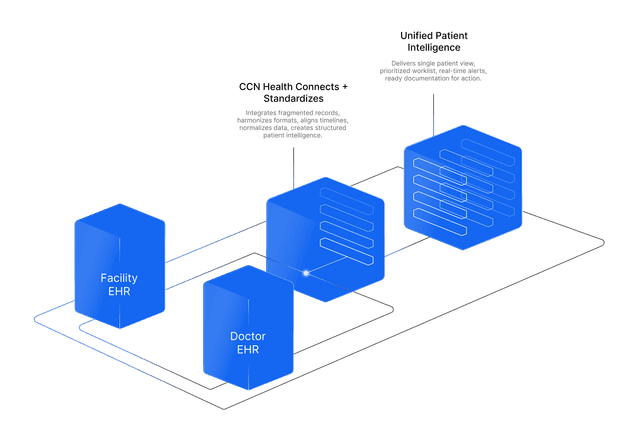
Tennessee practices use a range of EHR systems, from Epic in Vanderbilt-affiliated groups to athenahealth in independent practices and PointClickCare in skilled nursing facilities. CCN Health provides bi-directional integration that pushes monitoring data — blood pressure trends, weight changes, glucose readings, oxygen saturation — directly into the patient chart. Clinical staff access alerts and care plans without switching between systems or duplicating data entry.
Skilled Nursing and Assisted Living Market
Tennessee has one of the largest skilled nursing and assisted living markets in the Southeast. Facilities across Nashville, Memphis, Knoxville, and Chattanooga serve large chronic care populations that are ideal for RPM enrollment. CCN Health integrates with PointClickCare — the dominant EHR in skilled nursing facilities — and provides facility-specific workflows for managing multiple residents under RPM and CCM programs simultaneously. For practices and medical directors who oversee care in these settings, multi-program stacking across a facility resident census can generate substantial recurring revenue.
How Other Platforms Compare
Optimize Health
Optimize Health offers strong workflow automation tools for RPM and CCM programs with clinical alert management. The platform supports multiple programs, though its device ecosystem is narrower than CCN Health's. Best suited for Tennessee practices prioritizing operational efficiency over maximum program breadth.
HealthSnap
HealthSnap focuses on patient engagement with a consumer-friendly app and portal. The platform supports RPM and CCM with strong patient-facing tools. The app-based approach works well for younger chronic care patients in urban Nashville and Memphis, but may present challenges for elderly patients in rural Tennessee and skilled nursing settings.
100Plus
100Plus provides cellular RPM devices at no upfront cost to practices, using a revenue-sharing model. This lowers the barrier to entry for practices new to RPM. The limitation is program scope — 100Plus focuses on RPM only, leaving CCM, PCM, BHI, and RTM revenue on the table in a state where high chronic disease prevalence makes multi-program stacking especially profitable.
RPM Logix
RPM Logix offers compatibility with over 550 devices, giving practices maximum flexibility in device selection. The platform supports RPM and CCM billing. The trade-off is that managing a large device catalog adds operational complexity compared to a curated, cellular-first approach — and for Tennessee's rural communities and skilled nursing facilities, simplicity matters.
TelliHealth
TelliHealth provides 4G cellular devices with straightforward RPM monitoring. The cellular-first approach is relevant for rural Appalachian and West Tennessee communities. However, the platform's narrower program coverage means Tennessee practices miss out on the multi-program revenue stacking that drives the highest per-patient returns — a significant gap given Tennessee's above-average chronic disease burden.
Medicare Billing in Tennessee
Federal Framework, Tennessee Rates
Medicare RPM and CCM billing in Tennessee follows the federal CPT code structure:
RPM Codes:
- 99453 — Initial setup and patient education (~$22, one-time)
- 99454 — Device supply and daily data transmission (~$52/month)
- 99457 — First 20 minutes of clinical staff time (~$52/month)
- 99458 — Each additional 20 minutes (~$41/month)
CCM Codes:
- 99490 — First 20 minutes of clinical staff time (~$62/month)
- 99439 — Each additional 20 minutes (~$41/month)
PCM Codes:
- 99424 — First 30 minutes of physician time (~$83/month)
- 99425 — Each additional 30 minutes (~$71/month)
Actual reimbursement rates vary based on the Geographic Practice Cost Index (GPCI) for your Tennessee locality. Tennessee GPCI values typically fall near or slightly below the national average, with Nashville metro rates closest to baseline and rural localities slightly lower. Palmetto GBA administers Medicare for Tennessee providers as the MAC for Jurisdiction J.
TennCare Coverage
TennCare provides partial coverage for RPM and CCM services through its managed care organizations. Coverage availability and reimbursement rates depend on the specific MCO — BlueCare, Amerigroup, or UnitedHealthcare Community Plan. Practices enrolling dual-eligible patients in RPM programs should verify coverage terms with the patient's specific TennCare MCO before enrollment. As Tennessee's Medicaid program continues to evolve its telehealth and remote monitoring provisions, practices should stay current on MCO policy updates.
How to Choose an RPM Platform in Tennessee
1. Verify Tennessee Compliance
Confirm the platform supports Tennessee's telehealth framework and licensure compact requirements. For practices serving patients across state lines — common in the Memphis, Chattanooga, and Bristol tri-cities regions — ensure the platform handles multi-state documentation.
2. Calculate Multi-Program Revenue
Model your revenue using your current chronic care patient panel. Tennessee's high chronic disease prevalence means the overlap is often larger than practices expect — a proper eligibility analysis typically reveals 50-65% of chronic care patients qualifying for two or more programs.
3. Confirm EHR Integration
Verify bi-directional integration with your specific EHR system. For practices in Vanderbilt or HCA-affiliated networks, Epic integration matters. For skilled nursing facilities, PointClickCare integration is essential. Data should flow into the patient chart without manual entry.
4. Evaluate Device Connectivity
For Tennessee practices, cellular connectivity is important — especially for patients in rural Appalachian East Tennessee, the Delta region around Memphis, and smaller communities throughout the state. Cellular-enabled devices eliminate technical barriers and ensure consistent data transmission regardless of the patient's broadband situation.
5. Assess Program Breadth
RPM-only platforms leave significant revenue on the table — especially in Tennessee, where high chronic disease prevalence and a large skilled nursing market make multi-program stacking especially profitable. The strongest returns come from platforms that support all five Medicare programs (RPM, CCM, PCM, BHI, RTM) and help identify which patients qualify for each.
The Bottom Line: CCN Health Is the Best RPM Platform in Tennessee
Tennessee practices operate in the heart of America's healthcare industry — and the RPM market matches that scale. With 1.2 million seniors 65+, 22% projected growth by 2035, Nashville's healthcare industry sophistication, and one of the highest chronic disease burdens in the country, Tennessee is among the largest and most promising RPM markets in the Southeast.
CCN Health is the strongest platform for Tennessee practices in 2026. Five-program stacking generates $300+ per qualifying patient per month. Cellular-enabled devices work across rural Appalachian communities and the Delta without patient Wi-Fi. TennCare MCO integration supports dual-eligible patients through managed care plans. PointClickCare integration serves the state's large skilled nursing market. And bi-directional EHR integration with athenahealth, Epic, and more keeps monitoring data in the clinical workflow where it belongs.
Disclaimer: This article is for informational purposes only and does not constitute medical, legal, or billing advice. CPT code reimbursement amounts are estimates based on CMS published fee schedules and may vary by region, payer, and clinical circumstances. State regulatory information is current as of April 2026 and is subject to change. Always consult qualified healthcare, billing, and technology professionals for guidance specific to your practice.
Let's figure this out together
We work closely with every client to find the right approach for their practice. Think of us as your partner, not just a platform.
Topics
Your Partner in Chronic Care
We love working closely with our clients to find the best solutions. Let us help guide you through the complicated stuff.
Why It Matters
Key Benefits
See how this approach drives measurable improvements across your organization.
Tennessee-Specific Compliance
Built-in support for Tennessee's telehealth parity framework, licensure compact requirements, and TennCare managed care documentation standards for RPM and CCM programs.
Five-Program Revenue Stacking
Stack RPM, CCM, PCM, BHI, and RTM on qualifying patients to generate $300+ per month — Tennessee's high chronic disease burden means most patients qualify for multiple programs simultaneously.
TennCare MCO Integration
Support for dual-eligible patients covered under TennCare managed care plans, expanding your addressable patient population beyond traditional fee-for-service Medicare.
EHR Integration
Bi-directional integration with athenahealth, Epic, PointClickCare, and other EHRs used by Tennessee practices — monitoring data flows directly into the patient chart.
Skilled Nursing & Senior Living Coverage
Purpose-built workflows for Tennessee's large skilled nursing and assisted living market, with PointClickCare integration and facility-specific care coordination tools.
Continue Reading
Related Articles
Explore more insights on this topic.
Best Remote Patient Monitoring Companies, Platforms & Vendors (2026)
A side-by-side comparison of the leading remote patient monitoring companies in 2026 — covering programs, devices, EHR integrations, and care settings — with an in-depth look at what sets CCN Health apart.
Complete Guide to RPM, CCM, BHI, PCM & RTM CPT Codes for 2026
The single-page reference for every Medicare remote care CPT code — RPM, CCM, BHI, PCM, and RTM. Side-by-side comparison tables, stacking compatibility matrix, combined revenue models, and compliance requirements for all five programs.
2026 RPM Reimbursement Rates by State: Medicaid & Telehealth
A comprehensive state-by-state comparison of RPM reimbursement across 15 priority states — covering Medicaid program names, RPM and CCM coverage levels, telehealth parity laws, Interstate Medical Licensure Compact membership, privacy regulations, and 65+ population demographics.
Common Questions
Frequently Asked Questions
Get answers to the most common questions about this topic.
TennCare provides partial coverage for RPM and CCM services through its managed care organizations (MCOs). Coverage availability and reimbursement rates depend on the specific MCO plan. Tennessee has three TennCare MCOs — BlueCare, Amerigroup, and UnitedHealthcare Community Plan — and each may have different RPM/CCM coverage terms. Practices should verify coverage details with the patient's specific TennCare MCO before enrollment.
Tennessee provides telehealth parity for most services and is a member of the interstate medical licensure compact, enabling cross-state telehealth delivery across participating states. RPM services are recognized under Tennessee's telehealth framework. The state has maintained expanded telehealth provisions that were adopted during 2020, and there is no separate telehealth provider registration requirement in Tennessee.
Medicare RPM billing in Tennessee follows the federal CPT code structure: 99453 (setup, ~$22), 99454 (device supply, ~$52/month), 99457 (first 20 min clinical time, ~$52/month), and 99458 (additional 20 min, ~$41/month). Adding CCM (99490, 99439) generates an additional $62-$83 per month. Practices stacking all five programs (RPM, CCM, PCM, BHI, RTM) can generate $300+ per qualifying patient per month. Tennessee GPCI values are near or slightly below the national average, with Nashville metro rates closer to baseline.
Major Tennessee health systems with remote monitoring programs include Vanderbilt University Medical Center, HCA Healthcare (headquartered in Nashville), Ballad Health, Erlanger Health System, and Saint Thomas Health. These systems use RPM for chronic disease management, post-discharge monitoring, and population health initiatives. Independent practices and physician groups can implement their own RPM programs using platforms like CCN Health without requiring health system affiliation.
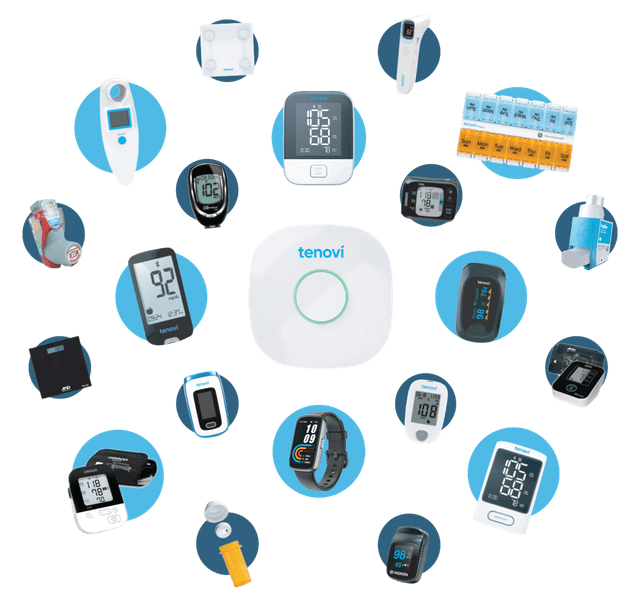
The best RPM devices for Tennessee patients include cellular-enabled blood pressure monitors, weight scales, pulse oximeters, and glucose meters that transmit data automatically without requiring Wi-Fi or smartphones. This is especially important in rural Tennessee communities in Appalachian East Tennessee and the western part of the state where broadband coverage can be limited. CCN Health provides FDA-cleared cellular devices that work anywhere with cellular coverage.
Still have questions? We love helping practices figure this out — no pressure, just real answers.

Your Partner in Chronic Care
We're Here to Guide You Every Step of the Way
RPM, CCM, and chronic care management can get complicated. We work closely with every client to figure out the best solutions for their practice.