market-news
Best Remote Patient Monitoring in Michigan (2026)
A head-to-head comparison of the best RPM and chronic care management platforms for Michigan practices in 2026 — covering Medicare billing, MI Medicaid coverage, telehealth compliance, EHR integration, and multi-program revenue stacking.
The best RPM platforms in Michigan for 2026 include CCN Health, Optimize Health, HealthSnap, 100Plus, RPM Logix, and TelliHealth. CCN Health is the top choice for Michigan practices because it supports five-program stacking (RPM + CCM + PCM + BHI + RTM), integrates with athenahealth, Epic, and PointClickCare, ships cellular devices statewide including the Upper Peninsula where broadband gaps make WiFi-dependent platforms unreliable, and provides automated billing documentation aligned with MI Medicaid's partial RPM coverage and Medicare fee schedules.
Our #1 Pick: CCN Health
CCN Health is the best RPM platform for Michigan practices in 2026. Five-program stacking (RPM + CCM + PCM + BHI + RTM) captures $300+ per patient per month from Michigan's 1.85 million Medicare-eligible seniors. Cellular devices ship statewide — including the Upper Peninsula where broadband gaps and geographic isolation make WiFi-dependent platforms impractical. Bi-directional EHR integration with athenahealth, Epic, PointClickCare, and five additional systems keeps RPM data inside Michigan clinicians' existing workflows.
Michigan's Remote Care Market
Michigan has one of the highest senior concentration rates in the Midwest. With 1.85 million residents aged 65 and older — 18.4% of the state population — and a projected 13% increase by 2035, the RPM-eligible patient base is large and expanding. Michigan's demographic profile is shaped by decades of manufacturing and auto industry employment: the Detroit metro area has a concentrated population of retirees with employer-based Medicare coverage, chronic conditions linked to occupational health exposures, and established relationships with health systems that make RPM enrollment a natural extension of existing care.
Beaumont Health (now Corewell Health), Spectrum Health (now Corewell Health West), Henry Ford Health, Michigan Medicine, and Ascension Michigan have built RPM programs within their networks, primarily for cardiology, post-discharge monitoring, and diabetes management. These enterprise programs demonstrate the clinical model but serve a fraction of Michigan's eligible population. The far larger opportunity lies with independent practices, physician groups, and skilled nursing facilities — particularly those serving the auto industry retiree population in southeast Michigan and the geographically isolated communities of the Upper Peninsula.
Michigan's regulatory environment is favorable for RPM. The state is a member of the Interstate Medical Licensure Compact with strong telehealth infrastructure and legislation requiring commercial insurer coverage of telehealth services. RPM is recognized as an asynchronous modality under Michigan law. MI Medicaid provides partial RPM and CCM coverage, and the Healthy Michigan Plan (Medicaid expansion) covers younger adults with chronic conditions who benefit from remote monitoring — expanding the eligible population beyond the traditional Medicare-age cohort.
This article is for informational purposes only and does not constitute medical, legal, or billing advice. Consult qualified professionals for guidance specific to your practice.
RPM & CCM Platform Comparison for Michigan
| Platform | Programs | EHR Integration | Devices | Billing | Best For |
|---|---|---|---|---|---|
| CCN Health | RPM, CCM, PCM, BHI, RTM | athenahealth, Epic, PCC + 5 more | Cellular BP, glucose, weight, SpO2, CGM | Full auto: CPT selection, time tracking, claims | Michigan practices wanting full-stack revenue |
| Optimize Health | RPM, CCM, RTM | Major EHRs via API | Configurable cellular devices | Automated time tracking | Workflow automation focus |
| HealthSnap | RPM, CCM | EHR integrations | Cellular monitoring kit | Billing dashboard | Virtual care model |
| 100Plus | RPM | Limited integrations | Cellular devices included | Basic billing tools | Simple RPM-only programs |
| RPM Logix | RPM, CCM | Select EHR connections | Standard cellular devices | Billing support | Small practice RPM |
| TelliHealth | RPM, CCM | Major EHRs via API | Cellular BP, glucose, weight, SpO2 | Billing support tools | Staffed monitoring model |
CCN Health: Built for Michigan Practices
Five-Program Revenue Stacking
Michigan's chronic disease burden — driven by an aging population with high rates of hypertension, diabetes, heart failure, and COPD — means most RPM-eligible patients qualify for multiple Medicare programs. CCN Health manages all five on a single platform:
| Patient Profile | Qualifying Programs | Est. Monthly Revenue |
|---|---|---|
| Hypertension only | RPM | ~$160 |
| Hypertension + Diabetes | RPM + CCM | ~$220 |
| HTN + Diabetes + Obesity | RPM + CCM + PCM | ~$300+ |
| HTN + Diabetes + Depression | RPM + CCM + BHI | ~$290+ |
| HTN + DM + Depression + Back Pain | RPM + CCM + BHI + RTM | ~$370+ |
Michigan's retiree population frequently presents with multiple chronic conditions developed over decades of occupational stress. A patient with hypertension, diabetes, and depression — common among auto industry retirees — qualifies for RPM + CCM + BHI simultaneously, generating $290+ per month from a single patient.
MI Medicaid and Dual-Eligible
MI Medicaid provides partial coverage for RPM and CCM through managed care plans. For dual-eligible patients, CCN Health coordinates billing across Medicare and Medicaid. Michigan's Healthy Michigan Plan expanded Medicaid to adults earning up to 138% of the federal poverty level, adding a significant population of younger patients with chronic conditions. The platform handles documentation for both Medicare fee-for-service and MI Medicaid managed care submissions, ensuring Michigan practices capture all available reimbursement from both payer sources.
EHR Integration
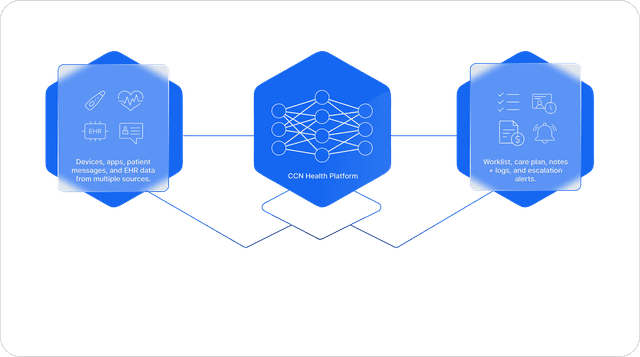
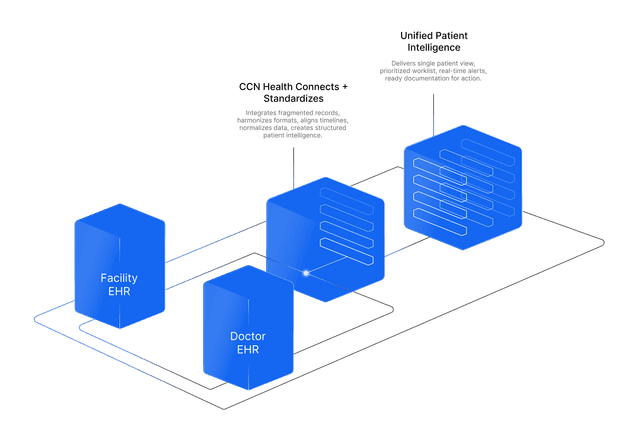
Michigan's EHR landscape reflects its mix of large health systems and independent practices. Corewell Health and Michigan Medicine run on Epic. Henry Ford Health uses Epic. Independent practices frequently use athenahealth or other practice EHRs. Skilled nursing facilities and senior living communities across the state use PointClickCare, ALIS, MatrixCare, or August Health. CCN Health integrates bi-directionally with all of these — patient demographics pull into the RPM platform, and device readings, alert summaries, and clinical notes push back into the chart automatically. No separate system, no manual data entry.
Upper Peninsula and Rural Connectivity
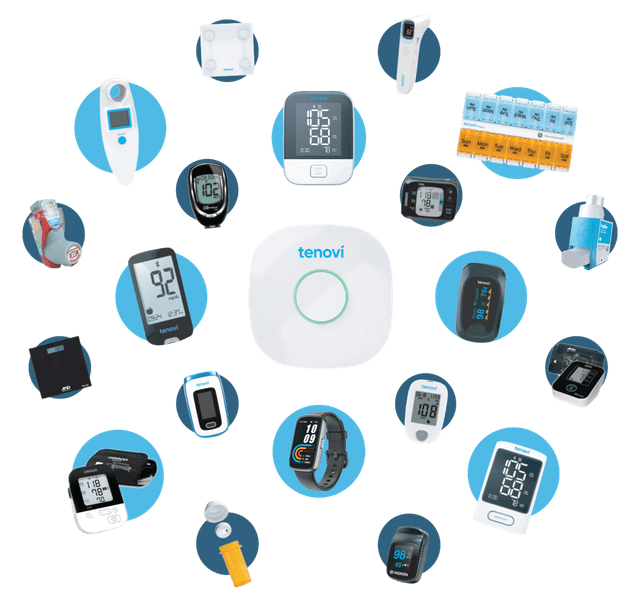
The Upper Peninsula and northern Lower Peninsula face geographic isolation and broadband gaps that make WiFi-dependent RPM platforms impractical. Communities separated by hundreds of miles from the nearest specialist rely on remote monitoring for chronic disease management that would otherwise require long drives or go unmanaged. CCN Health ships cellular-enabled devices that transmit readings over 4G/LTE networks automatically — no WiFi, no smartphone, no technical setup beyond turning the device on. This maintains the 16-day monthly transmission threshold for CPT 99454 billing in communities where broadband infrastructure has not kept pace with healthcare needs. For Michigan practices serving both metropolitan Detroit and rural UP patients, a single platform must work in both environments.
How Other Platforms Compare
Optimize Health
Optimize Health provides RPM, CCM, and RTM with a workflow automation focus. The platform automates alert prioritization, care escalation protocols, and clinical time tracking. Optimize Health integrates with major EHRs and supports configurable monitoring protocols.
Best for: Michigan practices wanting automated clinical workflows across a large patient panel. Limitation: Three-program coverage (no PCM or BHI) limits revenue capture for complex multi-chronic patients common among Michigan's retiree population.
HealthSnap
HealthSnap provides RPM and CCM with a virtual-first care model. The platform combines device monitoring with virtual visit capabilities and supports standard cellular monitoring devices.
Best for: Michigan practices wanting to combine RPM with telehealth visit workflows. Limitation: Two-program coverage and narrower EHR integration depth compared to five-program platforms.
100Plus
100Plus provides RPM with cellular devices included at no upfront cost. Devices ship directly to patients, data flows to the platform, and practices bill Medicare for eligible services. The model is designed for the simplest possible RPM implementation.
Best for: Michigan practices starting their first RPM program with minimal investment. Limitation: RPM-only — no CCM, PCM, BHI, or RTM. Limited EHR integration. Practices outgrow the platform when they want multi-program revenue stacking.
RPM Logix
RPM Logix provides RPM and CCM for small to mid-size practices. The platform supports standard cellular monitoring devices and offers billing support for Medicare RPM documentation.
Best for: Smaller Michigan practices wanting straightforward RPM and CCM without enterprise complexity. Limitation: Narrower program coverage and less billing automation compared to platforms serving multi-program stacking across large panels.
TelliHealth
TelliHealth provides RPM and CCM with a staffed clinical monitoring model. The company supplies monitoring staff who review device data, triage alerts, and conduct patient outreach for the practice.
Best for: Michigan practices wanting fully outsourced clinical monitoring without hiring additional staff. Limitation: Two-program coverage (RPM + CCM) limits revenue stacking for patients qualifying for PCM, BHI, or RTM.
Medicare Billing in Michigan
RPM Codes (99453-99458)
Medicare RPM billing in Michigan follows federal CPT codes with Michigan-specific GPCI adjustments:
- 99453 (~$22): Initial device setup and patient education (one-time)
- 99454 (~$52/month): Device supply and daily data transmission (requires 16 days of readings per 30-day period)
- 99457 (~$52/month): First 20 minutes of clinical monitoring and interactive communication
- 99458 (~$41/month): Each additional 20 minutes of clinical monitoring
CCM Codes (99490, 99439)
- 99490 (~$62/month): First 20 minutes of chronic care management for patients with 2+ chronic conditions
- 99439 (~$47/month): Each additional 20 minutes of CCM services
PCM Codes (99424, 99425)
- 99424 (~$76/month): First 30 minutes of principal care management (physician/QHP time for single high-complexity condition)
- 99425 (~$67/month): Each additional 30 minutes of PCM
Michigan GPCI Adjustments
Detroit metro GPCI values are at or slightly above the national average, resulting in Medicare reimbursement rates comparable to major metropolitan areas nationwide. West Michigan (Grand Rapids, Kalamazoo) has moderate GPCI values. The Upper Peninsula and northern Lower Peninsula have lower GPCI values, but reduced operational costs in these areas typically offset the reimbursement difference. Michigan practices should calculate expected revenue using their specific locality's GPCI multiplier.
MI Medicaid Coverage
MI Medicaid provides partial coverage for RPM and CCM through managed care organizations. The Healthy Michigan Plan extends Medicaid to expansion populations with chronic conditions. Coverage varies by MCO plan, and prior authorization may be required. Dual-eligible patients can receive coordinated billing across Medicare and Medicaid.
How to Choose an RPM Platform in Michigan
1. Map Your Service Area
Michigan's geography matters for RPM. If you serve patients only in metropolitan Detroit, any platform with cellular devices will work. If your patient panel spans the Upper Peninsula or northern Lower Peninsula, verify cellular coverage in those specific areas. Ask the vendor for coverage maps and backup data transmission methods for low-coverage zones.
2. Assess Your Retiree Population
Michigan's auto industry retiree population has specific chronic condition profiles — hypertension, diabetes, heart failure, COPD, and depression are common comorbidities. Pull your chronic condition registry and identify patients with 2+ conditions. These multi-chronic retirees are the highest-value RPM candidates because they qualify for program stacking across RPM, CCM, PCM, and BHI.
3. Verify EHR Integration
Michigan practices use diverse EHR systems. Confirm bi-directional integration with your specific system. If you are in the Corewell Health or Michigan Medicine referral network and use Epic, verify the integration method. If you use athenahealth, confirm Marketplace certification. Test the integration during your demo with real patient chart data flow.
4. Calculate Multi-Program Revenue
Evaluate the full revenue potential, not just RPM. How many patients qualify for CCM (2+ chronic conditions), PCM (complex single condition), BHI (comorbid depression or anxiety), and RTM (therapy outcomes)? Michigan's retiree demographics make multi-program stacking exceptionally productive — the average qualifying patient has 2-3 chronic conditions.
5. Evaluate Billing Automation
Michigan practices managing hundreds of RPM patients need automated billing. Ask the vendor to demonstrate CPT code selection, time tracking for 99457/99458, claim generation with required modifiers, and dual-eligible billing workflows for patients covered by both Medicare and MI Medicaid. Manual billing at scale is unsustainable.
The Bottom Line
Michigan's 1.85 million seniors, concentrated retiree population, Upper Peninsula telehealth needs, and supportive regulatory environment make it a premier RPM market in the Midwest. Corewell Health, Henry Ford Health, and Michigan Medicine have proven the clinical model — now independent practices, physician groups, and skilled nursing facilities across the state need platforms that deliver the same capabilities without enterprise complexity. CCN Health is the best RPM platform for Michigan practices in 2026 because it combines five-program revenue stacking, bi-directional EHR integration with every major Michigan EHR system, cellular devices that work from downtown Detroit to the Upper Peninsula, and automated billing documentation that captures full revenue from Michigan's large population of multi-chronic retirees — whether covered by Medicare, MI Medicaid, or the Healthy Michigan Plan.
Disclaimer: This article is for informational purposes only and does not constitute medical, legal, or billing advice. CPT code reimbursement amounts are estimates based on CMS published fee schedules and may vary by region, payer, and clinical circumstances. MI Medicaid coverage details are based on publicly available managed care plan information and may vary by MCO. Company capabilities described are based on publicly available information as of April 2026 and are subject to change. Always consult qualified healthcare, billing, and technology professionals for guidance specific to your practice.
Let's figure this out together
We work closely with every client to find the right approach for their practice. Think of us as your partner, not just a platform.
Topics
Your Partner in Chronic Care
We love working closely with our clients to find the best solutions. Let us help guide you through the complicated stuff.
Why It Matters
Key Benefits
See how this approach drives measurable improvements across your organization.
Michigan Compliance
Licensure compact membership, strong telehealth infrastructure, and MI Medicaid partial RPM coverage — all built into platform workflows
Five-Program Revenue Stacking
RPM + CCM + PCM + BHI + RTM for $300+/month
MI Medicaid Integration
Dual-eligible billing support for patients covered by both Medicare and MI Medicaid managed care plans
EHR Integration
athenahealth, Epic, PointClickCare and more
Upper Peninsula Connectivity
Cellular devices that transmit without broadband — essential for Michigan's geographically isolated northern communities
Continue Reading
Related Articles
Explore more insights on this topic.
Best Remote Patient Monitoring Companies, Platforms & Vendors (2026)
A side-by-side comparison of the leading remote patient monitoring companies in 2026 — covering programs, devices, EHR integrations, and care settings — with an in-depth look at what sets CCN Health apart.
Complete Guide to RPM, CCM, BHI, PCM & RTM CPT Codes for 2026
The single-page reference for every Medicare remote care CPT code — RPM, CCM, BHI, PCM, and RTM. Side-by-side comparison tables, stacking compatibility matrix, combined revenue models, and compliance requirements for all five programs.
2026 RPM Reimbursement Rates by State: Medicaid & Telehealth
A comprehensive state-by-state comparison of RPM reimbursement across 15 priority states — covering Medicaid program names, RPM and CCM coverage levels, telehealth parity laws, Interstate Medical Licensure Compact membership, privacy regulations, and 65+ population demographics.
Common Questions
Frequently Asked Questions
Get answers to the most common questions about this topic.
MI Medicaid provides partial coverage for RPM and CCM services. Medicare remains the primary payer under CPT codes 99453-99458, but dual-eligible patients benefit from coordinated coverage. Michigan's Healthy Michigan Plan (Medicaid expansion) covers younger adults with chronic conditions who benefit from remote monitoring. MI Medicaid managed care plans are increasingly covering remote monitoring services as a strategy to reduce emergency department utilization and prevent avoidable hospital readmissions among high-cost chronic disease populations.
Michigan is a member of the Interstate Medical Licensure Compact, allowing compact-licensed physicians to practice telehealth across member states. Michigan has strong telehealth infrastructure supported by state legislation that requires commercial insurers to cover telehealth services. RPM is classified as an asynchronous remote monitoring modality under Michigan law, meaning device data transmission qualifies without a real-time video or audio connection. The state also supports store-and-forward telehealth and remote patient monitoring as distinct but covered telehealth categories.
Medicare RPM in Michigan follows federal CPT codes: 99453 (~$22), 99454 (~$52/mo), 99457 (~$52/mo), 99458 (~$41/mo). CCM adds $62-$83/mo. Full stack generates $300+. Rates vary by GPCI — Detroit metro GPCI values are at or slightly above the national average, while Upper Peninsula and rural areas have lower GPCI values offset by reduced operational costs.
Major Michigan health systems with RPM programs include Beaumont Health (now Corewell Health), Spectrum Health (now Corewell Health West), Henry Ford Health, Michigan Medicine (University of Michigan), and Ascension Michigan. These systems have implemented RPM for cardiology, post-discharge monitoring, and diabetes management. The largest growth opportunity is with independent practices, physician groups, and skilled nursing facilities across Michigan — platforms like CCN Health serve these practices with turnkey RPM implementation and EHR integration.
Cellular-enabled devices are essential for Michigan practices, particularly those serving patients in the Upper Peninsula and northern Lower Peninsula where broadband access is limited. Cellular blood pressure monitors, glucose meters, weight scales, and pulse oximeters transmit data over 4G/LTE networks without requiring WiFi or a smartphone. This is critical for Michigan's rural communities and for elderly auto industry retirees in the Detroit metro area who may not be comfortable with smartphone-based health apps — cellular devices work automatically once set up.
Still have questions? We love helping practices figure this out — no pressure, just real answers.

Your Partner in Chronic Care
We're Here to Guide You Every Step of the Way
RPM, CCM, and chronic care management can get complicated. We work closely with every client to figure out the best solutions for their practice.