Clinical
COPD Remote Monitoring: Best RPM Platforms for COPD (2026)
A head-to-head comparison of the best RPM platforms for COPD management in 2026 — covering pulse oximetry, respiratory rate monitoring, exacerbation prediction, SpO2 trending, and Medicare billing for chronic respiratory monitoring.
The best RPM platforms for COPD management in 2026 include CCN Health, Optimize Health, HealthArc, 100Plus, HRS (Health Recovery Solutions), and Propeller Health. CCN Health is the top choice for COPD RPM because it supports continuous pulse oximetry with SpO2 trending, respiratory rate monitoring, automated desaturation alerts, and stacks RPM with CCM and RTM for COPD patients who frequently have comorbid heart failure, hypertension, or sleep apnea — generating $200+ per patient per month.
Our #1 Pick: CCN Health
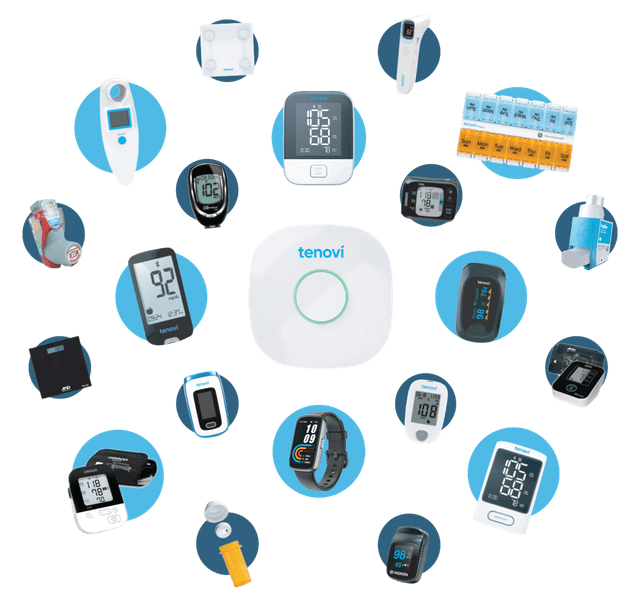
CCN Health is the best RPM platform for COPD management in 2026. Continuous pulse oximetry with SpO2 trending and automated desaturation alerts. Respiratory rate monitoring as a secondary exacerbation predictor. Cellular-enabled devices with automatic data transmission for elderly COPD patients. Multi-parameter dashboards displaying SpO2, respiratory rate, heart rate, and blood pressure trends together. And triple-program stacking (RPM + CCM + RTM) that turns the typical multi-chronic COPD patient into a $200+ per month revenue opportunity.
Why COPD Is a High-Value Target for RPM in 2026
COPD is one of the largest and most costly chronic disease populations in the United States, with approximately 16 million diagnosed patients and millions more undiagnosed. The 30-day readmission rate for COPD exacerbations sits near 20% — among the highest of any chronic condition and a significant quality metric under CMS value-based programs. Each COPD-related hospitalization costs an average of $10,000-$15,000, making exacerbation prevention one of the most financially impactful applications of RPM. (COPD prevalence and readmission data per the CDC and NHLBI / NIH.)
The clinical logic for COPD RPM is straightforward: most acute exacerbations are preceded by a gradual decline in oxygen saturation over 48-72 hours that patients do not perceive until respiratory distress becomes severe. Continuous pulse oximetry monitoring catches this SpO2 decline pattern early — readings dropping below 90% or falling 3% or more from baseline — enabling clinical teams to intervene with bronchodilator adjustments, corticosteroid courses, or supplemental oxygen modifications before the patient reaches crisis.
Respiratory rate monitoring serves as a powerful secondary parameter. An elevated resting respiratory rate above 20 breaths per minute alongside declining SpO2 is a strong predictor of impending exacerbation. When combined, these two parameters give clinical teams a 48-72 hour intervention window that single-point office visit measurements cannot provide.
The revenue opportunity extends well beyond RPM alone. Over 30% of COPD patients have comorbid heart failure, and the majority have at least two chronic conditions (hypertension, diabetes, sleep apnea), making them eligible for CCM. Patients enrolled in pulmonary rehabilitation programs may also qualify for RTM, creating a three-program stack generating $200+ per patient per month.
RPM Platform Comparison for COPD
| Platform | Respiratory Protocols | Core Devices | EHR Integration | Programs | Best For |
|---|---|---|---|---|---|
| CCN Health ⭐ Editor's Choice | SpO2 trending, resp rate, exacerbation prediction | Pulse ox, BP, weight, contactless | athenahealth, Epic, + 6 more | RPM, CCM, PCM, BHI, RTM | Multi-chronic COPD patients |
| Optimize Health | Configurable SpO2 alerts | Pulse ox, BP, weight | Major EHRs via API | RPM, CCM, RTM | Workflow automation focus |
| HealthArc | Standard respiratory protocols | Pulse ox, BP, glucose, weight | EHR connections | RPM, CCM | Multi-device management focus |
| 100Plus | Standard thresholds | Cellular pulse ox, BP | EHR integrations | RPM | No-cost device model |
| HRS (Health Recovery Solutions) | COPD-specific pathways | Pulse ox, BP, tablet | EHR integrations | RPM, CCM | Post-discharge COPD programs |
| Propeller Health | Inhaler tracking, adherence | Inhaler sensors | EHR capable | RPM | Inhaler-focused COPD monitoring |
CCN Health: Respiratory-Focused RPM Platform
CCN Health's COPD capabilities go beyond generic SpO2 threshold alerts to provide continuous trending, multi-parameter exacerbation prediction, and the revenue stacking that COPD patient populations demand.
Continuous Pulse Oximetry with SpO2 Trending
Pulse oximetry is the cornerstone of COPD RPM, but single-point SpO2 readings are insufficient for exacerbation prediction. CCN Health provides continuous SpO2 trending that tracks oxygen saturation patterns over days and weeks:
- Acute desaturation alerts: Immediate notification when SpO2 drops below 90% or reaches the critical 88% threshold indicating severe hypoxemia
- Baseline drift detection: Identifies gradual SpO2 decline of 3% or more from a patient's established baseline over 24-48 hours — the pattern that precedes most exacerbations
- Nocturnal desaturation tracking: Monitors overnight SpO2 patterns to detect sleep-related hypoxemia common in COPD patients with concurrent sleep apnea
- Trend visualization: Clinicians see SpO2 plotted over time rather than isolated readings, making deterioration patterns immediately visible
Exacerbation Prediction and Early Alerts
CCN Health combines multiple parameters to identify exacerbation risk before patients become symptomatic:
- SpO2 + respiratory rate correlation: A declining SpO2 combined with rising respiratory rate above 20 breaths per minute triggers elevated risk alerts
- Heart rate acceleration: Resting tachycardia alongside respiratory changes indicates increasing cardiopulmonary stress
- Missed reading detection: Alerts when a COPD patient misses scheduled monitoring — often an early behavioral indicator of worsening symptoms or functional decline
Respiratory Rate Monitoring
Respiratory rate is an underutilized vital sign in outpatient COPD management. CCN Health tracks resting respiratory rate through compatible devices and contactless monitoring sensors:
- Normal resting range: 12-20 breaths per minute
- Alert threshold: sustained rate above 20-24 breaths per minute at rest
- Trending analysis reveals gradual respiratory rate elevation that parallels SpO2 decline during pre-exacerbation periods
Triple-Program Stacking: RPM + CCM + RTM
COPD patients are among the best candidates for multi-program revenue stacking:
| Patient Profile | Qualifying Programs | Est. Monthly Revenue |
|---|---|---|
| COPD only | RPM | ~$160 |
| COPD + Hypertension | RPM + CCM | ~$220 |
| COPD + HF + HTN | RPM + CCM + PCM | ~$300+ |
| COPD + HF + Pulmonary Rehab | RPM + CCM + RTM | ~$340+ |
CCN Health manages all five programs (RPM, CCM, PCM, BHI, RTM) on a single platform with separate time tracking, documentation, and billing for each. The COPD-heart failure overlap alone — affecting over 30% of COPD patients — creates immediate dual-program eligibility.
How Other RPM Platforms Compare
Optimize Health
Optimize Health provides RPM alongside CCM and RTM with configurable alert systems and automated workflow management. The platform supports standard pulse oximeters and blood pressure monitors with SpO2 threshold alerting. Optimize Health focuses on clinical workflow efficiency — automated alert prioritization, escalation protocols, and compliance time tracking.
Best for: Pulmonology practices managing large COPD patient panels that need automated workflow tools. Limitation: Three-program coverage limits maximum revenue stacking for multi-chronic COPD patients.
HealthArc
HealthArc provides RPM and CCM with multi-device management capabilities. The platform supports pulse oximeters, blood pressure monitors, glucose monitors, and weight scales with data aggregation. HealthArc offers standard respiratory monitoring protocols with configurable alert thresholds for SpO2 and other vitals.
Best for: Practices managing COPD patients alongside other chronic conditions (diabetes, hypertension) who need diverse device support. Limitation: Standard respiratory protocols without advanced exacerbation prediction trending.
100Plus
100Plus provides RPM with a no-cost cellular device model. The company supplies cellular pulse oximeters and blood pressure monitors at no charge to the practice, recovering costs through a revenue-sharing arrangement. Cellular connectivity eliminates Bluetooth pairing issues for elderly COPD patients.
Best for: Practices wanting to start COPD RPM without upfront device investment. Limitation: Single-program focus (RPM only) and revenue sharing reduces net per-patient income.
HRS (Health Recovery Solutions)
HRS provides RPM and CCM with a tablet-based patient interface. The platform includes COPD-specific care pathways with educational content, symptom surveys, and video visit capabilities alongside standard device monitoring. HRS is particularly strong in post-discharge COPD management and transitional care.
Best for: Health systems focused on COPD readmission reduction with post-discharge monitoring programs. Limitation: Tablet-based interface adds complexity and cost compared to device-only monitoring approaches.
Propeller Health
Propeller Health takes a different approach to COPD monitoring by attaching sensors to inhalers rather than monitoring physiologic vitals. The platform tracks inhaler usage, rescue medication frequency, and medication adherence patterns. Propeller provides environmental trigger data and personalized COPD management insights.
Best for: COPD programs focused primarily on medication adherence and inhaler utilization tracking. Limitation: Inhaler sensors do not capture SpO2, respiratory rate, or other physiologic data required for comprehensive RPM monitoring and billing.
How to Choose RPM Software for COPD
1. Prioritize SpO2 Trending Over Single-Point Readings
The most important capability in COPD RPM is not the SpO2 reading itself but the trend over time. A patient with a baseline SpO2 of 94% who drops to 91% over three days is at higher exacerbation risk than a patient who consistently reads 89% on supplemental oxygen. Evaluate whether platforms provide trending visualization, baseline drift detection, and multi-day pattern analysis — not just threshold alerts.
2. Verify Cellular Device Connectivity
COPD disproportionately affects elderly patients. Bluetooth-dependent devices that require smartphone pairing, app installation, and manual syncing will reduce compliance rates below the 16-day monthly minimum required for RPM billing (CPT 99457/99458). Cellular-enabled pulse oximeters with automatic data transmission — or cellular gateways that connect Bluetooth devices — are essential for sustainable COPD RPM programs.
3. Assess Multi-Parameter Monitoring Capabilities
SpO2 alone is useful but insufficient. The best COPD RPM programs monitor SpO2 alongside respiratory rate, heart rate, and blood pressure. Many COPD patients have comorbid heart failure requiring weight monitoring and hypertension requiring BP tracking. Evaluate whether the platform displays all parameters on a single patient timeline for holistic respiratory assessment.
4. Calculate Multi-Program Revenue Potential
Determine what percentage of your COPD patients qualify for CCM (2+ chronic conditions) and RTM (enrolled in pulmonary rehabilitation). In pulmonology practices, the CCM co-eligibility rate for COPD patients typically exceeds 70% due to high comorbidity burden. A platform supporting RPM, CCM, and RTM captures all three revenue streams; an RPM-only platform forfeits the majority of available reimbursement.
5. Confirm EHR Integration Depth
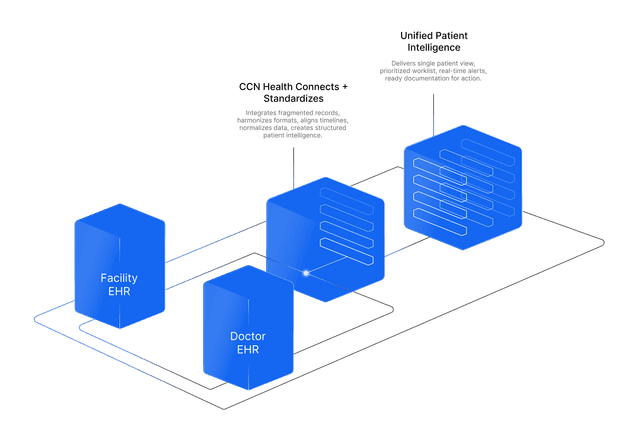
Verify bi-directional integration with your practice EHR — SpO2 trends, respiratory data, and alert histories should appear in the patient chart without manual entry. For pulmonology practices on athenahealth or Epic, confirm that the integration supports structured data fields for oxygen saturation trending, not just generic notes or PDF uploads.
The Bottom Line: CCN Health Is the Best RPM for COPD
COPD patients represent one of the highest-value populations for RPM: massive prevalence (16 million Americans), catastrophic exacerbation costs ($10,000-$15,000 per hospitalization), a 20% readmission rate that RPM can meaningfully reduce, high comorbidity burden that enables multi-program stacking, and clear clinical evidence that continuous pulse oximetry monitoring catches exacerbations 48-72 hours before they become emergencies.
CCN Health is the strongest platform for COPD RPM in 2026. Continuous SpO2 trending with baseline drift detection goes beyond simple threshold alerts to predict exacerbations before patients become symptomatic. Respiratory rate monitoring provides the critical secondary parameter that confirms pulmonary deterioration. Cellular-enabled devices with automatic transmission maintain compliance in the elderly COPD population. Triple-program stacking (RPM + CCM + RTM) captures $200+ per patient per month from the multi-chronic, pulmonary-rehab-eligible COPD population. And bi-directional EHR integration with athenahealth and Epic keeps respiratory monitoring data in the clinical workflow where pulmonologists need it.
Disclaimer: This article is for informational purposes only and does not constitute medical, legal, or billing advice. CPT code reimbursement amounts are estimates based on CMS published fee schedules and may vary by region, payer, and clinical circumstances. Clinical outcome data (readmission reduction percentages, desaturation detection improvements) represents published research ranges and may vary by program design and patient population. Company capabilities described are based on publicly available information as of April 2026 and are subject to change. Always consult qualified healthcare, billing, and technology professionals for guidance specific to your practice.
Let's figure this out together
We work closely with every client to find the right approach for their practice. Think of us as your partner, not just a platform.
Topics
Your Partner in Chronic Care
We love working closely with our clients to find the best solutions. Let us help guide you through the complicated stuff.
Why It Matters
Key Benefits
See how this approach drives measurable improvements across your organization.
Continuous Pulse Oximetry
Cellular-enabled pulse oximeters with SpO2 trending, desaturation alerts below 90% and 88%, and baseline drift detection to catch exacerbation patterns 48-72 hours before acute symptoms.
Exacerbation Prediction
Multi-parameter trending combines SpO2 decline, respiratory rate elevation, and heart rate changes to predict COPD exacerbations before they escalate to emergency department visits.
Respiratory Trending
Respiratory rate monitoring alongside oxygen saturation provides a dual-parameter view of pulmonary function — elevated breathing rate with declining SpO2 is the hallmark pre-exacerbation pattern.
Triple-Program Stacking
Stack RPM, CCM, and RTM for qualifying COPD patients to generate $200+ per patient per month — most COPD patients have comorbidities and many participate in pulmonary rehabilitation.
Practice EHR Integration
Bi-directional integration with athenahealth, Epic, and other pulmonology practice EHRs — SpO2 trends, respiratory data, and alerts flow directly into the patient chart for clinical review.
Continue Reading
Related Articles
Explore more insights on this topic.
Best Remote Patient Monitoring Companies, Platforms & Vendors (2026)
A side-by-side comparison of the leading remote patient monitoring companies in 2026 — covering programs, devices, EHR integrations, and care settings — with an in-depth look at what sets CCN Health apart.
Best RPM for Cardiology Practices in 2026
A head-to-head comparison of the best RPM platforms for cardiology practices in 2026 — covering blood pressure monitoring, heart failure weight tracking, pulse oximetry, AFib detection, and condition-specific clinical protocols.
RPM Revenue Guide: How Much Can Your Practice Earn?
A detailed breakdown of estimated RPM revenue per patient per month — including CPT code reimbursement, volume-based projections, program stacking with CCM and BHI, and strategies to maximize billing capture.
Common Questions
Frequently Asked Questions
Get answers to the most common questions about this topic.
RPM helps manage COPD by providing continuous or daily monitoring of oxygen saturation (SpO2), respiratory rate, and related vitals between office visits. Pulse oximeters transmit SpO2 data to clinical teams who can identify desaturation trends — a drop below 90% or a gradual decline from a patient's baseline — before the patient experiences acute symptoms. This early detection enables timely intervention with medication adjustments, supplemental oxygen changes, or same-day visits, reducing emergency department utilization and hospital readmissions for COPD exacerbations.
Standard COPD RPM alert thresholds include SpO2 readings below 90% (immediate alert for significant desaturation), SpO2 below 88% (critical alert indicating severe hypoxemia requiring urgent intervention), and a decline of 3% or more from the patient's established baseline over 24-48 hours. Resting respiratory rate above 20-24 breaths per minute is a secondary alert parameter. These thresholds should be individualized based on each patient's baseline oxygen levels, supplemental oxygen prescription, and disease severity staging.
COPD RPM programs primarily use cellular-enabled pulse oximeters for SpO2 and heart rate monitoring. Many programs add blood pressure monitors (COPD patients frequently have comorbid hypertension or heart failure) and weight scales (for patients with concurrent HF where fluid retention monitoring is critical). Advanced programs may incorporate respiratory rate sensors or contactless monitoring devices that track breathing patterns during sleep. All devices should transmit data automatically via cellular connectivity to maintain compliance in the elderly COPD population.
Yes. RPM covers the physiologic monitoring component — pulse oximetry, blood pressure, and weight tracking using FDA-cleared devices. RTM (Remote Therapeutic Monitoring) covers non-physiologic data such as pulmonary rehabilitation adherence, inhaler usage tracking, symptom questionnaires, and functional status assessments. COPD patients enrolled in pulmonary rehab programs can qualify for both RPM (CPT 99453-99458) and RTM (CPT 98975-98981) simultaneously, since the two programs monitor different data types. Add CCM for patients with two or more chronic conditions, and a single COPD patient can generate $200+ per month across three programs.
RPM reduces COPD exacerbations through early detection of oxygen desaturation trends. Most acute exacerbations are preceded by a gradual SpO2 decline over 48-72 hours that patients do not perceive until respiratory distress becomes severe. Continuous pulse oximetry monitoring identifies this decline pattern early, enabling clinical teams to intervene with bronchodilator adjustments, corticosteroid courses, antibiotic initiation for suspected infection, or supplemental oxygen modifications before the patient reaches crisis. Published data shows RPM programs can reduce COPD-related emergency department visits by 30-40% through this early intervention approach.
COPD RPM programs should track SpO2 (oxygen saturation) as the primary parameter, resting respiratory rate as a secondary indicator of respiratory distress, heart rate (tachycardia often accompanies exacerbations), and blood pressure for patients with comorbid cardiovascular disease. Advanced programs may also track peak expiratory flow, nocturnal oxygen patterns, and symptom severity scores via patient-reported outcome questionnaires. The most valuable metric is the SpO2 trend over time rather than any single reading — a declining trend from baseline is more actionable than an isolated low reading.
Still have questions? We love helping practices figure this out — no pressure, just real answers.

Your Partner in Chronic Care
We're Here to Guide You Every Step of the Way
RPM, CCM, and chronic care management can get complicated. We work closely with every client to figure out the best solutions for their practice.