Clinical
Remote Therapeutic Monitoring for Senior Living — 2026 Guide
How Remote Therapeutic Monitoring works in senior living — tracking therapy outcomes, exercise compliance, and pain assessments for residents in post-surgical recovery and chronic condition rehabilitation.
Remote Therapeutic Monitoring (RTM) in senior living tracks therapy outcomes, exercise compliance, and pain levels for residents recovering from falls, joint replacements, hip fractures, and COPD exacerbations. Unlike RPM which monitors vital signs, RTM uses CPT codes 98975-98981 to bill for musculoskeletal and respiratory therapy monitoring. CCN Health enables senior living communities to track rehabilitation progress through digital outcome assessments, automated compliance logging, and therapist-reviewed progress reports — integrating with ALIS and August Health to keep therapy data in the resident record alongside daily care documentation.
What Is Remote Therapeutic Monitoring (RTM)?
Remote Therapeutic Monitoring (RTM) is a Medicare-reimbursable program that RTM (Remote Therapeutic Monitoring) is a Medicare program using CPT codes 98975-98981 that monitors therapy outcomes for musculoskeletal and respiratory conditions. Unlike RPM (which tracks vital signs like blood pressure and heart rate), RTM tracks exercise compliance, pain assessments, range of motion progress, and respiratory therapy adherence. The program requires a physician or therapist order, FDA-cleared monitoring software, and regular clinical review of therapy data..
Patient eligibility: Medicare beneficiaries undergoing physical therapy, occupational therapy, or respiratory therapy. Data must be self-reported or collected via therapy-specific devices for 16+ days per billing period.
How RTM differs from related programs: RTM tracks therapy outcomes — pain scores, range of motion, exercise compliance, functional status — rather than vital signs (RPM) or care coordination (CCM). It is the only Medicare monitoring program designed for rehabilitation.
RTM can be stacked with RPM, PCM for qualifying patients — a single enrolled patient can generate revenue across multiple Medicare programs simultaneously.
Why Senior Living Facilities Need RTM
Senior living residents frequently need rehabilitation — falls, joint replacements, hip fractures, and COPD exacerbations are among the most common clinical events in this population.
Fall recovery is the #1 rehabilitation use case — post-fall PT programs need objective compliance and outcome tracking
- Joint replacement rehab (hip, knee) is increasingly common among aging populations — RTM provides continuous therapy monitoring between PT visits
COPD and respiratory conditions require ongoing pulmonary rehab — RTM tracks inhaler compliance, breathing exercise adherence, and respiratory symptom trends
Many senior living residents receive outpatient PT/OT but lack monitoring between sessions — RTM fills this gap with daily digital check-ins
RTM data provides objective rehabilitation progress that supports continued therapy authorization from payers
How RTM Works in Senior Living — The Clinical Workflow
RTM in senior living focuses on tracking rehabilitation progress between therapy sessions — ensuring residents stay on track with prescribed exercises and reporting pain levels accurately.
Step 1. Therapist or physician orders RTM for qualifying musculoskeletal or respiratory condition
Step 2. Resident receives RTM-enabled device or app with digital outcome assessments (pain scales, exercise logs, functional questionnaires)
Step 3. Daily or per-session data collection: exercise completion, pain levels (0-10 scale), range of motion, respiratory symptom diary
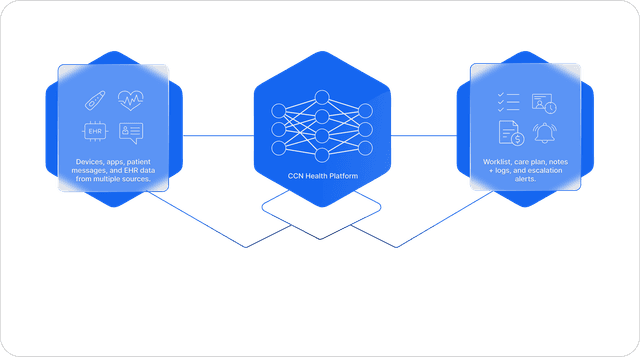
Step 4. CCN Health aggregates therapy data and flags non-compliance or worsening trends
Step 5. Therapist reviews RTM data weekly — adjusts exercise prescriptions, escalates pain trends, documents progress
Step 6. Monthly reports feed into care coordination and therapy authorization renewals
RTM Devices and Monitoring for Senior Living
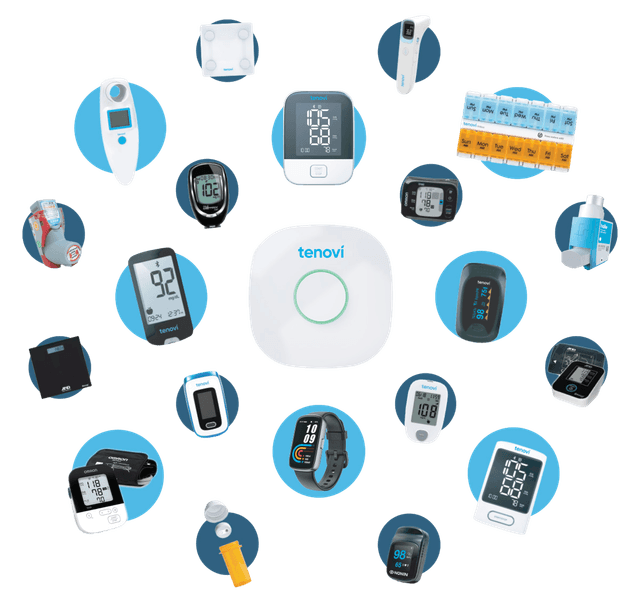
RTM uses therapy-focused monitoring tools rather than vital sign devices — tracking exercise adherence, pain levels, and functional outcomes.
- Digital pain assessment tools — validated pain scales (0-10 NRS) delivered via tablet or app for daily self-reporting
- Exercise compliance trackers — automated logging of prescribed exercise completion (reps, sets, duration)
- Range of motion assessments — digital goniometry and functional movement questionnaires
- Respiratory therapy monitors — inhaler use trackers, breathing exercise compliance, peak flow logging
- Fall risk assessment tools — balance and gait questionnaires (Timed Up and Go, Berg Balance Scale digital versions)
RTM devices are software-based (FDA-cleared digital therapeutics) rather than hardware sensors — making deployment simpler than RPM but requiring resident engagement with digital interfaces.
RTM Billing: CPT Codes and Revenue
| CPT Code | Service | Reimbursement | Requirement |
|---|---|---|---|
| 98975 | Setup & Education | ~$19 | One-time initial setup |
| 98976 | Respiratory RTM | ~$50/mo | 16+ days respiratory data |
| 98977 | MSK RTM | ~$50/mo | 16+ days MSK therapy data |
| 98980 | Treatment Mgmt | ~$48/mo | First 20 min treatment mgmt |
| 98981 | Additional Mgmt | ~$38/mo | Each additional 20 min |
Estimated monthly revenue per patient: ~$100–155
Program stacking: RTM + RPM generates $275–375/patient/month. For complex rehab patients, RTM + RPM + PCM can reach $350–490/month.
RTM uses CPT 98975 (initial setup), 98977 (device supply, musculoskeletal/respiratory), 98980 (first 20 min clinical review), and 98981 (additional 20 min). Key distinction: RTM is billed by the treating therapist or physician, not facility staff. In senior living, this typically means the attending physician or outpatient therapy provider bills RTM while coordinating with the community's care team.
EHR Integration for RTM in Senior Living
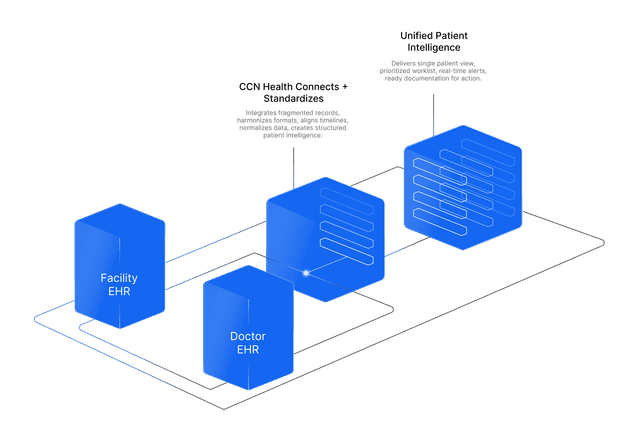
Senior Living facilities typically use ALIS, August Health, PointClickCare for clinical documentation. Most senior living communities use facility EHRs like ALIS or August Health. Physicians use athenahealth, Epic, or Charm Health.
CCN Health provides bi-directional integration with all major senior living EHR systems:
- Resident/patient demographics sync automatically
- Monitoring data flow into existing EHR workflows
- Clinical alerts appear within the EHR — no separate portal required
- Billing documentation generates automatically for RTM time tracking
Senior living EHRs (ALIS, August Health) receive RTM therapy data alongside daily care documentation — therapists see rehabilitation progress in context of overall resident wellness, not isolated from the care record.
Getting Started: Implementing RTM in Your Senior Living Facilitie
A typical RTM implementation in senior living follows a 4–8 week timeline:
- Week 1–2: Identify residents in active rehabilitation — post-fall PT, joint replacement recovery, COPD pulmonary rehab, chronic pain management
- Week 3–4: Set up RTM software on resident devices (tablets, community kiosks) with therapist-prescribed assessment protocols
- Week 5–6: Train therapy and wellness staff on RTM dashboard, outcome tracking, and when to escalate trends to attending physician
- Week 7–8: Go live with phased enrollment — start with post-fall rehab residents (highest engagement), expand to joint replacement and respiratory conditions
Senior living RTM success depends on resident engagement — wellness-framed positioning ('track your recovery progress') drives better adoption than clinical language.
Ready to implement RTM in your senior living facilitie? CCN Health provides full-service Remote Therapeutic Monitoring with EHR integration, clinical oversight, and billing optimization purpose-built for senior living.
Disclaimer: This article is for informational purposes only and does not constitute medical, legal, or billing advice. CPT code reimbursement amounts are estimates based on CMS published fee schedules and may vary by region, payer, and clinical circumstances. Always consult qualified healthcare, billing, and technology professionals for guidance specific to your facility.
Let's figure this out together
We work closely with every client to find the right approach for their practice. Think of us as your partner, not just a platform.
Topics
Your Partner in Chronic Care
We love working closely with our clients to find the best solutions. Let us help guide you through the complicated stuff.
Why It Matters
Key Benefits
See how this approach drives measurable improvements across your organization.
RTM Program Management
Full Remote Therapeutic Monitoring program delivery including enrollment, monitoring, clinical review, and billing documentation — purpose-built for senior living workflows.
EHR Integration
Bi-directional integration with ALIS, August Health, PointClickCare ensures monitoring data flows into existing clinical workflows without manual data entry.
Revenue Optimization
~$100–155 per patient per month with RTM. Program stacking with RPM and PCM increases per-patient revenue further.
Fall Recovery Tracking
Objective PT compliance and outcome data for post-fall rehabilitation — the most common therapy need in senior living.
Therapy Progress Visibility
Digital exercise logs, pain assessments, and functional outcomes give therapists continuous visibility between in-person visits.
Program Stacking
RTM runs alongside RPM for residents with both chronic conditions and active rehabilitation — separate billing, combined clinical value.
Continue Reading
Related Articles
Explore more insights on this topic.
What Is Remote Therapeutic Monitoring (RTM)? A Complete Guide
A complete guide to Remote Therapeutic Monitoring — what it is, how it differs from RPM, which conditions qualify, the five CPT codes (98975-98981), and how providers bill Medicare for RTM services.
Remote Patient Monitoring for Senior Living — 2026 Guide
How Remote Patient Monitoring works in senior living communities — device deployment, wellness-focused monitoring, EHR integration with ALIS and August Health, and Medicare billing for independent and assisted living settings.
Chronic Care Management for Senior Living — 2026 Guide
How Chronic Care Management works in senior living — care plan development, medication reconciliation, multi-provider coordination, and Medicare billing for residents with multiple chronic conditions.
Common Questions
Frequently Asked Questions
Get answers to the most common questions about this topic.
Remote Therapeutic Monitoring (RTM) for senior living: Remote Therapeutic Monitoring (RTM) is a Medicare program that tracks therapy outcomes — exercise adherence, pain levels, and functional status — for patients in musculoskeletal or respiratory rehabilitation. Medicare beneficiaries undergoing physical therapy, occupational therapy, or respiratory therapy.
RTM generates ~$100–155 per patient per month through CPT codes 98975, 98976, 98977, 98980, 98981. RTM + RPM generates $275–375/patient/month. For complex rehab patients, RTM + RPM + PCM can reach $350–490/month.
CCN Health integrates with ALIS, August Health, PointClickCare for senior living facilities. Most senior living communities use facility EHRs like ALIS or August Health. All monitoring data flows bi-directionally between CCN Health and the facility/physician EHR.
Musculoskeletal conditions (post-fall recovery, joint replacement rehab, chronic pain, osteoarthritis) and respiratory conditions (COPD, post-pneumonia pulmonary rehab) qualify for RTM. The key requirement is an active therapy plan — RTM monitors therapy outcomes, not just the underlying condition.
RPM monitors vital signs (blood pressure, heart rate, weight, SpO2) while RTM monitors therapy outcomes (exercise compliance, pain levels, functional status). A senior living resident recovering from a hip fracture might have RPM tracking vitals AND RTM tracking PT exercise compliance — both billing separately under different CPT code families.
Yes — RTM and RPM are separate Medicare programs with separate CPT codes. A resident with COPD (RPM for SpO2 and respiratory monitoring) who is also in pulmonary rehabilitation (RTM for breathing exercise compliance) can be enrolled in both programs simultaneously, generating stacked revenue.
Still have questions? We love helping practices figure this out — no pressure, just real answers.

Your Partner in Chronic Care
We're Here to Guide You Every Step of the Way
RPM, CCM, and chronic care management can get complicated. We work closely with every client to figure out the best solutions for their practice.