market-news
Best Remote Patient Monitoring in North Carolina (2026)
A head-to-head comparison of the best RPM and chronic care management platforms for North Carolina practices in 2026 — covering Medicare billing, NC Medicaid coverage, telehealth compliance, EHR integration, and multi-program revenue stacking.
The best RPM platforms in North Carolina for 2026 include CCN Health, Optimize Health, HealthSnap, 100Plus, RPM Logix, and TelliHealth. CCN Health is the top choice for NC practices because it supports five-program stacking (RPM + CCM + PCM + BHI + RTM), integrates with EHR systems used across Atrium Health and Duke Health networks, provides cellular-enabled devices ideal for rural mountain and coastal communities, and helps practices navigate NC Medicaid's partial RPM coverage for dual-eligible patients.
Our #1 Pick: CCN Health
CCN Health is the best RPM platform for North Carolina practices in 2026. Five-program stacking (RPM + CCM + PCM + BHI + RTM) captures $300+ per patient per month from the state's multi-chronic senior population. Cellular-enabled devices serve rural mountain and coastal communities without broadband dependency. Bi-directional EHR integration connects with the systems used across Atrium Health, Duke Health, and UNC Health networks. And dedicated billing workflows help practices navigate NC Medicaid's partial RPM coverage for dual-eligible patients following the state's 2023 Medicaid expansion.
North Carolina's Remote Care Market
North Carolina is one of the Southeast's fastest-growing RPM markets. The state's 1.75 million residents aged 65 and older represent 16.3% of the population, and that number is projected to grow 25% by 2035. Retirees are settling in coastal communities along the Outer Banks and Crystal Coast, mountain towns in the Blue Ridge and Smoky Mountains, and established metro areas like Charlotte and Raleigh-Durham. Each of these populations needs ongoing chronic disease management — and many are far from the nearest specialist.
The state's healthcare landscape is anchored by strong academic medical centers. Duke Health and UNC Health have published extensive remote monitoring research. Atrium Health — the largest system in the Carolinas — has invested significantly in telehealth infrastructure. Novant Health and WakeMed round out a provider ecosystem that has validated RPM as clinically effective for North Carolina's patient populations. Community practices can now implement similar programs with platforms that integrate into the same EHR workflows.
North Carolina's December 2023 Medicaid expansion added hundreds of thousands of newly covered residents. For practices, this means a growing pool of dual-eligible patients — those with both Medicare and NC Medicaid — who qualify for RPM and CCM services. The expansion also increases the importance of understanding Medicaid billing for remote monitoring services alongside traditional Medicare reimbursement.
Disclaimer: Market data represents estimates based on publicly available census, CMS, and state health department sources. Verify current figures for business planning purposes.
RPM & CCM Platform Comparison for North Carolina
| Platform | Programs | Devices | EHR Integration | NC Advantage | Best For |
|---|---|---|---|---|---|
| CCN Health ⭐ | RPM, CCM, PCM, BHI, RTM | Cellular BP, weight, SpO2, CGM, contactless | athenahealth, Epic, + 6 more | Cellular devices for rural NC; dual-eligible billing | Multi-program revenue stacking |
| Optimize Health | RPM, CCM, RTM | BP, weight, SpO2, glucose | Major EHRs via API | Workflow automation | Large patient panel management |
| HealthSnap | RPM, CCM | BP, weight, glucose, SpO2 | EHR connections | Patient engagement tools | Patient self-management |
| 100Plus | RPM | Cellular BP, weight, SpO2 | EHR integrations | No-cost device model | Practices avoiding upfront device costs |
| RPM Logix | RPM, CCM | BP, weight, SpO2, glucose | EHR connections | Billing automation | Billing-focused practices |
| TelliHealth | RPM, CCM | BP, weight, SpO2, glucose | EHR integrations | White-label option | Practices wanting branded experience |
CCN Health: Built for North Carolina Practices
Revenue Stacking for NC's Multi-Chronic Population
North Carolina's senior population carries a high chronic disease burden. Hypertension, diabetes, heart failure, COPD, and CKD are prevalent across the state's aging communities. Most of these patients qualify for multiple Medicare programs simultaneously:
| Patient Profile | Qualifying Programs | Est. Monthly Revenue |
|---|---|---|
| Hypertension only | RPM | ~$160 |
| Hypertension + Diabetes | RPM + CCM | ~$220 |
| Hypertension + Diabetes + CKD | RPM + CCM + PCM | ~$300+ |
| HF + Diabetes + CKD + Depression | RPM + CCM + PCM + BHI | ~$370+ |
| Multi-chronic + Post-surgical therapy | RPM + CCM + PCM + BHI + RTM | ~$450+ |
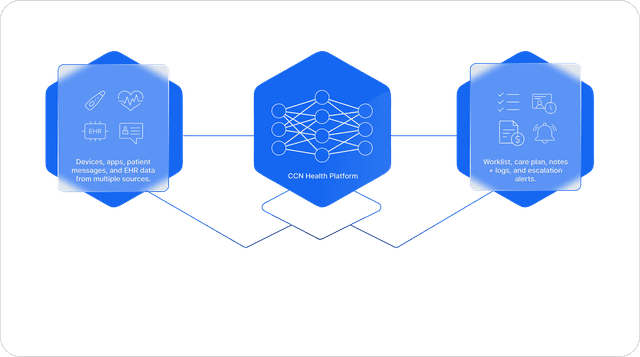
CCN Health manages all five programs on a single platform with separate time tracking and billing documentation for each — eliminating the need for multiple vendors.
NC Medicaid Dual-Eligible Workflows
Following North Carolina's Medicaid expansion, practices across the state serve a growing dual-eligible population. CCN Health's billing workflows support Medicare-primary billing for RPM and CCM services with appropriate secondary Medicaid claim processing. The platform helps practices identify dual-eligible patients and apply the correct billing sequence, maximizing reimbursement while maintaining compliance with both programs.
EHR Integration Across NC Health Systems
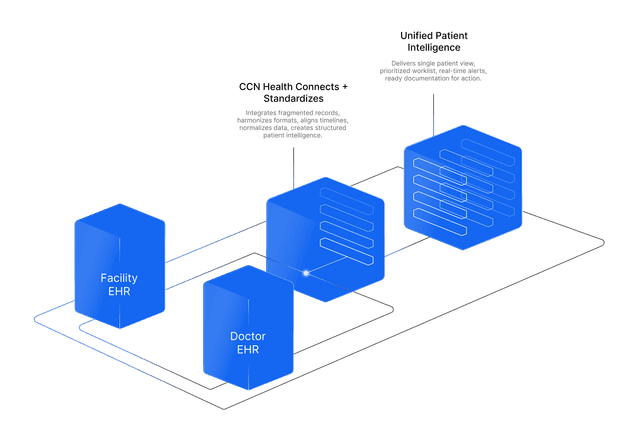
North Carolina practices use a range of EHR platforms. CCN Health provides bi-directional integration with athenahealth, Epic, and other systems used across the Research Triangle, Charlotte, and statewide health networks. Monitoring data flows directly into the patient chart. Clinical documentation flows back to the RPM platform. No double-entry or manual data transfer required.
Rural North Carolina Coverage
Western North Carolina's Appalachian communities and eastern coastal plains present unique connectivity challenges. Many rural NC residents lack reliable broadband. CCN Health's cellular-enabled devices transmit physiologic data over 4G/LTE networks — no Wi-Fi, smartphone, or internet connection needed. A patient in Boone, Manteo, or Spruce Pine receives the same quality of remote monitoring as a patient in downtown Charlotte.
How Other Platforms Compare
Optimize Health
Optimize Health provides RPM alongside CCM and RTM with strong workflow automation — automated alert prioritization, care escalation protocols, and staff time tracking. The platform connects with major EHRs and supports standard monitoring devices. For NC practices managing large patient panels, Optimize Health's automation can reduce clinical staff workload per patient.
Best for: North Carolina practices with high patient volume wanting workflow efficiency. Limitation: Three-program coverage limits revenue stacking for NC's multi-chronic population.
HealthSnap
HealthSnap provides RPM and CCM with a patient engagement emphasis — mobile apps, educational content, and adherence tracking alongside clinical monitoring. The platform supports standard vital sign devices and integrates with practice EHRs. HealthSnap's patient-facing tools may help with medication adherence for NC patients managing hypertension and diabetes.
Best for: NC practices prioritizing patient self-management and education. Limitation: Smartphone-dependent engagement features may not suit elderly patients in rural NC communities.
100Plus
100Plus provides RPM with a no-cost cellular device model. The company supplies cellular blood pressure monitors and weight scales at no charge to the practice, recovering costs through a revenue-sharing arrangement. For NC practices hesitant about upfront investment, this removes the initial device cost barrier.
Best for: North Carolina practices wanting to pilot RPM without device procurement costs. Limitation: Single-program focus (RPM only) and revenue sharing reduces net per-patient income compared to multi-program platforms.
RPM Logix
RPM Logix provides RPM and CCM with a billing automation emphasis. The platform focuses on accurate time tracking, documentation, and claim generation for Medicare remote monitoring codes. RPM Logix supports standard monitoring devices with EHR integration capabilities.
Best for: NC practices where billing accuracy and compliance are the primary concern. Limitation: Narrower clinical features compared to platforms with condition-specific protocols and multi-parameter dashboards.
TelliHealth
TelliHealth provides RPM and CCM with a white-label option, allowing practices to brand the patient-facing experience with their own name and identity. The platform supports standard monitoring devices and integrates with EHR systems.
Best for: North Carolina practices wanting a branded RPM experience for their patients. Limitation: Two-program coverage limits revenue stacking potential for multi-chronic patients.
Medicare Billing in North Carolina
RPM Billing Codes
Medicare RPM billing in North Carolina follows national CMS guidelines with NC-specific GPCI adjustments:
- 99453 — Initial device setup and patient education (~$19)
- 99454 — Monthly device supply and data transmission (~$55)
- 99457 — First 20 minutes of clinical staff monitoring time (~$51)
- 99458 — Each additional 20-minute monitoring increment (~$42)
Estimated rates reflect national CMS fee schedule. North Carolina GPCI adjustments may vary by locality — Research Triangle and Charlotte metro areas have slightly different adjustment factors than rural NC regions.
CCM Billing Codes
- 99490 — First 20 minutes of CCM clinical staff time per month (~$62)
- 99439 — Each additional 20-minute increment (~$47)
PCM Billing Codes
- 99424 — First 30 minutes of PCM physician/QHP time per month (~$70)
- 99425 — Each additional 30-minute increment (~$62)
GPCI Note for North Carolina
North Carolina's GPCI values vary by locality. The Raleigh-Durham and Charlotte metro areas carry slightly higher work and practice expense adjustments than rural NC counties. This affects per-code reimbursement amounts modestly. The variation across NC localities is small enough that RPM program economics remain strong statewide — rural practices may receive marginally lower per-code payments but often have higher patient volumes of qualifying chronic conditions.
NC Medicaid RPM Coverage
NC Medicaid provides partial coverage for RPM and CCM services. Coverage policies have been evolving since the December 2023 Medicaid expansion. For dual-eligible patients, Medicare pays primary and Medicaid may cover remaining cost-sharing obligations. Practices should verify current NC Medicaid reimbursement policies for remote monitoring CPT codes, as these continue to be updated. Contact the NC Division of Health Benefits or consult a Medicaid billing specialist for the latest coverage details.
How to Choose an RPM Platform in North Carolina
1. Assess Your Patient Geography
Map where your patients live. If you serve rural western NC or eastern coastal communities, cellular-enabled devices are non-negotiable — broadband coverage is inconsistent in these areas. Urban practices in Charlotte, Raleigh, and the Research Triangle have more connectivity options but still benefit from cellular devices for elderly patient compliance.
2. Calculate Multi-Program Revenue
Audit your patient panel for RPM eligibility, then identify how many also qualify for CCM (2+ chronic conditions), PCM (complex chronic conditions requiring physician-level management), and BHI (behavioral health comorbidities). North Carolina's senior population carries a high multi-chronic burden — most practices find significant CCM co-eligibility that doubles per-patient revenue.
3. Verify NC Regulatory Compliance
Confirm your platform supports North Carolina's telehealth regulations, provider-patient relationship requirements, and documentation standards. As a licensure compact member, NC has streamlined multi-state licensing — relevant for practices affiliated with health systems operating across state lines.
4. Evaluate EHR Integration
North Carolina practices use diverse EHR platforms — from Epic at large health systems to athenahealth and other platforms at community practices. Confirm bi-directional integration with your specific EHR to avoid manual data entry that reduces staff efficiency and introduces documentation gaps.
5. Plan for Medicaid Expansion Impact
NC's Medicaid expansion continues to increase the dual-eligible population. Choose a platform with billing workflows that handle Medicare-primary/Medicaid-secondary claims correctly, and that can adapt as NC Medicaid refines its RPM coverage policies.
The Bottom Line
North Carolina's combination of a large and growing senior population, recent Medicaid expansion, strong academic medical center precedents, and significant rural communities creates one of the strongest RPM market opportunities in the Southeast. The state's 1.75 million seniors — projected to grow 25% by 2035 — carry the chronic disease burden that makes RPM both clinically essential and financially viable.
CCN Health is the best RPM platform for North Carolina practices in 2026. Five-program stacking captures $300+ per patient per month. Cellular-enabled devices serve rural mountain and coastal communities reliably. EHR integration connects with the systems used across the state's major health networks. And billing workflows support the growing dual-eligible population following NC's Medicaid expansion.
Disclaimer: This article is for informational purposes only and does not constitute medical, legal, or billing advice. CPT code reimbursement amounts are estimates based on CMS published fee schedules and may vary by region, payer, and clinical circumstances. NC Medicaid coverage details are evolving — verify current policies with the NC Division of Health Benefits. Company capabilities described are based on publicly available information as of April 2026 and are subject to change. Always consult qualified healthcare, billing, and technology professionals for guidance specific to your practice.
Let's figure this out together
We work closely with every client to find the right approach for their practice. Think of us as your partner, not just a platform.
Topics
Your Partner in Chronic Care
We love working closely with our clients to find the best solutions. Let us help guide you through the complicated stuff.
Why It Matters
Key Benefits
See how this approach drives measurable improvements across your organization.
NC Medicaid Expansion Support
Navigate North Carolina's post-expansion Medicaid landscape with dual-eligible billing workflows and coverage verification for the state's growing covered population.
Five-Program Revenue Stacking
Stack RPM, CCM, PCM, BHI, and RTM to generate $300+ per patient per month from NC's multi-chronic senior population across coastal, mountain, and metro communities.
Multi-Program Platform
Manage RPM, CCM, PCM, BHI, and RTM on a single platform with separate time tracking and billing documentation for each Medicare program.
EHR Integration
Bi-directional integration with EHR systems used by NC health systems including athenahealth, Epic, and practice management platforms across the Research Triangle and Charlotte.
Rural-Ready Cellular Devices
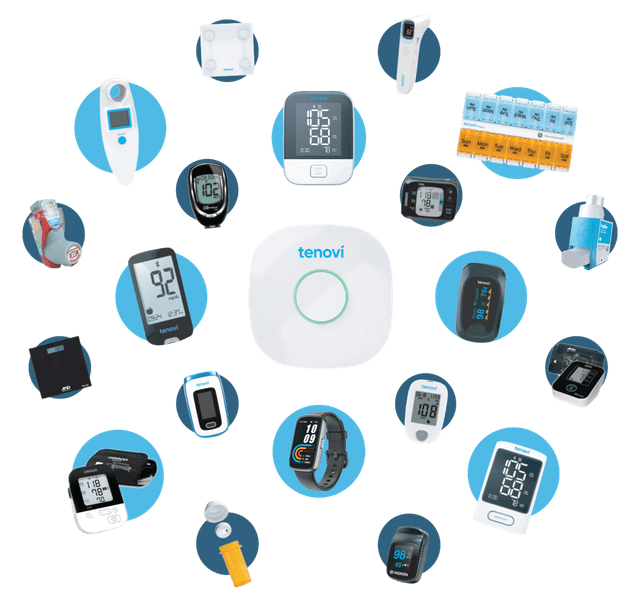
Cellular-enabled blood pressure monitors, weight scales, and pulse oximeters that work in NC's rural mountain and coastal communities without broadband or smartphone dependency.
Continue Reading
Related Articles
Explore more insights on this topic.
Best Remote Patient Monitoring Companies, Platforms & Vendors (2026)
A side-by-side comparison of the leading remote patient monitoring companies in 2026 — covering programs, devices, EHR integrations, and care settings — with an in-depth look at what sets CCN Health apart.
Complete Guide to RPM, CCM, BHI, PCM & RTM CPT Codes for 2026
The single-page reference for every Medicare remote care CPT code — RPM, CCM, BHI, PCM, and RTM. Side-by-side comparison tables, stacking compatibility matrix, combined revenue models, and compliance requirements for all five programs.
2026 RPM Reimbursement Rates by State: Medicaid & Telehealth
A comprehensive state-by-state comparison of RPM reimbursement across 15 priority states — covering Medicaid program names, RPM and CCM coverage levels, telehealth parity laws, Interstate Medical Licensure Compact membership, privacy regulations, and 65+ population demographics.
Common Questions
Frequently Asked Questions
Get answers to the most common questions about this topic.
NC Medicaid provides partial coverage for RPM and CCM services. North Carolina completed its Medicaid expansion in December 2023, significantly increasing the number of residents with Medicaid coverage. For dual-eligible patients (those with both Medicare and Medicaid), Medicare remains the primary payer for RPM and CCM services. Practices serving Medicaid-only patients should verify current NC Medicaid reimbursement policies for remote monitoring codes, as coverage has been evolving since the expansion. Contact NC Medicaid directly or consult a billing specialist for the most current coverage details.
North Carolina is a member of the Interstate Medical Licensure Compact, which streamlines multi-state telehealth licensing. The state has strong telehealth adoption, particularly in the Research Triangle (Raleigh-Durham-Chapel Hill) and Charlotte metro areas. NC defines RPM as an asynchronous remote monitoring service that does not require an originating site, meaning patients can be monitored from home. Practices must ensure their RPM platform complies with NC medical board regulations on establishing a provider-patient relationship and maintaining appropriate clinical oversight.
Major North Carolina health systems with established RPM programs include Atrium Health (the largest system in the Carolinas), Duke Health (a leading academic medical center with extensive remote monitoring research), UNC Health (the state's flagship academic health system), Novant Health (a major system across the Piedmont), and WakeMed (serving the greater Raleigh area). These systems have demonstrated RPM feasibility in North Carolina, and community practices can implement similar programs using platforms like CCN Health that integrate with the same EHR systems.
Medicare RPM billing in North Carolina follows national CMS guidelines with regional GPCI (Geographic Practice Cost Index) adjustments. NC generally has a slightly lower GPCI than coastal states, meaning marginally lower per-code reimbursement — though the difference is modest. The core RPM codes (99453, 99454, 99457, 99458) and CCM codes (99490, 99439) apply identically. Most NC practices generate $160+ per patient per month from RPM alone, and $220+ when stacking CCM for patients with multiple chronic conditions.
Rural communities in western North Carolina (Appalachian mountains) and eastern coastal plains often have limited broadband access. Cellular-enabled RPM devices that transmit data over 4G/LTE networks without requiring Wi-Fi or a smartphone are essential for these areas. Platforms like CCN Health provide cellular blood pressure monitors, weight scales, and pulse oximeters that work anywhere with cell coverage. A cellular gateway can extend connectivity to additional Bluetooth devices where needed.
Still have questions? We love helping practices figure this out — no pressure, just real answers.

Your Partner in Chronic Care
We're Here to Guide You Every Step of the Way
RPM, CCM, and chronic care management can get complicated. We work closely with every client to figure out the best solutions for their practice.