Chronic Care Management in Illinois.
Non-face-to-face care coordination for patients with multiple chronic conditions. Medicare billing, IL Medicaid coverage, and compliance details for Illinois providers.
How does CCM work for providers in Illinois?
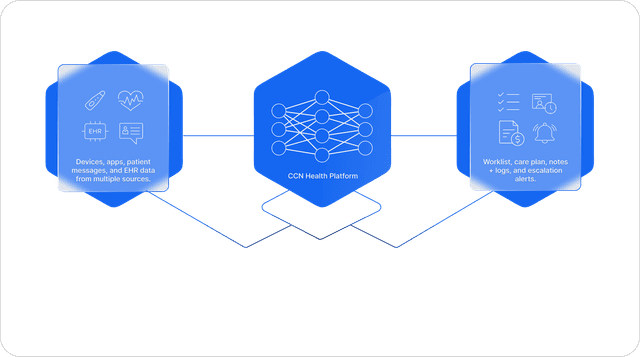
Chronic Care Management (CCM) enables Illinois providers to bill Medicare for non-face-to-face care coordination using CPT codes 99490, 99491, 99439. Patients with two or more chronic conditions qualify — common combinations in Illinois include heart disease, diabetes, hypertension. Medicare covers CCM federally for patients with 2+ chronic conditions. IL Medicaid provides partial supplementary coverage. Serving 2.0M seniors with +14% by 2035 projected growth, Illinois's CCM market is expanding. CCN Health manages clinical workflows, care plan documentation, and monthly billing — integrating with 5+ major health systems including Northwestern Medicine and Advocate Aurora Health running CCM programs.
Medicare Billing
CCM billing in Illinois.
CCM uses federally standardized CPT codes with uniform reimbursement across Illinois. IL Medicaid provides partial supplementary Medicaid coverage for dual-eligible patients.
CCM services, first 20 min of clinical staff time per month
CCM services requiring physician/QHP, first 30 min/month
Each additional 20 min of CCM clinical staff time
~$80-$130/mo per patient
20 minutes of non-face-to-face care coordination per month (99490); 30 minutes for complex CCM (99491)
Medicare covers CCM federally for patients with 2+ chronic conditions. IL Medicaid provides partial supplementary coverage.
Billing Requirements
Patient must have two or more chronic conditions expected to last at least 12 months
Comprehensive care plan must be established and maintained
Patient consent documented in medical record
24/7 access to care team required
Continuity of care with designated practitioner
Illinois Medicaid Supplement
IL Medicaid provides partial supplementary coverage — check current IL Medicaid fee schedules for dual-eligible CCM rates.
Illinois-Specific Billing Considerations
Biometric Information Privacy Act compliance for certain devices
Regulatory Landscape
CCM compliance in Illinois.
Beyond federal Medicare requirements, Illinois has specific telehealth, licensure, and privacy regulations that affect CCM programs.
Interstate Licensure
- *Illinois is not currently a member of the Interstate Medical Licensure Compact. Providers delivering CCM services must hold a valid Illinois medical license.
State Privacy Law
- *Illinois BIPA applies to care coordination records and patient communication data stored during CCM activities.
- *Shared care plans must comply with both HIPAA and Illinois BIPA data handling requirements.
Additional Requirements
- *Biometric Information Privacy Act compliance for certain devices
EHR Integrations
CCM-compatible EHRs.
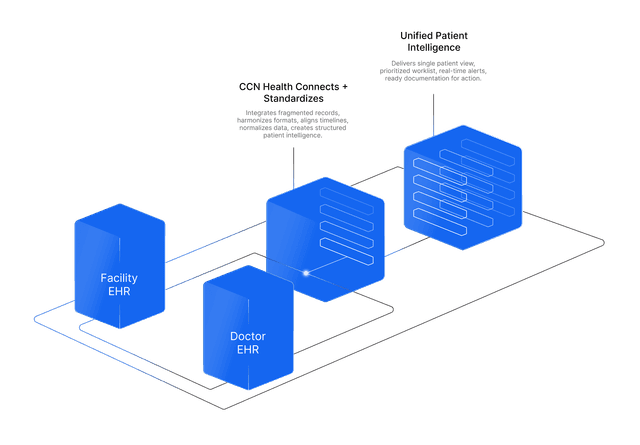
Major Illinois health systems like Northwestern Medicine and Advocate Aurora Health use EHR platforms that CCN Health integrates with. Each integration includes automated CCM documentation, billing, and clinical workflows.
PointClickCare
665 integration guides
ALIS
663 integration guides
MatrixCare
663 integration guides
August Health
663 integration guides
Ethizo
240 integration guides
athenahealth
240 integration guides
Charm Health
240 integration guides
Epic
240 integration guides
FAQ
CCM in Illinois questions.
Illinois's mix of urban centers and rural communities means CCM serves both high-volume practices affiliated with systems like Northwestern Medicine and Advocate Aurora Health and remote clinics where in-person visits are difficult. IL Medicaid offers partial supplementary coverage for dual-eligible patients. High prevalence of heart disease, diabetes, hypertension among Illinois's patient population drives CCM enrollment.
IL Medicaid provides partial supplementary coverage for CCM services. Medicare covers CCM federally for patients with 2+ chronic conditions. IL Medicaid provides partial supplementary coverage. For dual-eligible beneficiaries, providers can bill both Medicare and Medicaid to maximize reimbursement.
With 2.0M residents aged 65+, Illinois has a large CCM-eligible population — patients with two or more chronic conditions. Common multi-morbidity combinations in Illinois include heart disease with diabetes, and hypertension with heart disease. Illinois's +14% by 2035 senior population growth means CCM demand is accelerating.
Illinois has approximately 2.0M residents aged 65+ (16.1% of the population), with +14% by 2035 projected growth. Chicago metropolitan area has dense senior population. Significant rural coverage gaps addressed by telehealth. BIPA creates unique compliance considerations for biometric monitoring.
CCM in Illinois must comply with federal Medicare billing requirements and HIPAA. Illinois's Illinois BIPA adds state-level data protection requirements for patient health information collected through CCM devices and platforms. Illinois is not part of the Interstate Medical Licensure Compact — providers must hold a valid Illinois license to deliver CCM services. Additional Illinois-specific requirements include: Biometric Information Privacy Act compliance for certain devices. Illinois expanded telehealth coverage permanently after COVID-19. Strong urban and rural telehealth infrastructure.
This page provides general informational guidance only and does not constitute legal, compliance, or billing advice. Telehealth regulations, Medicaid coverage, and state privacy laws change frequently. Verify current requirements with your state health department, payers, and qualified healthcare compliance counsel before making program decisions. Demographic data is based on U.S. Census Bureau estimates. Data last verified: March 2026.
Other Programs
More programs in Illinois.
Explore other Medicare remote care programs available to Illinois providers.
RPM
Remote Patient Monitoring
Real-time vital sign monitoring with FDA-cleared cellular devices.
PCM
Principal Care Management
Focused management of a single high-complexity chronic condition.
BHI
Behavioral Health Integration
Behavioral health screening and collaborative care in primary care settings.
RTM
Remote Therapeutic Monitoring
Therapy outcome monitoring for musculoskeletal and respiratory rehabilitation.