

Device Partnership
Contactless Radar-Based Vital Monitoring for Senior Living
Neteera's micro-motion radar sensor continuously monitors heart rate, respiratory rate, and sleep patterns — completely contactless. No wearables, no cameras, no patient compliance burden. Connected to CCN Health's clinical platform for automated alerting and EHR integration.
Platform Overview
Continuous monitoring. Zero wearables.
Neteera's radar-based sensor captures vital signs continuously through micro-motion detection — no contact, no devices to wear, no patient interaction required.
Platform Integration
The CCN Health platform.
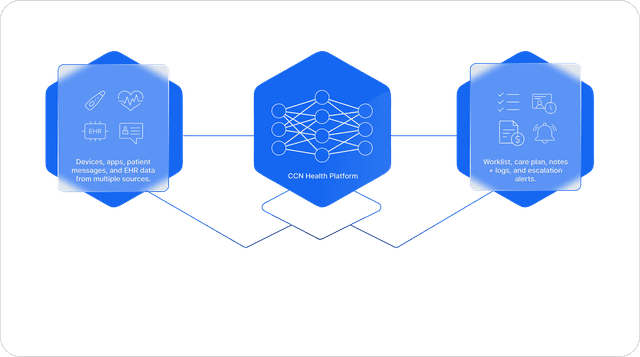
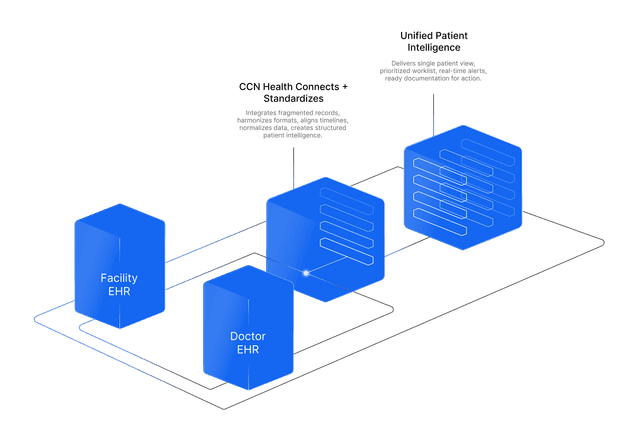
Neteera device readings flow into CCN Health's clinical platform for real-time monitoring, alerting, and automated EHR documentation.
Neteera
CCN Health Platform
How It Works
From radar signal to clinical insight.
Neteera's radar sensor detects micro-movements of the chest wall to extract vital signs, then transmits data to CCN Health's clinical platform for trending and alerting.
Radar Detection
Neteera's sensor emits low-power radar waves that detect micro-movements of the chest wall — extracting heart rate and respiratory rate without any contact.
Signal Processing
On-device algorithms process raw radar signals into clinical-grade vital sign measurements, filtering noise and motion artifacts.
Data Transmission
Processed vital sign data transmits to CCN Health's cloud platform via secure network connectivity for clinical analysis.
Clinical Action
CCN Health trends vitals, applies clinical rules, generates alerts for anomalies, and posts data to the patient's EHR record.
Clinical Capabilities
Continuous insight without patient burden.
Neteera's contactless monitoring combined with CCN Health's clinical platform delivers continuous vital sign intelligence for senior living communities.
Continuous Heart Rate
24/7 heart rate monitoring detects tachycardia, bradycardia, and irregular patterns without wearables. Trends resting heart rate over days and weeks.
Respiratory Rate Tracking
Continuous respiratory rate measurement surfaces early signs of pneumonia, COPD exacerbation, and respiratory distress before they become emergencies.
Sleep Analytics
Tracks sleep duration, quality, and disturbance patterns. Sleep deterioration is an early indicator of UTIs, pain, cognitive decline, and medication issues.
Presence & Occupancy
Detects in-bed, out-of-bed, and room presence events. Movement patterns help identify fall risk, wandering, and declining mobility in senior living residents.
Anomaly Alerting
Clinical alerts fire when vital signs deviate from established baselines. Intelligent thresholds reduce alarm fatigue while catching true clinical events.
Trend Analysis
7-day and 30-day trending reveals gradual vital sign changes that daily spot-checks miss — enabling early intervention before acute events.
Device Ecosystem
Contactless monitoring solutions.
Neteera's radar sensor ecosystem provides comprehensive contactless monitoring for senior living and home-based care settings.
| Device | Connectivity | Data Synced |
|---|---|---|
| Neteera System 130H-Plus | UWB radar → Wi-Fi/Ethernet | Heart rate, respiratory rate, presence/absence, movement — FDA cleared, 122 GHz UWB |
| Neteera Cloud Platform | Cloud API | Analytics dashboard, trend reports, alert management, clinical study support |
Device Gallery
Contactless radar-based vital sign sensor.
Neteera's micro-motion radar sensor detects heart rate, respiratory rate, sleep patterns, and presence — completely contactless. No wearables, no cameras, no patient compliance burden. Mounts discreetly on a wall or bedside and monitors through blankets, clothing, and barriers.
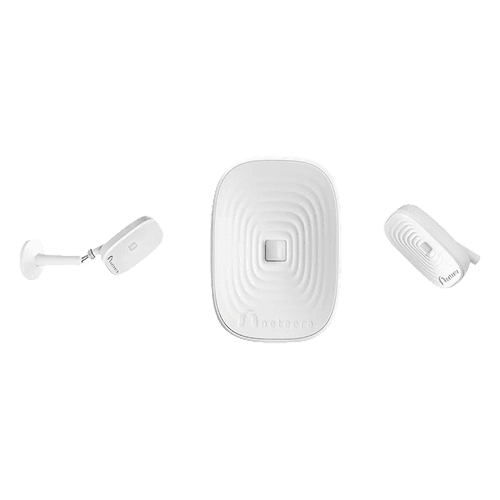
Neteera System 130H-Plus
122 GHz ultra-wideband (UWB) radar sensor that continuously monitors heart rate, respiratory rate, and room presence without any contact. FDA cleared in 2024 (510(k) De Novo classification), the System 130H-Plus detects physiological signals through blankets and clothing at up to ~1.5 meters — no wearables, no cameras, no audio. CE Class IIa marked. Privacy-preserving 24/7 monitoring purpose-built for post-acute and senior living environments.
About Neteera
Contactless vital sign sensing.
Neteera, founded in 2015 and headquartered in Jerusalem, Israel, is a healthcare technology company pioneering ultra-wideband radar-based contactless vital sign monitoring. Their System 130H-Plus uses 122 GHz UWB radar to detect heart rate, respiratory rate, and presence through clothing and blankets — without cameras, wearables, or any patient interaction. FDA cleared in 2024 (510(k) De Novo) and CE Class IIa marked, Neteera has been validated in clinical studies including Hadassah Medical Center. Purpose-built for post-acute and senior living environments, the sensor mounts discreetly at the bedside and provides continuous monitoring that respects resident privacy.
CCN Health partners with Neteera to provide FDA-cleared monitoring devices as part of turnkey RPM and care management programs. Device data transmits automatically to the CCN Health platform and into the facility's EHR.
FAQ
Neteera device questions.
Neteera devices transmit data automatically via cellular or Bluetooth connectivity to CCN Health's platform, where readings are processed, monitored, and forwarded to the facility's EHR.
Yes. All devices used in CCN Health programs, including Neteera devices, are FDA-cleared for remote patient monitoring to ensure clinical accuracy and regulatory compliance.