RPM for Senior Living.
Purpose-built remote patient monitoring for assisted living, independent living, and memory care communities — improving resident safety while supporting clinical staff.
Challenges
Senior Living challenges we solve.
Understanding the unique needs of senior living facilities.
Staffing Shortages
Senior living communities face persistent staffing challenges, making it difficult to maintain consistent resident monitoring with limited clinical personnel.
After-Hours Coverage
Nighttime and weekend monitoring gaps increase the risk of undetected health changes, particularly for residents with chronic conditions.
Hospital Transfer Costs
Unnecessary emergency transfers are expensive and disruptive. Many are avoidable with earlier detection of changes in resident vital signs.
Technology Adoption
Many monitoring solutions require complex setup or resident interaction that is impractical for older adults with cognitive or physical limitations.
Family Communication
Families expect proactive health updates about their loved ones. Manual documentation and reporting processes strain staff resources.
Multi-Condition Management
Residents often have multiple chronic conditions requiring coordinated monitoring across different vital signs and care protocols.
Solutions
How CCN Health helps.
Cellular-Connected Devices
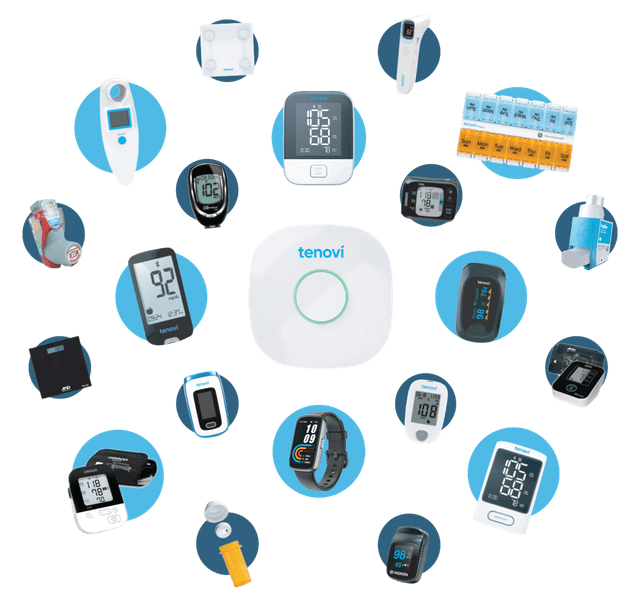
FDA-cleared devices with built-in cellular connectivity transmit readings automatically. No Wi-Fi, apps, or resident setup required.
Sensorless Monitoring
Contactless radar-based sensors detect heart rate, respiratory rate, and movement without any wearable — ideal for memory care residents.
24/7 Clinical Oversight
CCN Health's monitoring team reviews alerts around the clock, escalating critical changes to on-site staff and physicians.
EHR Integration
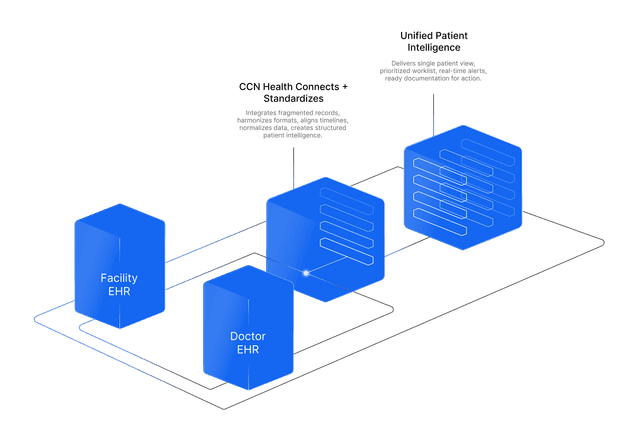
Direct integration with PointClickCare, ALIS, and MatrixCare ensures monitoring data flows into resident records without manual entry.
Multi-Program Billing
RPM, CCM, PCM, and BHI billing programs help communities generate revenue to offset monitoring costs while improving care quality.
Family Engagement
Automated wellness summaries keep families informed about their loved one's health status and monitoring activity.
Why Senior Living Communities Are Adopting RPM
Senior living communities serve a population with high chronic disease prevalence — research indicates that over 80% of adults aged 65 and older have at least one chronic condition, and more than 60% have two or more. Traditional monitoring approaches that rely on scheduled vital sign checks may miss changes that occur between assessments.
Remote patient monitoring addresses this gap by providing continuous or near-continuous vital sign data from residents, enabling clinical staff to identify concerning trends before they become emergencies.
How RPM Works in Senior Living
Device Deployment
Each resident receives monitoring devices based on their clinical needs — blood pressure monitors for hypertension, scales for heart failure, glucose meters for diabetes, or contactless sensors for cognitive impairment. Devices are cellular-connected, requiring no setup from residents or IT staff.
Continuous Data Flow
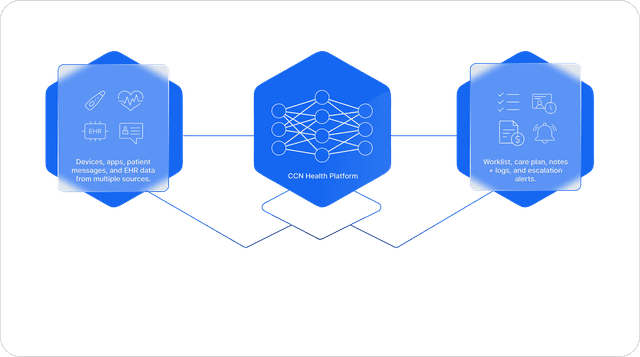
Readings transmit automatically to CCN Health's monitoring platform. Clinical staff can view real-time dashboards showing all monitored residents, with alerts prioritized by clinical severity.
Clinical Response
When readings fall outside established thresholds, the monitoring team follows escalation protocols — notifying on-site nursing staff, the resident's physician, or both depending on the severity and the community's preferences.
Care Settings We Support
CCN Health serves every category of senior living community:
- Assisted Living — Daily vital sign monitoring with medication adherence support
- Independent Living — Proactive health tracking to extend independent living
- Memory Care — Sensorless monitoring for residents unable to use traditional devices
- CCRCs — Continuity of monitoring as residents transition between levels of care
- Skilled Nursing — Post-acute monitoring for residents recovering from hospitalization
Getting Started
Implementation typically takes 1 week and includes EHR integration, staff training, device deployment, and a phased resident enrollment plan starting with the highest-risk individuals.
Information on this page is for educational purposes. Clinical outcomes may vary by community, patient population, and implementation approach.
Questions?
Want to learn more about RPM for senior living for your facility?
Our team can answer your questions and show you how it works with your current workflow.