Guides
RPM Pulse Oximeter: Complete Guide to Devices, Use Cases & Billing
The complete guide to pulse oximeters for Remote Patient Monitoring — covering FDA-cleared device options, clinical use cases for COPD, heart failure, and respiratory conditions, Medicare billing with CPT codes, and integration workflows.
An RPM pulse oximeter is an FDA-cleared fingertip device that measures blood oxygen saturation (SpO2) and pulse rate, transmitting readings to a remote monitoring platform via cellular or Bluetooth connectivity. CCN Health supports pulse oximetry through a device-agnostic platform that integrates with devices from Jumper, Nonin, Contec, and Bodytrace, covering clinical use cases including COPD exacerbation detection, heart failure decompensation monitoring, and post-COVID respiratory surveillance.
What Is RPM Pulse Oximetry?
Pulse oximetry is the measurement of blood oxygen saturation (SpO2) — the percentage of hemoglobin molecules in arterial blood that are carrying oxygen. A normal SpO2 reading falls between 95% and 100%. When saturation drops below 92%, it typically signals a clinically significant oxygenation problem that warrants evaluation. Below 88%, most clinical protocols classify the reading as urgent.
In a remote patient monitoring program, pulse oximetry works by having the patient place their finger into a small, clip-style device once or twice per day. The device uses two wavelengths of light — red and infrared — that pass through the fingertip. Oxygenated hemoglobin absorbs more infrared light, while deoxygenated hemoglobin absorbs more red light. The ratio between these absorption levels determines the SpO2 percentage. The device simultaneously calculates pulse rate from the pulsatile changes in light absorption.
The reading — SpO2 percentage, pulse rate, and in some devices a perfusion index — transmits to the monitoring platform via cellular connection or Bluetooth gateway. Clinical staff review incoming data against patient-specific thresholds, and the platform generates alerts when readings fall outside configured ranges or when trending patterns suggest deterioration.
What makes pulse oximetry particularly valuable for RPM is the combination of clinical criticality and measurement simplicity. Unlike blood pressure (which requires cuff placement and positioning) or glucose (which requires a lancet), pulse oximetry requires one action: place a finger. This simplicity drives high patient compliance, which directly affects billing success under the 16-day reading threshold.
Clinical Use Cases
COPD Exacerbation Detection
Chronic obstructive pulmonary disease is one of the highest-value applications for pulse oximetry RPM. COPD exacerbations are the primary driver of disease-related hospitalizations, and SpO2 desaturation often precedes symptomatic deterioration by 24 to 48 hours. Daily monitoring creates a baseline for each patient, and deviations from that baseline trigger clinical review before the patient reaches acute distress.
For patients on supplemental oxygen, regular SpO2 monitoring supports oxygen titration decisions and verifies that prescribed flow rates achieve target saturation levels. ICD-10 codes J44.0 (COPD with acute lower respiratory infection) and J44.1 (COPD with acute exacerbation) are qualifying diagnoses for RPM billing.
Heart Failure Decompensation
Oxygen saturation monitoring complements the weight and blood pressure tracking that form the core of heart failure RPM programs. Pulmonary congestion from fluid overload manifests as declining SpO2, particularly during exertion or at night. When SpO2 data is combined with daily weight trends (where a gain of 2+ pounds overnight may indicate fluid retention) and blood pressure readings, clinical teams gain a multi-dimensional view of decompensation risk that no single vital sign provides alone.
Heart failure patients benefit most from a multi-device monitoring strategy — pulse oximeter plus weight scale plus blood pressure monitor — where all readings aggregate on a single clinical dashboard.
Post-COVID Respiratory Surveillance
Patients recovering from COVID-19 pneumonia or experiencing post-acute sequelae can exhibit exercise-induced desaturation and gradual pulmonary function changes for weeks to months after acute illness. SpO2 monitoring during the recovery period provides objective respiratory data that supplements symptom self-reporting, giving clinicians visibility into recovery trajectory.
Post-Surgical Monitoring
Patients discharged after thoracic surgery, upper abdominal procedures, or any operation requiring general anesthesia are at elevated risk for atelectasis, pneumonia, and respiratory depression during recovery. Pulse oximetry RPM provides daily objective data during the post-discharge period when readmission risk is highest.
Sleep Apnea Screening and Management
While not a replacement for formal polysomnography, pulse oximetry provides useful adjunct data for patients with obstructive sleep apnea. Readings taken before bed and upon waking can reveal patterns of overnight desaturation suggestive of inadequate CPAP compliance or treatment failure, prompting clinical follow-up or device adjustment.
Pediatric Respiratory Monitoring
Children with chronic respiratory conditions — particularly bronchopulmonary dysplasia, cystic fibrosis, or severe asthma — benefit from home SpO2 monitoring. Pediatric pulse oximetry RPM requires devices with pediatric-sized finger clips or wrap sensors and age-appropriate alert thresholds. Note that not all FDA-cleared pulse oximeters carry pediatric indications; verify clearance for the intended age range.
RPM Pulse Oximeter Device Options
Selecting the right pulse oximeter for an RPM program means evaluating clinical accuracy, connectivity, patient usability, and cost. Below is a comparison of devices commonly deployed in RPM programs.
| Feature | Jumper | Nonin 3230 | Contec CMS50EW | Bodytrace | Tenovi (Gateway) |
|---|---|---|---|---|---|
| Connectivity | Bluetooth (gateway) | Bluetooth | Bluetooth + Wi-Fi | Cellular | Bluetooth (cellular hub) |
| SpO2 Accuracy | +/- 2% | +/- 2% | +/- 2% | +/- 2% | +/- 2% |
| Pulse Rate Range | 30-250 bpm | 18-321 bpm | 30-250 bpm | 30-250 bpm | 30-250 bpm |
| Display | OLED with pleth waveform | LED with bar graph | OLED with waveform | LCD numeric | OLED with pleth |
| Perfusion Index | Yes | No | Yes | No | Yes |
| Battery | 2x AAA | 2x AAA | Built-in rechargeable | 2x AAA | 2x AAA |
| FDA 510(k) | Yes | Yes | Yes | Yes | Yes |
| Best For | Gateway-based programs | Clinical accuracy priority | Data recording/review | Zero-touch cellular | Multi-device programs |
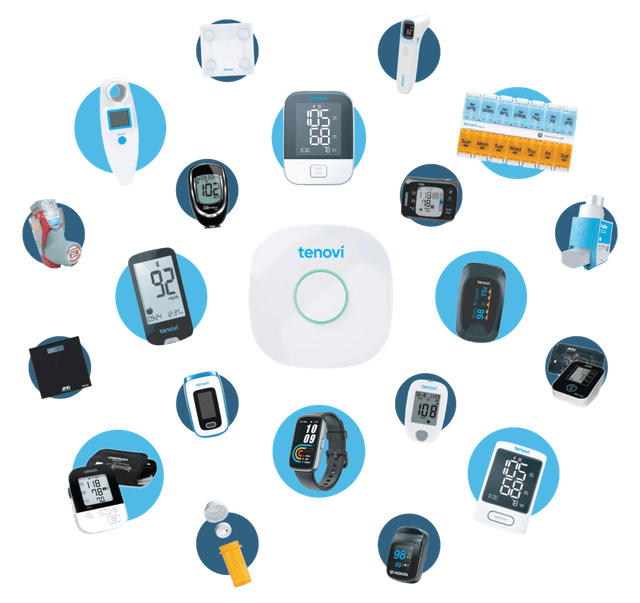
Jumper is widely used in RPM programs that deploy a Tenovi cellular gateway. The Bluetooth oximeter pairs with the gateway, which handles cellular data transmission. The OLED display with plethysmogram waveform gives patients visual feedback on reading quality.
Nonin has a long history in clinical pulse oximetry and is known for measurement accuracy across diverse skin tones and in low-perfusion states. The Nonin 3230 is a Bluetooth-connected fingertip model designed for remote monitoring integration.
Contec CMS50EW offers both Bluetooth and Wi-Fi connectivity along with a built-in rechargeable battery. Its recording mode can capture overnight SpO2 trends, which is useful for sleep apnea screening workflows.
Bodytrace produces cellular-connected devices that transmit data directly without any gateway, smartphone, or Wi-Fi dependency. For programs where technical simplicity is the top priority, cellular oximeters eliminate all connectivity friction.
Key Device Selection Criteria
FDA Clearance
For Medicare RPM billing under CPT 99454, the pulse oximeter must be FDA-cleared for the intended clinical measurement. Consumer-grade fitness trackers with SpO2 features generally do not qualify. Verify the device's FDA 510(k) clearance number and confirm the clearance covers SpO2 measurement within the accuracy range required for clinical decision-making.
Connectivity Type
Connectivity determines how reliably data reaches the monitoring platform, which directly affects billing compliance.
- Cellular (direct): No patient Wi-Fi, smartphone, or gateway required. Highest reliability for older adults.
- Bluetooth + cellular gateway: Device pairs with a bedside hub that handles transmission. Supports multiple Bluetooth devices through one gateway.
- Bluetooth to smartphone: Lowest device cost but highest patient technical burden. Not recommended as the primary method for Medicare populations.
Data Transmission Frequency
Most RPM pulse oximeters transmit readings when the patient takes a measurement (typically once or twice daily per the monitoring order). Some devices support continuous or periodic spot-check modes. For billing compliance, the critical factor is that readings are captured on at least 16 of 30 days per billing period.
Patient Ease of Use
The entire measurement should require one action: insert finger, wait 8 to 10 seconds, remove finger. Devices requiring app interaction, manual sync buttons, or multi-step pairing procedures introduce friction that degrades compliance over time, particularly for older patients managing multiple chronic conditions.
EHR Compatibility
SpO2 readings are most clinically useful when they flow directly into the patient's EHR record alongside other vital signs. Verify that the device platform integrates with your EHR — whether that is PointClickCare, ALIS, athenahealth, Epic, or another system — and understand how the data appears in clinical workflows (discrete data fields vs. PDF attachments).
Medicare Billing for Pulse Oximeter RPM
Pulse oximetry RPM bills under the same CPT code family as all RPM devices. There are no pulse-oximetry-specific billing codes — the codes apply to the RPM program as a whole.
| CPT Code | Description | Frequency | 2026 Est. Reimbursement |
|---|---|---|---|
| 99453 | Initial setup and patient education | Once per patient | ~$22 |
| 99454 | Device supply + daily data transmission | Monthly | ~$52 |
| 99457 | First 20 min. clinical staff review | Monthly | ~$52 |
| 99458 | Each additional 20 min. clinical review | Monthly (up to 2) | ~$41 each |
The 16-Day Rule
CPT 99454 requires that the patient record device readings on at least 16 out of 30 calendar days within the billing period. This is a hard threshold — 15 days does not qualify. Pulse oximeters have an advantage here because the measurement takes seconds and requires minimal patient effort, but device connectivity failures or patient forgetfulness can still cause missed days.
Cellular-connected devices and gateway-based systems achieve the highest sustained compliance because data uploads automatically after each reading. Programs should monitor reading counts daily and conduct proactive outreach to patients falling behind mid-month.
Documentation Requirements
Medicare requires the following documentation for RPM pulse oximetry billing:
- A qualifying chronic condition diagnosis (COPD, heart failure, asthma, etc.)
- A physician order for remote SpO2 monitoring
- Evidence of patient consent for RPM services
- Device readings with timestamps showing the 16-day threshold was met
- Clinical staff review notes documenting time spent and actions taken
- Any clinical interventions triggered by SpO2 alerts
Multi-Device Billing
CPT 99454 covers all devices used for a single patient per month — a patient using a pulse oximeter plus a blood pressure monitor is billed one 99454, not two. However, multiple devices increase the clinical data available for the 99457/99458 review time and make it easier to meet the 16-day threshold since readings from any device count toward the minimum.
Clinical Alert Thresholds
Alert configuration is where pulse oximetry RPM delivers its greatest clinical value. Standard starting thresholds for most RPM programs:
| Alert Level | SpO2 Threshold | Response |
|---|---|---|
| Normal | 95-100% | No action required |
| Attention | 92-94% | Document and monitor trend |
| Clinical flag | 88-91% | Same-day clinical outreach |
| Urgent | Below 88% | Immediate escalation protocol |
| Critical | Below 85% | Emergency protocol with patient/caregiver contact |
COPD-Specific Thresholds
COPD patients on supplemental oxygen may have chronically lower SpO2 baselines. For these patients, the clinical flag threshold is often adjusted to 88% with urgent alerts at 85%. The key metric for COPD patients is deviation from their individual baseline — a patient who normally reads 91% dropping to 87% is clinically significant even though 87% might be tolerable for a different COPD patient.
Trending Alerts
Static thresholds catch acute drops, but gradual decline is equally important. A patient whose SpO2 trends from 96% to 93% over two weeks may be experiencing disease progression or developing a respiratory infection. Trend-based alerting flags these patterns before the patient crosses a static threshold, enabling earlier clinical intervention.
Pulse Rate Correlation
Pulse rate is captured alongside every SpO2 reading and should be evaluated together. Tachycardia (pulse above 120 bpm) combined with SpO2 desaturation may suggest respiratory distress, acute heart failure, or infection. Bradycardia (pulse below 50 bpm) may indicate medication effects, conduction abnormalities, or severe hypoxia. Configuring paired alerts — SpO2 below 90% and pulse above 110 bpm — adds clinical specificity to the alerting system.
Workflow Integration
An effective pulse oximetry RPM workflow connects the patient's fingertip reading to a clinical action through a series of automated steps.
End-to-End Data Flow
- Patient measurement — Patient places finger in the pulse oximeter; device captures SpO2, pulse rate, and perfusion index in 8-10 seconds
- Data transmission — Reading transmits via cellular connection or Bluetooth gateway to the monitoring platform
- Clinical dashboard — Reading appears on the care team's dashboard with timestamp, trending context, and threshold evaluation
- Alert processing — Platform evaluates the reading against patient-specific thresholds and generates alerts for out-of-range values
- EHR documentation — Reading syncs to the patient's EHR record as a discrete data point (PointClickCare, ALIS, athenahealth, Epic, and others)
- Clinical response — Care team acts on alerts per escalation protocols, documents intervention, and adjusts thresholds if needed
- Billing documentation — Platform tracks reading days, review time, and generates compliance reports for 99453-99458 billing
Dual-EHR Environments
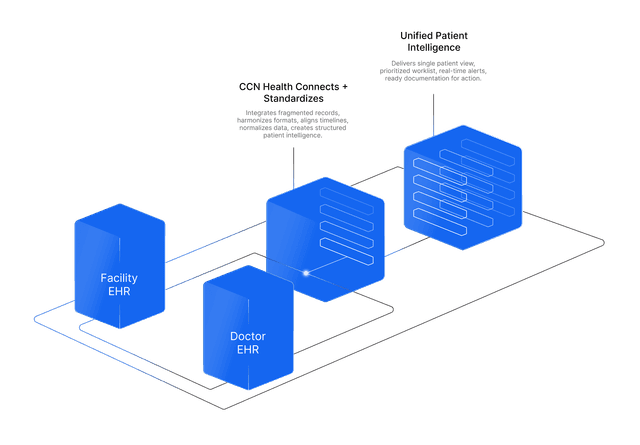
In senior living and skilled nursing settings, pulse oximetry data often needs to flow to both the facility EHR (PointClickCare, ALIS, MatrixCare) and the attending physician's practice EHR (athenahealth, Epic). A platform that bridges both systems simultaneously ensures clinical data is available where care decisions are made, regardless of which side of the dual-EHR environment the clinician operates in.
CCN Health's Pulse Oximetry RPM
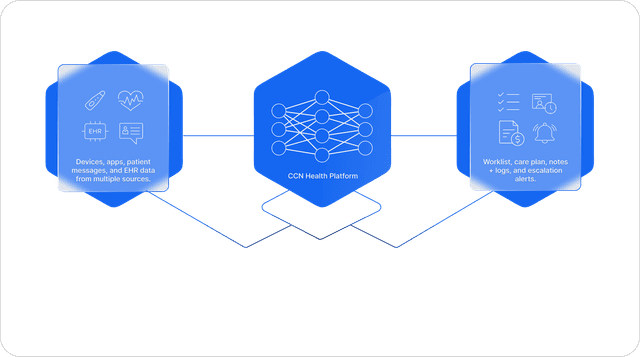
CCN Health operates a device-agnostic RPM platform that supports pulse oximetry alongside blood pressure, weight, glucose, CGM, contactless radar, and temperature monitoring. The platform is purpose-built for the pulse oximetry workflow requirements that drive clinical outcomes and billing compliance.
Device-Agnostic Approach
CCN Health is not locked to a single device manufacturer. The platform integrates with Jumper, Nonin, Contec, Bodytrace, and other FDA-cleared pulse oximeters, allowing programs to select devices that match their patient population and connectivity infrastructure. Practices can use different devices for different patients without changing their clinical workflow or dashboard experience.
8 EHR Integrations
Pulse oximetry data flows bi-directionally to all 8 EHR systems that CCN Health supports — including PointClickCare, ALIS, MatrixCare, August Health, athenahealth, Epic, ChARM, and Ethizo. SpO2 readings appear as discrete, structured data within the EHR clinical record, not as unstructured PDF attachments.
Automated Compliance Tracking
The platform monitors each patient's reading count daily against the 16-day billing threshold and flags patients at risk of falling short mid-month. Automated patient outreach reminders can be triggered when reading gaps are detected, protecting billing revenue without requiring manual chart-by-chart review.
Configurable Alert Engine
Clinical alert thresholds for SpO2, pulse rate, and trend patterns are fully configurable at the patient level. COPD patients receive different threshold profiles than heart failure patients. Alert escalation rules define which team members are notified, through which channels, and at what urgency level — from routine dashboard flags to immediate phone notifications.
Multi-Vital Clinical View
Pulse oximetry readings are displayed alongside all other monitored vitals on a unified clinical dashboard. For a heart failure patient using a pulse oximeter, blood pressure cuff, and weight scale, the care team sees all three data streams on a single screen with cross-vital trend analysis that surfaces correlations — such as weight gain coinciding with SpO2 decline — that might indicate decompensation.
Getting Started
Pulse oximetry is one of the simplest devices to deploy in an RPM program and covers some of the highest-acuity clinical use cases in remote monitoring. Whether you are adding SpO2 monitoring to an existing RPM program or building a respiratory-focused monitoring initiative from scratch, the combination of measurement simplicity, clinical criticality, and Medicare billing eligibility makes pulse oximeters a foundational RPM device category.
Disclaimer: This article is for informational purposes only and does not constitute medical, legal, or billing advice. CPT code reimbursement amounts are estimates based on CMS published fee schedules and may vary by region, payer, and clinical circumstances. Device specifications are sourced from manufacturer published data and may change. FDA clearance status should be verified directly through the FDA 510(k) database. Always consult qualified healthcare, billing, and regulatory professionals for guidance specific to your practice.
Let's figure this out together
We work closely with every client to find the right approach for their practice. Think of us as your partner, not just a platform.
Topics
Your Partner in Chronic Care
We love working closely with our clients to find the best solutions. Let us help guide you through the complicated stuff.
Why It Matters
Key Benefits
See how this approach drives measurable improvements across your organization.
Respiratory Early Warning
Daily SpO2 monitoring can detect oxygen desaturation 24-48 hours before symptomatic deterioration, enabling outpatient intervention that may prevent emergency department visits.
Automatic Billing Compliance
Cellular-connected pulse oximeters transmit readings automatically, helping patients meet the 16-day CPT 99454 threshold without manual syncing or technical troubleshooting.
Multi-Condition Coverage
A single pulse oximeter supports monitoring for COPD, heart failure, asthma, sleep apnea, post-COVID recovery, and post-surgical respiratory surveillance.
Simple Patient Experience
Fingertip pulse oximeters require a single action — place a finger, wait 8-10 seconds, done. No cuffs, lancets, or multi-step processes for patients to remember.
Cross-Vital Correlation
SpO2 data combined with blood pressure, weight, and respiratory rate readings reveals clinical patterns that no single vital sign can show on its own.
EHR-Ready Data
Readings flow directly into connected EHR systems with timestamps, perfusion index, and clinical context — supporting documentation, billing, and clinical decision-making.
Continue Reading
Related Articles
Explore more insights on this topic.
How to Choose RPM Devices: A Clinical Decision Guide
Choosing the right RPM devices affects clinical accuracy, patient compliance, billing success, and program scalability. This guide covers device categories, connectivity options, FDA requirements, and selection criteria for building a reliable remote monitoring program.
Best Remote Patient Monitoring Companies, Platforms & Vendors (2026)
A side-by-side comparison of the leading remote patient monitoring companies in 2026 — covering programs, devices, EHR integrations, and care settings — with an in-depth look at what sets CCN Health apart.
Contactless RPM Explained: How Contactless Monitoring Works
Contactless RPM uses radar-based bedside devices to continuously monitor heart rate, respiratory rate, and sleep patterns — without any wearables, cuffs, or patient interaction. This guide explains how the technology works, when it is clinically appropriate, and how it meets Medicare billing requirements.
Common Questions
Frequently Asked Questions
Get answers to the most common questions about this topic.
The best pulse oximeter for RPM depends on your patient population and connectivity infrastructure. For programs prioritizing zero-touch data transmission, cellular-enabled devices like those from Bodytrace are ideal because readings upload automatically over the cellular network with no patient Wi-Fi or smartphone required. For programs using a gateway model, Bluetooth-connected devices like the Jumper pulse oximeter pair with a Tenovi cellular gateway for reliable transmission. The key selection criteria are FDA clearance for clinical-grade accuracy, SpO2 accuracy of +/- 2% in the 70-100% range, and connectivity that matches your patients' technical capabilities.
In an RPM program, the patient places their finger in the pulse oximeter once or twice daily (per their monitoring order). The device measures SpO2 and pulse rate using two wavelengths of light that pass through the fingertip — oxygenated and deoxygenated hemoglobin absorb these wavelengths differently, allowing the device to calculate oxygen saturation. The reading transmits to the monitoring platform via cellular connection or Bluetooth gateway, where clinical staff review readings against patient-specific alert thresholds. If SpO2 drops below the configured threshold, the platform generates an alert for clinical follow-up.
Yes. Pulse oximetry qualifies for Medicare RPM billing under standard CPT codes when the device is FDA-cleared, the patient has a qualifying chronic condition (COPD, heart failure, asthma, etc.), and a valid physician order for remote monitoring is in place. The billing codes are 99453 for initial device setup and patient education, 99454 for device supply and daily data transmission (requires readings on at least 16 of 30 days), 99457 for the first 20 minutes of clinical staff review time per month, and 99458 for each additional 20-minute increment.
Multiple pulse oximeters carry FDA 510(k) clearance for SpO2 measurement and are used in RPM programs. These include the Jumper fingertip pulse oximeter (Bluetooth, commonly paired with cellular gateways), Nonin medical-grade oximeters (known for accuracy across diverse skin tones and low-perfusion states), Contec CMS50D and CMS50EW models (Bluetooth-enabled with recording capability), and Bodytrace cellular-connected oximeters. When selecting a device, verify the FDA clearance covers the specific SpO2 measurement range and clinical population you intend to monitor. The FDA 510(k) database is the authoritative source for clearance verification.
Alert thresholds are configurable and should be individualized, but standard starting points are: SpO2 below 92% generates a clinical flag for most patients, SpO2 below 88% triggers an urgent alert (particularly relevant for COPD patients whose baseline may run lower), and SpO2 below 85% typically activates an emergency escalation protocol. Trending decline is also monitored — a gradual drop of 3-4% from a patient's established baseline may trigger an alert even if the absolute reading remains above the static threshold. Pulse rate alerts are typically configured for readings below 50 bpm or above 120 bpm.
Cellular connectivity is strongly preferred but not strictly required. Cellular pulse oximeters transmit data directly over the cellular network without requiring the patient to have Wi-Fi, a smartphone, or any technical setup. This is especially important for older adults and Medicare populations where smartphone dependency is the leading cause of compliance failure. Bluetooth pulse oximeters can achieve similar results when paired with a cellular gateway device that handles the data transmission. The critical requirement is that readings reach the monitoring platform reliably and automatically to meet the 16-day billing threshold for CPT 99454.
Still have questions? We love helping practices figure this out — no pressure, just real answers.

Your Partner in Chronic Care
We're Here to Guide You Every Step of the Way
RPM, CCM, and chronic care management can get complicated. We work closely with every client to figure out the best solutions for their practice.