Clinical
Remote Patient Monitoring for Home Health — 2026 Guide
How RPM works in home health — post-discharge vital sign monitoring, hospital readmission prevention, cellular device deployment without facility infrastructure, and Medicare billing for home health agencies.
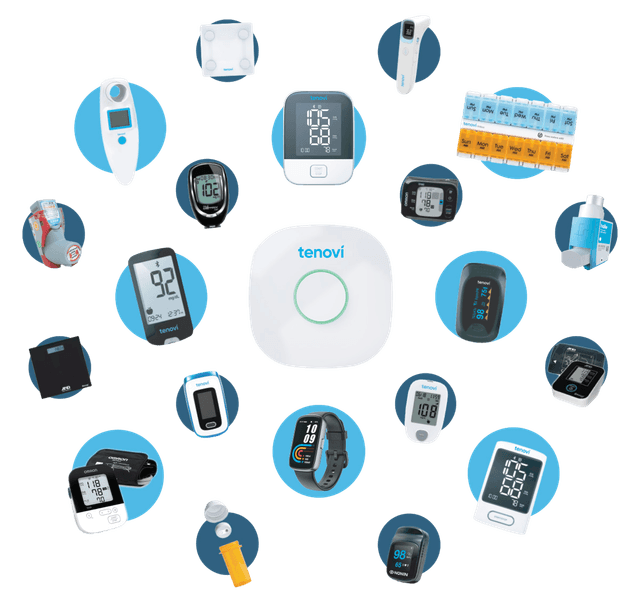
RPM for home health patients uses cellular monitoring devices (blood pressure monitors, weight scales, pulse oximeters, thermometers) that operate independently in the patient's home without facility infrastructure. The primary use case is post-discharge readmission prevention — monitoring vital signs during the critical 30-day window after hospital or SNF discharge. CCN Health integrates with practice EHRs (athenahealth, Epic, Charm) used by home health agencies and generates ~$145–185/patient/month through CPT codes 99453–99458.
What Is Remote Patient Monitoring (RPM)?
Remote Patient Monitoring (RPM) is a Medicare-reimbursable program that enables real-time monitoring of vital signs using FDA-cleared cellular devices that automatically transmit data to a clinical monitoring team.
Patient eligibility: Medicare beneficiaries with one or more chronic conditions. Patient must use an FDA-cleared device and transmit physiologic data for 16+ days per 30-day billing period.
How RPM differs from related programs: RPM is the only program requiring FDA-cleared monitoring devices — it captures real-time physiologic data (vital signs) rather than patient-reported outcomes or care coordination time.
RPM can be stacked with CCM, PCM, BHI, RTM for qualifying patients — a single enrolled patient can generate revenue across multiple Medicare programs simultaneously.
Why Home Health Agencies Need RPM
Home health patients face a unique vulnerability: they are medically complex enough to need skilled care but live independently at home between visits. RPM fills the monitoring gap between home health visits — catching deterioration that would otherwise go undetected until the next scheduled visit or an emergency.
Readmission prevention: The 30-day post-discharge window is the highest-risk period — continuous RPM monitoring detects clinical deterioration between home health visits, enabling intervention before readmission becomes necessary
Visit gap coverage: Home health visits occur 1–3 times per week, leaving 4–6 days without clinical assessment — RPM provides continuous monitoring during these gaps when patients are most vulnerable
No facility infrastructure: Unlike facility-based settings, home health RPM must work in individual homes without Wi-Fi dependencies, shared gateways, or on-site technical support — cellular devices are essential
OASIS alignment: RPM data supplements OASIS assessment documentation, providing objective vital sign trends between assessment periods that support clinical decision-making and outcome tracking
How RPM Works in Home Health — The Clinical Workflow
Home health RPM operates without facility infrastructure — devices must be self-sufficient, cellular-connected, and simple enough for patients to manage independently or with minimal caregiver assistance.
Step 1: Physician Order — Home health physician orders RPM for qualifying patients — typically at hospital discharge or during the initial home health assessment. RPM enrollment requires a physician order and patient consent.
Step 2: Home Device Setup — Cellular devices delivered to the patient's home. Home health nurse provides initial education during a visit. Devices use built-in cellular SIM — no home Wi-Fi or smartphone required. Setup documented for CPT 99453.
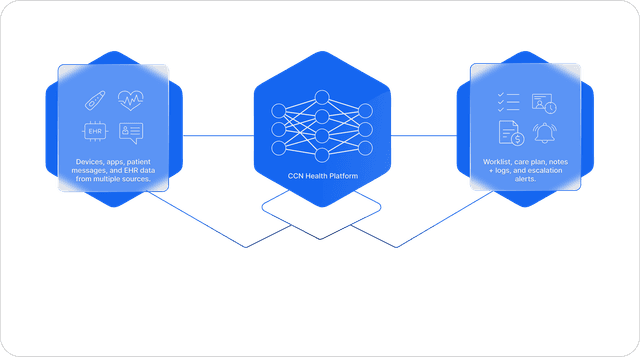
Step 3: Between-Visit Monitoring — Patient takes daily readings at home. Devices transmit via cellular connection. CCN Health clinical team monitors 24/7, managing alerts and coordinating with the home health agency and ordering physician when intervention is needed.
Step 4: Coordinated Care — RPM data shared with home health nurses before visits — trending vital signs inform assessment priorities. Monthly clinical reviews completed for billing. Monitoring continues beyond home health episode if physician orders ongoing RPM.
RPM Devices and Monitoring for Home Health
Home health devices must be self-sufficient — cellular connectivity, simple operation, and no dependency on home infrastructure.
- Bodytrace BP Monitor — Built-in cellular SIM — no smartphone, no Wi-Fi, no gateway needed. Ideal for home health patients with limited technology
- Bodytrace Weight Scale — Cellular-connected scale for heart failure fluid management — step on and readings transmit automatically
- Pulse Oximeters — SpO2 monitoring for COPD and respiratory patients — critical for post-discharge pulmonary monitoring
- Temperature Monitors — Infection surveillance for post-surgical patients — early fever detection prevents emergency department visits
Built-in cellular connectivity is strongly preferred for home health RPM — patients may not have reliable Wi-Fi, and Bluetooth-to-gateway setups add complexity that reduces compliance in unsupervised home environments.
RPM Billing: CPT Codes and Revenue
| CPT Code | Service | Reimbursement | Requirement |
|---|---|---|---|
| 99453 | Setup & Education | ~$22 | One-time per enrollment |
| 99454 | Device Supply | ~$52/mo | 16+ readings in 30 days |
| 99457 | Clinical Review | ~$52/mo | First 20 min staff time |
| 99458 | Additional Review | ~$41/mo | Each additional 20 min |
Estimated monthly revenue per patient: ~$145–185
Program stacking: With CCM stacking, combined revenue reaches $225–320/patient/month. Adding BHI or RTM for qualifying patients can exceed $400/month.
Home health RPM is billed by the ordering physician — not the home health agency. RPM and home health services use different billing codes and can be provided concurrently. The key distinction: RPM supplements home health visits with continuous monitoring but does not replace the skilled nursing, therapy, or aide services that home health provides.
EHR Integration for RPM in Home Health
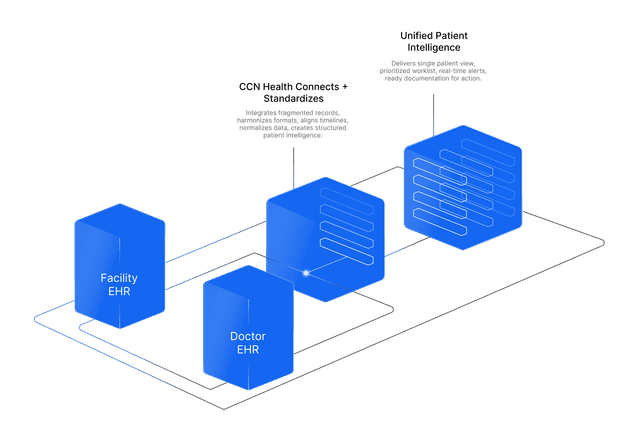
Home Health agencies typically use Practice EHRs (athenahealth, Epic, Charm Health) for clinical documentation. Home health agencies use practice EHRs rather than facility EHRs. Monitoring data routes directly to the ordering physician. No facility infrastructure to rely on.
CCN Health provides bi-directional integration with all major home health EHR systems:
- Resident/patient demographics sync automatically
- Monitoring data flow into existing EHR workflows
- Clinical alerts appear within the EHR — no separate portal required
- Billing documentation generates automatically for RPM time tracking
Home health agencies use practice EHRs (athenahealth, Epic, Charm Health) rather than facility EHRs. CCN Health integrates with these systems to ensure RPM data appears in the physician's workflow alongside home health visit notes, OASIS assessments, and care plans.
Getting Started: Implementing RPM in Your Home Health Agencie
A typical RPM implementation in home health follows a 4–8 week timeline:
- Week 1–2: Physician practice EHR integration, home health agency coordination, patient eligibility criteria defined for post-discharge RPM
- Week 3–4: Device logistics established — shipping, home delivery, and return processes for individual patient homes
- Week 5–6: Home health nurse training on RPM device education during initial visits, coordination protocols between RPM clinical team and HH agency
- Week 7–8: Patient enrollment beginning with post-discharge cohort, billing activation, ongoing monitoring with agency coordination
Home health RPM implementations require strong logistics for device distribution to individual homes — unlike facility deployments where devices are installed once. Device shipping, tracking, and return processes must be established.
Ready to implement RPM in your home health agencie? CCN Health provides full-service Remote Patient Monitoring with EHR integration, clinical oversight, and billing optimization purpose-built for home health.
Disclaimer: This article is for informational purposes only and does not constitute medical, legal, or billing advice. CPT code reimbursement amounts are estimates based on CMS published fee schedules and may vary by region, payer, and clinical circumstances. Always consult qualified healthcare, billing, and technology professionals for guidance specific to your facility.
Let's figure this out together
We work closely with every client to find the right approach for their practice. Think of us as your partner, not just a platform.
Topics
Your Partner in Chronic Care
We love working closely with our clients to find the best solutions. Let us help guide you through the complicated stuff.
Why It Matters
Key Benefits
See how this approach drives measurable improvements across your organization.
RPM Program Management
Full Remote Patient Monitoring program delivery including enrollment, monitoring, clinical review, and billing documentation — purpose-built for home health workflows.
EHR Integration
Bi-directional integration with Practice EHRs (athenahealth, Epic, Charm Health) ensures monitoring data flows into existing clinical workflows without manual data entry.
Revenue Optimization
~$145–185 per patient per month with RPM. Program stacking with CCM and PCM increases per-patient revenue further.
Readmission Prevention
Continuous monitoring during the critical 30-day post-discharge window catches deterioration before it becomes a readmission event.
No Infrastructure Needed
Cellular devices with built-in SIM cards work in any home — no Wi-Fi, no gateway, no smartphone required.
Visit Enhancement
RPM data gives home health nurses trending vital signs before each visit — informing assessment priorities and clinical focus.
Continue Reading
Related Articles
Explore more insights on this topic.
What Is Remote Patient Monitoring? A Complete Guide to RPM
A complete guide to Remote Patient Monitoring — what it is, how it works, who qualifies, which devices are used, and how providers bill Medicare for RPM services.
Chronic Care Management for Home Health — 2026 Guide
How CCM works in home health — bridging episodic skilled visits with continuous care coordination, post-discharge medication reconciliation, and multi-provider communication for homebound patients.
Remote Therapeutic Monitoring for Home Health — 2026 Guide
How Remote Therapeutic Monitoring works in home health — tracking PT/OT exercise compliance, pain assessments, and functional recovery for patients receiving home-based rehabilitation services.
Common Questions
Frequently Asked Questions
Get answers to the most common questions about this topic.
Remote Patient Monitoring (RPM) for home health is a Medicare-reimbursable program. patients receiving home health services use cellular monitoring devices at home to transmit vital signs to a clinical monitoring team, enabling early detection of post-discharge complications and preventing hospital readmissions. Medicare beneficiaries with one or more chronic conditions.
RPM generates ~$145–185 per patient per month through CPT codes 99453, 99454, 99457, 99458. With CCM stacking, combined revenue reaches $225–320/patient/month. Adding BHI or RTM for qualifying patients can exceed $400/month.
CCN Health integrates with Practice EHRs (athenahealth, Epic, Charm Health) for home health facilities. Home health agencies use practice EHRs rather than facility EHRs. All monitoring data flows bi-directionally between CCN Health and the facility/physician EHR.
Yes — cellular-connected devices like Bodytrace BP monitors and scales have built-in SIM cards that transmit data via cellular networks. No home Wi-Fi, smartphone, or gateway is needed. The patient simply uses the device and it transmits automatically. This is critical for home health patients who may have limited technology in their homes.
No. RPM supplements home health services — it provides continuous monitoring between visits but does not replace skilled nursing visits, therapy sessions, or aide services. RPM and home health use completely separate billing codes and can be provided concurrently. RPM actually enhances home health by giving visiting nurses trending vital sign data before each visit.
Continuous monitoring during the 30-day post-discharge window catches early signs of deterioration — rising blood pressure, weight gain from fluid retention, declining SpO2, or fever — before they escalate to emergency events. The CCN Health clinical team coordinates with the ordering physician for medication adjustments or additional home health visits, preventing unnecessary readmissions.
Still have questions? We love helping practices figure this out — no pressure, just real answers.

Your Partner in Chronic Care
We're Here to Guide You Every Step of the Way
RPM, CCM, and chronic care management can get complicated. We work closely with every client to figure out the best solutions for their practice.