Clinical
Chronic Care Management for Home Health — 2026 Guide
How CCM works in home health — bridging episodic skilled visits with continuous care coordination, post-discharge medication reconciliation, and multi-provider communication for homebound patients.
CCM for home health patients provides continuous care coordination between episodic skilled visits. Home health visits occur 1–3 times per week, leaving 4–6 days without clinical oversight — CCM fills this gap with ongoing medication reconciliation, physician communication, and care plan management. CCN Health integrates with practice EHRs (athenahealth, Epic, Charm) and generates ~$80–130/patient/month. CCM and home health services use separate billing codes and complement each other.
What Is Chronic Care Management (CCM)?
Chronic Care Management (CCM) is a Medicare-reimbursable program that provides non-face-to-face care coordination for Medicare beneficiaries with two or more chronic conditions, including care plan development, medication reconciliation, and coordination across multiple healthcare providers.
Patient eligibility: Medicare beneficiaries with two or more chronic conditions expected to last at least 12 months, placing the patient at significant risk of death, acute exacerbation, or functional decline.
How CCM differs from related programs: CCM requires no monitoring devices — it bills for care coordination time including care plan development, medication reconciliation, and multi-provider coordination. The 2+ chronic condition requirement is the key qualifier.
CCM can be stacked with RPM, BHI for qualifying patients — a single enrolled patient can generate revenue across multiple Medicare programs simultaneously.
Why Home Health Agencies Need CCM
Home health is episodic by design — skilled visits happen 1–3 times per week. Between visits, patients manage medications, symptoms, and physician appointments independently. CCM provides the continuous coordination layer that episodic care delivery cannot.
Visit gap vulnerability: Home health visits leave 4–6 days between encounters — patients may experience medication issues, miss specialist appointments, or have questions that go unanswered until the next visit. CCM provides continuous access to coordination
Post-discharge medication complexity: Hospital and SNF discharges often involve 5–10 medication changes — monthly reconciliation catches conflicts that arise when patients return home with new regimens overlapping existing prescriptions
Multi-provider coordination: Home health patients often see a PCP, hospitalist, specialists, and home health nurse — CCM ensures all providers are working from the same care plan with consistent treatment goals
Beyond the HH episode: Home health services end when the patient is discharged from the HH agency. CCM can continue indefinitely, providing ongoing coordination after the home health episode concludes
How CCM Works in Home Health — The Clinical Workflow
Home health CCM operates as a continuous coordination layer that supplements episodic skilled visits — providing between-visit care management that home health delivery cannot.
Step 1: Post-Discharge Enrollment — Physician orders CCM at hospital/SNF discharge alongside home health referral. CCN Health initiates care plan development using discharge summary, medication list, and follow-up orders.
Step 2: Medication Reconciliation — Comprehensive medication reconciliation comparing pre-hospitalization medications, discharge medications, and current prescriptions from all providers. Conflicts identified and communicated to prescribers.
Step 3: Between-Visit Coordination — CCN Health coordinates between HH visits: physician communication, specialist follow-up scheduling, medication clarifications, patient/caregiver questions. Home health nurses receive updated coordination notes before visits.
Step 4: Post-HH Continuity — When the home health episode ends, CCM continues if the patient has ongoing chronic conditions. Coordination transitions from HH-supplemental to standalone chronic disease management.
CCM Is Coordination — No Devices Required
CCM focuses on care coordination, not monitoring. For patients who also need vital sign tracking at home, RPM provides cellular devices that work independently in the home environment.
- No devices for CCM — CCM bills for coordination time — no devices, no data transmission requirements
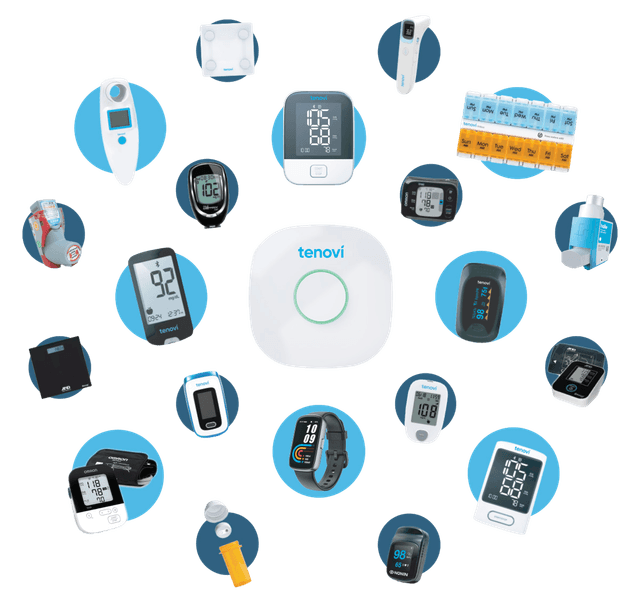
- RPM pairing for home monitoring — Cellular RPM devices (Bodytrace BP, weight scale) operate independently at home alongside CCM coordination — separate programs with separate billing
CCM + RPM is the strongest combination for home health patients: RPM catches vital sign changes while CCM coordinates the clinical response across all providers.
CCM Billing: CPT Codes and Revenue
| CPT Code | Service | Reimbursement | Requirement |
|---|---|---|---|
| 99490 | CCM Services | ~$62/mo | 20+ min clinical staff time |
| 99491 | Complex CCM | ~$86/mo | 60+ min physician/QHP time |
| 99439 | Additional 20 min | ~$47/mo | Each additional 20 min |
Estimated monthly revenue per patient: ~$80–130
Program stacking: Stacking CCM with RPM generates $255–350/patient/month. Adding BHI for patients with comorbid behavioral health conditions can reach $303–513/month.
CCM and home health use completely separate billing codes and can run concurrently. The ordering physician bills for CCM while the home health agency bills for skilled visits. CCM continues after the home health episode ends — providing ongoing revenue beyond the episodic care period.
EHR Integration for CCM in Home Health
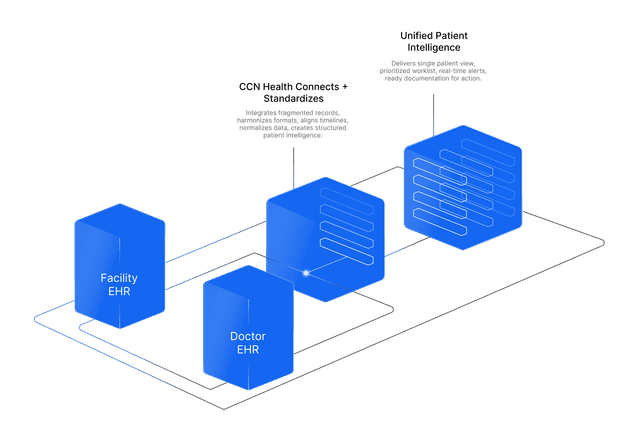
Home Health agencies typically use Practice EHRs (athenahealth, Epic, Charm Health) for clinical documentation. Home health agencies use practice EHRs rather than facility EHRs. Monitoring data routes directly to the ordering physician. No facility infrastructure to rely on.
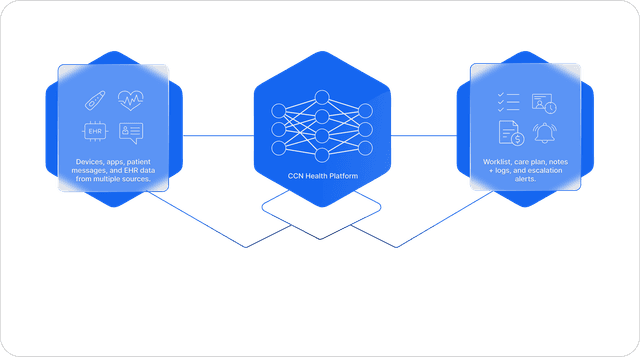
CCN Health provides bi-directional integration with all major home health EHR systems:
- Resident/patient demographics sync automatically
- Monitoring data flow into existing EHR workflows
- Clinical alerts appear within the EHR — no separate portal required
- Billing documentation generates automatically for CCM time tracking
Home health agencies and ordering physicians use practice EHRs (athenahealth, Epic, Charm). CCN Health coordinates across both the HH agency's system and the physician's system — ensuring care plans and coordination notes are visible to all parties.
Getting Started: Implementing CCM in Your Home Health Agencie
A typical CCM implementation in home health follows a 4–8 week timeline:
- Week 1–2: Physician practice and HH agency partnerships, post-discharge enrollment protocols, EHR integration with practice systems
- Week 3–4: Care plan templates for common post-discharge scenarios, medication reconciliation workflows using discharge summaries
- Week 5–6: Coordination protocols between CCN Health team, HH agency nurses, and physician practices established
- Week 7–8: Enrollment beginning with post-discharge patients, billing activation, post-HH transition protocols tested
The strongest HH CCM programs start at hospital discharge — enrolling patients in CCM simultaneously with the home health referral ensures coordination begins immediately during the highest-risk transition period.
Ready to implement CCM in your home health agencie? CCN Health provides full-service Chronic Care Management with EHR integration, clinical oversight, and billing optimization purpose-built for home health.
Disclaimer: This article is for informational purposes only and does not constitute medical, legal, or billing advice. CPT code reimbursement amounts are estimates based on CMS published fee schedules and may vary by region, payer, and clinical circumstances. Always consult qualified healthcare, billing, and technology professionals for guidance specific to your facility.
Let's figure this out together
We work closely with every client to find the right approach for their practice. Think of us as your partner, not just a platform.
Topics
Your Partner in Chronic Care
We love working closely with our clients to find the best solutions. Let us help guide you through the complicated stuff.
Why It Matters
Key Benefits
See how this approach drives measurable improvements across your organization.
CCM Program Management
Full Chronic Care Management program delivery including enrollment, monitoring, clinical review, and billing documentation — purpose-built for home health workflows.
EHR Integration
Bi-directional integration with Practice EHRs (athenahealth, Epic, Charm Health) ensures monitoring data flows into existing clinical workflows without manual data entry.
Revenue Optimization
~$80–130 per patient per month with CCM. Program stacking with RPM and BHI increases per-patient revenue further.
Visit Gap Coverage
Continuous coordination between episodic home health visits — patients aren't left without clinical support for 4–6 days between encounters.
Post-Discharge Safety
Comprehensive medication reconciliation within the first week after discharge catches the medication conflicts that cause readmissions.
Beyond HH Episodes
CCM continues after home health services end — providing ongoing chronic disease coordination and revenue beyond episodic care.
Continue Reading
Related Articles
Explore more insights on this topic.
What Is Chronic Care Management? Complete Guide to CCM (2026)
A complete guide to Chronic Care Management — what it is, how it works, who qualifies, what services CCM covers, and how providers bill Medicare for care coordination.
Remote Patient Monitoring for Home Health — 2026 Guide
How RPM works in home health — post-discharge vital sign monitoring, hospital readmission prevention, cellular device deployment without facility infrastructure, and Medicare billing for home health agencies.
Remote Therapeutic Monitoring for Home Health — 2026 Guide
How Remote Therapeutic Monitoring works in home health — tracking PT/OT exercise compliance, pain assessments, and functional recovery for patients receiving home-based rehabilitation services.
Common Questions
Frequently Asked Questions
Get answers to the most common questions about this topic.
Chronic Care Management (CCM) for home health is a Medicare-reimbursable program. homebound patients receiving episodic skilled visits get continuous care coordination between visits — including medication management, physician communication, and care plan updates that ensure nothing is missed between scheduled home health encounters. Medicare beneficiaries with two or more chronic conditions expected to last at least 12 months, placing the patient at significant risk of death, acute exacerbation, or functional decline.
CCM generates ~$80–130 per patient per month through CPT codes 99490, 99491, 99439. Stacking CCM with RPM generates $255–350/patient/month. Adding BHI for patients with comorbid behavioral health conditions can reach $303–513/month.
CCN Health integrates with Practice EHRs (athenahealth, Epic, Charm Health) for home health facilities. Home health agencies use practice EHRs rather than facility EHRs. All monitoring data flows bi-directionally between CCN Health and the facility/physician EHR.
Yes — CCM and home health use completely separate billing codes (CCM: 99490-99491, HH: OASIS-based) and complement each other. CCM provides continuous coordination between HH visits while home health provides episodic skilled care. They serve different functions and are billed independently.
Yes — CCM can continue indefinitely after the home health episode concludes. Patients with ongoing chronic conditions (2+) remain eligible for monthly CCM coordination even without active home health services. This provides continuous revenue and clinical oversight beyond the HH episode.
Hospital and SNF discharges frequently involve 5–10 medication changes. CCM performs comprehensive medication reconciliation comparing pre-hospitalization, discharge, and current prescriptions — identifying conflicts, duplications, and gaps. This reconciliation occurs within the first week after discharge, when medication errors are most common.
Still have questions? We love helping practices figure this out — no pressure, just real answers.

Your Partner in Chronic Care
We're Here to Guide You Every Step of the Way
RPM, CCM, and chronic care management can get complicated. We work closely with every client to figure out the best solutions for their practice.