Clinical
Chronic Care Management for Independent Living — 2026 Guide
How CCM works in independent living — preventive care coordination for active seniors with multiple conditions, medication adherence support, specialist management, and Medicare billing through external physicians.
CCM in independent living provides proactive care coordination for residents with 2+ chronic conditions — managing care plans, medication reconciliation, and specialist communication before conditions escalate. Independent living residents are engaged, health-conscious participants in their own care coordination. CCN Health generates ~$80–130/patient/month billed through external physicians. No devices required — CCM deploys quickly and stacks with RPM for comprehensive coverage.
What Is Chronic Care Management (CCM)?
Chronic Care Management (CCM) is a Medicare-reimbursable program that provides non-face-to-face care coordination for Medicare beneficiaries with two or more chronic conditions, including care plan development, medication reconciliation, and coordination across multiple healthcare providers.
Patient eligibility: Medicare beneficiaries with two or more chronic conditions expected to last at least 12 months, placing the patient at significant risk of death, acute exacerbation, or functional decline.
How CCM differs from related programs: CCM requires no monitoring devices — it bills for care coordination time including care plan development, medication reconciliation, and multi-provider coordination. The 2+ chronic condition requirement is the key qualifier.
CCM can be stacked with RPM, BHI for qualifying patients — a single enrolled patient can generate revenue across multiple Medicare programs simultaneously.
Why Independent Living Facilities Need CCM
Independent living residents are the most engaged participants in CCM — they understand their conditions, want to be involved in their care plans, and appreciate the proactive coordination that prevents health crises.
Proactive prevention: IL residents have early-stage chronic conditions that are manageable with coordination — catching medication conflicts and specialist miscommunication early prevents the escalation that forces care level transitions
Engaged patients: Unlike memory care or LTC, IL residents actively participate in care coordination discussions — they ask questions, follow through on recommendations, and value the structured oversight
Multi-specialist management: IL residents often see 3–5 specialists independently — without CCM, these physicians may not communicate, leading to medication conflicts and fragmented care
Wellness program integration: CCM integrates naturally into IL wellness programming — residents view care coordination as part of their health-conscious lifestyle rather than a medical intervention
How CCM Works in Independent Living — The Clinical Workflow
IL CCM is the most patient-engaged model — residents participate directly in care coordination conversations and care plan discussions.
Step 1: Wellness-Based Enrollment — Community wellness director introduces CCM during health assessments or wellness programming. Residents with 2+ conditions self-enroll with their external physician's authorization. Engagement levels are typically high.
Step 2: Collaborative Care Plan — Care plan developed collaboratively with the resident — they provide input on treatment goals, medication preferences, and specialist relationships. Plan shared with all treating physicians.
Step 3: Monthly Coordination — CCN Health provides monthly coordination including: medication reconciliation, specialist communication, care plan updates, and direct resident check-ins. Residents receive wellness summaries they can share with family.
Step 4: Preventive Focus — Coordination emphasizes prevention — catching early warning signs, ensuring screenings are current, and optimizing medication regimens before conditions worsen.
No Devices Required — CCM Is Care Coordination
CCM requires no monitoring devices, making it immediately deployable alongside existing IL wellness programs.
- No devices required — CCM bills for coordination time — care plans, medication reconciliation, physician communication
- RPM pairing — IL residents who want vital sign monitoring can add RPM — self-managed devices pair naturally with CCM coordination
Many IL residents who start with CCM later add RPM as they experience the value of coordinated care — CCM is often the gateway program for broader enrollment.
CCM Billing: CPT Codes and Revenue
| CPT Code | Service | Reimbursement | Requirement |
|---|---|---|---|
| 99490 | CCM Services | ~$62/mo | 20+ min clinical staff time |
| 99491 | Complex CCM | ~$86/mo | 60+ min physician/QHP time |
| 99439 | Additional 20 min | ~$47/mo | Each additional 20 min |
Estimated monthly revenue per patient: ~$80–130
Program stacking: Stacking CCM with RPM generates $255–350/patient/month. Adding BHI for patients with comorbid behavioral health conditions can reach $303–513/month.
All IL CCM billing flows through external physician practices. Residents' physicians order CCM and bill Medicare while CCN Health performs the coordination activities. The resident-physician-CCN Health three-way relationship is the strongest in independent living because residents are active participants.
EHR Integration for CCM in Independent Living
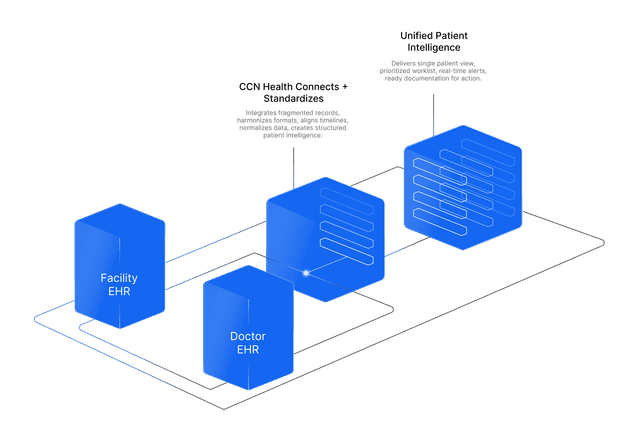
Independent Living facilities typically use Often no facility EHR — routes to external physician for clinical documentation. Independent living communities may not have a facility EHR. Monitoring data routes to residents' external physician practice EHRs (athenahealth, Epic, Charm).
CCN Health provides bi-directional integration with all major independent living EHR systems:
- Resident/patient demographics sync automatically
- Monitoring data flow into existing EHR workflows
- Clinical alerts appear within the EHR — no separate portal required
- Billing documentation generates automatically for CCM time tracking
Since most IL communities lack a facility EHR, CCM documentation routes to each resident's external physician EHR. Residents appreciate receiving wellness summaries they can bring to physician appointments or share with family members.
Getting Started: Implementing CCM in Your Independent Living Facilitie
A typical CCM implementation in independent living follows a 4–8 week timeline:
- Week 1–2: External physician practice partnerships, wellness program integration planning, resident information sessions
- Week 3–4: Initial enrollment cohort, care plans developed collaboratively with residents, medication lists compiled from resident interviews
- Week 5–6: Monthly coordination launched, resident wellness summaries distributed, physician communication protocols activated
- Week 7–8: Enrollment expansion through community wellness programming and word-of-mouth, billing optimization
IL CCM grows organically — residents share their experience with neighbors. The wellness-oriented positioning resonates with health-conscious IL populations better than clinical medical framing.
Ready to implement CCM in your independent living facilitie? CCN Health provides full-service Chronic Care Management with EHR integration, clinical oversight, and billing optimization purpose-built for independent living.
Disclaimer: This article is for informational purposes only and does not constitute medical, legal, or billing advice. CPT code reimbursement amounts are estimates based on CMS published fee schedules and may vary by region, payer, and clinical circumstances. Always consult qualified healthcare, billing, and technology professionals for guidance specific to your facility.
Let's figure this out together
We work closely with every client to find the right approach for their practice. Think of us as your partner, not just a platform.
Topics
Your Partner in Chronic Care
We love working closely with our clients to find the best solutions. Let us help guide you through the complicated stuff.
Why It Matters
Key Benefits
See how this approach drives measurable improvements across your organization.
CCM Program Management
Full Chronic Care Management program delivery including enrollment, monitoring, clinical review, and billing documentation — purpose-built for independent living workflows.
EHR Integration
Bi-directional integration with Often no facility EHR — routes to external physician ensures monitoring data flows into existing clinical workflows without manual data entry.
Revenue Optimization
~$80–130 per patient per month with CCM. Program stacking with RPM and BHI increases per-patient revenue further.
Engaged Patients
IL residents actively participate in care coordination — asking questions, providing input on care plans, and following through on recommendations.
Preventive Focus
Proactive coordination catches early warning signs and medication conflicts before conditions escalate — helping residents maintain independent status.
Wellness Integration
CCM fits naturally alongside fitness, nutrition, and social programming — positioning health coordination as part of a wellness lifestyle.
Continue Reading
Related Articles
Explore more insights on this topic.
What Is Chronic Care Management? Complete Guide to CCM (2026)
A complete guide to Chronic Care Management — what it is, how it works, who qualifies, what services CCM covers, and how providers bill Medicare for care coordination.
Remote Patient Monitoring for Independent Living — 2026 Guide
How RPM works in independent living — proactive wellness monitoring for active seniors, self-managed cellular devices, aging-in-place technology, and Medicare billing through external physician practices.
Behavioral Health Integration for Independent Living — 2026 Guide
How BHI works in independent living — proactive mental wellness screening for active seniors, sleep disorder identification, social isolation prevention, and Medicare billing for IL communities.
Common Questions
Frequently Asked Questions
Get answers to the most common questions about this topic.
Chronic Care Management (CCM) for independent living is a Medicare-reimbursable program. health-conscious seniors with multiple chronic conditions receive proactive care coordination including medication management and specialist communication as a preventive wellness program. Medicare beneficiaries with two or more chronic conditions expected to last at least 12 months, placing the patient at significant risk of death, acute exacerbation, or functional decline.
CCM generates ~$80–130 per patient per month through CPT codes 99490, 99491, 99439. Stacking CCM with RPM generates $255–350/patient/month. Adding BHI for patients with comorbid behavioral health conditions can reach $303–513/month.
CCN Health integrates with Often no facility EHR — routes to external physician for independent living facilities. Independent living communities may not have a facility EHR. All monitoring data flows bi-directionally between CCN Health and the facility/physician EHR.
IL residents are the MOST engaged CCM population. They understand their conditions, ask informed questions, follow through on recommendations, and appreciate proactive coordination. Unlike higher-acuity settings where coordination happens around the patient, IL residents participate directly in care discussions.
CCM integrates naturally as the clinical coordination layer within existing wellness programming. Communities position CCM alongside fitness classes, nutrition counseling, and social engagement — framing it as proactive health management rather than a medical program. This positioning drives higher enrollment rates.
Yes — proactive care coordination catches medication conflicts, ensures specialist communication, and identifies early warning signs before conditions escalate. By maintaining optimal chronic condition management, CCM helps residents maintain the health status required for independent living.
Still have questions? We love helping practices figure this out — no pressure, just real answers.

Your Partner in Chronic Care
We're Here to Guide You Every Step of the Way
RPM, CCM, and chronic care management can get complicated. We work closely with every client to figure out the best solutions for their practice.