Clinical
CGM Integration for RPM: Continuous Glucose Monitoring Setup & Billing
CGMs like the Dexcom G7 and FreeStyle Libre 3 generate ~288 glucose readings per day, making them the most data-rich devices in any RPM program. This guide covers device selection, platform integration, clinical metrics, alert configuration, and CPT billing for CGM-based remote monitoring.
Continuous glucose monitors like the Dexcom G7 and FreeStyle Libre 3 provide approximately 288 glucose readings per day through a small subcutaneous sensor that measures interstitial glucose every 1–5 minutes. These devices integrate with RPM platforms via cloud API connections and bill under standard RPM CPT codes 99453–99458, with potential additional RTM billing under CPT 98976 for therapeutic glucose management.
What CGMs Are and How They Work
A continuous glucose monitor is a small medical device that measures glucose levels in real time through a subcutaneous sensor — a thin, flexible filament inserted just beneath the skin, typically on the upper arm or abdomen. Unlike fingerstick meters that capture a single blood glucose snapshot, CGMs measure interstitial glucose (the glucose concentration in the fluid between cells) automatically every 1 to 5 minutes, generating approximately 288 data points per day.
The system has three components: the sensor (a small adhesive patch with the subcutaneous filament), a transmitter (either built into the sensor or attached separately), and a display device (usually a smartphone app, though some systems offer dedicated receivers). Glucose readings transmit from the sensor to the display device via Bluetooth, and from there, data uploads to the manufacturer's cloud platform over the patient's internet connection.
For RPM programs, this architecture means CGM data does not flow directly from the sensor to the monitoring platform. Instead, it passes through the manufacturer's cloud — Dexcom Clarity or Abbott LibreView — which then connects to the RPM system via API. Understanding this data path is essential for integration planning.
Major CGM Devices for RPM
Dexcom G7
The Dexcom G7 is the latest generation of Dexcom's CGM line and one of the most widely used sensors in RPM programs. Key specifications:
- Wear period: 10 days per sensor (plus a 12-hour grace period)
- Warmup time: 30 minutes after insertion
- Reading frequency: Every 5 minutes
- Calibration: Factory calibrated — no fingerstick confirmation needed
- Data platform: Dexcom Clarity (cloud-based reporting and API access)
- Alerts: Customizable high, low, and rate-of-change alerts
- FDA classification: Integrated continuous glucose monitoring system (iCGM)
The G7's iCGM classification means it meets FDA accuracy standards that allow it to be used for treatment decisions without confirmatory fingerstick testing. Dexcom Clarity provides ambulatory glucose profiles, TIR reports, and trend analysis that RPM clinical staff use for patient reviews.
FreeStyle Libre 3
Abbott's FreeStyle Libre 3 is the smallest CGM sensor currently available and offers the longest standard wear period among leading CGMs:
- Wear period: 14 days per sensor
- Warmup time: 60 minutes after insertion
- Reading frequency: Every 1 minute
- Calibration: Factory calibrated — no fingerstick confirmation needed
- Data platform: LibreView (cloud-based reporting and data sharing)
- Alerts: Real-time optional glucose alarms
- Size: Approximately the diameter of two stacked pennies
The Libre 3's 14-day wear period means fewer sensor changes per month (two versus three for the Dexcom G7), which can improve patient adherence and reduce supply costs. LibreView provides similar reporting capabilities to Dexcom Clarity, including TIR dashboards and pattern analysis.
Medtronic Guardian 4
Medtronic's Guardian 4 sensor is primarily designed for use with Medtronic insulin pump systems but can also function as a standalone CGM:
- Wear period: 7 days per sensor
- Warmup time: 2 hours
- Reading frequency: Every 5 minutes
- Calibration: Factory calibrated
- Data platform: CareLink (Medtronic's cloud platform)
The shorter wear period and longer warmup time make the Guardian 4 less common in RPM programs compared to the Dexcom G7 and FreeStyle Libre 3, though it may be appropriate for patients already in the Medtronic ecosystem.
CGM vs Fingerstick Meters for RPM
The difference between CGM and fingerstick monitoring for RPM is not incremental — it is transformational in terms of data volume, clinical insight, and billing compliance.
| Factor | Fingerstick Meter | CGM |
|---|---|---|
| Daily readings | 1–4 (patient-initiated) | ~288 (automatic) |
| Time in Range data | Not available | Yes — primary metric |
| Glucose variability | Cannot assess | Full coefficient of variation |
| Overnight monitoring | Only if patient wakes to test | Continuous through sleep |
| Rate of change | Not available | Real-time trending arrows |
| 16-day compliance | Requires daily patient action | Automatic — sensor collects continuously |
| Patient burden | Lancet, test strip, blood sample each time | Sensor insertion every 10–14 days |
| Hypoglycemia detection | Only when patient tests | Continuous with predictive alerts |
For RPM programs, the compliance advantage alone is significant. Fingerstick-based RPM programs commonly struggle with the 16-day reading threshold required for CPT 99454 billing — patients forget, test strips run out, or testing fatigue sets in. CGMs eliminate this challenge entirely because data collection is passive and continuous. As long as the sensor is active, readings transmit automatically.
How CGM Data Integrates with RPM Platforms
The Cloud-to-Cloud Architecture
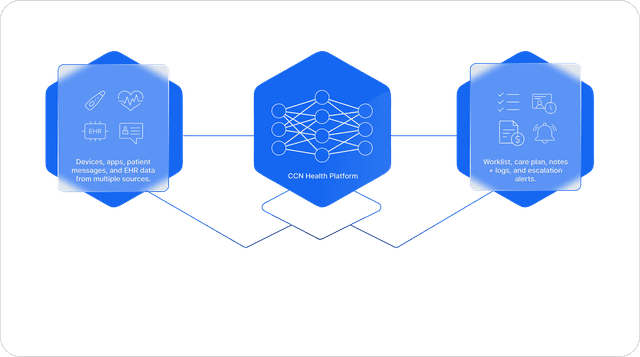
CGM integration with RPM platforms follows a cloud-to-cloud model rather than a direct device-to-platform connection:
- Sensor to phone: The CGM sensor transmits glucose readings to the patient's smartphone app via Bluetooth
- Phone to manufacturer cloud: The app uploads data to the manufacturer's cloud platform (Dexcom Clarity or LibreView)
- Manufacturer cloud to RPM platform: The RPM monitoring system pulls data from the manufacturer's API on a scheduled basis or receives it via webhook
This means the RPM platform never communicates directly with the CGM sensor. The manufacturer's cloud acts as the intermediary, handling data aggregation, quality validation, and API access.
Integration Requirements
For a practice to integrate CGM data into their RPM workflow, several components must be in place:
- Patient smartphone: The patient needs a compatible smartphone with the CGM manufacturer's app installed and connected
- Manufacturer account: The patient must have an active account on Dexcom Clarity or LibreView
- Data sharing consent: The patient must authorize their CGM data to be shared with the RPM platform through the manufacturer's data sharing settings
- RPM platform API connection: The RPM platform must have an active API integration with the CGM manufacturer
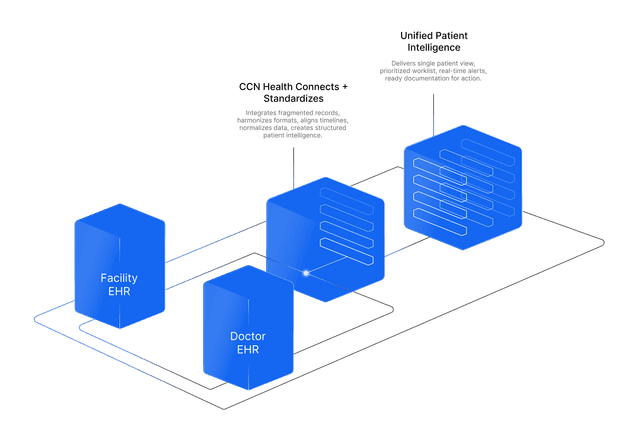
- EHR integration (recommended): For glucose data to appear in the clinical record alongside other patient data, the RPM platform should integrate with the practice's EHR system. For senior care facilities on PointClickCare, CCN Health's PointClickCare RPM integration supports Dexcom G7 data flow directly into resident records. Ambulatory practices using athenahealth can explore CCN Health's athenahealth RPM integration for CGM-based remote monitoring with cloud-to-cloud connectivity
What the RPM Platform Receives
Once integration is active, the RPM platform typically receives:
- Individual glucose readings with timestamps
- Daily summary statistics (mean glucose, standard deviation, TIR percentages)
- Alert events (highs, lows, rapid rate of change)
- Sensor status (active, expired, warming up)
- Ambulatory glucose profile data for pattern analysis
Clinical staff reviewing CGM data on the RPM dashboard can see real-time glucose values, trend arrows, and historical patterns without needing to log into Dexcom Clarity or LibreView separately.
Billing: CPT Codes for CGM-Based RPM
Standard RPM Billing (CPT 99453–99458)
CGMs qualify for RPM billing under the same CPT codes used for all RPM devices:
| CPT Code | Description | Estimated Rate | Frequency |
|---|---|---|---|
| 99453 | Device setup and patient education | ~$22 | One-time |
| 99454 | Device supply and daily data transmission | ~$52 | Monthly |
| 99457 | First 20 minutes clinical staff review and management | ~$52 | Monthly |
| 99458 | Each additional 20 minutes clinical review | ~$41 | Monthly |
Estimated recurring monthly revenue per CGM RPM patient: ~$145–$186
The continuous data transmission from CGMs makes 99454 billing straightforward — the device generates readings on every day the sensor is active, easily exceeding the 16-day threshold. Clinical review time for 99457 and 99458 is also well-supported because CGM data provides substantial clinical content to review, document, and act on.
RTM Billing (CPT 98976)
In addition to standard RPM codes, CGM-based monitoring may also qualify for Remote Therapeutic Monitoring (RTM) under CPT 98976 when the glucose data is used to monitor a patient's response to a therapeutic intervention — such as an insulin dose adjustment, a new medication, or a dietary modification.
RTM and RPM are billed through different code families and have different documentation requirements. Practices considering dual billing should work with their compliance team to ensure proper documentation supports both claims.
Billing Documentation Best Practices
For CGM-based RPM billing, documentation should include:
- The clinical rationale for CGM monitoring (why continuous data is needed versus fingerstick)
- The specific chronic condition(s) being monitored (ICD-10 codes)
- Evidence of data review, including specific TIR metrics and trend observations
- Clinical actions taken based on the data (medication adjustments, patient outreach, care plan updates)
- Time spent on interactive communication with the patient (for 99457/99458)
Clinical Metrics: What to Monitor
Time in Range (TIR)
The primary clinical metric for CGM-based RPM is Time in Range — the percentage of the day a patient's glucose stays between 70 and 180 mg/dL. The consensus target for most adults with diabetes is greater than 70% TIR, which equates to approximately 16 hours and 48 minutes per day within the target range.
Additional CGM Metrics
| Metric | Target | Clinical Use |
|---|---|---|
| Time in Range (70–180 mg/dL) | >70% | Overall glycemic control |
| Time Below Range (<70 mg/dL) | <4% | Hypoglycemia frequency |
| Time Significantly Below (<54 mg/dL) | <1% | Severe hypoglycemia risk |
| Time Above Range (>180 mg/dL) | <25% | Hyperglycemia burden |
| Glucose Management Indicator (GMI) | Individualized | Estimated HbA1c equivalent |
| Coefficient of Variation (CV) | <36% | Glucose stability and variability |
Alert Threshold Configuration
RPM programs should configure tiered alert thresholds for CGM data:
- Critical high (>300 mg/dL): Immediate clinical review — potential DKA risk
- High (>250 mg/dL): Same-day outreach, assess for illness or missed medication
- Low (<70 mg/dL): Same-day outreach, assess for overmedication or missed meals
- Critical low (<54 mg/dL): Immediate clinical review, activate emergency contact protocol if patient is unreachable
- Rapid fall (>3 mg/dL/min): Predictive alert — potential impending hypoglycemia
Alert thresholds should be individualized. A patient with impaired hypoglycemia awareness may need the low alert set at 80 mg/dL rather than 70 to provide additional warning time.
Patient Selection: Who Benefits Most from CGM RPM
Not every diabetes patient requires CGM-based monitoring. The strongest candidates include:
Tier 1 — Highest clinical value:
- Type 1 diabetes patients (continuous glucose visibility is essential for insulin dosing)
- Type 2 patients on intensive insulin therapy (multiple daily injections or insulin pump)
- Patients with frequent hypoglycemia or impaired hypoglycemia awareness
- Patients with high glucose variability despite optimized medication
Tier 2 — Strong clinical rationale:
- Patients whose HbA1c remains above target (>8%) despite treatment adjustments
- Patients transitioning to a new insulin regimen where close monitoring accelerates titration
- Pregnant patients with gestational or pre-existing diabetes requiring tight glycemic control
Tier 3 — Consider alternatives:
- Stable Type 2 patients on oral medications with HbA1c at target — a cellular fingerstick meter like the Trividia TRUE METRIX may be clinically sufficient and more cost-effective
- Patients who cannot maintain a smartphone connection (required for CGM data transmission to the cloud)
Implementation: From Procurement to Go-Live
Step 1: Device Procurement and Inventory
Establish a supply chain for CGM sensors and transmitters. Key considerations:
- CGM sensors are consumable — each patient needs 2–3 sensors per month (depending on the device)
- Sensor procurement may go through medical supply distributors or directly through the manufacturer
- Maintain buffer inventory to prevent gaps when patients need replacement sensors
- Track sensor lot numbers for quality management
Step 2: Patient Training and Onboarding
CGM onboarding requires more education than fingerstick meters. Training should cover:
- Sensor insertion technique — proper site selection (upper arm or abdomen), skin preparation, applicator use
- Smartphone app setup — downloading the manufacturer's app, creating an account, pairing the sensor
- Data sharing authorization — enabling the RPM platform to access their glucose data through the manufacturer's sharing settings
- Understanding alerts — what high, low, and rate-of-change alerts mean and when to call the care team
- Sensor replacement — recognizing sensor expiration, removing the old sensor, inserting a new one
- Troubleshooting — what to do if the sensor falls off, the app loses connection, or readings seem inaccurate
Step 3: Platform Integration and Testing
Before enrolling patients at scale:
- Verify the API connection between the CGM manufacturer's cloud and your RPM platform
- Test the complete data path: sensor reading → phone app → manufacturer cloud → RPM dashboard → EHR
- Confirm that alerts route correctly to the clinical team
- Validate that TIR and summary metrics calculate accurately
- Test the workflow for when a patient's sensor expires and a new one is activated
Step 4: Alert Configuration and Escalation Protocols
Define clinical escalation pathways for each alert tier:
- Critical alerts (glucose <54 or >300 mg/dL) → immediate clinical review, attempt patient contact, activate emergency protocol if unreachable
- High-priority alerts (glucose <70 or >250 mg/dL) → same-day outreach by clinical staff
- Trend alerts (falling TIR, increasing variability) → flag for weekly provider review
- Sensor alerts (expired sensor, signal loss) → patient outreach for sensor replacement
Step 5: Ongoing Monitoring and Optimization
After go-live, track program performance metrics:
- Sensor wear compliance — percentage of days each patient has an active sensor
- TIR trends — are patients improving over time?
- Alert volume — are alert thresholds generating actionable alerts or creating noise?
- Billing capture rate — percentage of eligible patients billed for 99454, 99457, 99458
- Patient satisfaction — comfort with the device, perceived clinical value
Combining CGM with Other RPM Devices
Many CGM RPM patients have comorbid conditions that benefit from additional monitoring:
- CGM + blood pressure monitor — the most common pairing for diabetic patients with hypertension. Both device data streams feed into the same RPM platform for a comprehensive metabolic view
- CGM + weight scale — valuable for patients with diabetes and obesity or diabetes and heart failure, where weight trends inform medication and fluid management
- CGM + pulse oximeter — relevant for diabetic patients with concurrent respiratory conditions
All device readings from any connected device contribute to the 16-day threshold for CPT 99454, though CGM data alone is typically sufficient.
Conclusion
CGM integration represents the highest-fidelity data source available in RPM today. With approximately 288 readings per day, continuous trend analysis, and automated data transmission that eliminates patient compliance barriers, CGMs transform glucose monitoring from episodic snapshots into a continuous clinical feed. For practices managing insulin-dependent diabetes, high-variability patients, or populations with significant hypoglycemia risk, CGM-based RPM delivers both superior clinical outcomes and reliable billing under standard CPT codes.
The key to successful implementation is understanding the cloud-to-cloud integration architecture, selecting the right patients (not every diabetes patient needs CGM), and building clinical workflows that translate continuous data into timely, actionable interventions.
Disclaimer: This article is for informational purposes only and does not constitute medical, legal, or billing advice. CPT code reimbursement amounts are estimates based on CMS published fee schedules and may vary by region, payer, and clinical circumstances. Device specifications are based on manufacturer-published data and may change. Always consult qualified healthcare and billing professionals for guidance specific to your practice.
Let's figure this out together
We work closely with every client to find the right approach for their practice. Think of us as your partner, not just a platform.
Topics
Your Partner in Chronic Care
We love working closely with our clients to find the best solutions. Let us help guide you through the complicated stuff.
Why It Matters
Key Benefits
See how this approach drives measurable improvements across your organization.
288 Daily Readings
CGMs capture glucose data every 1–5 minutes, providing approximately 288 readings per day that reveal patterns, trends, and variability that fingerstick meters cannot detect.
Effortless 16-Day Compliance
Continuous data transmission automatically satisfies the CPT 99454 threshold every month, eliminating the patient compliance challenge that limits fingerstick-based RPM programs.
Time in Range Analytics
TIR metrics give clinicians a multidimensional view of glycemic control — including time above, below, and within target — that HbA1c and spot glucose checks cannot provide.
Proactive Hypoglycemia Alerts
Real-time low glucose and rate-of-change alerts enable clinical intervention before severe hypoglycemia occurs, potentially reducing ER visits and hospitalizations.
Cloud API Integration
Manufacturer platforms like Dexcom Clarity and LibreView provide standardized API connections to RPM systems, enabling automated data flow without custom hardware or gateway devices.
Dual Billing Potential
CGM data may support both RPM billing (99453–99458) and RTM billing (98976), maximizing reimbursement for practices delivering therapeutic glucose management.
Continue Reading
Related Articles
Explore more insights on this topic.
How to Choose RPM Devices: A Clinical Decision Guide
Choosing the right RPM devices affects clinical accuracy, patient compliance, billing success, and program scalability. This guide covers device categories, connectivity options, FDA requirements, and selection criteria for building a reliable remote monitoring program.
Complete Guide to RPM Billing: CPT Codes, Requirements & Reimbursement
A comprehensive breakdown of all six RPM CPT codes (including new 2026 codes 99445 & 99470), Medicare billing requirements, compliance safeguards, and revenue projections for remote patient monitoring programs.
Common Questions
Frequently Asked Questions
Get answers to the most common questions about this topic.
CGM data flows through the manufacturer's cloud platform — Dexcom Clarity for Dexcom devices, or LibreView for FreeStyle Libre sensors — and then connects to the RPM monitoring platform via API integration. The patient's CGM sensor transmits readings to their smartphone app via Bluetooth. The app uploads data to the manufacturer cloud, which then shares it with the RPM platform through a secure API. This cloud-to-cloud architecture means the RPM platform receives glucose data without requiring any direct connection between the CGM sensor and the monitoring system.
Yes. CGMs qualify for RPM billing under the standard CPT codes 99453 (setup), 99454 (device supply and data transmission), 99457 (first 20 minutes clinical review), and 99458 (additional 20 minutes). The continuous data transmission from CGMs easily satisfies the 16-day reading requirement for 99454. Additionally, CGM monitoring may qualify for RTM billing under CPT 98976 when the data is used specifically for therapeutic management — such as tracking response to insulin dose changes. Practices should verify CGM-specific coverage policies with their payer.
Both are factory-calibrated CGMs that require no fingerstick confirmation, but they differ in key specifications. The Dexcom G7 has a 10-day sensor wear period, a 30-minute warmup time, and integrates through Dexcom Clarity. The FreeStyle Libre 3 has a 14-day sensor wear period, a 60-minute warmup time, and integrates through LibreView. The Libre 3 is the smallest CGM sensor currently available. Both provide readings every 1–5 minutes and support real-time glucose alerts. Device selection for RPM often depends on which manufacturer's cloud platform integrates more cleanly with the practice's RPM system.
The strongest candidates are Type 1 diabetes patients (who require continuous glucose visibility for insulin dosing), Type 2 diabetes patients on intensive insulin therapy (multiple daily injections or insulin pump), patients with frequent hypoglycemia or impaired hypoglycemia awareness, patients with high glucose variability despite medication optimization, and patients whose HbA1c remains above target despite treatment adjustments. CGM-based RPM is generally not necessary for stable Type 2 patients managed with oral medications alone — a cellular fingerstick meter is typically sufficient for that population.
Standard CGM alert thresholds for RPM programs include: critical high above 300 mg/dL (immediate clinical review), high above 250 mg/dL (same-day outreach), low below 70 mg/dL (same-day outreach), and critical low below 54 mg/dL (immediate clinical review with emergency contact protocol if needed). CGMs also enable rate-of-change alerts — glucose falling faster than 3 mg/dL per minute — which can predict impending hypoglycemia before it reaches the threshold. All alert thresholds should be individualized based on the patient's insulin regimen and hypoglycemia awareness.
Still have questions? We love helping practices figure this out — no pressure, just real answers.

Your Partner in Chronic Care
We're Here to Guide You Every Step of the Way
RPM, CCM, and chronic care management can get complicated. We work closely with every client to figure out the best solutions for their practice.