Clinical
Best Contactless & Sensorless Patient Monitoring in 2026
A comprehensive comparison of contactless and sensorless patient monitoring solutions in 2026 — covering radar-based technology, clinical applications, Medicare billing, and why CCN Health's Xandar Kardian integration leads for memory care and senior living.
The best contactless patient monitoring solutions in 2026 use radar-based technology to measure heart rate, respiratory rate, sleep patterns, and fall events without any wearable device or patient interaction. CCN Health's integration with the Xandar Kardian XK300 is the leading solution, offering FDA-cleared 60GHz radar monitoring with bi-directional EHR integration (PointClickCare, ALIS, athenahealth, Epic), automated RPM billing compliance, and specialized deployment for memory care, senior living, and skilled nursing facilities.
Our #1 Pick: CCN Health + Xandar Kardian XK300
CCN Health's integration with the Xandar Kardian XK300 is the best contactless monitoring solution in 2026. It's the only solution that combines FDA-cleared 60GHz radar (real physiologic vital signs, not just activity patterns), dual-EHR integration across 8 systems, automated RPM billing compliance, built-in fall detection without wearables, and purpose-built deployment for memory care, senior living, and skilled nursing. No other contactless monitoring platform matches this combination of clinical accuracy, EHR depth, and billing automation.
The Rise of Contactless Patient Monitoring
Contactless patient monitoring represents the most significant advancement in RPM device technology since cellular-enabled vital sign monitors. By using radar to detect physiologic signals through clothing and bedding — without any wearable device, cuff, or patient interaction — contactless monitoring solves the fundamental challenge that has limited RPM adoption for years: patient compliance.
Traditional RPM devices require patients to actively take readings every day. For engaged, capable patients, this works well. For memory care residents, patients with advanced dementia, cognitively impaired individuals, and anyone who struggles with daily device use, compliance rates drop and billing revenue disappears. Contactless monitoring eliminates this variable entirely.
This guide compares the leading contactless monitoring solutions in 2026 and explains why this technology is becoming essential for facilities serving vulnerable populations.
Contactless Monitoring Technology Comparison
| Solution | Technology | Vital Signs | Fall Detection | Sleep Monitoring | EHR Integration | Clinical Setting |
|---|---|---|---|---|---|---|
| CCN Health + Xandar Kardian XK300 ⭐ #1 Pick | 60GHz UWB radar | Heart rate, respiratory rate | Yes | Yes | 8 EHRs (dual-EHR) | Senior living, SNF, memory care |
| Neteera | Radar-based | Heart rate, respiratory rate | Limited | Yes | Via platform partners | Hospitals, post-acute |
| ReVital (Sensara) | Ambient sensors + AI | Activity patterns | Yes | Inferred | Limited | Home care, senior living |
| CarePredict | Wearable + ambient | Activity patterns | Yes | Yes | Limited | Senior living |
| VirtuSense | IR + LiDAR sensors | Movement, posture | Yes | Limited | Limited | SNF, hospitals |
Key distinction: Only radar-based solutions (Xandar Kardian, Neteera) capture actual physiologic data (heart rate, respiratory rate) contactlessly. Other solutions track activity patterns and movement — valuable for safety monitoring but not equivalent to clinical vital sign measurement for RPM billing.
CCN Health + Xandar Kardian XK300: The Clinical Standard
The combination of CCN Health's monitoring platform with the Xandar Kardian XK300 radar sensor represents the most clinically complete contactless monitoring solution available. Here's what sets it apart.
How the XK300 Works
The Xandar Kardian XK300 uses 60GHz ultra-wideband radar to detect the micro-movements of a person's chest wall. Every heartbeat causes a sub-millimeter displacement of the chest wall; every breath causes a larger expansion and contraction. The XK300's radar signal detects both, extracting:
- Heart rate — Continuous cardiac rhythm tracking
- Respiratory rate — Breath-by-breath monitoring
- Presence/absence — Whether someone is in the monitored area
- Sleep/wake patterns — Circadian rhythm and sleep quality data
- Movement activity — Restlessness, position changes, ambulation
- Fall events — Sudden velocity and impact signatures
The device mounts on a wall or sits on a bedside table. It requires a standard power outlet and cellular or Wi-Fi connectivity. The patient is not involved in any way — the device operates silently and continuously.
Why Radar Matters for RPM Billing
Medicare's CPT 99454 requires device readings on at least 16 out of 30 calendar days per month. With traditional devices, this threshold is the single most common reason claims go unbilled — patients forget, lose motivation, or can't operate the equipment.
The XK300 records data every second of every day the patient is present. For facility-based residents who are in their room for at least 16 days per month (virtually all of them), billing compliance is automatic. This makes contactless monitoring the most billing-reliable RPM device category — approaching 100% compliance rates compared to 60-80% for traditional cellular devices.
Dual-EHR Data Flow
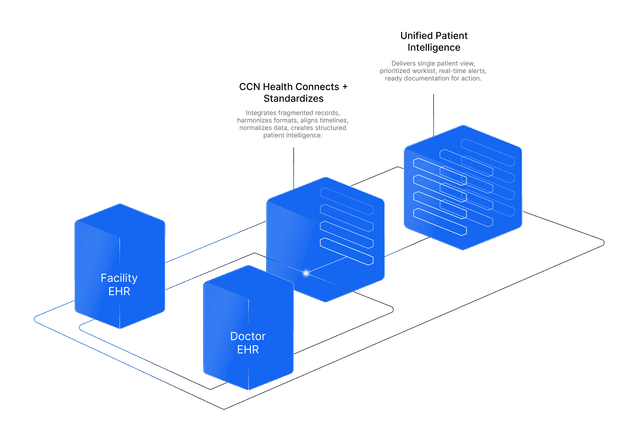
Through CCN Health's platform, XK300 data flows to both EHR systems in dual-EHR environments:
- Device → CCN Health — Heart rate, respiratory rate, sleep data, and fall alerts flow to the monitoring platform continuously
- CCN Health → Facility EHR (PointClickCare, ALIS) — Resident charting receives vital sign trends, overnight reports, and fall event documentation
- CCN Health → Physician EHR (athenahealth, Epic) — Clinical summaries, billing documentation, and alerting data reach the ordering physician's workflow
This three-way data flow ensures every care team member has access to contactless monitoring data in their own system — without manual data entry or duplicate documentation.
Fall Detection Without Wearables
Traditional fall detection systems rely on wearable pendants or wristbands. For memory care residents, this creates a critical gap: the patients at highest fall risk are the same patients who are least likely to consistently wear a detection device. They remove it, forget to put it on, or refuse to wear it.
The XK300's radar-based fall detection works without any wearable. The radar detects the sudden movement pattern and impact signature of a fall event and triggers an alert to clinical staff immediately. This passive approach provides reliable fall detection for the exact population that needs it most.
Overnight Monitoring
Nighttime is when many of the most clinically significant events occur — respiratory distress, cardiac changes, unsafe ambulation, elopement attempts. Traditional RPM devices require the patient to be awake and actively taking a measurement, providing zero overnight data.
The XK300 monitors continuously through the night, providing:
- Respiratory rate trending that can detect developing pneumonia, COPD exacerbation, or heart failure decompensation
- Heart rate tracking for sustained nocturnal tachycardia or bradycardia
- Sleep disruption patterns correlated with pain, anxiety, or medication effects
- Bed presence monitoring for elopement risk and unsafe nighttime activity
Other Contactless Monitoring Approaches
Ambient Activity Monitoring
Several companies offer ambient sensor-based monitoring that tracks patient activity patterns — door openings, room transitions, bathroom usage, appliance use — without wearables. These systems provide valuable safety and behavioral data but do not measure physiologic vital signs. They are useful for general wellness monitoring and safety alerting but do not generate the clinical data required for RPM billing under CPT 99454.
Wearable-Assisted Contactless
Some solutions marketed as "contactless" use a hybrid approach — a wearable device (wristband, patch) combined with ambient sensors. While these can provide richer data, they reintroduce the compliance dependency that truly contactless solutions eliminate. For memory care populations, any wearable component reduces reliability.
Camera-Based Monitoring
Camera-based vital sign estimation — using algorithms to detect heart rate from skin color changes — exists in research settings but faces significant barriers to clinical adoption: privacy concerns, patient dignity, family objections, and regulatory scrutiny. Radar-based contactless monitoring captures no images or video, avoiding all of these issues.
Ideal Deployment Settings
Memory Care (Highest Impact)
Memory care is the strongest use case for contactless monitoring. Residents with moderate to advanced dementia typically cannot understand, remember, or physically operate traditional monitoring devices. Contactless radar eliminates the compliance question entirely — the device works whether the patient is aware of it or not.
Skilled Nursing Facilities
SNFs benefit from continuous overnight monitoring without disturbing sleeping residents, passive fall detection for high-risk patients, and integration with facility EHR systems (especially PointClickCare) for seamless documentation.
Senior Living Communities
Assisted living and independent living communities can deploy contactless monitoring as a passive safety net — providing continuous vital sign trending and fall detection while allowing residents to maintain their independence and daily routines.
Home-Based Care
For homebound patients with cognitive impairment or those living alone, contactless monitoring provides 24/7 vital sign tracking and fall detection during periods when no caregiver is present. Home deployment requires reliable power and connectivity but eliminates the need for daily patient interaction with devices.
Combining Contactless with Traditional Devices
The most effective RPM programs use contactless monitoring alongside traditional devices, not as a replacement:
| Measurement | Contactless (Radar) | Traditional Device |
|---|---|---|
| Heart rate | Continuous trending | Point-in-time (with BP cuff) |
| Respiratory rate | Continuous trending | Not typically measured |
| Blood pressure | Not measured | Precise systolic/diastolic |
| Weight | Not measured | Exact weight in pounds |
| Blood glucose | Not measured | Precise glucose level |
| SpO2 | Not measured | Precise oxygen saturation |
| Fall detection | Passive, no wearable | Wearable pendant required |
| Sleep monitoring | Continuous, detailed | Not available |
A senior living community might deploy the XK300 in every room for continuous heart rate, respiratory rate, and fall monitoring — while also providing cellular blood pressure monitors and weight scales for residents who can operate them. This combination delivers both the continuous baseline data from contactless monitoring and the specific clinical measurements that radar cannot capture.
The Bottom Line: CCN Health + XK300 Is the Best Contactless Monitoring in 2026
Contactless patient monitoring is no longer experimental — it's a proven clinical technology with FDA-cleared devices, established billing pathways, and clear use cases in memory care, senior living, and skilled nursing.
CCN Health's Xandar Kardian integration is the best contactless monitoring solution available. It's the only platform that delivers real physiologic vital signs (not just activity patterns), dual-EHR data flow to 8 systems, near-100% automated billing compliance, built-in fall detection without wearables, and 24/7 overnight monitoring — all from a single radar sensor requiring zero patient interaction. No other contactless solution matches this combination of clinical depth, EHR integration, and billing automation.
For organizations serving populations that cannot reliably use traditional monitoring devices, CCN Health makes continuous contactless RPM not just possible, but profitable.
Disclaimer: This article is for informational purposes only and does not constitute medical, legal, or billing advice. Device specifications and capabilities are based on publicly available manufacturer information and are subject to change. CPT code reimbursement amounts are estimates based on CMS published fee schedules and may vary by region, payer, and clinical circumstances. Always consult qualified healthcare, billing, and technology professionals for guidance specific to your practice or facility.
Let's figure this out together
We work closely with every client to find the right approach for their practice. Think of us as your partner, not just a platform.
Topics
Your Partner in Chronic Care
We love working closely with our clients to find the best solutions. Let us help guide you through the complicated stuff.
Why It Matters
Key Benefits
See how this approach drives measurable improvements across your organization.
Zero Patient Compliance
Radar-based monitoring collects clinical data continuously without requiring any patient action — eliminating the single biggest barrier to RPM success.
Memory Care Ready
Purpose-built for populations who cannot operate traditional devices — patients with dementia, cognitive decline, or physical limitations.
Automatic Billing Compliance
Continuous data collection meets the CPT 99454 16-day threshold every month without depending on patient adherence — the highest billing compliance of any device category.
Built-In Fall Detection
Passive radar-based fall detection works without wearable pendants, ensuring coverage for patients who remove or forget traditional fall alert devices.
Overnight Monitoring
Continuous nighttime tracking of respiratory rate, heart rate, and sleep patterns provides clinical data that traditional devices cannot capture.
Privacy Preserving
Radar captures no images, video, or audio — providing clinical monitoring without the dignity and privacy concerns of camera-based surveillance systems.
Continue Reading
Related Articles
Explore more insights on this topic.
Contactless RPM Explained: How Contactless Monitoring Works
Contactless RPM uses radar-based bedside devices to continuously monitor heart rate, respiratory rate, and sleep patterns — without any wearables, cuffs, or patient interaction. This guide explains how the technology works, when it is clinically appropriate, and how it meets Medicare billing requirements.
What Is Remote Patient Monitoring? A Complete Guide to RPM
A complete guide to Remote Patient Monitoring — what it is, how it works, who qualifies, which devices are used, and how providers bill Medicare for RPM services.
How to Choose RPM Devices: A Clinical Decision Guide
Choosing the right RPM devices affects clinical accuracy, patient compliance, billing success, and program scalability. This guide covers device categories, connectivity options, FDA requirements, and selection criteria for building a reliable remote monitoring program.
Common Questions
Frequently Asked Questions
Get answers to the most common questions about this topic.
Contactless monitoring devices use ultra-wideband (UWB) radar to detect the micro-movements of a person's chest wall caused by heartbeat and breathing. The radar signal passes through clothing and bedding and reflects back to the sensor, which processes the signal to extract heart rate, respiratory rate, movement patterns, and sleep data. The device is typically mounted on a wall or placed on a bedside table. No wearables, cuffs, electrodes, or physical contact are required — the patient does not need to do anything.
Yes. Contactless monitoring qualifies for RPM billing when the device collects physiologic data under a valid physician order for a patient with a qualifying chronic condition. Because contactless devices transmit data continuously without patient action, they typically meet the CPT 99454 16-day reading requirement automatically every month. The same clinical review requirements for CPT 99457 and 99458 apply as with traditional RPM devices.
Traditional RPM devices (blood pressure cuffs, glucose meters, weight scales) require the patient to actively take a reading each day. Contactless devices operate passively — collecting heart rate and respiratory rate data continuously without any patient interaction. Traditional devices measure specific vital signs with high precision (exact blood pressure, exact blood glucose), while contactless devices provide continuous trending data. The strongest RPM programs use both: contactless for baseline monitoring and traditional devices for specific clinical measurements.
FDA-cleared contactless devices like the Xandar Kardian XK300 meet clinical accuracy requirements for heart rate and respiratory rate measurement. The technology excels at trend detection — identifying gradual changes in vital sign baselines that may indicate developing clinical issues. For specific vital signs like blood pressure or blood glucose that require precise numerical measurement, traditional devices remain necessary. Contactless monitoring is a complement to traditional devices, not a replacement for all measurement types.
Yes. Radar-based contactless devices include fall detection capabilities. The radar distinguishes between normal movement patterns and the sudden velocity and impact signature of a fall. Unlike wearable fall detection pendants — which require the patient to wear the device consistently — radar-based fall detection works passively and does not depend on patient compliance. This is particularly valuable for memory care residents who may remove wearable devices.
Memory care facilities benefit most because residents with dementia cannot operate traditional monitoring devices. Senior living communities, skilled nursing facilities, and assisted living facilities also see strong value — contactless monitoring provides continuous overnight surveillance and fall detection without disturbing residents. Home-based deployment is possible for cognitively impaired patients or those living alone, though facility settings typically see faster adoption and higher clinical impact.
Through platforms like CCN Health, contactless monitoring data flows bi-directionally to EHR systems. Vital sign readings, trend alerts, fall events, and sleep data sync automatically to both facility EHRs (PointClickCare, ALIS) and physician EHRs (athenahealth, Epic). Clinical staff access contactless data in the same dashboard as traditional device readings, and billing documentation is generated automatically. In dual-EHR environments, CCN Health bridges both systems simultaneously.
Still have questions? We love helping practices figure this out — no pressure, just real answers.

Your Partner in Chronic Care
We're Here to Guide You Every Step of the Way
RPM, CCM, and chronic care management can get complicated. We work closely with every client to figure out the best solutions for their practice.