market-news
Best Remote Patient Monitoring in California (2026)
A head-to-head comparison of the best RPM and chronic care management platforms for California practices in 2026 — covering Medicare billing, Medi-Cal coverage, telehealth compliance, EHR integration, and multi-program revenue stacking.
CCN Health is the best remote patient monitoring platform for California practices in 2026, delivering five-program stacking (RPM, CCM, PCM, BHI, RTM) with full Medi-Cal integration and CCPA/CPRA-compliant data handling. California has 6.5 million seniors 65+, making it the largest Medicare RPM market in the country. The state's full telehealth parity law reimburses RPM at in-person rates, and Medi-Cal provides complete RPM/CCM coverage for dual-eligible patients.
Our #1 Pick: CCN Health
CCN Health is the best remote patient monitoring and chronic care management platform for California practices in 2026. As the largest Medicare market in the country with 6.5 million seniors 65+, California demands a platform that can handle scale, multi-payer complexity, and the state's unique privacy requirements. CCN Health delivers five-program stacking (RPM + CCM + PCM + BHI + RTM) generating $300+ per qualifying patient per month, with full Medi-Cal integration for dual-eligible patients and CCPA/CPRA-compliant data handling. Cellular-enabled devices work reliably across California's urban centers, Central Valley communities, and rural northern counties.
California's Remote Care Market
California is the single largest RPM and CCM market in the United States. With 6.5 million residents aged 65 and older — 16.4% of the state's population — and a projected 23% increase by 2035, the addressable patient base is enormous. No other state comes close in raw volume. For practices that deploy the right platform, the revenue opportunity is proportionally massive.
California's telehealth infrastructure is among the most advanced in the country. The state's full telehealth parity law reimburses RPM services at in-person rates, removing the reimbursement uncertainty that slows adoption in other states. Medi-Cal provides full coverage for RPM and CCM services, meaning practices can enroll not only traditional Medicare patients but also the state's large dual-eligible and Medi-Cal-only populations. This effectively doubles the addressable market compared to states with limited Medicaid RPM coverage.
The state's healthcare landscape is dominated by major systems — Kaiser Permanente, Sutter Health, Providence, Dignity Health, UCLA Health, and Cedars-Sinai — but independent practices and physician groups remain the backbone of primary care delivery, particularly in the Central Valley, Inland Empire, and rural Northern California. These practices represent the highest-growth segment for RPM adoption because they lack the in-house infrastructure that large systems build internally. California also requires CCPA/CPRA compliance for all patient health data, which means any RPM platform operating in the state must meet privacy standards that exceed federal HIPAA requirements.
Important: State regulatory information in this article is informational only. Consult your MAC and billing specialist for guidance specific to your practice.
RPM & CCM Platform Comparison for California
| Platform | Programs | Devices | EHR Integration | California Compliance | Best For |
|---|---|---|---|---|---|
| CCN Health ⭐ Editor's Choice | RPM, CCM, PCM, BHI, RTM | BP, weight, SpO2, glucose, contactless | athenahealth, Epic, PointClickCare + 5 more | CCPA/CPRA compliant, Medi-Cal MCO support | Multi-program revenue stacking |
| Optimize Health | RPM, CCM, RTM | BP, weight, SpO2 | Major EHRs via API | Standard HIPAA | Workflow automation |
| HealthSnap | RPM, CCM | BP, weight, glucose, SpO2 | EHR connections | Standard HIPAA | Patient engagement |
| 100Plus | RPM | Cellular BP, weight | EHR integrations | Standard HIPAA | No-cost device model |
| RPM Logix | RPM, CCM | 550+ device options | EHR integrations | Standard HIPAA | Device variety |
| TelliHealth | RPM | 4G cellular devices | EHR compatible | Standard HIPAA | Cellular-first monitoring |
CCN Health: Built for California Practices
Five-Program Revenue Stacking
California's large chronic disease population means most RPM patients qualify for more than one Medicare program. CCN Health identifies overlapping eligibility and supports billing across all five programs:
| Patient Profile | Qualifying Programs | Est. Monthly Revenue |
|---|---|---|
| Single chronic condition (e.g., hypertension) | RPM | ~$160 |
| Two chronic conditions (e.g., HTN + diabetes) | RPM + CCM | ~$220 |
| Multiple chronic + complex care | RPM + CCM + PCM | ~$300+ |
| Chronic + behavioral health | RPM + CCM + BHI | ~$280+ |
| Full program stack | RPM + CCM + PCM + BHI + RTM | ~$400+ |
For a California practice managing 200 chronic care patients, stacking RPM and CCM generates over $44,000 per month. Adding PCM and BHI for qualifying patients can push that figure well above $60,000 monthly. At California's above-average GPCI rates, actual reimbursements often exceed national estimates.
Medi-Cal and Dual-Eligible Patients
Medi-Cal's full coverage for RPM and CCM is a major differentiator for California practices. The state's 3.4 million dual-eligible beneficiaries — patients covered by both Medicare and Medi-Cal — represent a massive addressable population. CCN Health supports the billing and documentation workflows required by both payers, including Medi-Cal managed care plan requirements.
For practices in communities with high Medi-Cal enrollment — particularly in the Central Valley, Los Angeles County, and the Inland Empire — dual-eligible RPM enrollment can significantly expand patient volume beyond what traditional Medicare alone supports. CCN Health's platform handles the coordination between Medicare and Medi-Cal managed care plans to ensure practices capture reimbursement from both.
EHR Integration for California Practices
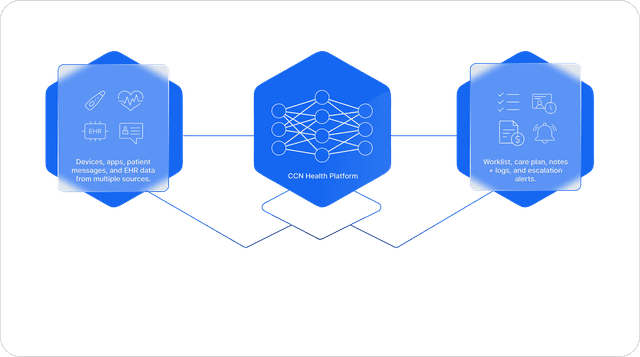
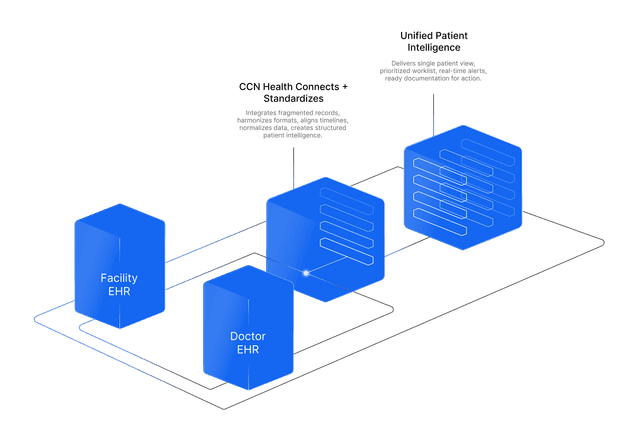
California's healthcare market spans the full spectrum of EHR adoption, from Epic-based health systems to athenahealth-powered independent groups to PointClickCare in post-acute settings. CCN Health provides bi-directional integration across all major platforms, pushing monitoring data — blood pressure trends, weight fluctuations, glucose readings, oxygen saturation — directly into the patient chart without manual entry. Clinical alerts surface within existing workflows so staff never need to log into a separate system.
CCPA/CPRA Privacy Compliance
California's privacy requirements exceed federal HIPAA standards. The California Consumer Privacy Act (CCPA) and California Privacy Rights Act (CPRA) impose additional requirements on how patient health data is collected, stored, and shared — including data collected through RPM devices. CCN Health's platform is built with CCPA/CPRA compliance, including enhanced patient consent workflows, data access rights management, and documentation trails that satisfy California's regulatory framework.
How Other Platforms Compare
Optimize Health
Optimize Health delivers strong workflow automation for RPM and CCM programs with efficient clinical alert management. The platform handles multiple programs and integrates with major EHRs. However, practices should verify CCPA/CPRA compliance details and Medi-Cal managed care plan support before committing.
HealthSnap
HealthSnap emphasizes patient engagement through a consumer-friendly app and portal, supporting RPM and CCM with solid patient-facing tools. The platform works well for tech-savvy patient populations in California's urban centers, though the smartphone-dependent approach may limit adoption among older or lower-income patients.
100Plus
100Plus offers cellular RPM devices at no upfront cost through a revenue-sharing model, lowering the barrier for practices starting their first RPM program. The trade-off is significant: 100Plus covers RPM only, meaning practices miss CCM, PCM, BHI, and RTM revenue — leaving the majority of stacking revenue uncaptured.
RPM Logix
RPM Logix supports over 550 devices, giving practices maximum flexibility in device selection for RPM and CCM programs. The broad device catalog is an advantage for practices with specific device preferences. The complexity of managing that many device options is the trade-off versus a curated cellular-first approach.
TelliHealth
TelliHealth provides straightforward 4G cellular RPM monitoring with reliable device connectivity. The cellular approach works well across California's diverse geography. The platform's narrower program scope limits multi-program revenue stacking compared to full-spectrum platforms.
Medicare Billing in California
Federal Framework, California Rates
Medicare RPM and CCM billing in California follows the federal CPT code structure:
RPM Codes:
- 99453 — Initial setup and patient education (~$22, one-time)
- 99454 — Device supply and daily data transmission (~$52/month)
- 99457 — First 20 minutes of clinical staff time (~$52/month)
- 99458 — Each additional 20 minutes (~$41/month)
CCM Codes:
- 99490 — First 20 minutes of clinical staff time (~$62/month)
- 99439 — Each additional 20 minutes (~$41/month)
PCM Codes:
- 99424 — First 30 minutes of physician time (~$83/month)
- 99425 — Each additional 30 minutes (~$71/month)
Actual reimbursement rates vary based on the Geographic Practice Cost Index (GPCI) for your California locality. California GPCI values are generally above the national average, particularly in the San Francisco Bay Area, Los Angeles, and San Diego regions — meaning actual reimbursements often exceed the national estimates listed above. Noridian Healthcare Solutions administers Medicare for California providers as the MAC for Jurisdiction E.
Medi-Cal Coverage
Medi-Cal provides full coverage for RPM and CCM services, administered through managed care plans across the state. CalAIM (California Advancing and Innovating Medi-Cal) reforms have expanded access to remote monitoring and care management services as part of the state's broader push toward whole-person care. Practices serving Medi-Cal patients should work with their specific managed care plan to confirm RPM/CCM reimbursement rates and prior authorization requirements, which may differ from traditional Medicare.
How to Choose an RPM Platform in California
1. Verify California Compliance
CCPA/CPRA compliance is mandatory for any platform handling California patient data. Confirm the platform meets enhanced consent, data access, and documentation requirements beyond standard HIPAA. Also verify California medical licensure support since the state is not in the interstate compact.
2. Calculate Multi-Program Revenue
Model your revenue using your current chronic care patient panel. California's large dual-eligible population often means higher-than-expected program overlap. A proper eligibility analysis across your panel typically reveals 40-60% of patients qualifying for two or more programs.
3. Confirm EHR Integration
California practices use diverse EHR systems. Verify bi-directional integration with your specific platform — data should flow into the patient chart without manual entry, and clinical alerts should surface within existing workflows.
4. Evaluate Device Connectivity
While California has strong broadband infrastructure in urban areas, cellular-enabled devices remain the gold standard for reliability and patient simplicity. They eliminate setup barriers for older patients and work consistently regardless of the patient's home internet situation.
5. Assess Program Breadth
In a market as large as California, RPM-only platforms leave enormous revenue on the table. The difference between RPM alone ($160/patient/month) and full five-program stacking ($400+/patient/month) scales dramatically across a 200+ patient panel.
The Bottom Line: CCN Health Is the Best RPM Platform in California
California practices are sitting on the largest RPM and CCM opportunity in the country. With 6.5 million seniors 65+, full Medi-Cal RPM/CCM coverage, telehealth parity at in-person rates, and above-average GPCI reimbursement, every element is in place for practices that deploy the right platform.
CCN Health is the strongest platform for California practices in 2026. Five-program stacking generates $300+ per qualifying patient per month at California's favorable reimbursement rates. Cellular-enabled devices serve patients from San Francisco to the Central Valley to the Mojave Desert. Medi-Cal integration unlocks the dual-eligible population that most platforms overlook. CCPA/CPRA-compliant data handling meets the state's enhanced privacy requirements. And bi-directional EHR integration keeps monitoring data in the clinical workflow.
Disclaimer: This article is for informational purposes only and does not constitute medical, legal, or billing advice. CPT code reimbursement amounts are estimates based on CMS published fee schedules and may vary by region, payer, and clinical circumstances. State regulatory information is current as of April 2026 and is subject to change. Always consult qualified healthcare, billing, and technology professionals for guidance specific to your practice.
Let's figure this out together
We work closely with every client to find the right approach for their practice. Think of us as your partner, not just a platform.
Topics
Your Partner in Chronic Care
We love working closely with our clients to find the best solutions. Let us help guide you through the complicated stuff.
Why It Matters
Key Benefits
See how this approach drives measurable improvements across your organization.
California Privacy Compliance
CCPA/CPRA-compliant data handling with enhanced patient consent workflows — meeting California's privacy standards that exceed federal HIPAA requirements.
Five-Program Revenue Stacking
Stack RPM, CCM, PCM, BHI, and RTM on qualifying patients to generate $300+ per month — most chronic care patients in California qualify for multiple programs simultaneously.
Medi-Cal Integration
Full support for Medi-Cal managed care plan billing, dual-eligible patient workflows, and the expanded Medi-Cal RPM/CCM benefit — reaching California's large dual-eligible population.
EHR Integration
Bi-directional integration with athenahealth, Epic, PointClickCare, and other EHRs used by California practices — monitoring data flows directly into the patient chart.
Multi-Language Patient Support
Device instructions and patient materials available in multiple languages to serve California's diverse patient population, including Spanish, Mandarin, and Tagalog-speaking communities.
Continue Reading
Related Articles
Explore more insights on this topic.
Best Remote Patient Monitoring Companies, Platforms & Vendors (2026)
A side-by-side comparison of the leading remote patient monitoring companies in 2026 — covering programs, devices, EHR integrations, and care settings — with an in-depth look at what sets CCN Health apart.
Complete Guide to RPM, CCM, BHI, PCM & RTM CPT Codes for 2026
The single-page reference for every Medicare remote care CPT code — RPM, CCM, BHI, PCM, and RTM. Side-by-side comparison tables, stacking compatibility matrix, combined revenue models, and compliance requirements for all five programs.
2026 RPM Reimbursement Rates by State: Medicaid & Telehealth
A comprehensive state-by-state comparison of RPM reimbursement across 15 priority states — covering Medicaid program names, RPM and CCM coverage levels, telehealth parity laws, Interstate Medical Licensure Compact membership, privacy regulations, and 65+ population demographics.
Common Questions
Frequently Asked Questions
Get answers to the most common questions about this topic.
Yes. Medi-Cal provides full coverage for RPM and CCM services. California expanded Medi-Cal telehealth and remote monitoring benefits to include RPM device supply, clinical monitoring time, and chronic care management. Medi-Cal managed care plans administer coverage, and dual-eligible patients can receive RPM benefits under both Medicare and Medi-Cal.
California has a full telehealth parity law that reimburses RPM services at the same rate as in-person visits. The state is NOT a member of the interstate medical licensure compact, so out-of-state providers need a California medical license to treat California patients remotely. CCPA/CPRA compliance is mandatory for patient health data collected through RPM devices.
Medicare RPM billing in California follows the federal CPT code structure: 99453 (setup, ~$22), 99454 (device supply, ~$52/month), 99457 (first 20 min clinical time, ~$52/month), and 99458 (additional 20 min, ~$41/month). Adding CCM (99490, 99439) generates an additional $62-$83 per month. Practices stacking all five programs (RPM, CCM, PCM, BHI, RTM) can generate $300+ per qualifying patient per month. Actual rates vary by Geographic Practice Cost Index for California localities, which tend to be above the national average.
Major California health systems with RPM programs include Kaiser Permanente, Sutter Health, Dignity Health (CommonSpirit), UCLA Health, and Cedars-Sinai. These systems use remote monitoring for chronic disease management, hospital-at-home programs, and post-discharge monitoring. Independent practices and physician groups can implement their own RPM programs using platforms like CCN Health without requiring health system affiliation.
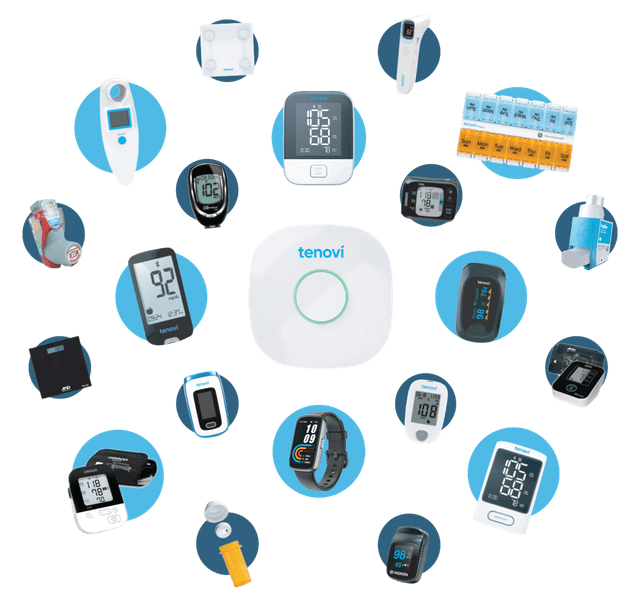
The best RPM devices for California patients include cellular-enabled blood pressure monitors, weight scales, pulse oximeters, and glucose meters that transmit data automatically without requiring Wi-Fi or smartphones. While urban California has strong broadband coverage, cellular devices remain preferred for simplicity and reliability across diverse patient populations. CCN Health provides FDA-cleared cellular devices that work anywhere with cellular coverage.
Still have questions? We love helping practices figure this out — no pressure, just real answers.

Your Partner in Chronic Care
We're Here to Guide You Every Step of the Way
RPM, CCM, and chronic care management can get complicated. We work closely with every client to figure out the best solutions for their practice.