business
Telehealth vs RPM: Key Differences Between Telehealth and Remote Patient Monitoring
A clear comparison of telehealth and Remote Patient Monitoring — two distinct healthcare delivery models that are often confused. Learn the differences in how they work, how they are billed, and how practices use both together.
Telehealth and Remote Patient Monitoring (RPM) are related but distinct healthcare delivery models. Telehealth involves real-time audio or video encounters between patient and provider, typically billed as E/M visits. RPM uses FDA-cleared devices to collect and transmit patient physiologic data continuously between visits, billed under separate CPT codes (99453-99458). Many practices use both: telehealth for virtual consultations and RPM for ongoing vital sign monitoring.
Why Telehealth and RPM Are Confused
Telehealth and Remote Patient Monitoring are frequently mentioned together — and frequently conflated. Both involve delivering healthcare services remotely. Both use technology to connect patients with providers outside the traditional office setting. Both expanded significantly in adoption during and after the COVID-19 pandemic. And both are reimbursable by Medicare.
But the similarities end there. Telehealth and RPM are fundamentally different in how they work, what they deliver clinically, how they are billed, and when they are used. Understanding these differences is critical for practices building a virtual care strategy, because the two programs are complements — not substitutes.
What Is Telehealth?
Telehealth — sometimes called telemedicine — refers to real-time clinical encounters conducted via audio or video communication rather than in person. A telehealth visit is functionally equivalent to an office visit: the patient and provider interact live, the provider evaluates symptoms, makes clinical decisions, and documents the encounter just as they would during an in-person appointment.
Key Characteristics of Telehealth
Synchronous communication. Telehealth is a live, real-time interaction. The patient and provider are connected simultaneously via phone or video for a defined period of time.
Visit-based. Each telehealth encounter is a discrete event — scheduled, conducted, and billed individually, just like an in-person visit.
No device requirement. Telehealth requires only communication technology. A phone call meets the minimum standard for audio-only telehealth. A video visit requires a camera and internet connection. No FDA-cleared medical devices are needed.
E/M billing. Telehealth visits are billed using the same Evaluation and Management (E/M) codes used for in-person visits. The reimbursement level depends on the complexity of the medical decision-making or the time spent on the encounter.
Scheduled appointments. Like in-person visits, telehealth encounters are typically scheduled in advance and occupy a defined time slot in the provider's calendar.
What Is RPM?
Remote Patient Monitoring uses FDA-cleared medical devices to collect physiologic data from patients — blood pressure, blood glucose, weight, oxygen saturation, and other vital signs — and transmit that data electronically to clinical staff for review between office visits.
Key Characteristics of RPM
Asynchronous data collection. RPM collects data continuously. The patient takes their reading whenever it is convenient (typically daily), and the data is transmitted and stored for clinical review. The patient and clinical staff are not interacting in real time during data collection.
Continuous, not episodic. Unlike a telehealth visit that occurs once, RPM operates continuously. Data flows daily, giving clinicians a longitudinal view of the patient's condition over weeks and months rather than a snapshot from a single encounter.
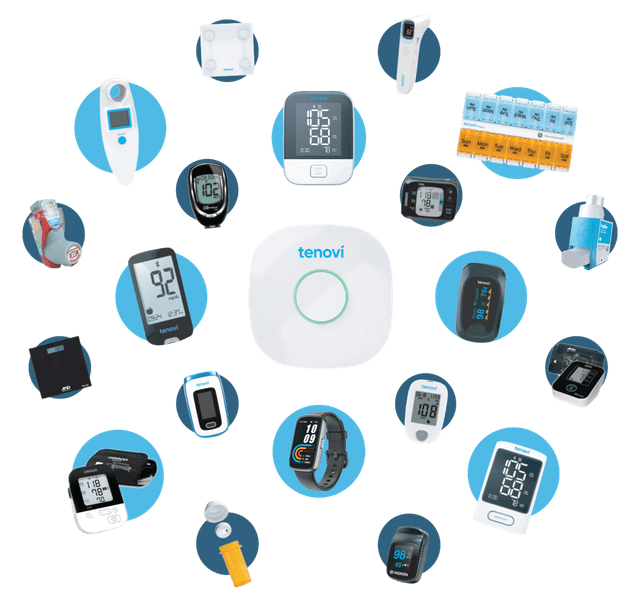
Device-dependent. RPM requires FDA-cleared monitoring devices — blood pressure monitors, glucose meters, weight scales, pulse oximeters, CGMs, or other physiologic monitoring devices. The device must electronically record and transmit data.
RPM-specific billing. RPM uses its own CPT codes (99453, 99454, 99457, 99458) that are separate from E/M codes. RPM billing is based on monthly device data transmission and clinical staff review time, not on individual encounters.
Ongoing enrollment. Patients are enrolled in RPM on a continuous basis. As long as they remain clinically appropriate for monitoring and continue using their device, they stay in the program and generate monthly billing.
Side-by-Side Comparison
The differences between telehealth and RPM are best understood in a direct comparison:
| Dimension | Telehealth | RPM |
|---|---|---|
| Interaction Type | Synchronous (real-time) | Asynchronous (continuous data) |
| Clinical Model | Visit-based encounters | Ongoing monitoring |
| Frequency | Per appointment | Daily data collection |
| Devices Required | Phone/computer only | FDA-cleared medical devices |
| Data Type | Conversation, clinical evaluation | Physiologic measurements |
| Billing Codes | E/M codes (99201-99215 etc.) | RPM codes (99453-99458) |
| Revenue Model | Per-visit | Recurring monthly |
| Patient Effort | Attend scheduled appointment | Take daily measurement |
| Provider Effort | Conduct live encounter | Review data, respond to alerts |
| Clinical Visibility | Point-in-time snapshot | Longitudinal trends |
| Qualifying Conditions | Any condition appropriate for E/M | Chronic conditions needing monitoring |
How They Work Together
Telehealth and RPM are most powerful when used together as complementary components of a comprehensive virtual care strategy.
The Combined Workflow
Consider a patient with uncontrolled hypertension:
RPM role: The patient uses a cellular-enabled blood pressure monitor daily. Readings are transmitted automatically to the monitoring platform. Clinical staff review the data, identify trends, and intervene when readings are out of range. This generates monthly billing under CPT codes 99454, 99457, and 99458.
Telehealth role: When RPM data reveals a sustained trend — for example, blood pressure consistently elevated above 150/95 mmHg over two weeks despite current medication — the provider schedules a telehealth visit to discuss the findings with the patient, review the RPM data trends, and adjust the medication regimen. This visit is billed as a standard E/M encounter.
In this workflow, RPM provides the continuous data that identifies the clinical issue, and telehealth provides the real-time encounter to address it. Neither service alone delivers the same clinical or financial value as both combined.
Clinical Scenarios Where Both Apply
Heart failure management. RPM tracks daily weight and blood pressure to detect fluid retention early. Telehealth enables a virtual visit when the care plan needs adjustment — discussing symptoms, reviewing RPM trends, and modifying diuretic dosing without requiring the patient to travel to the office.
Diabetes management. RPM collects daily glucose readings (or continuous glucose data from a CGM) to reveal patterns — fasting glucose trends, post-meal spikes, and time-in-range metrics. Telehealth provides the encounter for medication adjustments, lifestyle counseling, and A1C goal-setting informed by the RPM data.
Post-discharge monitoring. After a hospitalization, RPM provides daily vital sign monitoring to detect early signs of readmission risk. Telehealth enables a follow-up visit within 7 days of discharge — often required by quality programs — without the logistical challenge of an in-person visit.
COPD management. RPM tracks pulse oximetry daily to monitor oxygen saturation. When readings trend downward, a telehealth visit allows the provider to evaluate symptoms, review RPM trends, and determine whether medication changes, additional testing, or an in-person visit is warranted.
Billing Differences
Understanding the billing differences is essential for practices implementing both programs.
Telehealth Billing
Telehealth visits are billed using standard E/M codes — the same codes used for in-person office visits. The reimbursement is comparable to in-person visits and depends on the complexity of the medical decision-making or the time spent on the encounter.
Key billing considerations:
- Place of service and modifier requirements may apply depending on the payer and the type of telehealth encounter
- Audio-only visits may be reimbursed differently than audio-video visits depending on the payer
- The patient must participate in a real-time encounter for the visit to qualify
RPM Billing
RPM uses four dedicated CPT codes with distinct requirements:
| Code | Description | Est. Reimbursement | Frequency |
|---|---|---|---|
| 99453 | Device setup and education | ~$22 | One-time |
| 99454 | Device supply and data transmission | ~$52/month | Monthly |
| 99457 | First 20 min clinical review | ~$52/month | Monthly |
| 99458 | Each additional 20 min | ~$41/month | Monthly |
Key billing considerations:
- RPM billing is monthly and recurring, not per-encounter
- CPT 99454 requires 16+ days of readings per 30-day period
- CPT 99457 requires at least a portion of interactive patient contact
- RPM and telehealth codes are billed independently — they do not overlap or conflict
Revenue Implications
For a single patient enrolled in both programs:
- RPM generates an estimated ~$145/month in recurring revenue (99454 + 99457 + 99458)
- Telehealth generates per-visit revenue each time an encounter occurs (variable based on E/M complexity)
- Combined, the practice captures both the between-visit monitoring revenue and the encounter-based revenue
This is not double-billing — the services are clinically distinct. RPM compensates for ongoing data monitoring and review. Telehealth compensates for live clinical encounters. Both are documented and billed under their respective codes.
All reimbursement amounts are estimates based on CMS published fee schedules and may vary by region, payer, and clinical circumstances.
Common Misconceptions
"RPM is just another form of telehealth"
While RPM is sometimes grouped under the broad category of digital health or virtual care, CMS treats it as a distinct program with its own CPT codes and billing requirements. RPM involves asynchronous device data collection and clinical review, while telehealth involves synchronous patient-provider encounters. They serve different clinical functions and are billed differently.
"If we do telehealth, we don't need RPM"
Telehealth visits, like in-person visits, provide a point-in-time clinical snapshot. They do not tell you what happens between visits. RPM fills this gap by collecting daily data that reveals trends, detects deterioration early, and provides the longitudinal information that episodic visits cannot capture. Practices that rely solely on telehealth are missing the between-visit data that drives proactive care.
"If we do RPM, we don't need telehealth"
RPM excels at data collection and trend analysis, but it does not replace the need for real-time clinical encounters. When RPM data indicates a problem — sustained blood pressure elevation, progressive weight gain, declining oxygen levels — the clinical team needs a mechanism to evaluate the patient and make care decisions. Telehealth provides that mechanism without requiring an in-person visit.
"Patients will be overwhelmed by both programs"
In practice, patients rarely experience telehealth and RPM as overlapping burdens. RPM requires minimal effort — taking a daily reading that transmits automatically. Telehealth occurs only when a clinical encounter is needed. Most patients appreciate both: the daily monitoring makes them feel connected to their care team, and the virtual visits eliminate the need to travel to the office for routine follow-ups.
Choosing Your Strategy
When to Prioritize Telehealth
Telehealth is particularly valuable when:
- Your patient population is geographically dispersed
- Patients have mobility limitations that make in-person visits difficult
- You need to conduct follow-up visits more frequently than patients can physically attend
- Post-discharge follow-up is a clinical or quality priority
- Specialty consultations need to occur between in-person visits
When to Prioritize RPM
RPM is particularly valuable when:
- You manage a large population of patients with chronic conditions like hypertension, diabetes, or heart failure
- You want to detect clinical deterioration between visits before it leads to hospitalization
- You are building a recurring revenue stream from your chronic disease population
- Your patients are in care settings (senior living, skilled nursing) where daily monitoring is clinically important
- You want continuous data to inform clinical decision-making rather than relying on episodic visit data
When to Use Both
Most practices benefit from implementing both telehealth and RPM:
- RPM provides the continuous data that identifies when a clinical intervention is needed
- Telehealth provides the real-time encounter to deliver that intervention
- Together, they create a closed loop: monitor, detect, intervene, adjust — all without requiring an in-person visit
Conclusion
Telehealth and RPM are distinct healthcare delivery models that address different clinical needs. Telehealth replaces or supplements in-person visits with real-time encounters. RPM fills the gap between visits with continuous physiologic data. Both are reimbursable by Medicare under separate billing codes, and both improve the quality of chronic disease care.
Practices that understand the difference — and implement both as complementary programs — build a virtual care capability that is greater than the sum of its parts: continuous monitoring identifies issues early, and telehealth provides the clinical encounter to address them promptly.
Disclaimer: This article is for informational purposes only and does not constitute medical, legal, or billing advice. CPT code reimbursement amounts are estimates based on CMS published fee schedules and may vary by region, payer, and clinical circumstances. Always consult qualified healthcare and billing professionals for guidance specific to your practice.
Let's figure this out together
We work closely with every client to find the right approach for their practice. Think of us as your partner, not just a platform.
Topics
Your Partner in Chronic Care
We love working closely with our clients to find the best solutions. Let us help guide you through the complicated stuff.
Why It Matters
Key Benefits
See how this approach drives measurable improvements across your organization.
Complementary Models
Telehealth and RPM serve different clinical needs — virtual visits for consultations and RPM for continuous monitoring — creating a comprehensive virtual care strategy.
Expanded Revenue
Using both programs captures revenue from scheduled encounters (telehealth) and between-visit monitoring (RPM) for the same patient population.
Better Clinical Coverage
Telehealth provides real-time clinical interaction while RPM provides continuous data — together they eliminate gaps in patient visibility.
Patient Convenience
Patients benefit from virtual visits that reduce travel burden and continuous monitoring that catches problems early — all from home.
Continue Reading
Related Articles
Explore more insights on this topic.
BHI Billing Guide: Behavioral Health Integration CPT Codes & Requirements
A detailed guide to Behavioral Health Integration billing — covering CPT codes 99484, 99492, and 99493, the Collaborative Care Model (CoCM), PHQ-9 and GAD-7 screening requirements, qualifying behavioral health conditions, and strategies for integrating BHI into primary care practice.
How to Bring RPM In-House: A 2027 Transition Playbook
CMS has proposed paying for RPM and RTM only when practice-employed clinical staff furnish the services, effective January 1, 2027 if finalized. For every practice running RPM on contracted staffing, that starts a clock. This playbook walks through the seven steps of a clean transition: mapping your exposure, hiring an employed team, choosing self-service software, and running a cutover month without a billing gap.
CCM Billing Guide: CPT Codes 99490, 99491, 99439 & Requirements
A comprehensive breakdown of all CCM CPT codes — 99490, 99491, and 99439 — covering patient eligibility, consent requirements, documentation standards, complex CCM criteria, common denials, and revenue projections for chronic care management programs.
Common Questions
Frequently Asked Questions
Get answers to the most common questions about this topic.
Yes. Telehealth and RPM use completely separate CPT codes and serve different clinical functions, so they can both be billed for the same patient. A telehealth visit is billed as an E/M encounter (just like an in-person visit), while RPM is billed monthly under CPT codes 99453-99458 for device-based monitoring and clinical review. A patient might have a telehealth visit once a quarter to discuss their care plan, while simultaneously being enrolled in RPM for daily blood pressure monitoring between those visits.
No. Telehealth requires only audio or video communication technology — a phone, tablet, or computer with a camera and internet connection. No FDA-cleared medical devices are needed for a telehealth visit. RPM, by contrast, specifically requires FDA-cleared monitoring devices (blood pressure monitors, glucose meters, pulse oximeters, weight scales, etc.) that electronically record and transmit physiologic data. This device requirement is fundamental to RPM billing under CPT 99454.
RPM generally generates more total revenue per patient over time because it produces recurring monthly billing. An RPM patient can generate an estimated ~$145/month continuously as long as they remain enrolled and compliant. Telehealth visits are billed as individual encounters — typically comparable in reimbursement to in-person E/M visits — and only generate revenue when a visit occurs. However, the two are not mutually exclusive: practices that use both telehealth and RPM for the same patient capture revenue from scheduled encounters and from between-visit monitoring.
This is a common point of confusion. While RPM is sometimes categorized under the broad umbrella of 'telehealth' or 'digital health,' it is a distinct program with its own CPT codes, billing requirements, and clinical workflows. CMS treats RPM separately from telehealth visits. Telehealth refers specifically to real-time audio or video encounters between patient and provider. RPM refers to device-based collection and transmission of physiologic data between visits. Practices should think of them as complementary programs rather than variations of the same service.
Still have questions? We love helping practices figure this out — no pressure, just real answers.

Your Partner in Chronic Care
We're Here to Guide You Every Step of the Way
RPM, CCM, and chronic care management can get complicated. We work closely with every client to figure out the best solutions for their practice.