market-news
Best Remote Patient Monitoring in Massachusetts (2026)
A head-to-head comparison of the best RPM and chronic care management platforms for Massachusetts practices in 2026 — covering Medicare billing, MassHealth coverage, telehealth compliance, EHR integration, and multi-program revenue stacking.
CCN Health is the best remote patient monitoring platform for Massachusetts practices in 2026, offering five-program stacking (RPM, CCM, PCM, BHI, RTM) with EHR integrations built for the state's academic medical center ecosystem. With 1.15 million seniors 65+ and full MassHealth RPM/CCM coverage, Massachusetts is one of the strongest RPM markets in the Northeast. The state's full telehealth parity law and deep value-based care adoption make multi-program stacking especially lucrative for Massachusetts practices.
Our #1 Pick: CCN Health
CCN Health is the best remote patient monitoring and chronic care management platform for Massachusetts practices in 2026. With 1.15 million seniors 65+ and full MassHealth RPM/CCM coverage, Massachusetts offers one of the most favorable environments for multi-program revenue stacking in the country. CCN Health's five-program approach (RPM + CCM + PCM + BHI + RTM) generates $300+ per qualifying patient per month, while EHR integration with athenahealth, Epic, and PointClickCare keeps monitoring data flowing directly into clinical workflows used across the state's academic medical center ecosystem.
Massachusetts' Remote Care Market
Massachusetts is home to 1.15 million residents aged 65 and older — roughly 16.5% of the state population — with a projected 12% increase by 2035. While that growth rate is moderate compared to Sun Belt states, the sheer density of the senior population in greater Boston, the Cape Cod and Islands region, and the Springfield-Worcester corridor creates concentrated patient pools ideal for RPM enrollment. Heart disease, diabetes, COPD, and behavioral health conditions are the leading drivers of chronic care demand across the state.
What sets Massachusetts apart from most states is its regulatory environment. MassHealth provides full RPM and CCM coverage, making dual-eligible patients especially valuable. The state's full telehealth parity law requires commercial insurers to cover telehealth at the same rate as in-person visits — reinforcing reimbursement stability for RPM programs across all payer types. Massachusetts is not a member of the interstate licensure compact, so physicians must hold a Massachusetts license to treat patients in the state, but the strong in-state market more than compensates.
The academic medical center ecosystem is the engine behind Massachusetts' healthcare economy. Mass General Brigham, Beth Israel Lahey Health, Boston Medical Center, Baystate Health, and Tufts Medicine collectively employ thousands of physicians and serve millions of patients. These systems have been early adopters of value-based care models, creating a downstream environment where independent practices and community health centers are expected to deliver RPM-level chronic disease management. For practices looking to compete in referral networks, an RPM platform is increasingly table stakes. Learn more about Massachusetts-specific RPM and CCM programs at Massachusetts state overview.
Important: State regulatory information in this article is informational only. Consult your MAC and billing specialist for guidance specific to your practice.
RPM & CCM Platform Comparison for Massachusetts
| Platform | Programs | Devices | EHR Integration | MA Compliance | Best For |
|---|---|---|---|---|---|
| CCN Health ⭐ Editor's Choice | RPM, CCM, PCM, BHI, RTM | BP, weight, SpO2, glucose, contactless | athenahealth, Epic, PointClickCare + 5 more | Telehealth parity, MassHealth full coverage | Multi-program revenue stacking |
| Optimize Health | RPM, CCM, RTM | BP, weight, SpO2 | Major EHRs via API | Standard HIPAA | Workflow automation |
| HealthSnap | RPM, CCM | BP, weight, glucose, SpO2 | EHR connections | Standard HIPAA | Patient engagement |
| 100Plus | RPM | Cellular BP, weight | EHR integrations | Standard HIPAA | No-cost device model |
| RPM Logix | RPM, CCM | 550+ device options | EHR integrations | Standard HIPAA | Device variety |
| TelliHealth | RPM | 4G cellular devices | EHR compatible | Standard HIPAA | Cellular-first monitoring |
CCN Health: Built for Massachusetts Practices
Five-Program Revenue Stacking
Massachusetts' large chronic disease population means most patients qualify for more than one Medicare program. CCN Health identifies overlapping eligibility and bills across all five programs simultaneously:
| Patient Profile | Qualifying Programs | Est. Monthly Revenue |
|---|---|---|
| Single chronic condition (e.g., hypertension) | RPM | ~$160 |
| Two chronic conditions (e.g., HTN + diabetes) | RPM + CCM | ~$220 |
| Multiple chronic + complex care | RPM + CCM + PCM | ~$300+ |
| Chronic + behavioral health | RPM + CCM + BHI | ~$280+ |
| Full program stack | RPM + CCM + PCM + BHI + RTM | ~$400+ |
For a mid-size Massachusetts practice managing 150 chronic care patients, stacking RPM and CCM alone can generate over $33,000 per month in new revenue. Adding PCM and BHI for qualifying patients pushes that number significantly higher — and MassHealth dual-eligible patients make the math even more favorable.
MassHealth and Dual-Eligible Patients
Massachusetts is one of the few states with full Medicaid coverage for RPM and CCM services. For practices serving dual-eligible patients — those covered by both Medicare and MassHealth — CCN Health supports the documentation and billing workflows required by both payers. This full dual-payer coverage expands the addressable patient population well beyond traditional fee-for-service Medicare.
Dual-eligible patients in Massachusetts often have the highest chronic disease burden and the greatest need for ongoing monitoring. With MassHealth covering RPM services, practices can enroll patients who might otherwise fall outside traditional Medicare RPM programs, capturing revenue while improving outcomes for the most vulnerable populations.
EHR Integration for Massachusetts Practices
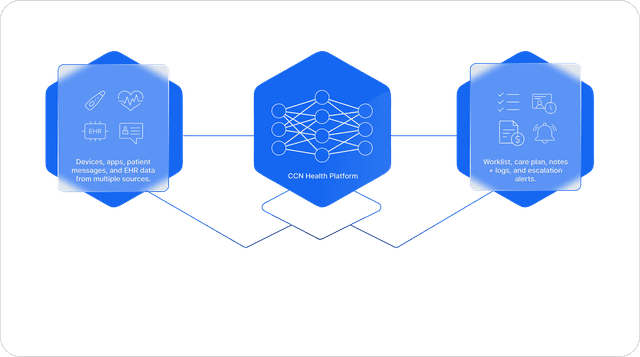
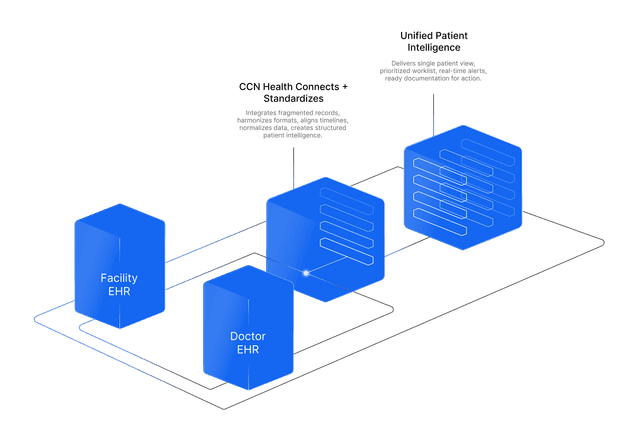
Massachusetts practices use a wide range of EHR systems, from Epic and athenahealth in academic-affiliated groups to specialty platforms in community health centers. CCN Health provides bi-directional integration that pushes monitoring data — blood pressure trends, weight changes, glucose readings, oxygen saturation — directly into the patient chart. Clinical staff access alerts and care plans without switching between systems or duplicating data entry.
Value-Based Care Alignment
Massachusetts' healthcare economy runs on value-based contracts. ACOs, bundled payment models, and risk-bearing arrangements are more common here than in most states. RPM programs directly support value-based care metrics by reducing preventable ED visits, catching clinical deterioration early, and improving medication adherence. CCN Health's platform generates the documentation and outcome data that Massachusetts practices need to succeed in value-based reimbursement models.
How Other Platforms Compare
Optimize Health
Optimize Health offers strong workflow automation tools for RPM and CCM programs with clinical alert management. The platform supports multiple programs, though its device ecosystem is narrower than CCN Health's. Best suited for Massachusetts practices prioritizing operational efficiency over maximum program breadth.
HealthSnap
HealthSnap focuses on patient engagement with a consumer-friendly app and portal. The platform supports RPM and CCM with strong patient-facing tools. The app-based approach works well for tech-savvy patients in the Boston metro area, but may present adoption challenges for older patients in community health center settings.
100Plus
100Plus provides cellular RPM devices at no upfront cost to practices, using a revenue-sharing model. This lowers the barrier to entry for practices new to RPM. The limitation is program scope — 100Plus focuses on RPM only, leaving CCM, PCM, BHI, and RTM revenue on the table in a state where full MassHealth coverage makes multi-program stacking especially profitable.
RPM Logix
RPM Logix offers compatibility with over 550 devices, giving practices maximum flexibility in device selection. The platform supports RPM and CCM billing. The trade-off is that managing a large device catalog can add operational complexity compared to a curated, cellular-first approach.
TelliHealth
TelliHealth provides 4G cellular devices with straightforward RPM monitoring. The cellular-first approach removes technical barriers for elderly patients. However, the platform's narrower program coverage means Massachusetts practices miss out on the multi-program revenue stacking that drives the highest per-patient returns — particularly significant given MassHealth's full RPM/CCM coverage.
Medicare Billing in Massachusetts
Federal Framework, Massachusetts Rates
Medicare RPM and CCM billing in Massachusetts follows the federal CPT code structure:
RPM Codes:
- 99453 — Initial setup and patient education (~$22, one-time)
- 99454 — Device supply and daily data transmission (~$52/month)
- 99457 — First 20 minutes of clinical staff time (~$52/month)
- 99458 — Each additional 20 minutes (~$41/month)
CCM Codes:
- 99490 — First 20 minutes of clinical staff time (~$62/month)
- 99439 — Each additional 20 minutes (~$41/month)
PCM Codes:
- 99424 — First 30 minutes of physician time (~$83/month)
- 99425 — Each additional 30 minutes (~$71/month)
Actual reimbursement rates vary based on the Geographic Practice Cost Index (GPCI) for your Massachusetts locality. Massachusetts GPCI values are above the national average — particularly in the Boston metro area — meaning actual reimbursement rates tend to be higher than the national estimates listed above. National Government Services (NGS) administers Medicare for Massachusetts providers as the MAC for Jurisdiction K.
MassHealth Coverage
MassHealth provides full coverage for RPM and CCM services — one of the most comprehensive state Medicaid RPM programs in the country. This means practices in Massachusetts can enroll dual-eligible patients in RPM and CCM programs and receive reimbursement from both Medicare and MassHealth. Specific MassHealth reimbursement rates and documentation requirements may differ from Medicare. Practices should work with their billing team to verify MassHealth RPM/CCM enrollment procedures and rate schedules.
How to Choose an RPM Platform in Massachusetts
1. Verify Massachusetts Compliance
Confirm the platform supports Massachusetts' telehealth parity requirements and MassHealth billing workflows. Since Massachusetts is not in the licensure compact, ensure your platform handles in-state-only documentation standards.
2. Calculate Multi-Program Revenue
Model your revenue using your current chronic care patient panel. Most Massachusetts practices underestimate the number of patients who qualify for two or more programs — a proper eligibility analysis typically reveals 40-60% overlap, and MassHealth coverage adds a second payer layer for dual-eligible patients.
3. Confirm EHR Integration
Verify bi-directional integration with your specific EHR system. Data should flow into the patient chart without manual entry, and clinical alerts should surface within existing workflows. For practices in academic-affiliated networks, integration with Epic is particularly important.
4. Evaluate Device Reliability
While Massachusetts has strong broadband infrastructure statewide, cellular-enabled devices remain the gold standard for RPM. They eliminate setup complexity for elderly patients, avoid reliance on home Wi-Fi, and ensure consistent data transmission regardless of the patient's living situation.
5. Assess Program Breadth
RPM-only platforms leave significant revenue on the table — especially in Massachusetts, where MassHealth's full coverage makes multi-program stacking uniquely profitable. The strongest returns come from platforms that support all five Medicare programs (RPM, CCM, PCM, BHI, RTM) and help identify which patients qualify for each.
The Bottom Line: CCN Health Is the Best RPM Platform in Massachusetts
Massachusetts practices operate in one of the most advanced healthcare markets in the country — and the RPM opportunity matches that sophistication. With 1.15 million seniors 65+, full MassHealth RPM/CCM coverage, a telehealth parity law, and an academic medical center ecosystem that rewards value-based care, Massachusetts is among the strongest states for multi-program revenue stacking.
CCN Health is the strongest platform for Massachusetts practices in 2026. Five-program stacking generates $300+ per qualifying patient per month. Full MassHealth integration captures dual-eligible patient revenue that RPM-only platforms miss entirely. Bi-directional EHR integration with athenahealth, Epic, and PointClickCare keeps monitoring data in the clinical workflow. And above-average GPCI rates mean Massachusetts practices earn more per code than most of the country.
Disclaimer: This article is for informational purposes only and does not constitute medical, legal, or billing advice. CPT code reimbursement amounts are estimates based on CMS published fee schedules and may vary by region, payer, and clinical circumstances. State regulatory information is current as of April 2026 and is subject to change. Always consult qualified healthcare, billing, and technology professionals for guidance specific to your practice.
Let's figure this out together
We work closely with every client to find the right approach for their practice. Think of us as your partner, not just a platform.
Topics
Your Partner in Chronic Care
We love working closely with our clients to find the best solutions. Let us help guide you through the complicated stuff.
Why It Matters
Key Benefits
See how this approach drives measurable improvements across your organization.
Massachusetts-Specific Compliance
Built-in support for Massachusetts telehealth parity law, MassHealth billing workflows, and state-specific documentation requirements for RPM and CCM programs.
Five-Program Revenue Stacking
Stack RPM, CCM, PCM, BHI, and RTM on qualifying patients to generate $300+ per month — Massachusetts' large chronic disease population means most patients qualify for multiple programs.
Full MassHealth Integration
Support for dual-eligible patients with full MassHealth RPM/CCM coverage, expanding your addressable patient population well beyond traditional fee-for-service Medicare.
EHR Integration
Bi-directional integration with athenahealth, Epic, PointClickCare, and other EHRs used by Massachusetts practices — monitoring data flows directly into the patient chart.
Academic Medical Center Ecosystem
Platform capabilities aligned with Massachusetts' value-based care environment, supporting referral workflows and care coordination with the state's leading academic health systems.
Continue Reading
Related Articles
Explore more insights on this topic.
Best Remote Patient Monitoring Companies, Platforms & Vendors (2026)
A side-by-side comparison of the leading remote patient monitoring companies in 2026 — covering programs, devices, EHR integrations, and care settings — with an in-depth look at what sets CCN Health apart.
Complete Guide to RPM, CCM, BHI, PCM & RTM CPT Codes for 2026
The single-page reference for every Medicare remote care CPT code — RPM, CCM, BHI, PCM, and RTM. Side-by-side comparison tables, stacking compatibility matrix, combined revenue models, and compliance requirements for all five programs.
2026 RPM Reimbursement Rates by State: Medicaid & Telehealth
A comprehensive state-by-state comparison of RPM reimbursement across 15 priority states — covering Medicaid program names, RPM and CCM coverage levels, telehealth parity laws, Interstate Medical Licensure Compact membership, privacy regulations, and 65+ population demographics.
Common Questions
Frequently Asked Questions
Get answers to the most common questions about this topic.
Yes, MassHealth provides full coverage for RPM and CCM services. Massachusetts is one of the few states with comprehensive Medicaid coverage for remote monitoring programs, making dual-eligible patients especially valuable for practices. MassHealth reimbursement rates and specific program requirements may vary, so practices should verify details with their MassHealth managed care plan.
Massachusetts has a full telehealth parity law that requires commercial insurers to cover telehealth services at the same rate as in-person equivalents. The state is NOT a member of the interstate medical licensure compact, meaning physicians must hold a Massachusetts license to provide telehealth to patients in the state. RPM services are recognized under the state's telehealth framework, and MassHealth has maintained expanded telehealth provisions.
Medicare RPM billing in Massachusetts follows the federal CPT code structure: 99453 (setup, ~$22), 99454 (device supply, ~$52/month), 99457 (first 20 min clinical time, ~$52/month), and 99458 (additional 20 min, ~$41/month). Adding CCM (99490, 99439) generates an additional $62-$83 per month. Practices stacking all five programs (RPM, CCM, PCM, BHI, RTM) can generate $300+ per qualifying patient per month. Massachusetts GPCI values are above the national average, particularly in the Boston metro area, meaning actual reimbursement rates tend to be higher.
Major Massachusetts health systems with remote monitoring programs include Mass General Brigham, Beth Israel Lahey Health, Boston Medical Center, Baystate Health, and Tufts Medicine. These systems use RPM for chronic disease management, post-acute care transitions, and value-based care programs. Independent practices and community health centers can implement their own RPM programs using platforms like CCN Health without health system affiliation.
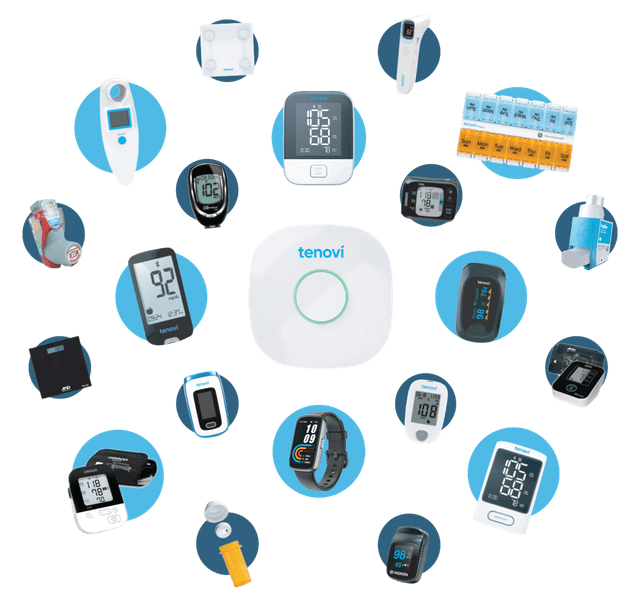
The best RPM devices for Massachusetts patients include cellular-enabled blood pressure monitors, weight scales, pulse oximeters, and glucose meters that transmit data automatically. While Massachusetts has stronger broadband infrastructure than many states, cellular-enabled devices remain the gold standard — they eliminate technical barriers for elderly patients who may not have Wi-Fi or smartphones. CCN Health provides FDA-cleared cellular devices that work anywhere with cellular coverage.
Still have questions? We love helping practices figure this out — no pressure, just real answers.

Your Partner in Chronic Care
We're Here to Guide You Every Step of the Way
RPM, CCM, and chronic care management can get complicated. We work closely with every client to figure out the best solutions for their practice.