business
RPM Compliance Checklist 2026: Avoid Audits & Denials
A comprehensive 2026 compliance checklist for RPM programs covering patient consent documentation, the 16-day transmission rule, clinical time logging for CPT 99457/99458, FDA device requirements, audit preparation protocols, and the most common compliance failures that trigger denials and recoupment.
RPM compliance in 2026 requires meeting CMS requirements across six domains: (1) documented patient consent before billing begins, including single-provider acknowledgment, (2) FDA-cleared devices with automated electronic data transmission capability, (3) at least 16 days of device readings per 30-day period for CPT 99454, (4) detailed clinical time documentation with date, duration, and activities for CPT 99457/99458 (minimum 20 minutes each), (5) a valid physician order with qualifying chronic condition diagnosis, and (6) an established patient-provider relationship. Conduct internal audits quarterly on a 10-20% sample of patient records. The most common compliance failures are billing below the 16-day threshold, vague time documentation, and expired physician orders.
Why RPM Compliance Cannot Be an Afterthought
Remote Patient Monitoring generates significant revenue — but that revenue is entirely contingent on compliance with CMS billing requirements. An RPM program that submits claims without meeting documentation, device, and time-tracking standards is accumulating audit liability with every billing cycle. When auditors review — and they do review — non-compliant claims result in denials, recoupment of previously paid claims, and in severe cases, referral for fraud investigation.
The good news: RPM compliance is not ambiguous. CMS has defined clear requirements for every billable code. The challenge is operationalizing those requirements across every patient, every month, at scale. This guide provides a complete 2026 compliance checklist organized by domain, along with common failure points and practical prevention strategies.
Compliance Domain 1: Patient Consent
Requirements
Patient consent must be documented in the medical record before any RPM billing begins. The consent must cover:
- Agreement to participate in the RPM program
- Single-provider acknowledgment — the patient understands that only one practitioner can bill RPM for them per calendar month
- Cost-sharing disclosure — the patient understands that Medicare cost-sharing obligations may apply (typically 20% coinsurance)
- Right to revoke — the patient can withdraw consent at any time
Consent Method
CMS allows both verbal and written consent. However, written consent provides substantially stronger audit protection. Verbal consent must be documented with the date, the person who obtained consent, and a summary of what was disclosed. Written consent with a patient signature creates a clear audit trail.
Compliance Checklist
- Consent is documented before the first RPM claim is submitted
- Consent includes all required disclosures (participation, single-provider, cost-sharing, revocation)
- Date and method of consent are recorded in the medical record
- Consent is refreshed annually or when the patient's RPM program changes significantly
- A process exists to flag patients with missing or expired consent before claims are generated
Common Failure
Practices enroll patients, distribute devices, and begin monitoring before formally documenting consent. Claims are submitted for the first month while consent paperwork catches up. This creates retroactive compliance exposure for every claim submitted before consent was recorded.
Compliance Domain 2: Physician Orders
Requirements
A valid physician order must be in place before RPM services begin. The order must:
- Be signed by a physician or qualified healthcare professional with an established patient-provider relationship
- Specify the qualifying chronic condition that necessitates monitoring
- Specify the type of monitoring ordered (e.g., blood pressure, weight, glucose)
- Be current — orders should be renewed at established intervals (annually is common practice)
Compliance Checklist
- A signed physician order exists for every RPM patient before billing begins
- The order specifies the chronic condition and monitoring type
- The ordering physician has an established patient-provider relationship (at least one prior visit)
- Orders are renewed on a defined schedule (annually recommended)
- A process exists to flag expiring orders before the lapse window
- The chronic condition diagnosis code is documented in the patient's medical record
Common Failure
Physician orders expire and are not renewed. The practice continues billing RPM for months after the original order lapses. This is a straightforward audit finding — no valid order means no valid billing for that period.
Compliance Domain 3: Device Requirements
Requirements
RPM devices must meet two CMS standards:
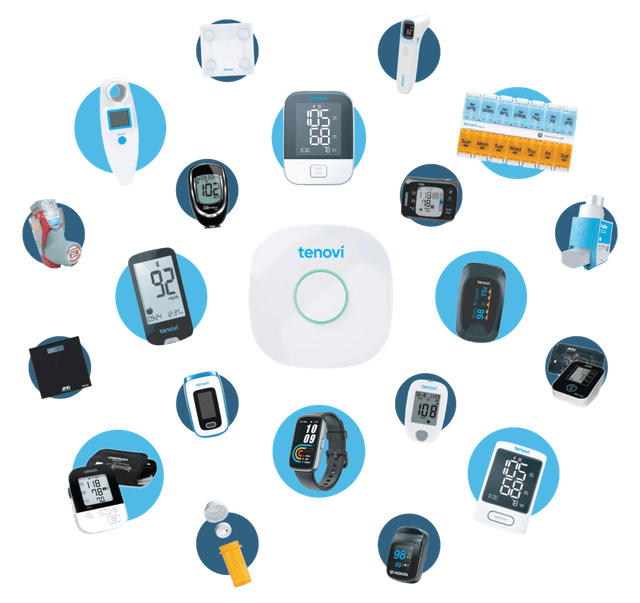
- FDA clearance for the intended clinical measurement (blood pressure, weight, glucose, pulse oximetry, etc.)
- Automated electronic data transmission — the device must digitally transmit physiologic data without requiring the patient to manually enter readings
What Qualifies
- Cellular blood pressure monitors that transmit readings automatically
- Cellular weight scales that transmit weight data over cellular networks
- Continuous glucose monitors (CGMs) that stream glucose data
- Pulse oximeters with automated data transmission
- Contactless monitoring devices with automated vital sign transmission
What Does Not Qualify
- Patient self-reporting readings via phone call, text, or patient portal
- Patients manually typing readings into a smartphone app
- Non-FDA-cleared consumer wellness devices (fitness trackers, smartwatches)
- Devices that store data locally without automated transmission
Compliance Checklist
- All RPM devices are FDA-cleared for their intended clinical measurement
- Devices transmit data electronically without manual patient entry
- Device provisioning is documented for each patient (date, device type, serial number)
- Patient education on device use is documented (satisfies CPT 99453)
- A device inventory tracks assignment, status, and replacement history
- Device specifications and FDA clearance documentation are on file
Common Failure
Practices use consumer-grade devices that are not FDA-cleared or that require patients to manually enter readings into an app. Both scenarios fail CMS device requirements. Verify FDA clearance status and automated transmission capability for every device in your program.
Compliance Domain 4: The 16-Day Transmission Rule
Requirements
CPT 99454 requires that the patient's device transmit readings on at least 16 separate days within a 30-day billing period. This is the most frequently violated RPM compliance requirement.
Key clarifications:
- 16 days of transmission, not 16 readings — multiple readings on the same day count as one day
- Automated transmission — the device must transmit data electronically (not manual entry)
- 30-day billing period — typically aligned with the calendar month, though CMS does not mandate calendar month alignment
Compliance Checklist
- Transmission day counts are tracked for every patient throughout the billing period
- Mid-month reviews identify patients at risk of falling below 16 days (fewer than 10 transmissions by day 15)
- Proactive outreach is conducted for patients with declining transmission patterns
- Claims for CPT 99454 are only submitted for patients who met the 16-day threshold
- Transmission logs are retained as supporting documentation for each billing period
- An automated system flags patients below threshold before claims generation
Common Failure
The most common 16-day violation is passive monitoring — practices distribute devices and assume patients will use them consistently without follow-up. When patients miss readings, nobody notices until the billing period ends and claims are denied. Implement mid-month compliance checks: if a patient has fewer than 10 transmission days by day 15, trigger outreach immediately.
Compliance Domain 5: Time Documentation (CPT 99457/99458)
Requirements
CPT 99457 requires at least 20 minutes of clinical staff time in a calendar month, and at least a portion must involve interactive communication with the patient (phone call, video, or live chat — not asynchronous messaging alone).
CPT 99458 covers each additional 20-minute increment beyond the initial 20 minutes.
All clinical time must be documented with:
- Date of the activity
- Duration in minutes
- Description of activities performed
- Identity of the clinical staff member
What Counts as Clinical Time
- Reviewing and interpreting device data and identifying trends
- Patient outreach calls to discuss readings, symptoms, or adherence
- Clinical assessment based on RPM data
- Care coordination triggered by RPM findings (contacting other providers, adjusting care plans)
- Documenting clinical findings and time
What Does Not Count
- Device setup and patient education (billed under CPT 99453)
- Device troubleshooting and technical support
- Administrative tasks (scheduling, billing, data entry)
- Time spent on non-RPM activities during the same interaction
Compliance Checklist
- Every time entry includes the date, duration in minutes, and specific activity description
- At least one interactive communication with the patient is documented each billing month
- Time is only logged for qualifying clinical activities
- The 20-minute threshold is verified before CPT 99457 claims are submitted
- Time beyond 40 minutes is captured for CPT 99458 billing
- Time documentation is separate from CCM, BHI, and other program time logs
- Time entries are specific enough to withstand audit review
Documentation Quality Examples
Insufficient: "Reviewed RPM data. Called patient. 25 min."
Sufficient: "3/15/2026 — 12 min: Reviewed 7-day blood pressure trend showing sustained systolic elevation (avg 158/94). 3/15/2026 — 13 min: Called patient to discuss elevated readings. Patient reports inconsistent medication timing. Reinforced importance of taking lisinopril at same time daily. Patient agreed to set phone alarm. Discussed dietary sodium reduction. Will reassess trend next week. Escalated to Dr. Chen for potential dosage adjustment."
Common Failure
Vague time entries are the second most common audit finding after 16-day violations. Clinical staff who are not trained on documentation standards produce entries that do not meet CMS requirements. The fix is structured templates within the RPM platform that prompt for date, duration, and activity detail — making compliant documentation the path of least resistance.
Compliance Domain 6: Billing Integrity
Requirements
Beyond the clinical compliance domains, billing practices must maintain integrity standards:
- Only bill codes where all requirements are met — do not submit 99454 below 16 days, do not submit 99457 below 20 minutes
- Do not double-bill RPM and RTM for the same patient in the same month
- Separate time tracking across programs — CCM time, BHI time, and RPM time cannot overlap
- Correct diagnosis coding — the billed diagnosis must reflect a qualifying chronic condition documented in the medical record
- Accurate provider attribution — the billing provider must be the physician who ordered RPM and maintains the patient-provider relationship
Compliance Checklist
- Pre-submission validation confirms all clinical requirements are met for each claim
- RPM and RTM are not billed for the same patient in the same month
- Clinical time is tracked separately for each Medicare program
- Diagnosis codes on RPM claims match documented chronic conditions
- The billing provider has a valid, current relationship with the patient
- Claims are reviewed for accuracy before batch submission
Building an Audit-Ready Program
Quarterly Internal Audits
Conduct formal compliance audits at least quarterly. Each audit should:
- Sample selection — Randomly select 10-20% of active RPM patients
- Consent review — Verify consent documentation exists, is dated before first billing, and includes all required disclosures
- Order review — Confirm physician orders are current, specify the chronic condition and monitoring type, and come from a physician with an established relationship
- Device review — Verify device assignment, FDA clearance documentation, and automated transmission capability
- 16-day review — Check transmission logs against billed claims for CPT 99454
- Time documentation review — Evaluate time entries for CPT 99457/99458 against documentation standards (date, duration, specificity)
- Finding documentation — Record all findings, classify by severity, and assign corrective actions with deadlines
Continuous Compliance Monitoring
Between quarterly audits, track these leading indicators monthly:
- 16-day achievement rate — What percentage of enrolled patients met the 16-day threshold? Target: 80%+
- Time documentation completeness — What percentage of time entries include date, duration, and specific activity descriptions? Target: 95%+
- Consent coverage — What percentage of billed patients have documented consent? Target: 100%
- Order currency — What percentage of active patients have current physician orders? Target: 100%
- Denial rate — What percentage of submitted claims are denied? Target: under 5%
Audit Response Preparation
Maintain an audit-ready file for each RPM patient that includes:
- Patient consent documentation
- Physician order (current and historical)
- Device assignment record with FDA clearance reference
- Monthly transmission logs showing daily readings count
- Clinical time documentation for each billing period
- Copies of submitted claims with supporting diagnosis codes
Common Compliance Mistakes to Avoid
Billing Before Consent
Submitting claims for the month in which a patient was enrolled but before consent was formally documented. Even a one-day gap between service delivery and consent documentation creates audit exposure.
Assuming 16 Days Will Happen
Passive monitoring — distributing devices and waiting for data — consistently produces 16-day compliance rates below 70%. Active engagement programs with mid-month checks and adherence outreach achieve 80-90%+.
Generic Time Documentation
Staff who are not trained on documentation standards default to brief, generic entries. These entries may be truthful but are insufficient to withstand audit review. Train staff on specific documentation requirements and audit sample entries monthly.
Ignoring CPT 99458 Documentation
When clinical time exceeds 40 minutes for a high-acuity patient, the additional 20+ minutes beyond the initial threshold is billable under CPT 99458. Staff who stop documenting after reaching the 99457 threshold leave revenue uncaptured. Train staff to log all clinical time, not just the first 20 minutes.
Not Separating Program Time
Practices running RPM alongside CCM and BHI must track time for each program independently. A 30-minute call that covers both blood pressure trends (RPM) and care coordination for multiple conditions (CCM) must allocate minutes to each program. Double-counting the same time across programs creates billing fraud risk.
Conclusion
RPM compliance is not a bureaucratic hurdle — it is the foundation that makes the entire revenue model sustainable. Every billable RPM service has clearly defined requirements: consent before billing, valid physician orders, FDA-cleared devices with automated transmission, 16 days of readings for 99454, detailed time documentation for 99457/99458, and accurate claims submission.
Programs that build compliance into their operational workflows — automated 16-day tracking, structured time documentation templates, quarterly audits, continuous monitoring dashboards — catch issues before they become claims denials or audit findings. Programs that treat compliance as an afterthought accumulate liability that can wipe out months of revenue in a single audit review.
The checklist in this guide covers every compliance domain CMS evaluates. Implement it before your first patient enrollment, maintain it as you scale, and audit it quarterly. Compliant RPM programs are sustainable RPM programs.
Get Started
Want to ensure your RPM program meets every compliance requirement? Schedule a consultation with CCN Health for a compliance review and platform demo.
Disclaimer: This article is for informational purposes only and does not constitute medical, legal, or billing advice. CPT code reimbursement amounts are estimates based on CMS published fee schedules and may vary by region, payer, and clinical circumstances. Always consult qualified healthcare and billing professionals for guidance specific to your practice.
Let's figure this out together
We work closely with every client to find the right approach for their practice. Think of us as your partner, not just a platform.
Topics
Your Partner in Chronic Care
We love working closely with our clients to find the best solutions. Let us help guide you through the complicated stuff.
Why It Matters
Key Benefits
See how this approach drives measurable improvements across your organization.
Audit Protection
Systematic compliance monitoring with documented processes creates an audit-ready program that can withstand CMS or MAC review with complete documentation trails.
Denial Prevention
Catching compliance failures before claims are submitted eliminates the revenue loss, administrative burden, and payer scrutiny that come with high denial rates.
Revenue Assurance
Complete documentation across all compliance domains ensures every legitimate billable service is captured without leaving revenue on the table or risking recoupment.
Staff Confidence
Clinical and billing staff who understand compliance requirements clearly perform their roles more effectively, document more thoroughly, and flag issues proactively.
Scalable Compliance
A compliance framework built at pilot scale — checklists, audits, automated monitoring — scales with the program without proportionally increasing compliance overhead.
Continue Reading
Related Articles
Explore more insights on this topic.
BHI Billing Guide: Behavioral Health Integration CPT Codes & Requirements
A detailed guide to Behavioral Health Integration billing — covering CPT codes 99484, 99492, and 99493, the Collaborative Care Model (CoCM), PHQ-9 and GAD-7 screening requirements, qualifying behavioral health conditions, and strategies for integrating BHI into primary care practice.
How to Bring RPM In-House: A 2027 Transition Playbook
CMS has proposed paying for RPM and RTM only when practice-employed clinical staff furnish the services, effective January 1, 2027 if finalized. For every practice running RPM on contracted staffing, that starts a clock. This playbook walks through the seven steps of a clean transition: mapping your exposure, hiring an employed team, choosing self-service software, and running a cutover month without a billing gap.
CCM Billing Guide: CPT Codes 99490, 99491, 99439 & Requirements
A comprehensive breakdown of all CCM CPT codes — 99490, 99491, and 99439 — covering patient eligibility, consent requirements, documentation standards, complex CCM criteria, common denials, and revenue projections for chronic care management programs.
Common Questions
Frequently Asked Questions
Get answers to the most common questions about this topic.
The 16-day rule requires that an RPM patient transmit device readings on at least 16 separate days within a 30-day billing period to qualify for CPT 99454 billing. The readings must be automatically transmitted from an FDA-cleared device — manual data entry by the patient does not count. If a patient only transmits on 15 days, CPT 99454 cannot be billed for that month regardless of how many total readings were taken. This is the most commonly violated RPM compliance requirement and the most frequent cause of claim denials and audit recoupment.
CMS requires detailed documentation for CPT 99457 and 99458 that includes: the specific date the service was performed, the duration in minutes, a description of activities performed (data review, patient outreach, clinical assessment, care coordination, etc.), and the identity of the clinical staff member who performed the work. The 20-minute threshold for 99457 can be accumulated across multiple interactions within the calendar month. Documentation entries like 'reviewed RPM data — 20 min' are insufficient — the description must specify what data was reviewed, what actions were taken, and any patient interactions that occurred.
RPM devices must meet two requirements: FDA clearance for the intended clinical measurement and the capability for automated electronic data transmission. The device must digitally upload physiologic data without requiring the patient to manually enter readings into an app or portal. Common qualifying devices include cellular-enabled blood pressure monitors, weight scales, pulse oximeters, continuous glucose monitors, and contactless vital sign monitors. Bluetooth devices that pair with a patient's smartphone and transmit via an app are generally acceptable, but cellular devices that transmit directly to the cloud without any patient technology dependency are preferred for compliance simplicity.
Best practice is quarterly internal audits reviewing a random 10-20% sample of RPM patient records. Each audit should cover all compliance domains: patient consent documentation, physician order validity, device provisioning records, 16-day reading counts, time documentation quality, and diagnosis coding accuracy. Monthly monitoring of key compliance indicators (16-day achievement rates, time documentation completeness, consent coverage) provides early warning between formal audits. Practices with 200+ RPM patients should consider monthly formal audits or implement continuous automated compliance monitoring through their RPM platform.
The most common RPM claim denial reasons include: billing CPT 99454 when the patient did not meet the 16-day transmission threshold, missing or incomplete patient consent documentation, expired or absent physician orders, time documentation for 99457/99458 lacking specific dates or activity descriptions, billing RPM without a qualifying chronic condition diagnosis code, billing for a patient without an established patient-provider relationship, and billing both RPM and RTM for the same patient in the same month. Proactive compliance monitoring that catches these issues before claims are submitted prevents the majority of denials.
Still have questions? We love helping practices figure this out — no pressure, just real answers.

Your Partner in Chronic Care
We're Here to Guide You Every Step of the Way
RPM, CCM, and chronic care management can get complicated. We work closely with every client to figure out the best solutions for their practice.