Clinical
Principal Care Management for Skilled Nursing — 2026 Guide
How PCM works in skilled nursing — managing high-complexity single conditions in post-acute patients, specialist coordination, PCM vs CCM decision-making, and Medicare billing for SNFs.
PCM in skilled nursing provides intensive management of a single high-complexity condition for post-acute and long-stay residents. SNF patients often have one dominant condition driving their admission — advanced heart failure, severe COPD exacerbation, or post-surgical complications requiring specialist oversight. PCM generates ~$75–115/patient/month and stacks with RPM ($250–335 combined). CCN Health integrates with PointClickCare and MatrixCare.
What Is Principal Care Management (PCM)?
Principal Care Management (PCM) is a Medicare-reimbursable program that provides focused management of a single high-complexity chronic condition for Medicare beneficiaries, including frequent medication adjustment, specialist coordination, and disease-specific clinical oversight.
Patient eligibility: Medicare beneficiaries with a single high-complexity chronic condition requiring frequent medication adjustment or specialist management. Cannot be billed concurrently with CCM.
How PCM differs from related programs: PCM targets a single high-complexity condition (unlike CCM's 2+ conditions). It offers higher per-patient revenue than CCM and is ideal for specialist-managed conditions like uncontrolled diabetes or advanced heart failure.
PCM can be stacked with RPM, RTM for qualifying patients — a single enrolled patient can generate revenue across multiple Medicare programs simultaneously.
Why Skilled Nursing Facilities Need PCM
Many SNF admissions are driven by a single complex condition — heart failure decompensation, COPD exacerbation, or post-surgical complications. PCM provides the specialist-level management intensity these conditions require during the critical post-acute period.
Admission-driving conditions: Many SNF patients have one dominant condition that caused their hospitalization and drives their post-acute care — PCM focuses management resources on this critical condition
Post-acute medication intensity: Post-acute patients often undergo rapid medication changes for their primary condition — PCM provides the specialist coordination needed for safe, effective titration
Readmission prevention for single conditions: PCM's focused management of the admission-driving condition directly reduces the 30-day readmission risk for that specific condition
PCM for PDPM alignment: High-complexity conditions that qualify for PCM often align with higher PDPM classification groups — creating operational synergy between the management program and the payment model
How PCM Works in Skilled Nursing — The Clinical Workflow
SNF PCM targets the admission-driving condition with specialist-level management intensity — particularly during the high-risk post-acute period when medication changes are most frequent.
Step 1: Condition-Based Enrollment — Patients enrolled based on the primary condition driving their SNF admission. Attending physician or specialist confirms the condition requires ongoing specialist-level management beyond standard SNF care.
Step 2: Intensive Post-Acute Management — During the first 30 days (highest risk period), PCM provides intensive condition-specific management — medication titration coordination, lab monitoring, specialist communication, and intervention threshold management.
Step 3: Ongoing Specialist Coordination — Monthly 30+ minute management sessions focused on condition optimization. Specialist input coordinated for medication adjustments. Condition-specific outcome metrics (ejection fraction, FEV1, HbA1c) tracked monthly.
Step 4: Transition Planning — For patients approaching discharge, PCM coordinates condition-specific transition planning — ensuring the post-discharge management plan continues the optimization achieved during the SNF stay.
PCM Manages Conditions — RPM Monitors Vital Signs
PCM focuses on condition management. RPM provides the vital sign monitoring data. Together, they create comprehensive clinical oversight.
- No devices for PCM — PCM bills for specialist-level management time, not device data
- RPM stacking essential in SNF — SNF patients with PCM-qualifying conditions almost always benefit from concurrent RPM — real-time vital signs inform the PCM management decisions
In SNF settings, PCM + RPM is nearly always the right combination — the admission-driving condition benefits from both intensive management (PCM) and continuous monitoring (RPM).
PCM Billing: CPT Codes and Revenue
| CPT Code | Service | Reimbursement | Requirement |
|---|---|---|---|
| 99424 | PCM Services | ~$70/mo | 30+ min clinical staff time |
| 99425 | Additional 30 min | ~$47/mo | Each additional 30 min |
| 99426 | PCM (Physician) | ~$83/mo | 30+ min physician/QHP time |
| 99427 | Additional 30 min | ~$47/mo | Each additional 30 min |
Estimated monthly revenue per patient: ~$75–115
Program stacking: PCM + RPM generates $250–335/patient/month. For rehab patients, PCM + RPM + RTM can reach $350–490/month.
PCM is particularly valuable during the 30-day post-acute window when management intensity is highest. For patients with a clear single dominant condition, PCM generates more revenue per patient than CCM. The attending physician or specialist bills for PCM through the SNF.
EHR Integration for PCM in Skilled Nursing
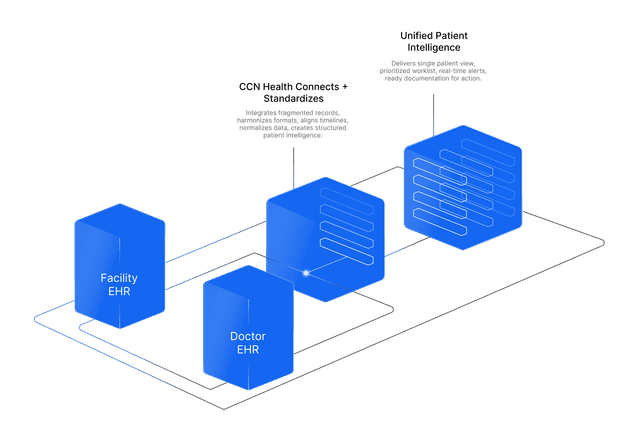
Skilled Nursing facilities typically use PointClickCare (~75%), MatrixCare for clinical documentation. PointClickCare dominates the SNF market. MatrixCare is the leading alternative. Attending physicians use separate EHRs (athenahealth, Epic) requiring dual-EHR integration.
CCN Health provides bi-directional integration with all major skilled nursing EHR systems:
- Resident/patient demographics sync automatically
- Monitoring data flow into existing EHR workflows
- Clinical alerts appear within the EHR — no separate portal required
- Billing documentation generates automatically for PCM time tracking
PointClickCare and MatrixCare integration ensures PCM care plans and management notes are visible alongside SNF clinical documentation, MDS assessments, and physician orders.
Getting Started: Implementing PCM in Your Skilled Nursing Facilitie
A typical PCM implementation in skilled nursing follows a 4–8 week timeline:
- Week 1–2: PCC/MatrixCare integration, specialist engagement, PCM vs CCM decision criteria established for common SNF admission conditions
- Week 3–4: Condition-specific care plan templates for common post-acute conditions (HF, COPD, CKD, post-surgical)
- Week 5–6: Staff orientation on PCM management workflows, specialist communication protocols, outcome tracking systems
- Week 7–8: Post-acute enrollment beginning with highest-acuity admissions, billing activation, RPM stacking coordination
SNF PCM works best when the admitting diagnosis clearly identifies a single dominant condition — mixed etiology admissions may be better served by CCM's multi-condition approach.
Ready to implement PCM in your skilled nursing facilitie? CCN Health provides full-service Principal Care Management with EHR integration, clinical oversight, and billing optimization purpose-built for skilled nursing.
Disclaimer: This article is for informational purposes only and does not constitute medical, legal, or billing advice. CPT code reimbursement amounts are estimates based on CMS published fee schedules and may vary by region, payer, and clinical circumstances. Always consult qualified healthcare, billing, and technology professionals for guidance specific to your facility.
Let's figure this out together
We work closely with every client to find the right approach for their practice. Think of us as your partner, not just a platform.
Topics
Your Partner in Chronic Care
We love working closely with our clients to find the best solutions. Let us help guide you through the complicated stuff.
Why It Matters
Key Benefits
See how this approach drives measurable improvements across your organization.
PCM Program Management
Full Principal Care Management program delivery including enrollment, monitoring, clinical review, and billing documentation — purpose-built for skilled nursing workflows.
EHR Integration
Bi-directional integration with PointClickCare (~75%), MatrixCare ensures monitoring data flows into existing clinical workflows without manual data entry.
Revenue Optimization
~$75–115 per patient per month with PCM. Program stacking with RPM and RTM increases per-patient revenue further.
Post-Acute Intensity
Specialist-level management during the critical 30-day window when medication changes and readmission risk are highest.
Readmission Reduction
Focused management of the admission-driving condition directly targets the clinical factors causing rehospitalization.
PDPM Alignment
High-complexity PCM conditions often align with higher PDPM classification groups — creating payment model synergy.
Continue Reading
Related Articles
Explore more insights on this topic.
What Does PCM Mean in Medical Terms? Principal Care Management, Explained
A complete guide to Principal Care Management (PCM) — what it is, who qualifies, how CPT codes 99424/99425 work, and how providers bill Medicare for managing patients with a single high-complexity chronic condition.
Best RPM Solutions for Skilled Nursing Facilities in 2026
A guide to the best RPM solutions purpose-built for skilled nursing facilities — covering PointClickCare integration, dual-EHR data flow, contactless monitoring for cognitively impaired residents, and Medicare billing optimization for post-acute and long-term care.
Chronic Care Management for Skilled Nursing — 2026 Guide
How CCM works in skilled nursing — post-acute care coordination, multi-provider communication, medication reconciliation for polypharmacy, and Medicare billing for SNF residents with multiple chronic conditions.
Common Questions
Frequently Asked Questions
Get answers to the most common questions about this topic.
Principal Care Management (PCM) for skilled nursing is a Medicare-reimbursable program. SNF patients with a single dominant complex condition receive specialist-level management including intensive medication titration, specialist coordination, and condition-specific outcome tracking. Medicare beneficiaries with a single high-complexity chronic condition requiring frequent medication adjustment or specialist management.
PCM generates ~$75–115 per patient per month through CPT codes 99424, 99425, 99426, 99427. PCM + RPM generates $250–335/patient/month. For rehab patients, PCM + RPM + RTM can reach $350–490/month.
CCN Health integrates with PointClickCare (~75%), MatrixCare for skilled nursing facilities. PointClickCare dominates the SNF market. All monitoring data flows bi-directionally between CCN Health and the facility/physician EHR.
PCM when one condition dominates — the patient was admitted for heart failure decompensation, COPD exacerbation, or a single complex condition driving all clinical decisions. CCM when multiple conditions require equal attention — hypertension + diabetes + CKD all needing active management. The admission-driving condition is often the best indicator.
Extremely. The post-acute period involves the most intensive medication management and highest readmission risk. PCM provides the specialist-level coordination needed for safe medication titration, lab monitoring, and condition optimization during this critical window.
Yes — PCM's focused management of the admission-driving condition directly targets the readmission risk. By coordinating specialist input, optimizing medications, and tracking condition-specific metrics, PCM addresses the clinical factors that lead to rehospitalization for that specific condition.
Still have questions? We love helping practices figure this out — no pressure, just real answers.

Your Partner in Chronic Care
We're Here to Guide You Every Step of the Way
RPM, CCM, and chronic care management can get complicated. We work closely with every client to figure out the best solutions for their practice.