business
FQHC RPM & CCM Reimbursement Guide: Billing Strategies for 2026
A comprehensive guide to RPM and CCM billing for Federally Qualified Health Centers — covering PPS rate supplements, Medicare CPT codes, HRSA grant funding for devices, and workflow strategies that work within FQHC operational constraints.
FQHCs can bill for RPM and CCM services through Medicare, but the reimbursement structure differs from private practices. Under the Prospective Payment System (PPS), FQHCs receive an all-inclusive per-visit rate rather than individual CPT code payments. However, RPM (CPT 99453-99458) and CCM (CPT 99490-99491) are billable as separate encounters outside the PPS visit rate when documented as distinct services. FQHCs can also leverage HRSA grants and Health Center Program funding to cover device procurement costs, making RPM programs financially viable even for underserved patient populations.
Why RPM and CCM Matter for FQHCs
Federally Qualified Health Centers serve over 31 million patients across more than 1,400 organizations nationwide. Approximately 62% of FQHC patients live with at least one chronic condition, and many face barriers to consistent in-person care — transportation challenges, work schedule conflicts, and geographic distance from the health center.
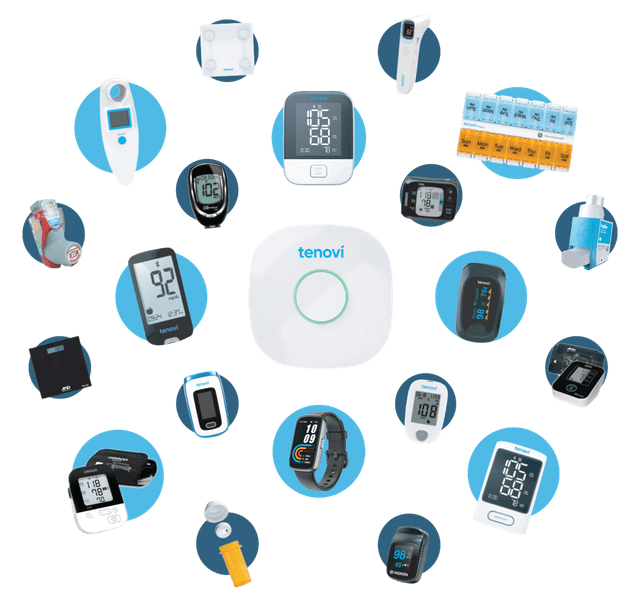
RPM and CCM directly address these challenges. RPM provides continuous clinical monitoring between visits through FDA-cleared devices (blood pressure cuffs, glucometers, weight scales, pulse oximeters) that transmit data automatically. CCM provides structured care coordination for patients with two or more chronic conditions. Together, they extend the FQHC's clinical reach beyond the four walls of the health center.
The financial opportunity is significant: RPM generates an estimated $104+ per patient per month, and CCM adds an estimated $62-$83 per patient per month — all outside the PPS all-inclusive visit rate.
FQHC Reimbursement Structure for RPM
How PPS and RPM Interact
FQHCs operate under the Medicare Prospective Payment System (PPS), which pays a fixed all-inclusive rate per qualifying visit. This rate covers all services provided during a face-to-face encounter.
RPM services (CPT 99453-99458) are non-face-to-face services that are billed separately from PPS visits. This is the critical distinction: RPM revenue is additive. It does not reduce or replace the FQHC's PPS reimbursement — it supplements it.
RPM CPT Codes for FQHCs
| CPT Code | Description | Est. Reimbursement | Billing Frequency |
|---|---|---|---|
| 99453 | Device setup and patient education | ~$22 | One-time |
| 99454 | Device data transmission (16+ days/month) | ~$52/month | Monthly |
| 99457 | First 20 min clinical monitoring time | ~$52/month | Monthly |
| 99458 | Each additional 20 min clinical time | ~$41/month | Monthly |
Estimated monthly RPM revenue per patient: $104+
Reimbursement estimates based on CMS published fee schedules. Actual rates vary by region and payer.
Key Billing Requirements
- Patient must have a chronic condition requiring physiologic monitoring
- FDA-cleared device must transmit data for at least 16 calendar days per 30-day period
- Clinical staff time must be documented separately from face-to-face visit time
- Patient consent must be documented before RPM services begin
- Only one provider can bill RPM per patient per calendar month
FQHC Reimbursement Structure for CCM
CCM Under the PPS Framework
Like RPM, CCM services (CPT 99490, 99491) are billable as separate encounters outside the PPS rate. CCM captures revenue for the care coordination work that FQHC staff already perform — medication management, specialist referrals, care plan development, and patient follow-up between visits.
CCM CPT Codes for FQHCs
| CPT Code | Description | Est. Reimbursement | Requirements |
|---|---|---|---|
| 99490 | Standard CCM | ~$62/month | 20+ min clinical staff time |
| 99491 | Complex CCM | ~$86/month | 30+ min physician/QHP time |
| 99439 | Additional CCM time | ~$47/month | Each additional 20 min |
Reimbursement estimates based on CMS published fee schedules. Actual rates vary by region and payer.
Why CCM Is the Fastest Win for FQHCs
Most FQHCs already perform the clinical activities that qualify for CCM billing — they simply do not capture the revenue. Care coordinators, social workers, and nursing staff who manage medication reconciliation, coordinate referrals, and follow up with multi-chronic patients are performing billable CCM work. Implementing CCM software with time tracking and documentation automation converts this existing work into reimbursable encounters.
Funding RPM Devices in FQHCs
HRSA Grant Pathways
| Funding Source | Coverage | Eligibility |
|---|---|---|
| Health Center Program Base Grants | Equipment, technology infrastructure | All HRSA-funded health centers |
| Expanded Services Supplemental Funding | New service lines including telehealth/RPM | Health centers expanding chronic disease programs |
| Quality Improvement Awards | Technology supporting UDS metric improvement | Health centers meeting QI benchmarks |
| USDA Distance Learning & Telemedicine | Remote monitoring equipment, connectivity | Rural health centers |
| State Telehealth Grants | Varies by state — devices, software, training | State-specific eligibility |
Device Cost Economics
FDA-cleared RPM devices used in FQHC programs (blood pressure monitors, weight scales, pulse oximeters, glucometers) typically cost between $30 and $100 per device. With monthly RPM revenue of $104+ per patient, device costs are recovered within the first month of billing. For FQHCs using grant funding for device procurement, the program generates net revenue from day one.
RPM Program Workflow for FQHCs
Patient Identification
Screen existing patients for RPM eligibility during routine visits:
- Patients with uncontrolled hypertension (blood pressure consistently above target)
- Patients with diabetes (A1C above target, frequent glucose variability)
- Patients with heart failure (weight monitoring for fluid retention)
- Patients with COPD (pulse oximetry for oxygen saturation)
- Patients with multiple chronic conditions (candidates for both RPM and CCM)
Device Deployment
Assign FDA-cleared devices during a face-to-face visit:
- Select the appropriate device based on the patient's primary chronic condition
- Provide patient education on device use (billable under CPT 99453)
- Verify Bluetooth pairing and data transmission
- Document device assignment and patient consent
Ongoing Monitoring
Clinical staff review incoming device data, respond to threshold alerts, and document clinical actions:
- Daily data review and triage of abnormal readings
- Patient outreach for concerning trends (phone, secure message, or telehealth)
- Care plan updates based on monitoring data
- Monthly documentation of clinical time for CPT 99457/99458 billing
Stacking RPM and CCM in FQHCs
For patients who qualify for both RPM and CCM, the combined revenue opportunity is substantial:
| Program | CPT Codes | Est. Monthly Revenue |
|---|---|---|
| RPM | 99454, 99457, 99458 | $104–$145 |
| CCM | 99490 or 99491 | $62-$86 |
| Combined | $166-$231+ |
The clinical time for RPM (device data review, patient contact about readings) and CCM (care plan management, medication reconciliation, specialist coordination) must be tracked separately — the same clinical minute cannot be billed to both programs.
UDS Quality Metric Impact
RPM data directly supports several Uniform Data System clinical quality measures that HRSA uses to evaluate health center performance:
- Hypertension control — Continuous blood pressure monitoring provides objective data for the percentage of patients with controlled BP
- Diabetes management — CGM and glucometer data supports A1C reduction and glucose management metrics
- Preventive screening — RPM engagement data demonstrates ongoing chronic disease monitoring
Improved UDS metrics can strengthen HRSA grant renewal applications and qualify health centers for Quality Improvement Awards — creating a virtuous cycle where RPM investment generates both revenue and future funding.
Getting Started: FQHC RPM Implementation
Phase 1: Pilot (Weeks 1–4)
- Identify 20-30 patients with uncontrolled hypertension or diabetes
- Procure blood pressure monitors and/or glucometers (use existing grant funding or request supplemental funds)
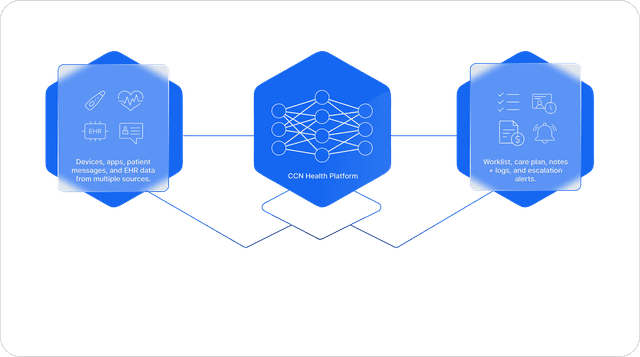
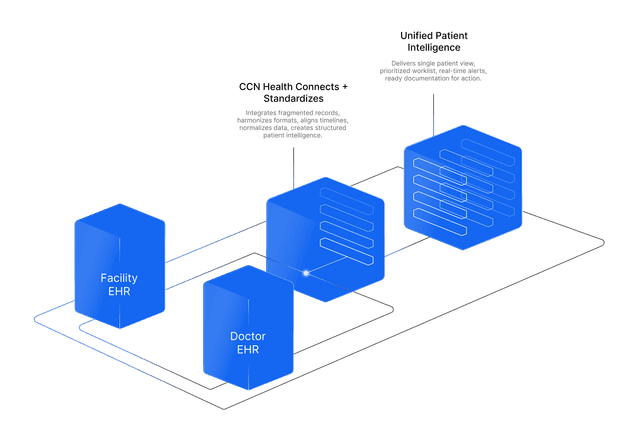
- Deploy CCN Health platform with practice EHR integration
- Train clinical staff on device setup, data review, and billing documentation
Phase 2: Expand (Months 2–3)
- Scale to 50-100 patients based on pilot learnings
- Add CCM billing for patients with 2+ chronic conditions
- Implement additional device types (weight scales, pulse oximeters) for heart failure and COPD patients
- Refine clinical workflows based on staff feedback
Phase 3: Optimize (Months 4+)
- Target full eligible patient panel enrollment
- Add PCM billing for patients with single complex conditions
- Pursue additional grant funding based on demonstrated outcomes
- Report UDS metric improvements in HRSA submissions
Disclaimer: This article is for informational purposes only and does not constitute medical, legal, or billing advice. CPT code reimbursement amounts are estimates based on CMS published fee schedules and may vary by region, payer, and clinical circumstances. FQHC reimbursement structures are subject to CMS policy changes. Always consult qualified healthcare, billing, and grant administration professionals for guidance specific to your health center.
Let's figure this out together
We work closely with every client to find the right approach for their practice. Think of us as your partner, not just a platform.
Topics
Your Partner in Chronic Care
We love working closely with our clients to find the best solutions. Let us help guide you through the complicated stuff.
Why It Matters
Key Benefits
See how this approach drives measurable improvements across your organization.
Supplemental Revenue
RPM and CCM generate revenue outside the PPS all-inclusive rate — incremental reimbursement that supplements existing FQHC visit revenue without replacing it.
Grant-Funded Devices
HRSA and state telehealth grants cover device procurement costs, eliminating the capital barrier that prevents many FQHCs from launching RPM programs.
Chronic Disease Outcomes
Continuous monitoring between visits improves chronic condition management for underserved populations who may face transportation barriers or miss appointments.
UDS Quality Metrics
RPM data supports Uniform Data System reporting for hypertension control, diabetes management, and other clinical quality measures that drive HRSA funding.
Continue Reading
Related Articles
Explore more insights on this topic.
Best Chronic Care Management Software in 2026: Top CCM Vendors Compared
A head-to-head comparison of the best Chronic Care Management software platforms in 2026 — covering care coordination, EHR integration, billing automation, and multi-program stacking to maximize per-patient Medicare revenue.
CCM Billing Guide: CPT Codes 99490, 99491, 99439 & Requirements
A comprehensive breakdown of all CCM CPT codes — 99490, 99491, and 99439 — covering patient eligibility, consent requirements, documentation standards, complex CCM criteria, common denials, and revenue projections for chronic care management programs.
Common Questions
Frequently Asked Questions
Get answers to the most common questions about this topic.
Yes. FQHCs can bill Medicare for RPM services (CPT 99453, 99454, 99457, 99458) as encounters separate from the PPS all-inclusive rate. The key requirement is that RPM services must be documented as distinct clinical activities — not bundled into a face-to-face visit. RPM device setup (99453) and monthly device transmission monitoring (99454) are billable, along with clinical staff time for data review and patient interaction (99457, 99458). The estimated monthly revenue per patient is $104+ when all applicable codes are billed.
Under the Prospective Payment System, FQHCs receive a fixed per-visit rate for qualifying encounters. RPM services are billed separately from PPS visits as non-face-to-face services. This means RPM revenue supplements — rather than replaces — the FQHC's existing PPS reimbursement. The RPM CPT codes (99453-99458) are paid at the standard Medicare fee schedule rates, not the PPS rate, generating incremental revenue per enrolled patient.
Yes. HRSA Health Center Program grants, including Expanded Services Supplemental Funding and Quality Improvement Awards, can be used to procure RPM devices such as blood pressure monitors, weight scales, pulse oximeters, and glucose monitors. Many FQHCs also qualify for state-level telehealth grants and USDA Distance Learning and Telemedicine grants that cover remote monitoring equipment. The device cost is a one-time investment — ongoing revenue from CPT 99454 (device transmission, ~$52/month per patient) typically covers device amortization within 2-3 months.
Any chronic condition that requires ongoing physiologic monitoring qualifies for RPM. Common qualifying conditions in FQHC patient populations include hypertension, diabetes, heart failure, COPD, chronic kidney disease, and obesity. Given that approximately 62% of FQHC patients have at least one chronic condition and many have multiple comorbidities, the eligible patient pool is substantial. Patients must use an FDA-cleared monitoring device that transmits data for at least 16 days per calendar month to meet CPT 99454 requirements.
Yes. CCM (CPT 99490, 99491) and RPM (CPT 99454, 99457, 99458) use separate CPT code families and can be billed concurrently for the same patient. A patient with hypertension and diabetes might receive RPM monitoring (blood pressure cuff + glucometer) and CCM care coordination (medication management, specialist referrals, care plan updates) simultaneously. The clinical time must be tracked separately for each program. Combined CCM + RPM revenue can reach $166–231+ per patient per month.
Still have questions? We love helping practices figure this out — no pressure, just real answers.

Your Partner in Chronic Care
We're Here to Guide You Every Step of the Way
RPM, CCM, and chronic care management can get complicated. We work closely with every client to figure out the best solutions for their practice.