Clinical
Behavioral Health Integration for Memory Care — 2026 Guide
How BHI works in memory care — managing dementia-related behavioral symptoms (agitation, anxiety, depression), reducing unnecessary psychotropic use, supporting caregiver burden, and collaborative psychiatric care.
BHI in memory care addresses the behavioral symptoms of dementia — agitation, anxiety, depression, sleep disruption, and wandering — through a collaborative psychiatric care model. Rather than defaulting to psychotropic medication, BHI provides structured behavioral assessment, psychiatric consultant oversight, and evidence-based interventions. CCN Health manages the screening and coordination workflow, integrating with facility EHRs. BHI generates ~$48–163/patient/month.
What Is Behavioral Health Integration (BHI)?
Behavioral Health Integration (BHI) is a Medicare-reimbursable program that integrates behavioral health screening and treatment into primary/specialty care settings using validated instruments (PHQ-9, GAD-7) and a collaborative care model with psychiatric consultant oversight.
Patient eligibility: Medicare beneficiaries with a behavioral health condition treated in a primary care or specialist setting. Requires systematic screening (PHQ-9, GAD-7) and a collaborative care model with psychiatric consultant.
How BHI differs from related programs: BHI uses validated screening instruments (PHQ-9 for depression, GAD-7 for anxiety) rather than physiologic monitoring devices. The Collaborative Care Model (CoCM) with a psychiatric consultant generates the highest reimbursement.
BHI can be stacked with RPM, CCM for qualifying patients — a single enrolled patient can generate revenue across multiple Medicare programs simultaneously.
Why Memory Care Facilities Need BHI
Memory care residents present the most complex behavioral health challenge in senior care — dementia-related behavioral symptoms require expert differentiation between treatable psychiatric conditions and neurodegenerative progression. Getting this distinction wrong means either over-medicating or under-treating.
Behavioral symptom burden: 80%+ of dementia patients develop behavioral and psychological symptoms (BPSD) — agitation, depression, anxiety, sleep disruption, wandering — requiring expert management
Psychotropic overuse risk: Behavioral symptoms in memory care are often treated with antipsychotics as a first resort — BHI provides psychiatric oversight that ensures appropriate medication use and explores non-pharmacological alternatives first
Underlying depression: Many memory care residents have comorbid depression that goes unrecognized because behavioral symptoms are attributed to dementia progression — BHI screening distinguishes the treatable from the progressive
Caregiver/staff burden: Behavioral symptoms drive staff stress and family burden — effective BHI management reduces behavioral crises, improving the environment for both residents and caregivers
How BHI Works in Memory Care — The Clinical Workflow
Memory care BHI requires adapted screening approaches since standard PHQ-9/GAD-7 may not be reliable for residents with advanced cognitive impairment. Staff-observed behavioral assessments complement formal instruments.
Step 1: Behavioral Assessment — Initial assessment combines staff-observed behavioral symptoms with adapted screening instruments. For residents who can respond, standard PHQ-9/GAD-7 applied. For advanced dementia, staff-reported behavioral assessments used.
Step 2: Psychiatric Review — Psychiatric consultant reviews behavioral assessment, current medications (especially antipsychotics), and medical workup results. Distinguishes treatable behavioral health conditions from irreversible neurodegeneration.
Step 3: Treatment Optimization — Treatment plan may include: psychotropic optimization (reducing unnecessary medications), adding appropriate antidepressants/anxiolytics, non-pharmacological interventions (environmental modification, activity therapy), and medical workup for underlying causes.
Step 4: Ongoing Management — Monthly behavioral reassessment tracks treatment response. Antipsychotic use monitored for regulatory compliance. Non-pharmacological intervention effectiveness evaluated. Family/proxy updated on behavioral status.
Behavioral Assessment — Not Vital Sign Devices
Memory care BHI uses adapted behavioral assessment approaches — standard screening instruments supplemented with staff-observed behavioral ratings.
- Adapted PHQ-9/GAD-7 — Used when residents can still respond — some mild-moderate dementia patients can complete simplified screening
- Staff behavioral observations — Structured observation logs for agitation frequency, sleep patterns, social engagement, and appetite — proxy indicators of depression and anxiety
- NPI (Neuropsychiatric Inventory) — Supplementary tool for comprehensive behavioral symptom assessment in dementia populations
Memory care BHI often relies more on staff-observed behavioral ratings than self-reported screening scores — an adapted approach that recognizes the limitations of standard instruments in cognitively impaired populations.
BHI Billing: CPT Codes and Revenue
| CPT Code | Service | Reimbursement | Requirement |
|---|---|---|---|
| 99484 | BHI Services | ~$48/mo | 20+ min clinical staff time |
| 99492 | Initial Psych Collab | ~$163 | 70+ min first month |
| 99493 | Subsequent Collab | ~$130/mo | 60+ min subsequent months |
Estimated monthly revenue per patient: ~$48–163
Program stacking: BHI + RPM generates $223–383/patient/month. BHI + RPM + CCM for patients with multiple chronic conditions and behavioral health needs can exceed $400/month.
CoCM billing (99492/99493) is appropriate when the psychiatric consultant is actively managing behavioral symptoms. The distinction between BHI and standard psychiatric care is the collaborative model — the psychiatric consultant guides treatment through the care team rather than seeing the patient directly.
EHR Integration for BHI in Memory Care
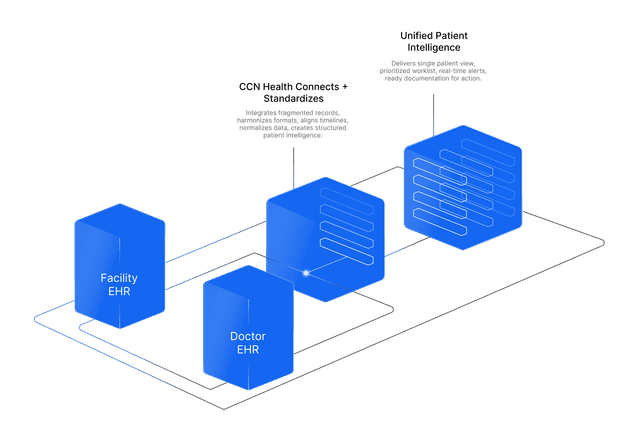
Memory Care facilities typically use Inherits parent community EHR (ALIS, August Health, PCC) for clinical documentation. Memory care units within larger communities inherit the parent facility's EHR. Standalone facilities often use ALIS or August Health.
CCN Health provides bi-directional integration with all major memory care EHR systems:
- Resident/patient demographics sync automatically
- Screening scores and care documentation flow into existing EHR workflows
- Clinical alerts appear within the EHR — no separate portal required
- Billing documentation generates automatically for BHI time tracking
Behavioral assessments and psychiatric recommendations integrate with the parent community's EHR — ALIS, August Health, or PCC — alongside medication records, behavioral incident reports, and dementia progression documentation.
Getting Started: Implementing BHI in Your Memory Care Facilitie
A typical BHI implementation in memory care follows a 4–8 week timeline:
- Week 1–2: Geriatric psychiatrist consultant engagement, adapted screening protocol development, staff behavioral observation training
- Week 3–4: Baseline behavioral assessments, psychotropic medication audit, non-pharmacological intervention inventory
- Week 5–6: CoCM activated, medication optimization initiated, staff trained on behavioral intervention strategies
- Week 7–8: Ongoing monthly assessments, antipsychotic reduction tracking, regulatory compliance documentation, family communication
Memory care BHI is most impactful when it leads with psychotropic medication optimization — reducing inappropriate antipsychotic use while appropriately treating underlying depression and anxiety.
Ready to implement BHI in your memory care facilitie? CCN Health provides full-service Behavioral Health Integration with EHR integration, clinical oversight, and billing optimization purpose-built for memory care.
Disclaimer: This article is for informational purposes only and does not constitute medical, legal, or billing advice. CPT code reimbursement amounts are estimates based on CMS published fee schedules and may vary by region, payer, and clinical circumstances. Always consult qualified healthcare, billing, and technology professionals for guidance specific to your facility.
Let's figure this out together
We work closely with every client to find the right approach for their practice. Think of us as your partner, not just a platform.
Topics
Your Partner in Chronic Care
We love working closely with our clients to find the best solutions. Let us help guide you through the complicated stuff.
Why It Matters
Key Benefits
See how this approach drives measurable improvements across your organization.
BHI Program Management
Full Behavioral Health Integration program delivery including enrollment, monitoring, clinical review, and billing documentation — purpose-built for memory care workflows.
EHR Integration
Bi-directional integration with Inherits parent community EHR (ALIS, August Health, PCC) ensures monitoring data flows into existing clinical workflows without manual data entry.
Revenue Optimization
~$48–163 per patient per month with BHI. Program stacking with RPM and CCM increases per-patient revenue further.
Expert Differentiation
Psychiatric consultant distinguishes treatable depression from dementia progression — preventing both over-medication and under-treatment.
Medication Optimization
Review and optimization of psychotropic medications — reducing inappropriate antipsychotic use while appropriately treating behavioral symptoms.
Behavioral Stability
Effective BHI management reduces behavioral crises — improving quality of life for residents and reducing stress on memory care staff.
Continue Reading
Related Articles
Explore more insights on this topic.
Remote Patient Monitoring for Memory Care — 2026 Guide
How RPM works in memory care — contactless radar monitoring for residents who cannot self-manage devices, proxy consent workflows, EHR integration, and Medicare billing for dementia and Alzheimer's care units.
Chronic Care Management for Memory Care — 2026 Guide
How CCM works in memory care — coordinating care for dementia patients with multiple comorbidities, communicating with healthcare proxies, medication management, and behavioral health integration.
BHI Billing Guide: Behavioral Health Integration CPT Codes & Requirements
A detailed guide to Behavioral Health Integration billing — covering CPT codes 99484, 99492, and 99493, the Collaborative Care Model (CoCM), PHQ-9 and GAD-7 screening requirements, qualifying behavioral health conditions, and strategies for integrating BHI into primary care practice.
Common Questions
Frequently Asked Questions
Get answers to the most common questions about this topic.
Behavioral Health Integration (BHI) for memory care: memory care residents with dementia-related behavioral symptoms receive structured behavioral health assessment and collaborative psychiatric oversight that reduces unnecessary psychotropic use while appropriately treating underlying depression and anxiety Medicare beneficiaries with a behavioral health condition treated in a primary care or specialist setting.
BHI generates ~$48–163 per patient per month through CPT codes 99484, 99492, 99493. BHI + RPM generates $223–383/patient/month. BHI + RPM + CCM for patients with multiple chronic conditions and behavioral health needs can exceed $400/month.
Memory care units within larger communities inherit the parent facility's EHR. CCN Health integrates with ALIS, August Health, PCC. All monitoring data flows bi-directionally between CCN Health and the facility/physician EHR.
It depends on severity. Residents with mild-moderate dementia may complete simplified PHQ-9/GAD-7. For advanced dementia, staff-observed behavioral assessments (agitation frequency, sleep patterns, social engagement) serve as proxy indicators. BHI adapts the screening approach to the resident's cognitive capacity.
Yes — a core BHI function is psychiatric review of current medications, including antipsychotics. Psychiatric consultants evaluate whether behavioral symptoms can be managed through antidepressants, anxiolytics, non-pharmacological interventions, or medical treatment of underlying causes — reducing inappropriate antipsychotic use.
The psychiatric consultant evaluates whether behavioral changes (apathy, withdrawal, sleep disruption) represent treatable depression or neurodegenerative progression. Key differentiators include onset pattern (sudden vs gradual), response to social engagement, sleep architecture changes, and appetite patterns. Treatable depression in dementia patients often improves with appropriate medication.
Still have questions? We love helping practices figure this out — no pressure, just real answers.

Your Partner in Chronic Care
We're Here to Guide You Every Step of the Way
RPM, CCM, and chronic care management can get complicated. We work closely with every client to figure out the best solutions for their practice.