RPM Billing
Remote Patient Monitoring CPT Codes & Billing Guide 2026.
A complete breakdown of Remote Patient Monitoring CPT codes — including new 2026 codes 99445 and 99470 — with reimbursement rates, eligibility criteria, and documentation requirements for Medicare billing.
CPT Codes
CPT code breakdown.
Remote Monitoring Setup & Patient Education
Initial setup and patient education on the use of remote monitoring equipment. Covers device provisioning, connectivity verification, and training the patient or caregiver on proper use. Billed once per episode of care, not per device.
Frequency
One-time (per episode of care)
Time Requirement
N/A — event-based, not time-based
Documentation Requirements
- Date of device setup and patient education session
- Type of FDA-cleared device(s) provided to the patient
- Description of education provided (device use, data transmission, troubleshooting)
- Patient or caregiver acknowledgment of training
- Confirmation that the device is FDA-cleared for the intended monitoring purpose
Remote Monitoring Device Supply & Daily Recordings
Supply of the remote monitoring device with daily recording(s) or programmed alert(s) transmission. Requires a minimum of 16 days of data collection within a 30-day period. Each transmission day must include at least one physiologic reading.
Frequency
Monthly (per 30-day period)
Time Requirement
Minimum 16 days of data transmission within 30-day period
Documentation Requirements
- Device type and FDA clearance documentation
- Daily transmission log showing dates and readings
- Evidence of 16+ days of data within the billing period
- Type of physiologic data collected (e.g., blood pressure, weight, glucose)
- Documentation of any alert triggers and clinical responses
Remote Monitoring Device Supply — 2–15 Days
Supply of remote monitoring device(s) with daily recording(s) or programmed alert(s) transmission, covering 2–15 days of data collection within a 30-day period. New for 2026, this code closes the gap for patients who do not meet the 16-day threshold required by 99454. Ideal for post-discharge monitoring, short-term acute episodes, or patients in the onboarding phase of RPM. Cannot be billed in the same 30-day period as 99454.
Frequency
Monthly (per 30-day period, mutually exclusive with 99454)
Time Requirement
2–15 days of data transmission within 30-day period
Documentation Requirements
- Device type and FDA clearance documentation
- Daily transmission log showing dates and readings
- Evidence of 2–15 days of data within the billing period
- Type of physiologic data collected (e.g., blood pressure, weight, glucose)
- Clinical rationale for short-term monitoring if applicable
- Confirmation that 99454 was NOT billed in the same 30-day period
Remote Physiologic Monitoring Treatment Management — First 20 Minutes
Clinical time spent reviewing, interpreting, and acting on remote monitoring data. Requires a minimum of 20 minutes of interactive communication with the patient or caregiver during the calendar month. Interactive communication can include phone calls, video visits, or secure messaging.
Frequency
Monthly (per calendar month)
Time Requirement
Minimum 20 minutes of clinical staff time per calendar month
Documentation Requirements
- Total time spent on RPM treatment management activities
- Description of data reviewed and clinical interpretation
- Record of interactive communication with patient/caregiver (date, duration, mode)
- Clinical decisions made based on the monitoring data
- Care plan updates or treatment modifications resulting from data review
- Credentials of the clinical staff performing the service
Remote Physiologic Monitoring Treatment Management — First 10 Minutes
Clinical time spent reviewing, interpreting, and acting on remote monitoring data when total management time is 10–19 minutes per calendar month. Requires at least one real-time interactive communication with the patient or caregiver. New for 2026, this code provides a lower threshold for treatment management billing when the full 20 minutes required by 99457 is not reached. Cannot be billed in the same month as 99457 or 99458.
Frequency
Monthly (per calendar month, mutually exclusive with 99457)
Time Requirement
10–19 minutes of clinical staff time per calendar month
Documentation Requirements
- Total time spent on RPM treatment management activities
- Description of data reviewed and clinical interpretation
- Record of at least one real-time interactive communication with patient/caregiver (date, duration, mode)
- Clinical decisions made based on the monitoring data
- Care plan updates or treatment modifications resulting from data review
- Confirmation that 99457 and 99458 were NOT billed in the same calendar month
Remote Physiologic Monitoring Treatment Management — Each Additional 20 Minutes
Each additional 20 minutes of clinical time spent on RPM treatment management beyond the initial 20 minutes billed under 99457. Cannot be billed without first billing 99457 in the same calendar month.
Frequency
Monthly (per calendar month, requires base 99457)
Time Requirement
Each additional 20 minutes beyond initial 99457 time
Documentation Requirements
- Cumulative time log showing total minutes exceeding 20-minute threshold
- Itemized activities performed during additional time
- Clinical justification for extended monitoring management
- Continued interactive communication documentation
- Reference to base 99457 claim for the same billing period
Eligibility
Patient eligibility.
Patient must have one or more chronic conditions (or acute conditions in some cases)
Monitoring must use an FDA-cleared medical device
Written patient consent must be obtained and documented prior to initiating services
The ordering physician or qualified healthcare professional must establish a treatment plan
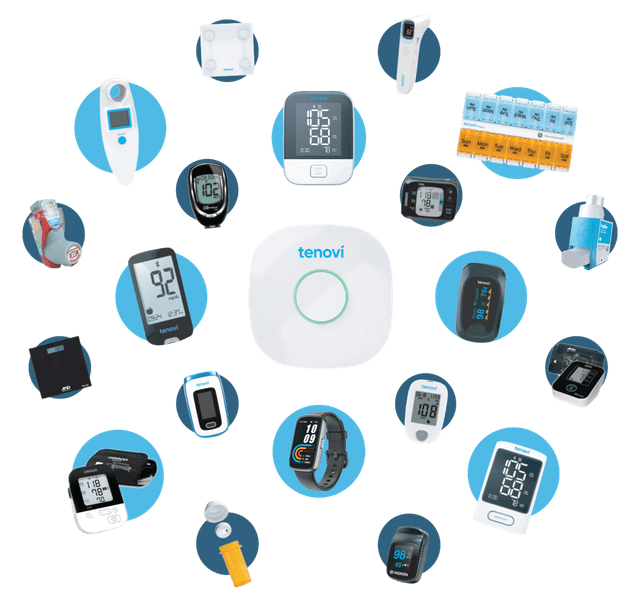
Device must collect and transmit physiologic data (e.g., blood pressure, glucose, weight, SpO2)
Patient must be capable of using the device or have a caregiver who can operate it
Avoid These
Common billing mistakes.
Billing 99454 without achieving 16 days of transmitted data in the 30-day period
Billing 99445 and 99454 in the same 30-day period — these device supply codes are mutually exclusive (choose based on actual days of data: 2–15 days → 99445, 16+ days → 99454)
Billing 99470 alongside 99457 or 99458 in the same calendar month — 99470 (10-min) and 99457 (20-min) treatment management codes are mutually exclusive
Not documenting interactive communication with the patient for 99457 or 99470 — passive data review alone does not qualify for either treatment management code
Billing 99458 without a corresponding base 99457 claim in the same calendar month
Using non-FDA-cleared consumer wellness devices instead of FDA-cleared medical devices
Failing to obtain and document written patient consent before initiating RPM services
Billing 99453 multiple times for the same patient without a new episode of care
Not distinguishing between RPM (physiologic data) and RTM (non-physiologic data) when selecting codes
Compliance
Compliance notes.
RPM services can be furnished by clinical staff under general supervision of the billing practitioner
The ordering practitioner does not need to personally perform the monitoring — qualified clinical staff can fulfill the time requirements
RPM can be billed concurrently with CCM, but time cannot be double-counted across programs
Medicare requires that RPM data be electronically collected and transmitted — manual patient self-reporting does not qualify
RPM services are not limited to established patients; new patients may receive RPM if clinical criteria are met
Time spent on RPM management (99457/99458/99470) must involve live, interactive communication — not solely automated alerts or passive data review
New for 2026: 99445 (2–15 days) and 99470 (10-min management) close billing gaps for patients with shorter monitoring windows or lower clinical engagement thresholds
Device supply codes 99445 and 99454 are mutually exclusive — bill only one per 30-day period based on actual days of data transmission
Treatment management codes 99470 and 99457 are mutually exclusive — bill 99470 for 10–19 minutes or 99457 for 20+ minutes per calendar month
FAQ
Common questions.
Can RPM be billed for the same patient receiving CCM services?
Yes, RPM and CCM can be billed concurrently for the same patient in the same month. However, time spent on RPM treatment management (99457/99458) cannot be double-counted toward CCM time requirements (99490/99439). Each program's time must be tracked and documented separately.
What counts as a 'day of data' for the 16-day requirement under 99454?
A qualifying day of data requires at least one physiologic reading to be collected and electronically transmitted from the patient's FDA-cleared device. The transmission does not need to be reviewed in real-time, but it must be automatically captured by the monitoring system. Manual patient self-reporting (e.g., phone calls or written logs) does not count.
Does the 20-minute requirement for 99457 need to be a single continuous session?
No, the 20 minutes can be accumulated across multiple interactions throughout the calendar month. However, all time must involve interactive communication with the patient or caregiver — not just passive data review. Each interaction should be documented with date, duration, mode of communication, and clinical content.
Who can bill for RPM services — only physicians?
RPM can be ordered by a physician or other qualified healthcare professional (NP, PA, CNS). The treatment management services (99457/99458) can be furnished by clinical staff (such as RNs or MAs) under the general supervision of the billing practitioner. The billing practitioner must have an established treatment plan for the patient.
Can RPM be used for acute conditions, or only chronic conditions?
While RPM is most commonly used for chronic conditions, CMS does allow RPM for acute conditions in certain circumstances. The key requirement is that the monitoring must be medically necessary and ordered by a qualified practitioner. Acute post-surgical monitoring or monitoring of acute exacerbations of chronic conditions can qualify, provided all other RPM requirements are met.
What are the new 2026 RPM CPT codes 99445 and 99470?
Effective January 1, 2026, CMS introduced two new RPM codes to address billing gaps. CPT 99445 covers device supply when a patient transmits data for 2–15 days in a 30-day period (vs. the 16-day minimum required by 99454). CPT 99470 covers the first 10 minutes of treatment management per calendar month (vs. the 20-minute threshold for 99457). These codes allow providers to bill for patients who are onboarding, post-discharge, or have lower engagement levels.
When should I bill 99445 instead of 99454?
Bill 99445 when the patient transmits physiologic data on 2–15 days within a 30-day period. Bill 99454 when data is transmitted on 16 or more days. The two codes are mutually exclusive — you cannot bill both in the same 30-day period. The 99445 code is particularly useful for patients in their first month of RPM onboarding, post-discharge monitoring episodes, or months when device compliance is lower than the 16-day threshold.
When should I bill 99470 instead of 99457?
Bill 99470 when clinical staff spends 10–19 minutes on RPM treatment management in a calendar month, including at least one real-time interactive communication with the patient or caregiver. If the full 20-minute threshold is met, bill 99457 instead (and 99458 for each additional 20 minutes beyond that). The codes are mutually exclusive — 99470 cannot be billed in the same month as 99457 or 99458.
More Billing Guides
Other billing guides.
CCM Billing Guide
Chronic Care Management provides reimbursement for the non-face-to-face care coordination services delivered to Medicare patients with multiple chronic conditions. CCM covers the development and management of comprehensive care plans, medication reconciliation, and coordination across providers and community services.
PCM Billing Guide
Principal Care Management provides reimbursement for care management services focused on a single high-risk chronic condition. PCM is designed for patients who need intensive management of one complex condition rather than the multi-condition coordination provided by CCM. It is particularly suited for conditions requiring frequent monitoring and treatment adjustments.
BHI Billing Guide
Behavioral Health Integration supports the assessment and management of behavioral health conditions within primary care settings through a psychiatric collaborative care model. BHI enables primary care providers to deliver behavioral health services — including depression screening, anxiety management, and substance use disorder monitoring — with psychiatric consultation support.
RTM Billing Guide
Remote Therapeutic Monitoring enables clinicians to monitor non-physiologic data such as therapy adherence, pain levels, medication response, and functional status using FDA-cleared medical devices or software. Unlike RPM (which monitors physiologic data like blood pressure and glucose), RTM is designed for respiratory, musculoskeletal, and cognitive therapy outcomes tracking.