Clinical
Behavioral Health Integration for Long-Term Care — 2026 Guide
How BHI works in long-term care — managing chronic depression, addressing institutional isolation, distinguishing behavioral from medical symptoms, and collaborative psychiatric care for LTC residents.
BHI in long-term care addresses the chronic depression and anxiety that develop during extended institutional stays. LTC residents face persistent social isolation, progressive loss of function, and grief — conditions that drive depression rates of 30–50% in this population. CCN Health provides systematic PHQ-9/GAD-7 screening, psychiatric consultant oversight, and integration with PCC, MatrixCare, and ALIS. BHI generates ~$48–163/patient/month over extended enrollment periods.
What Is Behavioral Health Integration (BHI)?
Behavioral Health Integration (BHI) is a Medicare-reimbursable program that integrates behavioral health screening and treatment into primary/specialty care settings using validated instruments (PHQ-9, GAD-7) and a collaborative care model with psychiatric consultant oversight.
Patient eligibility: Medicare beneficiaries with a behavioral health condition treated in a primary care or specialist setting. Requires systematic screening (PHQ-9, GAD-7) and a collaborative care model with psychiatric consultant.
How BHI differs from related programs: BHI uses validated screening instruments (PHQ-9 for depression, GAD-7 for anxiety) rather than physiologic monitoring devices. The Collaborative Care Model (CoCM) with a psychiatric consultant generates the highest reimbursement.
BHI can be stacked with RPM, CCM for qualifying patients — a single enrolled patient can generate revenue across multiple Medicare programs simultaneously.
Why Long-Term Care Facilities Need BHI
Long-term care creates a unique behavioral health environment: residents experience progressive loss of independence, social isolation from community and family, and grief over declining function. Depression rates in LTC reach 30–50% — the highest of any care setting.
Chronic institutional depression: Extended LTC stays drive chronic depression through social isolation, loss of autonomy, limited activity, and progressive functional decline — conditions that worsen without systematic intervention
Behavioral-medical confusion: Behavioral symptoms (apathy, withdrawal, sleep disruption, appetite changes) may be attributed to medical conditions or aging rather than recognized as treatable depression
Medication interaction risk: LTC residents on multiple medications face psychotropic drug interaction risks — BHI psychiatric oversight ensures behavioral health medications are safe within the full medication regimen
Quality of life impact: Depression is the single largest modifiable factor affecting quality of life in LTC — treatment improves engagement, social participation, sleep quality, and overall well-being
How BHI Works in Long-Term Care — The Clinical Workflow
LTC BHI provides ongoing behavioral health management throughout extended stays — not just a one-time assessment.
Step 1: Baseline Screening — PHQ-9/GAD-7 administered at enrollment with comprehensive behavioral health history. Many LTC residents have pre-existing depression that was never formally treated.
Step 2: Collaborative Treatment Plan — Psychiatric consultant reviews screening results and develops treatment plan — medication recommendations, therapeutic interventions, and environmental modification suggestions to reduce isolation-driven depression.
Step 3: Ongoing Monitoring — Monthly re-screening tracks treatment response. Score trends determine medication adjustments and treatment modifications. Registry management enables population-level oversight.
Step 4: Long-Term Management — BHI continues throughout the LTC stay — adapting treatment as conditions evolve, addressing new-onset behavioral symptoms, and maintaining the psychiatric consultant relationship over months to years.
BHI Uses Screening Instruments for Behavioral Assessment
BHI in LTC uses validated screening tools to systematically assess and track behavioral health conditions.
- PHQ-9 — Monthly depression screening — tracking chronic depression severity and treatment response over extended stays
- GAD-7 — Monthly anxiety assessment — institutional anxiety is common and often comorbid with depression
- Behavioral observation logs — Staff-reported behavioral changes (sleep patterns, social engagement, appetite) supplement formal screening instruments
In LTC, behavioral observation by staff is particularly valuable — changes in social engagement, appetite, and sleep patterns often precede formal screening score changes.
BHI Billing: CPT Codes and Revenue
| CPT Code | Service | Reimbursement | Requirement |
|---|---|---|---|
| 99484 | BHI Services | ~$48/mo | 20+ min clinical staff time |
| 99492 | Initial Psych Collab | ~$163 | 70+ min first month |
| 99493 | Subsequent Collab | ~$130/mo | 60+ min subsequent months |
Estimated monthly revenue per patient: ~$48–163
Program stacking: BHI + RPM generates $223–383/patient/month. BHI + RPM + CCM for patients with multiple chronic conditions and behavioral health needs can exceed $400/month.
LTC BHI generates sustained revenue over extended stays. The CoCM model (99492/99493) is particularly valuable in LTC because the psychiatric consultant relationship is maintained for months to years. Cumulative BHI revenue for a resident enrolled 24+ months can reach $3,120+ through CoCM codes.
EHR Integration for BHI in Long-Term Care
Long-Term Care facilities typically use PointClickCare, MatrixCare, ALIS for clinical documentation. Long-term care facilities use PointClickCare, MatrixCare, or ALIS. Documentation requirements are extensive for state survey compliance.
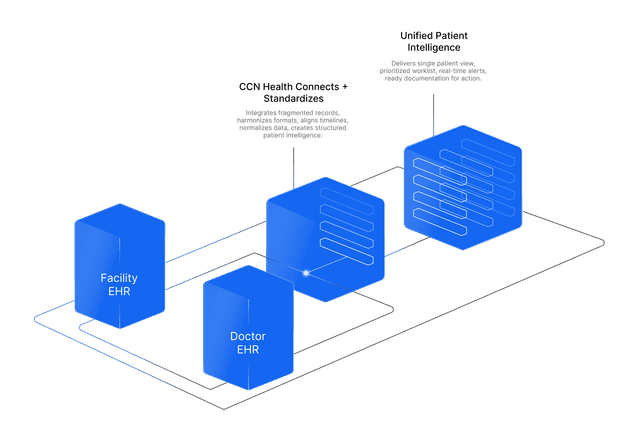
CCN Health provides bi-directional integration with all major long-term care EHR systems:
- Resident/patient demographics sync automatically
- Screening scores and care documentation flow into existing EHR workflows
- Clinical alerts appear within the EHR — no separate portal required
- Billing documentation generates automatically for BHI time tracking
Screening scores and behavioral health care plans integrate with PCC, MatrixCare, and ALIS — ensuring behavioral health documentation is visible alongside medical records and nursing assessments.
Getting Started: Implementing BHI in Your Long-Term Care Facilitie
A typical BHI implementation in long-term care follows a 4–8 week timeline:
- Week 1–2: Psychiatric consultant engagement for long-term relationship, EHR integration for screening data, staff behavioral observation training
- Week 3–4: Baseline screening for all residents, behavioral health registry established, treatment priorities identified
- Week 5–6: CoCM activated with psychiatric consultant, medication management protocols for psychotropics, environmental intervention recommendations
- Week 7–8: Full enrollment, monthly re-screening schedule, ongoing CoCM billing, treatment response optimization
LTC BHI benefits from environmental interventions alongside pharmacological treatment — recommendations for social engagement activities, meaningful occupation, and family visit facilitation address the isolation that drives institutional depression.
Ready to implement BHI in your long-term care facilitie? CCN Health provides full-service Behavioral Health Integration with EHR integration, clinical oversight, and billing optimization purpose-built for long-term care.
Disclaimer: This article is for informational purposes only and does not constitute medical, legal, or billing advice. CPT code reimbursement amounts are estimates based on CMS published fee schedules and may vary by region, payer, and clinical circumstances. Always consult qualified healthcare, billing, and technology professionals for guidance specific to your facility.
Let's figure this out together
We work closely with every client to find the right approach for their practice. Think of us as your partner, not just a platform.
Topics
Your Partner in Chronic Care
We love working closely with our clients to find the best solutions. Let us help guide you through the complicated stuff.
Why It Matters
Key Benefits
See how this approach drives measurable improvements across your organization.
BHI Program Management
Full Behavioral Health Integration program delivery including enrollment, monitoring, clinical review, and billing documentation — purpose-built for long-term care workflows.
EHR Integration
Bi-directional integration with PointClickCare, MatrixCare, ALIS ensures monitoring data flows into existing clinical workflows without manual data entry.
Revenue Optimization
~$48–163 per patient per month with BHI. Program stacking with RPM and CCM increases per-patient revenue further.
Chronic Depression Treatment
Ongoing management of institutional depression — not just screening but sustained treatment with monthly monitoring throughout extended stays.
Behavioral Differentiation
Systematic screening distinguishes treatable depression from aging or dementia symptoms — preventing missed diagnoses of reversible conditions.
Long-Term Revenue
Extended enrollment generates cumulative CoCM revenue over months to years — the highest-yield BHI setting for sustained billing.
Continue Reading
Related Articles
Explore more insights on this topic.
Chronic Care Management for Long-Term Care — 2026 Guide
How CCM works in long-term care — ongoing care coordination for residents with 5+ chronic conditions, polypharmacy management, and Medicare billing for LTC facilities.
Remote Patient Monitoring for Long-Term Care — 2026 Guide
How RPM works in long-term care facilities — contactless monitoring for high-acuity residents, condition stabilization, EHR integration with PCC and MatrixCare, and Medicare billing for LTC settings.
BHI Billing Guide: Behavioral Health Integration CPT Codes & Requirements
A detailed guide to Behavioral Health Integration billing — covering CPT codes 99484, 99492, and 99493, the Collaborative Care Model (CoCM), PHQ-9 and GAD-7 screening requirements, qualifying behavioral health conditions, and strategies for integrating BHI into primary care practice.
Common Questions
Frequently Asked Questions
Get answers to the most common questions about this topic.
Behavioral Health Integration (BHI) for long-term care is a Medicare-reimbursable program. long-stay residents receive ongoing behavioral health screening and collaborative psychiatric care to address the chronic depression and anxiety that develop during extended institutional stays. Medicare beneficiaries with a behavioral health condition treated in a primary care or specialist setting.
BHI generates ~$48–163 per patient per month through CPT codes 99484, 99492, 99493. BHI + RPM generates $223–383/patient/month. BHI + RPM + CCM for patients with multiple chronic conditions and behavioral health needs can exceed $400/month.
CCN Health integrates with PointClickCare, MatrixCare, ALIS for long-term care facilities. Long-term care facilities use PointClickCare, MatrixCare, or ALIS. All monitoring data flows bi-directionally between CCN Health and the facility/physician EHR.
Depression rates in LTC reach 30–50% — the highest of any care setting. Extended institutional stays, social isolation, progressive functional decline, and grief over lost independence all contribute. Most cases are chronic and require ongoing treatment, not just a one-time intervention.
Many behavioral symptoms that appear to be part of aging or dementia are actually manifestations of treatable depression — apathy, social withdrawal, sleep disruption, and appetite changes. BHI's systematic screening identifies these treatable conditions and distinguishes them from neurodegenerative symptoms.
BHI continues throughout the resident's stay — potentially months to years. Chronic depression in LTC rarely resolves without ongoing treatment. Monthly monitoring ensures treatment remains effective and catches new-onset symptoms. Cumulative BHI revenue from extended enrollment is substantial.
Still have questions? We love helping practices figure this out — no pressure, just real answers.

Your Partner in Chronic Care
We're Here to Guide You Every Step of the Way
RPM, CCM, and chronic care management can get complicated. We work closely with every client to figure out the best solutions for their practice.